
The world of cancer treatment is moving faster than ever, and the progress in non-small cell lung cancer (NSCLC) is a powerful source of hope. Just a decade ago, the outlook was very different. Today, treatments like targeted therapy and immunotherapy are standard care, offering more personalized and effective options. This rapid pace of discovery directly impacts the answer to the question, “Is Stage 4 non-small cell lung cancer curable?” While a cure isn’t the typical outcome, these advanced therapies are helping people live longer and better, turning the disease into a manageable condition. This article will explain these breakthroughs and what they mean for you.
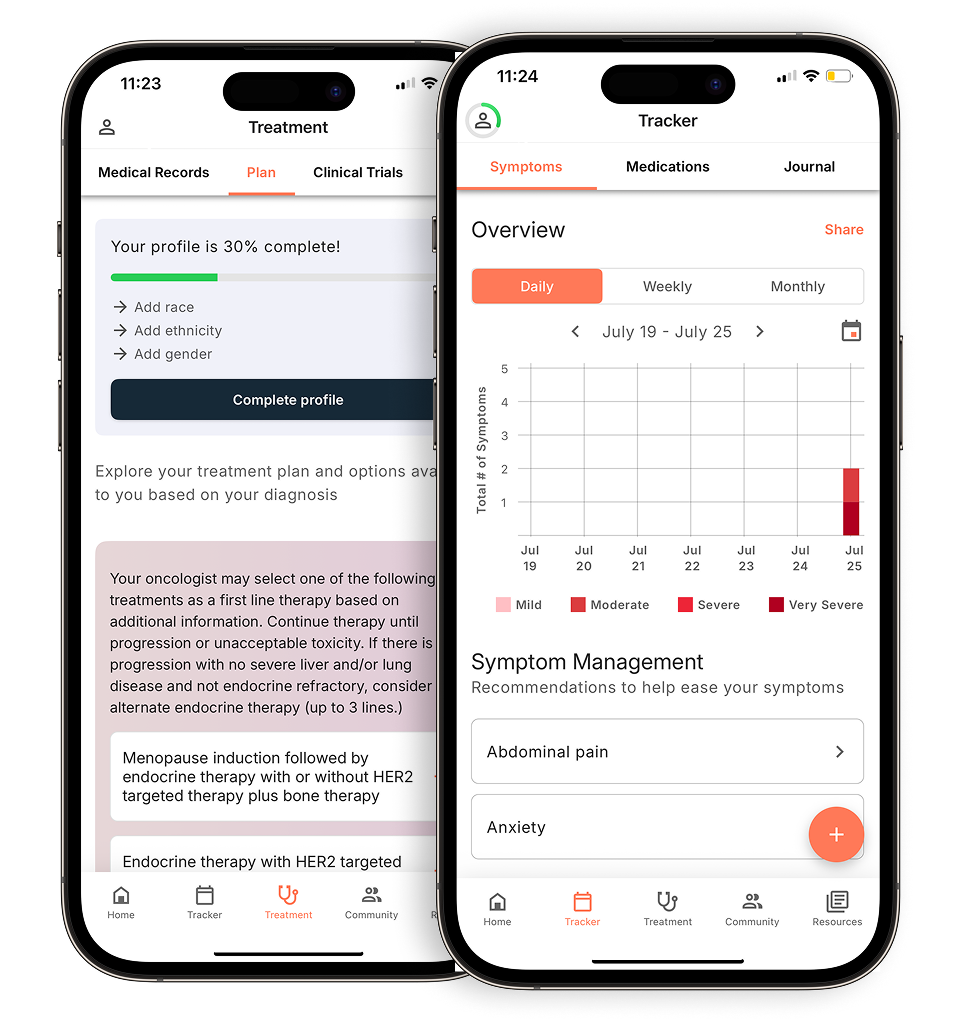
View your personalized treatment plan in the Outcomes4Me app
Use your diagnosis to unlock personalized NCCN Guidelines®-aligned recommendations.
Key Takeaways
- Understand That Stage 4 NSCLC Is Treatable: While a cure isn’t the goal, modern treatments focus on managing the cancer as a chronic condition. This approach can control the disease’s growth and manage symptoms, allowing many people to live longer with a good quality of life.
- Ask About Genetic Testing for Personalized Treatment: Your cancer has a unique genetic profile. Testing for specific biomarkers is the critical first step that allows your doctor to match you with the most effective targeted therapies or immunotherapies, moving beyond a one-size-fits-all approach.
- Take an Active Role in Your Treatment Plan: You are the most important member of your care team. Communicate openly with your doctors, ask about clinical trials, and use patient resources to ensure your treatment plan aligns with your personal health and quality-of-life goals.
What Is Stage 4 Non-Small Cell Lung Cancer?
Receiving a Stage 4 non-small cell lung cancer (NSCLC) diagnosis can feel overwhelming, and it’s natural to have a lot of questions. Understanding what this diagnosis means is the first step in taking control of your health journey. In simple terms, the “stage” of a cancer describes its size and whether it has spread from where it started. Stage 4 is the most advanced stage, but it’s important to remember that new treatments are changing what’s possible.
Let’s break down what Stage 4 NSCLC means and why it requires a specific approach to treatment.
Defining Stage 4
When lung cancer is classified as Stage 4, it means the cancer has metastasized, or spread, beyond the original tumor in one lung. Cancer cells can travel through the bloodstream or lymphatic system to establish new tumors in other parts of the body. This might include the other lung, the fluid surrounding the lung or heart, or distant organs like the brain, bones, or liver. The process of cancer staging is how your doctors map out the extent of the cancer. This detailed picture is absolutely crucial for your care team to determine the most effective treatment plan for your unique situation.
NSCLC vs. Other Lung Cancers
Non-small cell lung cancer is the most common type of lung cancer, making up about 85% of all diagnoses. What makes Stage 4 NSCLC particularly challenging is that the cancer is no longer confined to a single, treatable area. Because it has spread to distant sites throughout the body, treatments that target one location, like surgery or focused radiation, are often not the primary approach. Instead, your treatment plan will likely center on systemic therapies. These are treatments like chemotherapy, targeted therapy, or immunotherapy that circulate through your body to find and fight cancer cells wherever they are. Your oncology team will use information about your cancer’s specific characteristics to build a strategy just for you.
Can Stage 4 Non-Small Cell Lung Cancer Be Cured?
When you receive a Stage 4 non-small cell lung cancer (NSCLC) diagnosis, one of the first questions that comes to mind is often about a cure. It’s a completely natural question. While the medical community doesn’t use the word “cure” for this stage of cancer, it’s crucial to understand that Stage 4 NSCLC is absolutely treatable. Thanks to incredible advances in medicine, the goal of treatment has shifted toward managing the cancer as a chronic condition, allowing many people to live longer and maintain a good quality of life. This shift in perspective is powerful. It moves the focus from a single outcome to a continuous process of care, symptom management, and living well. Understanding the difference between “curable” and “treatable” is the first step in reframing your outlook and focusing on the path ahead.
Curable vs. Treatable: What’s the Difference?
In the world of oncology, a “cure” typically means that the cancer has been completely eliminated from the body and will not come back. For Stage 4 NSCLC, this isn’t a realistic goal because the cancer has already spread to other parts of the body, a process called metastasis. This is where the term “treatable” becomes so powerful. Think of it like managing other chronic conditions, such as diabetes or heart disease. While the cancer may not be completely gone, modern treatments can effectively control its growth, shrink tumors, and manage symptoms. The focus of your care plan will be to keep the cancer under control for as long as possible while ensuring you feel your best.
Making Sense of Survival Rates
It’s easy to find frightening statistics online, but it’s vital to put them in context. Many survival rates for Stage 4 NSCLC are based on data from several years ago, before today’s advanced treatments became widely available. These numbers are averages and don’t account for your specific situation, your cancer’s unique genetic profile, or how you might respond to newer therapies. While the statistics can feel impersonal, research shows that a surprising number of people are living much longer than older data suggests, some for many years. Your journey is your own, and it won’t be defined by a percentage. The most effective treatment plans are personalized, taking into account the specific characteristics of your cancer to give you the best possible outcome.
What Are My Treatment Options for Stage 4 NSCLC?
When you receive a stage 4 non-small cell lung cancer diagnosis, your oncology team will work with you to create a treatment plan that’s tailored to your specific situation. The primary goals are to help you live longer and to manage symptoms, ensuring the best possible quality of life. Modern medicine has made incredible strides, and today’s treatments are more personalized than ever. Your plan will depend on several factors, including the specific genetic makeup of the cancer cells, where the cancer has spread, and your overall health. Let’s walk through the main types of treatment you and your doctor might discuss.
Chemotherapy
Chemotherapy is a type of treatment that uses powerful drugs to kill fast-growing cells, like cancer cells. It’s often a primary treatment option, especially if genetic testing doesn’t find any specific mutations in your cancer cells that can be treated with other drugs. Your doctor might recommend a combination of chemotherapy drugs, or if you have other health concerns, they may suggest a single drug that is gentler on your body. Chemotherapy can be given on its own or sometimes alongside other treatments like immunotherapy to make it more effective. Your care team will carefully monitor you to manage any side effects and ensure the treatment is working as well as it can.
Targeted Therapy
Targeted therapy is a truly personalized approach to cancer treatment. Unlike chemotherapy, which affects all fast-growing cells, these drugs are designed to target specific genetic changes (mutations) within the cancer cells that help them grow and spread. Before you can receive this treatment, your tumor will be tested to see if it has one of these specific mutations. If a treatable genetic change is found, your doctor can prescribe a drug that directly attacks that vulnerability. This precision often leads to fewer side effects than traditional chemotherapy. Think of it as a key that fits a specific lock on the cancer cell, stopping it in its tracks.
Immunotherapy
Immunotherapy is an innovative treatment that works by helping your own immune system recognize and fight cancer cells more effectively. Cancer cells can sometimes hide from the immune system by using certain proteins as a disguise. Immunotherapy drugs, often called checkpoint inhibitors, essentially block these proteins, taking the disguise off the cancer cells so your immune system can find and attack them. This treatment may be an option if your cancer cells have high levels of a protein called PD-L1. Your doctor may recommend immunotherapy on its own or in combination with chemotherapy, depending on your cancer’s specific profile.
Radiation and Palliative Care
While radiation therapy isn’t typically used to cure stage 4 NSCLC, it plays a vital role in managing the disease and improving your quality of life. This treatment uses high-energy beams to target and shrink tumors in specific areas. It can be incredibly effective for relieving symptoms like pain, breathing difficulties, or bleeding. For example, your doctor might use radiation to treat cancer that has spread to the bones or the brain.
Alongside these treatments, you’ll also receive palliative care. This is a common point of confusion—palliative care is not the same as hospice. It’s a layer of support focused entirely on managing symptoms and treatment side effects to help you feel as comfortable as possible. It can and should be given right from the start, alongside your active cancer treatments.
What Factors Influence My Prognosis?
When you hear the word “prognosis,” it’s easy to think of it as a single, fixed number. But the reality is much more personal and dynamic. Your prognosis for stage 4 non-small cell lung cancer (NSCLC) isn’t just a statistic; it’s a picture that becomes clearer when you consider several key factors unique to you and your cancer. Think of it less as a prediction and more as a guide that helps you and your care team make the best possible decisions for your treatment plan. It’s a living assessment that can change over time as you begin treatment and your doctors learn more about how your cancer behaves.
Understanding these factors can help you feel more in control and prepared for conversations with your oncologist. Your journey is shaped by a combination of your body’s overall strength, the specific biological details of the cancer itself, and how effectively treatments can do their job. For example, two people with the same diagnosis might have very different outcomes based on these individual details. By looking at these pieces together, your medical team can create a more personalized and effective strategy that is tailored specifically to you. We’ll walk through three of the most important factors that influence your path forward, giving you the knowledge to be an active partner in your care.
Your Overall Health
Your general health before and during treatment plays a significant role in your prognosis. When your doctor considers treatment options, they look at your age and any other health conditions you might have, like heart disease or diabetes. This is because your body needs to be strong enough to handle powerful treatments like chemotherapy or immunotherapy. A person’s general health can directly influence which therapies are recommended and how well you might tolerate them. Focusing on good nutrition, managing other health issues, and communicating openly with your doctor about how you’re feeling can make a real difference in your ability to stay on your treatment plan.
Your Cancer’s Unique Profile
No two cancers are exactly alike. Today, we know that the genetic makeup of a tumor is one of the most critical factors in determining treatment. Your oncologist will likely recommend testing a sample of the tumor for specific genetic changes or biomarkers. These tests can reveal mutations in genes like EGFR, ALK, or ROS1. Finding these markers is like finding a specific target for your treatment to aim at. This information allows your doctor to select targeted therapies designed to attack cancer cells with those exact genetic alterations, often leading to better outcomes than a one-size-fits-all approach.
How Your Body Responds to Treatment
How your cancer responds to the therapies you receive is a major factor in your long-term outlook. The goal of treatment is to shrink tumors, stop their growth, and manage symptoms. Your oncology team will closely monitor your progress with imaging scans and other tests to see how well a therapy is working. This response is critical, as research shows that factors like the number of treatment cycles you complete directly influence survival outcomes. If one treatment isn’t as effective as hoped, this close monitoring allows your team to pivot and explore other options, keeping your plan tailored to what works best for you.
How Do Targeted Therapies Work?
Think of targeted therapy as a smart drug. Unlike traditional chemotherapy that affects all fast-growing cells (both cancerous and healthy), targeted therapies are designed to find and attack cancer cells with specific characteristics. They work by zeroing in on the unique changes, or mutations, within the cancer’s DNA that help it grow and spread.
This approach is a cornerstone of what’s known as precision medicine. Before you start treatment, your doctor will likely recommend genetic testing of your tumor tissue. This testing, also called biomarker or molecular testing, looks for specific genetic markers. If your cancer has one of these markers, your care team can match you with a targeted therapy drug designed to attack that exact vulnerability. This personalized strategy can often lead to better outcomes and, in some cases, fewer side effects than traditional chemotherapy.
Key Genetic Markers (EGFR, ALK, and More)
When your care team runs tests on your tumor, they’re looking for specific genetic mutations that are known to drive lung cancer growth. Think of these markers as signposts on the cancer cells that tell doctors which treatment path might be most effective. Some of the most common markers in non-small cell lung cancer include EGFR, ALK, ROS1, BRAF, and KRAS. Each of these represents a different change in the cancer cell’s instruction manual. For example, an EGFR mutation can cause cancer cells to grow and divide too quickly. A targeted drug can block that specific signal, effectively putting the brakes on the cancer’s growth.
Using Genetic Tests to Guide Treatment
Genetic testing is the critical first step in determining if a targeted therapy is right for you. This process analyzes a sample of your tumor to create a unique profile of your cancer. The results of these tests give your oncology team a roadmap, helping them choose a therapy that is most likely to work against your specific cancer. This is why it’s so important to have this testing done before starting treatment. Without it, doctors can’t know if your cancer has a “target” that one of these specialized drugs can hit. This information empowers you and your doctor to make the most informed treatment decisions possible from the very beginning.
The Promise of Precision Medicine
This entire approach—testing for genetic markers and then selecting a drug based on those results—is the essence of precision medicine. It’s a move away from a one-size-fits-all treatment plan and toward a highly personalized strategy tailored to your cancer’s specific biology. The goal is to make treatment more effective and less toxic. When a specific genetic change is found, your doctor can prescribe a drug that directly interferes with that pathway. This tailored approach is a primary and powerful treatment option for many people with Stage 4 NSCLC, offering a clear path forward based on the unique characteristics of your tumor.
What Is Immunotherapy’s Role in Treatment?
Instead of introducing foreign substances to kill cancer cells, immunotherapy is a groundbreaking approach that helps your own immune system do the job it was designed for: finding and fighting invaders. For many people with Stage 4 NSCLC, these treatments have become a cornerstone of care, offering a new way to manage the disease by turning the body’s natural defenses into a powerful weapon against cancer. Think of it as training your internal security team to recognize and target cancer cells that were previously hiding in plain sight.
How Immune Checkpoint Inhibitors Work
Your immune system has “checkpoints” that act like brakes to prevent it from attacking healthy cells. The trouble is, some cancer cells are clever enough to use these checkpoints to hide from your immune system. Immune checkpoint inhibitors are drugs that release these brakes, allowing your immune cells to recognize and attack the cancer. Your doctor will likely test your tumor for specific protein markers, like PD-L1, to see if these immunotherapy treatments are a good fit for you. For some people, this approach can lead to long-term control of the disease.
Combining Immunotherapy with Other Treatments
Immunotherapy doesn’t always work alone. Your oncologist may recommend using it in combination with other treatments, most commonly chemotherapy. This strategy creates a powerful, multi-front attack on the cancer. This approach is often considered for patients whose tumors don’t have specific genetic markers like EGFR or ALK, which would make them candidates for targeted therapy. By combining immunotherapy with chemotherapy, your care team can fight the cancer from different angles, which can lead to better results than using either treatment by itself. Your specific treatment plan will always be tailored to your unique diagnosis.
The Potential for Lasting Results
While Stage 4 NSCLC is not considered curable, immunotherapy has dramatically changed the outlook for many people. These treatments have significantly improved survival outcomes, offering the potential for durable, long-term responses. For a growing number of patients, immunotherapy can control the cancer for years, allowing them to maintain a good quality of life. It’s a major step forward that provides real hope and more time for people living with lung cancer. Every person’s response is different, but the success of immunotherapy marks a truly optimistic shift in managing advanced lung cancer.
What Are the Latest Advances in Research?
The world of cancer research is constantly moving, and the progress in treating non-small cell lung cancer is a powerful source of hope. Scientists and doctors are always looking for smarter, more effective ways to manage Stage 4 NSCLC, leading to new therapies and strategies that are changing what’s possible. Just a decade ago, treatments like targeted therapy and immunotherapy were groundbreaking concepts being explored in clinical trials. Today, they are standard care for many patients, offering more personalized and effective options than ever before. This rapid pace of discovery is incredibly encouraging.
This progress is fueled by a deeper understanding of the biology of lung cancer. Researchers are no longer treating it as a single disease but as a collection of distinct conditions, each with its own genetic fingerprint. This precision allows for the development of treatments that target the specific drivers of a person’s cancer, leading to better outcomes and often, fewer side effects than traditional chemotherapy. The advances we see today are built on years of dedicated research and the courage of patients who participated in clinical trials. As we look to the future, the focus remains on finding even more effective, less invasive, and more personalized ways to help you live longer and better. Here’s a look at some of the most promising developments happening right now.
Using Liquid Biopsies to Track Progress
Imagine being able to monitor your cancer’s activity with a simple blood test instead of an invasive surgical biopsy. That’s the reality of liquid biopsies. These powerful tests analyze your blood for tiny pieces of DNA that tumors shed, giving your care team a real-time snapshot of your cancer’s genetic makeup. This is a game-changer because it allows your doctor to see if a treatment is working or if the cancer is changing and developing resistance. By tracking tumor dynamics this way, your oncologist can make faster, more informed decisions about your care plan, potentially switching you to a more effective therapy sooner. It’s a less invasive, smarter way to stay a step ahead of the cancer.
New Treatment Combinations on the Horizon
Researchers are finding that using different treatments together can be much more powerful than using them one at a time. The strategy is to attack the cancer from multiple angles at once. For example, combining chemotherapy with immunotherapy has shown great promise. The chemotherapy can weaken and kill cancer cells, and in the process, it can expose them to the immune system. This makes it easier for the immunotherapy drug to help your own immune cells recognize and destroy the cancer. These combination therapies are a major focus of current research, as scientists work to find the most effective and synergistic pairings to improve outcomes for patients with Stage 4 NSCLC.
Finding the Right Clinical Trial
Clinical trials are at the heart of every major breakthrough in cancer treatment. They are carefully designed research studies that test new therapies to see if they are safe and more effective than current options. Participating in a trial can give you access to the next generation of treatments, sometimes years before they become widely available. It’s important to see this not as a last resort, but as a proactive way to explore every possible option for your care. The first step is to discuss clinical trials with your oncologist. They can help you find studies that are a good match for your specific diagnosis, genetic markers, and treatment history, ensuring it’s a safe and appropriate choice for you.
Where Can I Find Support and Resources?
A stage 4 NSCLC diagnosis can feel isolating, but you are not alone. A strong support system is a key part of managing your health, and there are incredible organizations dedicated to providing practical, financial, and emotional help. Tapping into these resources can make a significant difference in your journey, giving you the tools and community you need to feel more in control. Whether you need help with treatment costs, want someone to help you speak up for your needs, or just need to talk to people who get it, support is available.
Getting Financial Support
The cost of cancer treatment can be a major source of stress, but you don’t have to figure it out alone. Many organizations offer resources to ease the financial pressure so you can focus on your health. These groups can connect you with grants, co-pay assistance programs, and other aid. The Lung Cancer Foundation of America, for example, provides information on financial assistance options. Exploring these avenues can help cover the costs of medications and treatments, lightening the load for you and your family.
Connecting with Patient Advocates
A patient advocate can help you communicate with your healthcare team, understand your diagnosis, and explore your treatment options. They act as a guide and a voice for you, ensuring your questions are answered and your concerns are heard. This support is invaluable when you’re processing complex medical information. Organizations like the GO2 Foundation for Lung Cancer offer access to educational materials and advocates who can empower you to take an active role in your care and make informed decisions that feel right for you.
Finding Emotional and Mental Health Support
Your emotional well-being is just as important as your physical health. It’s normal to feel a wide range of emotions, and connecting with others can provide immense comfort. Many foundations offer counseling services and support groups where you can share your experience with people who understand what you’re going through. These groups are available for both patients and caregivers, creating a safe space to process feelings, share coping strategies, and build a sense of community. This support can help you feel less alone.
How Can I Get Personalized Treatment Guidance?
When you’re dealing with a Stage 4 NSCLC diagnosis, the sheer volume of information can feel overwhelming. But here’s the most important thing to remember: your treatment plan should be as unique as you are. There is no one-size-fits-all approach. Personalized treatment guidance means creating a plan that considers the specific genetic makeup of your cancer, your overall health, and your personal preferences and goals. This isn’t just about choosing a therapy; it’s about designing a comprehensive strategy that fits your life.
Getting this level of tailored care involves a few key steps. It starts with building a strong, collaborative relationship with your medical team. From there, it helps to have a basic understanding of the expert guidelines that inform your doctor’s recommendations. Finally, it means exploring all of your options, including clinical trials that could offer access to the latest advancements in cancer care. Taking an active role in these conversations is one of the most powerful things you can do. It ensures your voice is heard and that the path you take aligns with what matters most to you.
Partnering with Your Oncology Team
Think of your relationship with your oncologist and the rest of your care team as a partnership. They bring the medical expertise, and you bring the most important expertise of all: knowledge of your own body, your life, and your priorities. Your healthcare team will work with you to create a treatment plan that fits your unique situation. This collaborative approach is essential for making sure all aspects of your health and preferences are considered.
To make this partnership work, open communication is key. Don’t be afraid to ask questions, express your concerns, and talk about your quality-of-life goals. It can be helpful to write down your questions before an appointment so you don’t forget anything. Feeling empowered to speak up ensures that your treatment plan truly reflects your needs.
Making Sense of NCCN Guidelines
You might hear your doctor mention the NCCN Guidelines. So, what are they? The National Comprehensive Cancer Network (NCCN) creates and publishes recommendations that oncologists use to make decisions about cancer care. These guidelines are developed by leading cancer experts and represent the recognized standard for high-quality cancer treatment. They provide a framework for oncologists to tailor treatments based on specific characteristics of the cancer, like certain genetic mutations.
While these guidelines are written for medical professionals, understanding the basics can help you have more informed conversations about your care. Knowing that your doctor is using these expert-backed recommendations can be reassuring. Resources are also available to help translate this information, making it easier for you to understand the “why” behind your personalized treatment plan.
How to Find Clinical Trials for You
Clinical trials are research studies that test new and promising ways to treat cancer. For many people with Stage 4 NSCLC, they represent an opportunity to access cutting-edge treatments that aren’t yet widely available. Your doctor is your best resource for information on clinical trials, so don’t hesitate to ask if there are any that might be a good fit for you. Participation is always your choice, but it’s a valuable option to explore.
Beyond your doctor, there are excellent resources you can use to find potential trials. Websites like the U.S. National Library of Medicine’s ClinicalTrials.gov allow you to search for studies based on your condition and location. Patient-focused platforms can also help match you with relevant trials, simplifying the search process and helping you bring a list of possibilities to your next appointment.
Related Articles
- Stage 4 Non-Small Cell Lung Cancer Life Expectancy with Treatment – Outcomes4Me
- Stage 4 Lung Cancer Life Expectancy: Factors & Treatment Options
- Stage 4 Lung Cancer Life Expectancy Without Treatment: Survival Rate
- What does it mean when stage 4 lung cancer is treatable but not curable? | Outcomes4Me Community
- Stage 2 Non Small Cell Lung Cancer Survival Rate: Prognosis & Life Expectancy
View your personalized treatment plan in the Outcomes4Me app
Use your diagnosis to unlock personalized NCCN Guidelines®-aligned recommendations.
Frequently Asked Questions
I keep hearing that Stage 4 NSCLC isn’t “curable.” What does that actually mean for me? It’s a heavy word, and it’s completely normal to get stuck on it. In medicine, “cure” means a disease is gone forever. Because Stage 4 cancer has spread, the goal shifts from complete elimination to long-term management. Think of it like a chronic condition, such as diabetes. The focus is on using advanced treatments to control the cancer, manage symptoms, and help you live a long, full life. It’s a shift in perspective, but it’s a hopeful one that centers on continuous care and quality of life.
Why is genetic testing for my tumor so important? Think of your cancer as having a unique instruction manual. Genetic testing, sometimes called biomarker testing, reads that manual to find the specific changes that are telling the cancer to grow. This information is critical because it helps your doctor match you with a treatment designed to target that exact vulnerability. It’s the key to personalized medicine, allowing for more precise and effective treatments like targeted therapy or immunotherapy, which can often work better and have fewer side effects than a one-size-fits-all approach.
With so many treatment options, how will my doctor and I choose the right one? Choosing a treatment plan is a partnership between you and your oncology team. The decision isn’t based on one single thing but on a combination of factors. Your doctor will look at the genetic profile of your tumor, where the cancer has spread, and your overall health. Just as importantly, they will consider your personal goals for your quality of life. This collaborative process ensures the final plan is tailored specifically to you, giving you the best possible path forward.
You mentioned palliative care. Isn’t that just for the end of life? This is one of the biggest and most important misconceptions to clear up. Palliative care is not the same as hospice or end-of-life care. It is a specialized layer of support that focuses entirely on managing your symptoms and the side effects of treatment to help you feel your best. It should be a part of your care plan from the very beginning, right alongside active treatments like chemotherapy or immunotherapy, to improve your overall quality of life.
I feel overwhelmed. What’s the most important first step I can take? Feeling overwhelmed is a completely valid response. The single most important first step is to focus on building a strong, open line of communication with your oncology team. Write down your questions before appointments, bring a friend or family member to help you listen and take notes, and don’t ever be afraid to say, “Can you explain that again in a different way?” Your voice is a crucial part of your care, and establishing a collaborative partnership with your doctor is the foundation for everything that comes next.