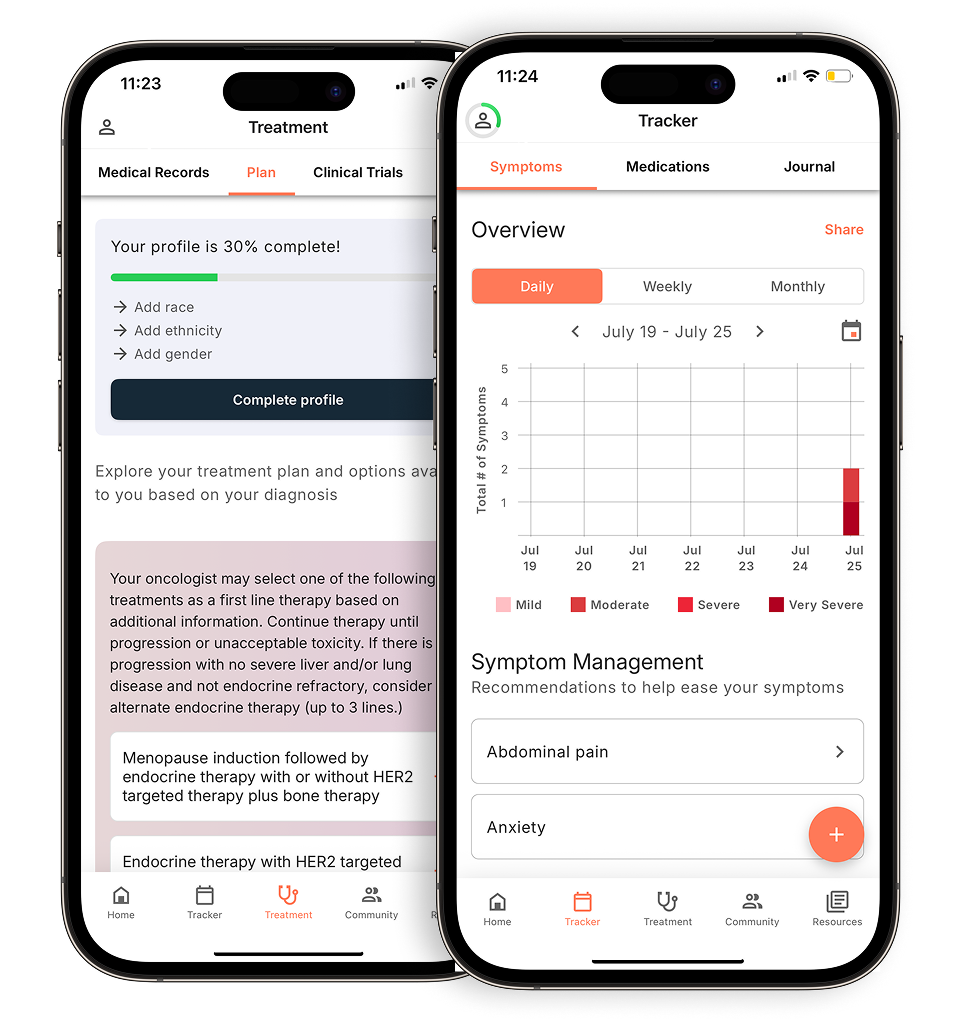
As CDK 4/6 inhibitors become more widely used in early-stage breast cancer, an important question remains: who truly benefits from these therapies? At the San Antonio Breast Cancer Symposium (SABCS), researchers shared updates on how care teams can better personalize treatment decisions with new data.
We asked UCLA Health breast oncologist Dr. Kelly McCann to share her thoughts on the recent research.
The following questions and responses have been lightly edited for grammatical purposes.
- Were there any updates on how care teams can determine which patients are most likely to benefit from a CDK 4/6 inhibitor? How do you create a personalized treatment plan with the emerging research?
Dr. Kelly McCann: There were many talks on this topic. One session focused on combining the tools we currently use separately into one overarching dataset to better predict outcomes for individual patients.
When I talk with my patients about how we determine a treatment plan, there are three major factors that go into our recommendations.
The first is the biology of the cancer. Is it ER-positive, PR-positive, HER2-positive? Is it fast-dividing? What is the grade? Grade is on a scale from 1 to 3. Grade 1 tumors are still trying to resemble normal breast cells in some ways, such as forming ducts, and they grow more slowly. Grade 3 tumors are rapidly dividing and are no longer behaving like normal breast cells. This helps us predict how the cancer is likely to behave.
The second factor is stage. Where is the cancer located? Is it only in the breast, or has it spread to the lymph nodes? If cancer has reached the lymph nodes, that tells me it has the ability to enter the bloodstream, which increases risk. I treat lymph node–positive disease differently. For example, in a premenopausal patient with lymph node involvement, chemotherapy is recommended for most patients.
The third factor is patient-specific considerations. Are there other treatments the patient might benefit from? Does she have a BRCA mutation, which could open up an entirely different set of oral therapies? Of course, patient preferences matter as well.
Many of my patients ask whether they would benefit from ribociclib. The NATALEE trial included a much larger patient population, including patients with very early stage II disease and no lymph node involvement, but with higher-grade, more aggressive tumor biology.
I’ve been watching the data for those patients closely. They did show some benefit, but we’re not talking about large differences. At five years, the benefit is in the single-digit percentage range. However, breast cancer is so common that even single-percentage improvements can translate to a large number of people.
Ultimately, it comes down to the patient. We often have a detailed discussion where I can explain how the medication worked for the population enrolled in the trial, but for an individual patient, it’s difficult to say exactly what their personal risk is.
Hopefully, in the future, we’ll have better tools, perhaps involving AI, to give us a clearer picture of individual risk. That might include combining information from pathology slides with assays like Oncotype DX, which we currently use primarily to assess chemotherapy benefit.
Bringing together patient factors, tumor biology, and stage could help us create even more personalized treatment plans. That’s already my goal, but it would be helpful to have more precision when talking with individual patients.
Learn more about the new data in early breast cancer research in part one of our recap.
Personalized support for real care decisions
Understand your diagnosis, explore clinical trials, and track symptoms--all in one place.
Get started
Compare treatments, prepare for appointments, and track side effects—all in the app
Built for your diagnosis, Outcomes4Me gives you the tools to make confident, informed decisions—right when you need them.
Continue in app