
Understanding stage 3 colon cancer and regional spread
Stage 3 colon cancer means the disease has moved beyond the wall of the colon into nearby lymph nodes, but hasn’t been found in distant organs like the liver or lungs. In cancer registries, this category is usually labeled “regional” spread, a term you’ll see repeatedly when you look up a colon cancer survival rate.
Stage 3 colon cancer may be further classified into substages (such as 3A, 3B, or 3C) based on factors including how deeply the tumor has invaded the bowel wall and the extent of lymph node involvement. Your care team can explain how your tumor’s specific characteristics affect your individual prognosis. The TNM system is used to classify colon cancer substages by evaluating Tumor depth, Node involvement, and metastasis. Your care team can explain how these factors apply to your individual diagnosis.
One more definition worth holding onto: relative survival compares people with a given diagnosis to people of the same age and sex without it. Overall survival counts every death from any cause. The two answer different questions, and confusing them is the fastest way to misread your own odds.
Stage 3 colon cancer survival rates by age group
Younger patients with colorectal cancer have higher five-year relative survival rates than older patients across all stages of diagnosis. Older patients, particularly those past 65, show lower percentages, driven heavily by comorbidities and reduced tolerance for full-dose chemotherapy rather than by biology alone. Age also shapes what oncologists recommend, a fit 42-year-old and a frail 80-year-old may be offered very different treatment intensities for identical pathology.
The impact of substage on 5-year outcomes
Substage separates outcomes sharply. Stage 3A colon cancer, which involves shallow tumor invasion and fewer positive lymph nodes, is generally considered less advanced than Stage 3C, where deeper invasion and more involved nodes are present. Your care team can discuss how these differences may relate to your individual prognosis and treatment options. The count itself is prognostic: each additional positive lymph node signals wider microscopic spread and influences statistical life expectancy.
So when someone asks what the odds of survival are for stage 3 colon cancer, the honest answer is that published “regional” figures blend 3A, 3B, and 3C together. Your substage sits somewhere inside that average.
Evidence-based guidance powered by NCCN Guidelines®
Personalized treatment plans shaped by the latest oncology standards—tailored to your diagnosis.
Get started
View your personalized treatment plan in the Outcomes4Me app
Use your diagnosis to unlock personalized NCCN Guidelines®-aligned recommendations.
Continue in app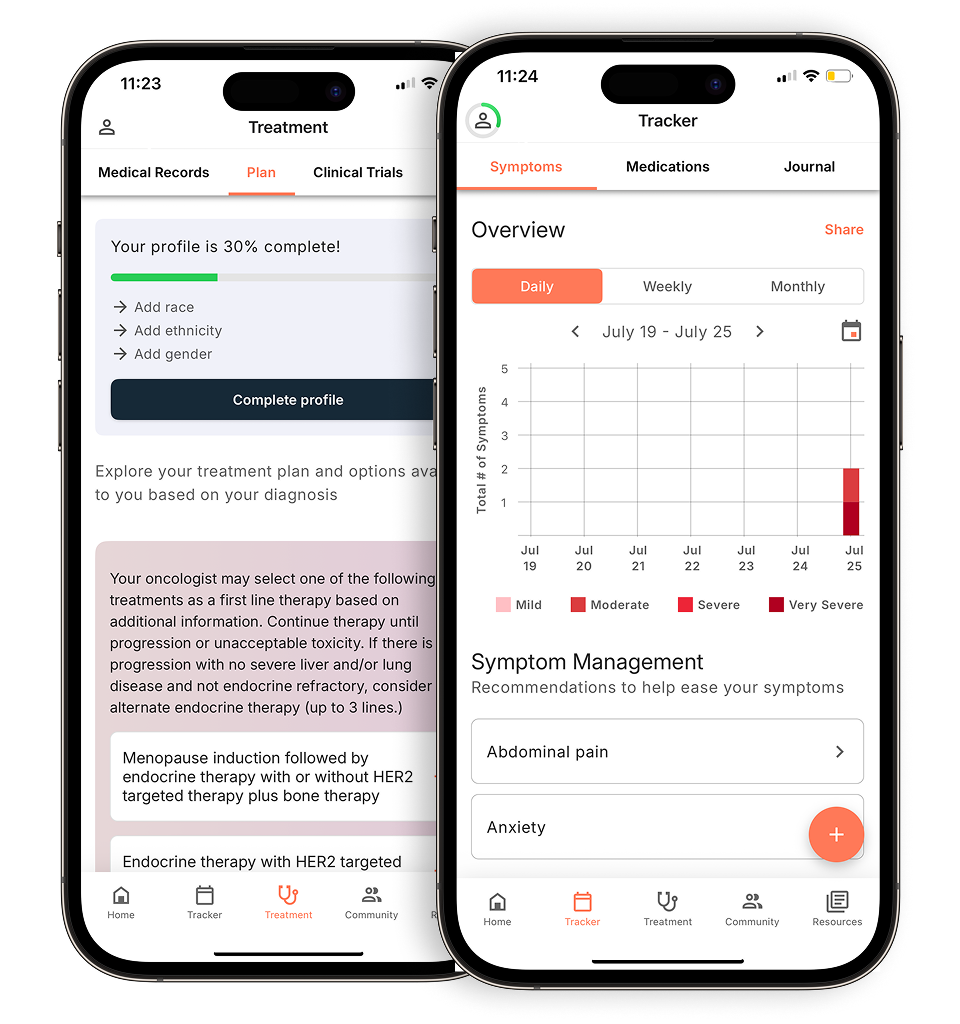
Key factors influencing individual prognosis beyond age
Age is one variable among several, and it’s rarely the dominant one.
Tumor grade. Pathologists describe how closely cancer cells resemble normal colon tissue. Tumor grade (how differentiated the cancer cells appear under a microscope) may influence how colon cancer progresses, with some evidence suggesting that poorly differentiated tumors tend to be associated with more challenging outcomes. Your care team can discuss what your tumor’s grade means for your individual situation.
Genetic markers. Your doctor may consider microsatellite instability-high (MSI-H) and deficient mismatch repair (dMMR) status when planning your treatment and estimating your outlook, as these tumor characteristics can influence how colon cancer behaves. These tumors often respond differently to standard chemotherapy, and they identify candidates for immunotherapy. Universal testing of colon tumors for these markers is now routine.
Tumor location. Tumors in different locations within the colon and rectum have different molecular and biological features and are associated with different risk factors. Location is part of the prognostic conversation, not a footnote.
Lymphovascular invasion. When cancer cells are seen inside lymphatic channels or small blood vessels on the pathology report, that’s flagged as a high-risk feature and frequently tips the decision toward more aggressive adjuvant therapy.
Ask your care team to walk you through each of these on your own report.
Treatment adherence and surgical outcomes
People often ask about average life expectancy after a right hemicolectomy. There’s no single number, outcomes track the pathology removed, not the operation’s name. R0 resection, meaning no cancer at the margins, and examination of an adequate number of lymph nodes are goals your surgical team may discuss with you, as they are considered part of standard colon cancer surgery. Completing the full prescribed course of adjuvant chemotherapy, rather than stopping early, lowers recurrence risk.
Role of targeted therapies and immunotherapy in 2026
A personalized care plan built around tumor genetics now shapes much of stage 3 treatment. Patients with MSI-H or dMMR tumors may be evaluated for immunotherapy, while others are matched to targeted biologics based on mutation status. Oncologists anchor these decisions to NCCN treatment guidelines, which define standard-of-care benchmarks and are updated as evidence changes. For stage 3 colon cancer, the standard treatment involves surgery to remove the affected section of the colon along with nearby lymph nodes, followed by chemotherapy.
Cancer care guidance for every step of your journey
Get treatment options, clinical trials, and support tailored to your diagnosis--all in one place.
Get started
See treatment options, manage symptoms, and stay informed—all in the app
View treatment options and trials personalized to your diagnosis—plus track progress in real time.
Continue in appCommon patterns in recovery and long-term surveillance
After treatment ends, surveillance begins, and it’s structured, not improvised. Follow-up care for stage 3 colon cancer typically involves periodic physical exams, CEA blood tests, CT imaging of the chest, abdomen, and pelvis, and colonoscopy at intervals your care team recommends. These are commonly used tools, though your doctor can discuss which monitoring approach may be right for your situation. Follow-up care and monitoring are more frequent in the first couple of years after treatment, then become less frequent in the years that follow.
Lifestyle carries measurable weight in survivorship research. Many healthcare providers discuss lifestyle approaches, such as regular physical activity, a diet rich in vegetables and whole grains, maintaining a healthy weight, and limiting alcohol and processed meat, as part of overall care alongside clinical follow-up. Talk with your care team about which of these approaches may be right for you.
Is colon cancer curable at this stage? For many people, yes. Stage 3 is regional, not metastatic, and the standard combination of complete surgical resection plus adjuvant chemotherapy is given with curative intent. That framing matters when you’re reading percentages that feel like verdicts.
The timeline of progression and recurrence risks
How long does it take for colon cancer to reach stage 4? There’s no fixed clock, progression depends on tumor biology, and some cancers advance over months while others take years. What’s more useful is disease-free survival, the measure of how long you remain without detectable cancer after initial treatment. Many recurrences tend to occur in the first two to three years after treatment, though your care team can discuss your individual risk factors and follow-up schedule. New or persistent symptoms, abdominal pain, unexplained weight loss, changes in bowel habits, warrant a call to your care team immediately rather than at the next scheduled visit.
Survivorship: Quality of life after treatment
Oxaliplatin-based chemotherapy can leave peripheral neuropathy, numbness, tingling, cold sensitivity in the hands and feet, that lingers well past the final infusion. Some older patients report that peripheral neuropathy takes longer to improve, though recovery timelines can vary widely. It may be worth discussing individual factors with your care team. The emotional challenges are real too, especially the anxiety that builds in the weeks before each scan. Younger patients face additional questions around fertility preservation, employment, and insurance. Raise these before treatment starts, not after.
Limitations of survival statistics and when to re-evaluate
Every published survival figure comes with constraints worth understanding.
Population-level data describes groups, and no percentage can predict what happens to one person. A 70% five-year figure doesn’t mean you have a 70% chance, it means that among a large, diverse group diagnosed years ago, that proportion was alive at five years.
That lag is the second limitation. Five-year survival rates are based on people diagnosed and treated at least five years earlier, so they may not reflect how well newer treatments work for patients being diagnosed today. Lead-time bias is a concept that can complicate how survival statistics are interpreted. It refers to situations where earlier detection may appear to lengthen survival time on paper without necessarily changing how the disease actually progresses.
Third, relative survival rates typically exclude deaths from unrelated causes. That adjustment matters most for older cohorts, where heart disease and other conditions compete as causes of death.
Finally, intensity has costs. For an elderly patient, full-dose chemotherapy may trade meaningful quality of life for uncertain benefit. That trade-off deserves an explicit conversation, not a default.
Navigating a stage 3 diagnosis
- Stage 3 colon cancer is regional disease, it has reached nearby lymph nodes but not distant organs, and it remains treatable, frequently with curative intent.
- Survival rates are consistently highest among younger patients and among those with Stage 3A pathology.
- Completing adjuvant chemotherapy after surgery is the primary tool for reducing the risk of progression to Stage 4.
- Your individual prognosis rests more on positive lymph node count, tumor genetics, and whether surgery achieved clear margins than on age by itself.
- Bring your pathology report to every appointment and ask your care team to translate each line.
Disclaimer: The information provided in this article is for informational purposes only and is not intended to be a substitute for professional medical advice, diagnosis, or treatment. Outcomes4Me is not acting as your caregiver, and any suggestions or guidance offered should not replace the advice of your healthcare provider or qualified medical professional. Always seek the guidance of your physician or other qualified health provider with any questions you may have regarding a medical condition.
Personalized support for real care decisions
Understand your diagnosis, explore clinical trials, and track symptoms--all in one place.
Get started
Compare treatments, prepare for appointments, and track side effects—all in the app
Built for your diagnosis, Outcomes4Me gives you the tools to make confident, informed decisions—right when you need them.
Continue in app