Transcript
The transcript has been lightly edited for grammatical purposes.
What does it mean if your doctor says you have ALK-positive (ALK+) lung cancer?
Dr. Stephen Liu: For an ALK+ lung cancer, we want to incorporate the use of an ALK inhibitor, an ALK tyrosine kinase inhibitor, and there are several available in the U.S.
Most patients, unfortunately, present with late-stage disease (stage IV lung cancer). In those settings, the backbone of treatment is medical therapy. Historically, we’ve used agents like chemotherapy, but what we know now is that using an ALK inhibitor is really superior to chemotherapy. We have multiple newer generations of ALK inhibitors that are even more effective.
We know a lot about ALK+ lung cancers. ALK+ refers to a cancer that has an ALK fusion or a chromosomal rearrangement within the ALK gene. This is present in about 5% of lung cancers, typically in people without a smoking history. That said, smoking doesn’t protect you from developing ALK+ cancer. People who smoke can also develop this. It’s just not something we think is related to smoking.
Evidence-based guidance powered by NCCN Guidelines®
Personalized treatment plans shaped by the latest oncology standards—tailored to your diagnosis.
Get started
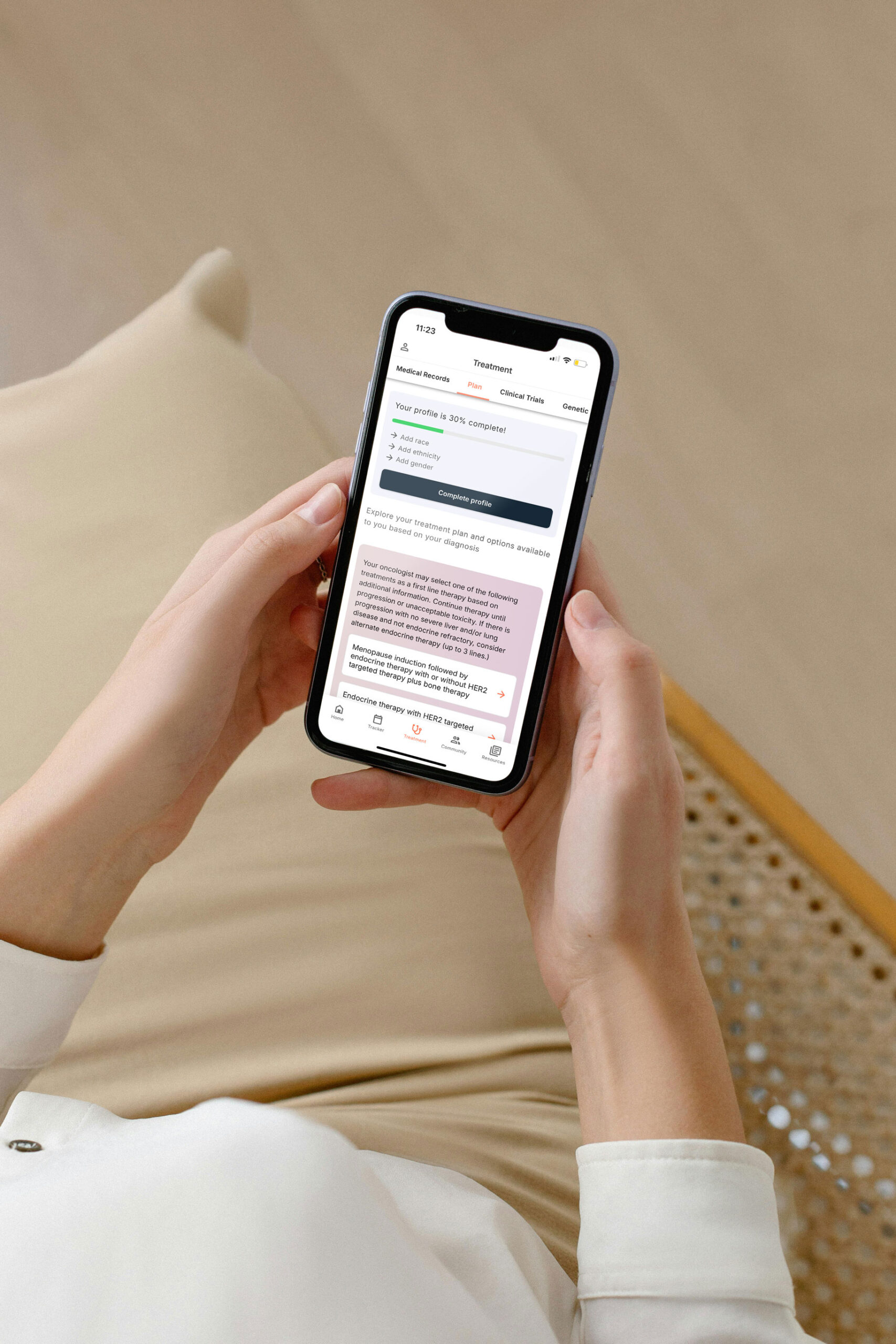
View your personalized treatment plan in the Outcomes4Me app
Use your diagnosis to unlock personalized NCCN Guidelines®-aligned recommendations.
Continue in app
That said, we don’t know what is causing it. We’re still trying to figure that out, including why we’re seeing more of these cancers in recent years. This is a cancer that can spread quickly and tends to spread to the brain. That’s why it’s important that we monitor the brain closely. When we think about ideal medicines that target ALK, we want a drug that’s very potent, works quickly, lasts a long time, and is effective in the brain.
Among the different ALK inhibitors, there are first-generation and later-generation drugs. The first ALK inhibitor approved in the U.S. was a drug called crizotinib. It’s an effective treatment that’s better than chemotherapy, but it’s generally not a drug we use anymore because, frankly, there are better options now.
Ceritinib was approved after that, but it tends to have a bit more GI toxicity, so it’s also not typically our preferred drug. The next generation of agents, like alectinib, brigatinib, ensartinib, and lorlatinib, are better tolerated and work better in the brain. All of these agents are superior to crizotinib and are really among our preferred treatments. These drugs work very quickly and work for almost everyone.
When we see an ALK fusion, we have a high level of confidence that these drugs will work and that we’ll see a response. While this is not a disease where we can make promises, responses are extremely likely. At least some reduction in cancer is seen in almost everybody.
The problem is that they don’t work forever. Eventually, these cancers develop resistance. The time to resistance is very individual. If you look at the newest agent out there, a latest-generation ALK inhibitor like lorlatinib, at 5 years, we still haven’t reached the median time of response. The drug generally works for more than 5 years. We’re seeing responses lasting six, even seven years in many patients, which is a long time to be on a single treatment before needing to make changes.
So, our drugs are getting better. They’re working for longer periods. People often ask, “Well, is it a good thing to have an ALK+ cancer?” That’s not really how I look at it. I don’t think there’s a “good” lung cancer. Lung cancer is very unpredictable, and nothing is guaranteed.
That said, there are many options for these cancers. When I do genomic testing, I don’t think in terms of good or bad results. It’s just about understanding the reality, the truth of the disease, so we can select the right treatment.
When we detect these cancers earlier, and that’s happening more now with increased awareness, we sometimes catch them at a stage where surgery is possible. For early-stage, resectable lung cancer, we’ll often pursue surgery in an effort to cure it. What we know now is that after surgery, using an ALK inhibitor, specifically alectinib, can delay recurrence and provide benefit. So these drugs are now being combined with surgery, and there are studies looking at combining them after radiation therapy as well.
ALK inhibitors are an important part of the treatment for ALK+ lung cancer. We know that immunotherapy is not an effective treatment for these cancers. We’re trying to understand why so that we can improve outcomes. The field is moving quickly, and as powerful, potent, and well-tolerated as our current drugs are, there are even newer and better drugs being developed. That’s why we always want to be thinking about clinical trials for access to the latest and greatest options that we think are even better than what’s currently available to the general public.
Learn more about ALK+ and ROS1 NSCLC from Dr. Liu in the full video here.
Personalized support for real care decisions
Understand your diagnosis, explore clinical trials, and track symptoms--all in one place.
Get started
Compare treatments, prepare for appointments, and track side effects—all in the app
Built for your diagnosis, Outcomes4Me gives you the tools to make confident, informed decisions—right when you need them.
Continue in app