
If you’ve been diagnosed with prostate cancer, you probably have many questions surrounding treatment, surgery, and prevention of recurrence.
In the sea of information, one topic that may come up that’s worth your further consideration is participating in a prostate cancer clinical trial. If you’ve not participated in a clinical trial in the past, you may have many questions. For many, one of the first questions is: how can I benefit from a clinical trial?
Read on for some of the reasons you may want to consider a clinical trial for your prostate cancer treatment.
Access to the newest cutting-edge treatments
While traditional prostate cancer treatment may consist of a combination of surveillance, radiation therapy, chemotherapy, or hormone therapy, participating in a clinical trial will potentially give you access to newer, more innovative treatments not yet used in a widespread manner.
While this may seem intimidating, keep in mind that clinical trials can lead to breakthroughs, and you could possibly have early access to these novel modes of treatment and prevention. From new drugs to modified treatment timelines to innovative new surgery methods, hundreds of new treatments are currently under investigation for prostate cancer. Should a treatment benefit be found from one of these trials, you would be among the first to benefit if you were a participant.
Immunotherapy, for example, which has revolutionized the treatment of many cancers in recent decades, only became approved after rigorous clinical trials. Many trial participants were the first to see these results.
A chance to lower your treatment costs
Evidence-based guidance powered by NCCN Guidelines®
Personalized treatment plans shaped by the latest oncology standards—tailored to your diagnosis.
Get started
View your personalized treatment plan in the Outcomes4Me app
Use your diagnosis to unlock personalized NCCN Guidelines®-aligned recommendations.
Continue in app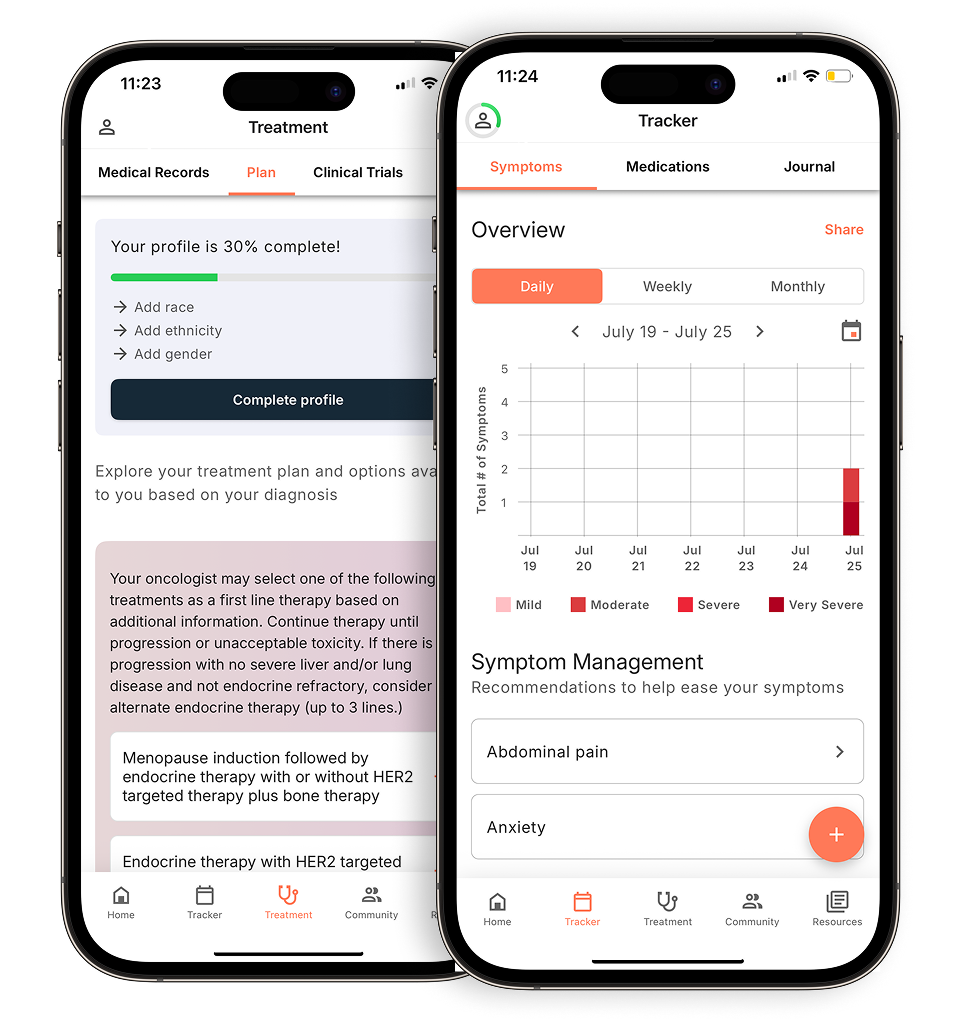
In a clinical trial, typically, the cost of the intervention is covered by the sponsor of the study – or the cost is greatly reduced from what it would be if otherwise offered to the public.
While there may be costs incurred for supplemental travel, many insurances cover at least part of the additional financial burdens of clinical trial participation. In fact, the Affordable Care Act requires most insurance plans to cover “routine patient care costs” for most federally funded, FDA-reviewed Phase I through IV clinical trials “related to prevention, detection, or treatment of cancer or other life-threatening disease.” Medicare and Medicaid recipients are also covered for many or most clinical trial costs.
Additional layers of care
If you take part in a prostate cancer clinical trial, you will have an additional layer of monitoring: the research team. Clinical trial research teams must follow stringent monitoring and follow-up techniques at regular intervals, so you will have access to an “extra layer” of care and several new sets of watchful eyes as you undergo your prostate cancer treatment and interventions.
Often, clinical trials are led by research teams at the edge of cutting-edge, innovative ideas and methods surrounding prostate cancer treatment and care, so you may also potentially gain more direct access to these top-tier researchers and medical professionals through your participation.
You may help future generations
Clinical trials are an essential step on the pathway to future Food & Drug Administration review and approval of prostate cancer treatments – without the contributions of study participants, this vitally important step cannot occur. By participating in a clinical trial, you can be a part of the process to set the stage for revolutionary prostate cancer treatments, helping future generations.
At Outcomes4Me, we are committed to helping you navigate your prostate cancer treatment options. Our app provides personalized information, resources, and support to help you stay informed and empowered. Download the Outcomes4Me app today to explore treatment options and access the latest research and insights on prostate cancer care.
Related Topics
Personalized support for real care decisions
Understand your diagnosis, explore clinical trials, and track symptoms--all in one place.
Get started
Compare treatments, prepare for appointments, and track side effects—all in the app
Built for your diagnosis, Outcomes4Me gives you the tools to make confident, informed decisions—right when you need them.
Continue in app