Bladder cancer is the sixth most common cancer, and catching it early can make a big difference in treatment success. That’s where biomarker testing comes in. Biomarkers can give doctors important insights about what’s happening inside your cells.
In bladder cancer, these markers can help with early detection, monitoring, and guiding treatment decisions.
How biomarker tests help detect and monitor bladder cancer
Traditional methods for diagnosing bladder cancer, like cystoscopy (looking inside the bladder with a camera), can be uncomfortable and invasive. Biomarker tests, on the other hand, often use a simple urine sample. These tests look for certain proteins or molecules that could signal the presence of cancer cells.
There are a few FDA-approved biomarker tests are already being used to help detect and monitor bladder cancer:
- BTA stat and BTA TRAK: These tests measure proteins linked to bladder tumor cells in urine.
- NMP22 BladderChek: This test looks for a protein released when bladder cancer cells die.
These tests are popular because they’re non-invasive and convenient. However, they aren’t perfect. Their accuracy, known as sensitivity (how well they detect cancer) and specificity (how well they avoid false alarms), can vary a lot between studies. For example, data show that BTA stat’s sensitivity has ranged from 40% to 72%, while its specificity has ranged from 29% to 96%. Similarly, NMP22 BladderChek has shown sensitivities between 11% and 85.7%.
While these tests can provide useful information, doctors still rely on additional scans and diagnostic tests to confirm a clear and accurate diagnosis.
The future of bladder cancer biomarkers
Researchers are developing new and more reliable biomarkers to improve detection, especially at early stages when treatment is most effective.
One exciting area of research involves extracellular vesicles (EVs) and exosomes. These are tiny particles released by cells that carry important biological information, including proteins and genetic material. Scientists believe they could become powerful tools for detecting bladder cancer earlier and more accurately.
Biomarker testing for tumor mutations and proteins
Doctors are also using tumor biomarker testing to understand the unique makeup of a bladder cancer tumor. This type of testing looks at mutations in genes or proteins expressed by the tumor to guide treatment decisions and identify targeted therapy options.
Some important biomarkers being tested in bladder cancer include:
- FGFR3 mutations: Changes in the FGFR3 gene can drive tumor growth in some bladder cancers. Identifying this mutation can help doctors determine if a patient may benefit from targeted therapies designed to block FGFR3 activity.
- Nectin-4: This protein is often found in bladder cancer cells and can be used to determine eligibility for certain antibody-drug therapies that specifically target Nectin-4 on cancer cells.
- HER2: More commonly known in breast cancer, HER2 is also present in some bladder cancers. Testing for HER2 can help doctors decide whether HER2-targeted treatments could be effective.
Tumor biomarker testing represents a big step forward in making bladder cancer treatment more precise and tailored to each patient’s cancer profile.
What this means for patients
If you or a loved one is facing a bladder cancer diagnosis, talk to your care team about whether biomarker testing could play a role in your treatment or monitoring plan. As research continues, these tests may soon help doctors catch bladder cancer even earlier and improve outcomes for patients everywhere.
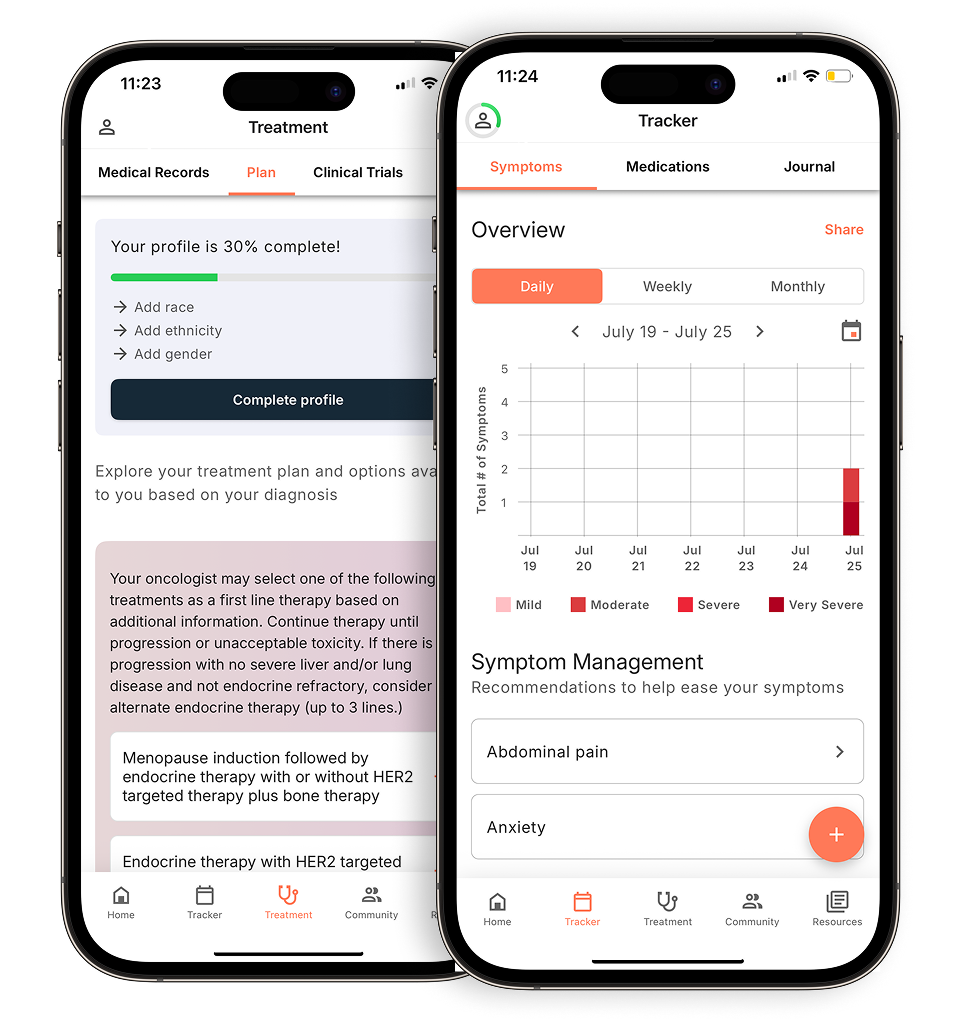
If you would like to connect with an Outcomes4Me oncology nurse practitioner at no charge through the Outcomes4Me app, using the “Ask Outcomes4Me” button.
Personalized support for real care decisions
Understand your diagnosis, explore clinical trials, and track symptoms--all in one place.
Get started
Compare treatments, prepare for appointments, and track side effects—all in the app
Built for your diagnosis, Outcomes4Me gives you the tools to make confident, informed decisions—right when you need them.
Continue in app