
A bladder cancer diagnosis can stop your world. One moment you’re waiting on test results; the next, you’re trying to absorb a flood of medical terms, treatment options, and next steps, all while processing news that’s genuinely frightening.
Being prepared with the right questions for your oncologist after a bladder cancer diagnosis helps you move from shock to action.
That information overload is real. Research, referrals, second opinions, and urgent decisions all arrive at once, and it’s easy to feel like the situation is happening to you rather than with you. What’s important to understand is that bladder cancer treatment is far from uniform. Depending on the tumor’s characteristics, treatment can range from a minimally invasive outpatient procedure to systemic therapies like immunotherapy. The right path depends on details specific to your case. Understanding those details is where your power lies.
Biomarker testing can provide important insights about your specific cancer to help guide treatment decisions. Talk with your care team about whether biomarker testing could play a role in your personalized treatment or monitoring plan. According to the American Cancer Society, preparing questions to ask your cancer care team about bladder cancer can help guide your discussions about diagnosis, treatment options, and follow-up care, and that preparation can meaningfully reduce the anxiety that comes with uncertainty.
The goal of what follows is to help you move from diagnosis to a clear, personalized action plan. It starts with understanding the most critical distinction your care team will make about your tumor.
The critical distinction. Understanding your tumor’s stage and grade
Two numbers will shape nearly every decision your care team makes after a bladder cancer diagnosis: stage and grade. Understanding what each one means and why they’re not the same thing puts you in a far stronger position to participate in your own care.
Stage describes where the tumor is. Grade describes how dangerous it looks under a microscope. Stage tells your care team how deeply the tumor has grown into the bladder wall or beyond it. Grade measures how abnormal the cancer cells appear, and therefore how aggressively the tumor is likely to behave.
The single most important staging distinction is whether your cancer is non-muscle invasive or muscle-invasive. Non-muscle invasive bladder cancer is confined to the inner lining of the bladder, while muscle-invasive disease has penetrated the deeper muscle wall. This distinction is the most critical factor for prognosis, as it determines whether treatment can focus on preserving the bladder or whether more aggressive intervention is necessary.
Grade adds another layer. Low-grade tumors tend to grow slowly and are less likely to spread, while high-grade tumors are more aggressive and carry a greater risk of progression. A high-grade, non-muscle invasive cancer, for example, may require closer surveillance and more intensive treatment than a low-grade tumor at the same stage.
Expert tip: Stage and grade measure different things. Stage refers to how far the tumor has grown, while grade indicates how aggressive the cells look. Your care team uses both together to build your personalized care plan.
Evidence-based guidance powered by NCCN Guidelines®
Personalized treatment plans shaped by the latest oncology standards—tailored to your diagnosis.
Get startedView your personalized treatment plan in the Outcomes4Me app
Use your diagnosis to unlock personalized NCCN Guidelines®-aligned recommendations.
Continue in app

The procedure used to gather this information is called a transurethral resection of bladder tumor, or TURBT. The TURBT is considered the gold standard for initial staging because it both removes visible tumor tissue and provides the pathology sample your care team needs to determine stage and grade accurately.
When you meet with your specialist, ask directly: “How deep has the tumor grown into the bladder wall?” and “What is the grade, low or high?” These two questions anchor the conversation and give you the foundation to ask smarter follow-up questions. Understanding how targeted therapies work becomes especially relevant as you move into discussions about precision oncology for bladder cancer patients, including whether your tumor has specific molecular characteristics that could open additional treatment options.
Advocating for precision oncology and genomic testing
Personalized medicine for bladder cancer starts with understanding what’s driving your tumor at the genetic level, not just where it is or how far it’s spread.
Bladder cancer can be shaped by specific genetic mutations and molecular drivers that differ from patient to patient. Biomarker testing analyzes the genetic makeup of your tumor to identify those drivers, which can directly inform whether immunotherapy or other targeted therapies are likely to work for you. Because not every bladder cancer behaves the same way, a personalized care plan grounded in genomic data gives your care team a much clearer roadmap than staging alone.
Precision oncology uses your tumor’s genetic data to match you with the therapies most likely to be effective, which is a significant advantage over broad-spectrum approaches. Genomic or biomarker tests can also reveal whether a hereditary condition like Lynch Syndrome may be contributing to your diagnosis, which has implications for your treatment and for your family members’ health as well. Preparing questions to ask your cancer care team before your next appointment is a practical first step toward engaging in informed discussions about your diagnosis and treatment options.
Consider raising these questions directly with your care team:
- “Are there genomic tests that can guide my treatment decisions?” Ask specifically whether next-generation sequencing or tumor profiling is appropriate for your cancer type and stage.
- “Is my bladder cancer linked to a hereditary factor like Lynch Syndrome?” A family history of certain cancers may make this conversation especially relevant.
- “Could biomarker results affect whether immunotherapy is an option for me?” PD-L1 expression and other markers can influence eligibility for specific therapies.
Many patients and specialists find it helpful to discuss your tumor’s molecular profile early on, as this information may guide treatment decisions tailored to your individual cancer. With that genomic foundation in place, you’ll be far better positioned to evaluate all your treatment options, which is exactly where we’re headed next.
Evaluating treatment options. Beyond the standard of care
Once you understand your tumor’s stage, grade, and molecular profile, the next step is navigating what your care team recommends and knowing when to push beyond the initial proposal.
Cancer care guidance for every step of your journey
Get treatment options, clinical trials, and support tailored to your diagnosis--all in one place.
Get started
See treatment options, manage symptoms, and stay informed—all in the app
View treatment options and trials personalized to your diagnosis—plus track progress in real time.
Continue in app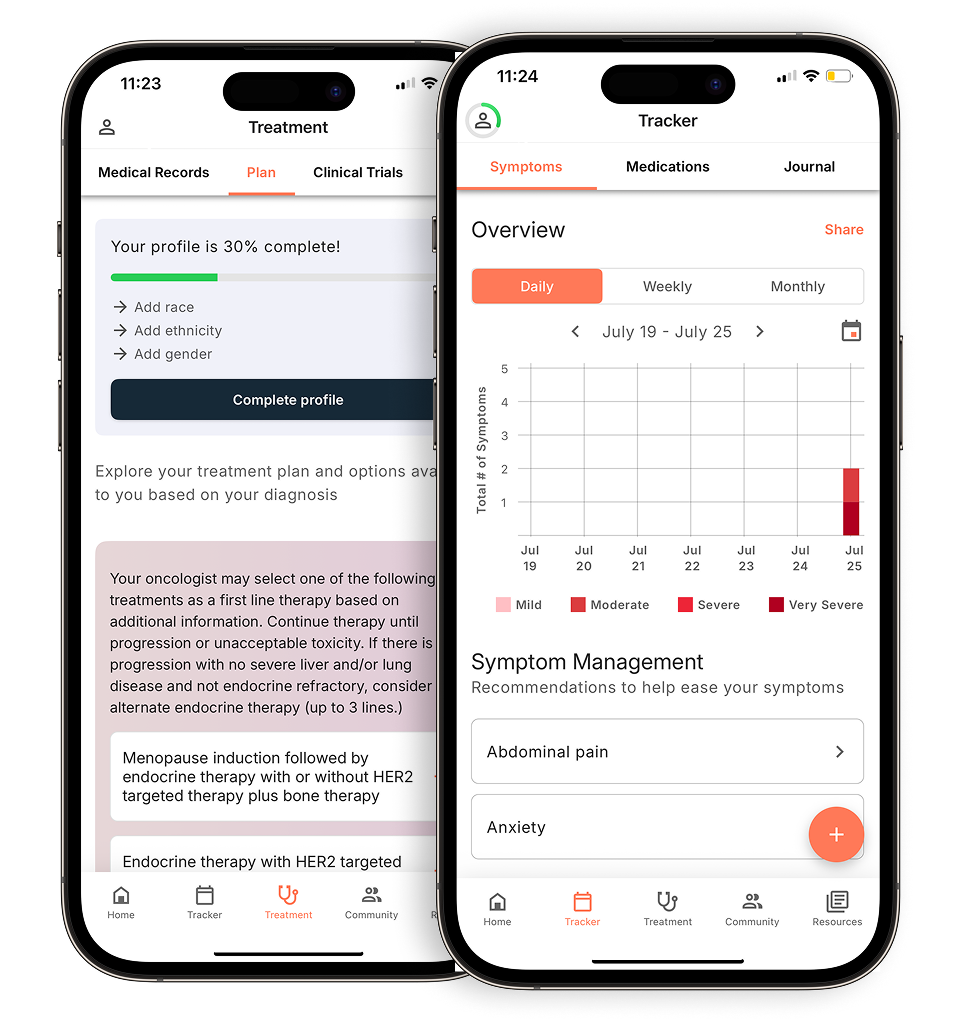
Treatment plans for bladder cancer carry different goals. Some approaches aim to cure the disease entirely; others focus on long-term management, particularly when the cancer has spread or recurred. Clarifying that distinction upfront helps you ask sharper questions and align your personalized care plan with what matters most to you.
Options for bladder preservation deserve a direct conversation with your specialist. For muscle-invasive bladder cancer, radical cystectomy involves full removal of the bladder and is often presented as the default. But trimodal therapy, combining surgery, radiation, and chemotherapy, is an established alternative for carefully selected patients. Quality of life implications, including urinary function, sexual function, and the long-term adjustments tied to urinary diversion, are significant and worth discussing in detail before any decision is finalized.
A second opinion is not a sign of distrust; it’s due diligence. Many patients with bladder cancer find it helpful to consider asking their care team whether a second opinion from a specialized cancer center might be right for their situation. These centers offer access to multidisciplinary tumor boards, specialized expertise, and emerging immunotherapy protocols that may not be available at every facility.
And when you’re ready to explore what else might be available, including how to find bladder cancer clinical trials that match your specific stage and grade, that question deserves its own focused conversation, which the next section addresses directly.
Why clinical trials should be your first thought, not your last
Clinical trials are one of the most proactive steps you can take after a bladder cancer diagnosis. Too often, patients assume trials are reserved for those who’ve exhausted every other option. But that’s a misconception worth challenging head-on. Clinical trials are often the best way to access the latest advancements in immunotherapy and targeted therapy, and many are open to patients at early stages of disease, including non-muscle-invasive cases.
If you’ve been working through your tumor’s molecular profile and evaluating treatment options beyond the standard of care, as covered in earlier sections, trials are a natural next step in that thinking. They can give you access to tomorrow’s treatments today, sometimes before those options are widely available. Whether researchers are studying new immunotherapy combinations, novel drug delivery methods, or targeted agents based on specific biomarkers, a trial might align closely with your cancer’s profile, not despite your early-stage diagnosis, but because of it.
It’s also worth noting that certain inherited gene mutations can increase bladder cancer risk, so if you’re wondering whether bladder cancer is hereditary in your family, that genetic context may itself open doors to specific trial eligibility. At your next appointment, ask your care team directly: “Are there any clinical trials open for my specific stage and grade?” That single question can shift the entire conversation. Digital tools make this easier than ever. With the right questions and the right tools in hand, you’ll be well-positioned for the practical checklist coming up next.
Your essential appointment checklist
The questions you bring to your next appointment can meaningfully shape your personalized care plan and ultimately influence your outcomes. Walking in prepared helps you take an active role in your care.
Before you leave any appointment, confirm these five things with your care team:
- Invasiveness status. Ask directly whether your cancer is muscle-invasive or non-muscle-invasive. This single distinction drives nearly every treatment decision that follows.
- Tumor grade. A low-grade tumor behaves very differently from a high-grade one. Knowing the grade tells you how aggressively the cancer is likely to progress, and how urgently you need to act.
- Genomic sequencing. Request biomarker testing to identify targets specific to your tumor. Understanding how biomarker testing works can help your doctor tailor your treatment plan to your specific cancer, potentially identifying options that a standard approach might not consider.
- Clinical trial eligibility. Ask at every visit, not just at diagnosis. New trials open regularly, and your eligibility can change as your treatment evolves.
- Multidisciplinary team. Confirm that your care includes a urologist, oncologist, and radiation oncologist working together. Research consistently shows that a coordinated, multidisciplinary team produces better-informed decisions and more comprehensive support.
The right questions are the foundation of informed, proactive care. As you build this foundation, the next step is having a reliable, organized way to track your results, match them to current guidelines, and connect with the right resources. That’s exactly where the right tools can make all the difference.
Navigating the path forward with the right tools
A bladder cancer diagnosis demands organized, evidence-based information that’s actually tailored to your situation. As you’ve seen throughout this article, the right questions and a proactive mindset can meaningfully shape your personalized care plan. But knowing where to find trustworthy answers is just as important as knowing what to ask.
Some digital platforms are designed to help patients access information aligned with National Comprehensive Cancer Network (NCCN) treatment guidelines. Ask your care team whether tools like these might complement your treatment planning. These platforms can translate complex clinical recommendations into language you can actually use in conversation with your care team. The right tools help you understand your options without needing a medical degree.
Rather than waiting for your care team to surface every possibility, you can attend your next appointment well-informed and asking better questions because of it.
You deserve to feel in control of what comes next. Take the first step toward a more informed, empowered approach to your bladder cancer care today. Your diagnosis doesn’t determine your path, but the decisions you make from here absolutely can.
Disclaimer: The information provided in this article is for informational purposes only and is not intended to be a substitute for professional medical advice, diagnosis, or treatment. Outcomes4Me is not acting as your caregiver, and any suggestions or guidance offered should not replace the advice of your healthcare provider or qualified medical professional. Always seek the guidance of your physician or other qualified health provider with any questions you may have regarding a medical condition.
Personalized support for real care decisions
Understand your diagnosis, explore clinical trials, and track symptoms--all in one place.
Get started
Compare treatments, prepare for appointments, and track side effects—all in the app
Built for your diagnosis, Outcomes4Me gives you the tools to make confident, informed decisions—right when you need them.
Continue in app