
Your medical team will talk to you about surgery, chemo, and radiation. But what about the other side of a diagnosis? The impact on your body image, your relationships, and your sense of self. These are the deeply personal challenges you won’t find in a medical textbook. You will, however, find them in the honest young women with breast cancer stories shared with one another. For any young breast cancer survivor, connecting with these experiences is a critical part of healing. This article supports the whole journey—especially the emotional one that happens outside the hospital walls.
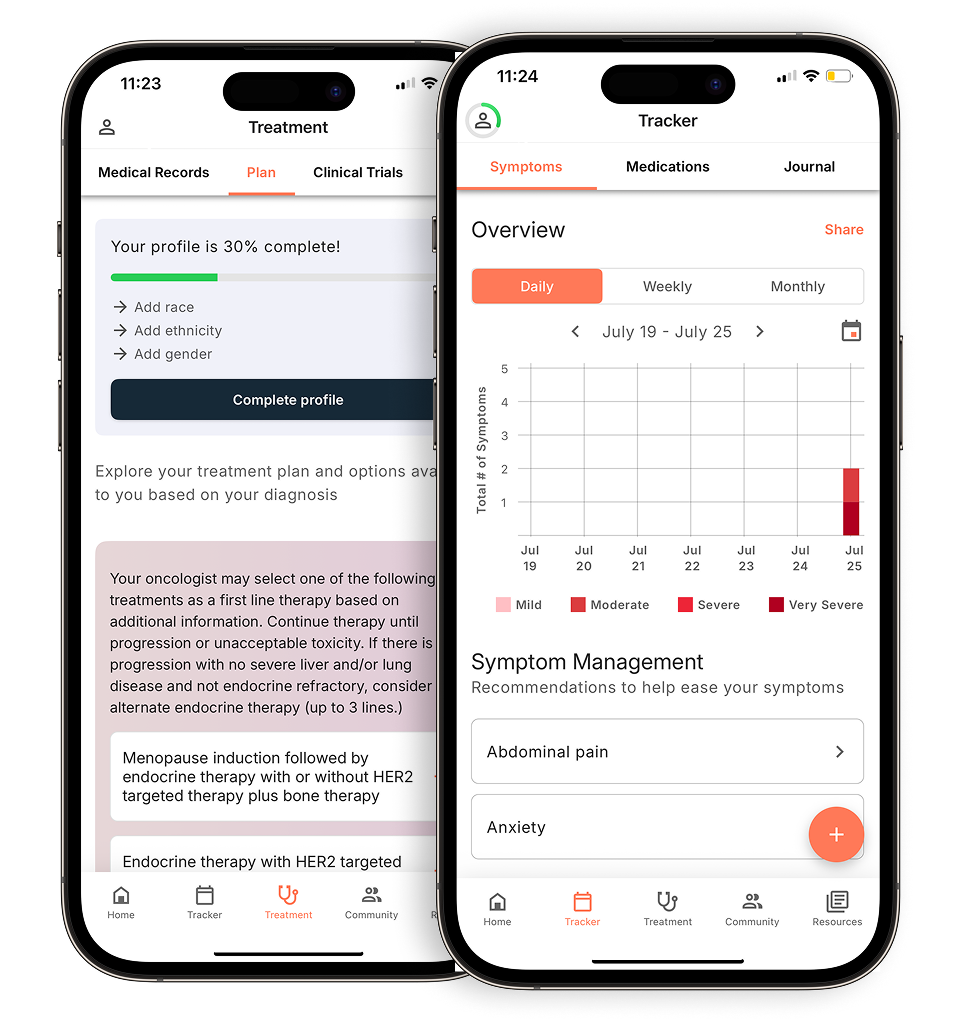
View your personalized treatment plan in the Outcomes4Me app
Use your diagnosis to unlock personalized NCCN Guidelines®-aligned recommendations.
Key Takeaways
- Proactively manage your future: A diagnosis in your 20s or 30s forces you to make big decisions quickly. Prioritize conversations about fertility preservation before treatment starts and understand your workplace rights to maintain control over your life path.
- Build a multi-layered support system: You need more than one type of support to get through this. Lean on your loved ones, find peer groups of other young survivors who truly get it, and seek professional counseling to care for your mental health.
- Be an active partner in your healthcare: Learn about your specific diagnosis and treatment options so you can make informed choices with your medical team. Your role extends beyond treatment into creating a long-term survivorship plan for your future health.
What Does It Mean to Be a “Survivor”?
The word “survivor” can feel complicated. For some, it’s a powerful badge of honor. For others, it doesn’t quite fit, especially if you’re still in the middle of treatment or dealing with long-term side effects. But in the medical world, the definition is broader than you might think. According to the National Cancer Institute, a person is considered a cancer survivor from the moment of diagnosis through the remainder of their life. This definition is inclusive, recognizing that the journey doesn’t just start after the last chemo session. It starts now.
This means you are a survivor today. Whether you just received the news, are actively in treatment, are in remission, or are living with metastatic disease, you are part of this community. Embracing this definition can shift your perspective. It reframes the experience from a single battle to be won into a new way of life to be managed. It acknowledges the strength it takes to get up every day and face appointments, side effects, and emotional hurdles. Survivorship isn’t just about the outcome; it’s about the resilience you show throughout the entire process.
Breast Cancer in Young Women: The Numbers
When you hear “breast cancer,” you probably picture someone older—maybe your mom, aunt, or grandmother. It’s true that age is a major risk factor, but the disease doesn’t discriminate. Breast cancer in young adults is considered rare, but that word can be misleading. More than 250,000 people living in the U.S. today were diagnosed under the age of 40. When you’re in your 20s or 30s, a diagnosis can feel incredibly isolating, like you’re the only one in the world going through this.
Understanding the statistics isn’t about creating fear. It’s about arming yourself with knowledge so you can advocate for your health and connect with a community that understands your specific challenges. The reality is that breast cancer in younger women is often diagnosed at a later stage and tends to be more aggressive. Knowing this highlights why it’s so important to pay attention to your body, insist on answers when something feels wrong, and understand the landscape you’re in. Let’s break down some of the key numbers from the Young Survival Coalition.
Incidence and Survival Rates
Each year, about 13,180 women under 40 are diagnosed with breast cancer. While this number is smaller compared to older age groups, the incidence of new cases in women under 50 is growing by 1.4% annually—a rate faster than in older women. This trend underscores a critical need for more awareness and research focused on this demographic. Because routine mammograms aren’t typically recommended for women under 40, cancers are often found by chance, either through self-exams or after symptoms appear, which can lead to a later-stage diagnosis and more aggressive treatment plans.
Unique Challenges for Young Black Women
It’s impossible to talk about breast cancer in young women without addressing the significant racial disparities. Young Black women face a disproportionately higher risk. Statistics show that Black women between 20 and 29 are diagnosed with breast cancer 1.3 to 1.5 times more often than white women in the same age group. Even more concerning, young Black women aged 20-49 are nearly twice as likely to die from the disease compared to their white counterparts. These stark differences highlight systemic inequities in healthcare and the urgent need for better screening, access to quality care, and culturally competent support for Black patients.
The Link Between Pregnancy and Breast Cancer
For many young women, a breast cancer diagnosis collides with major life events like starting a family. Pregnancy-associated breast cancer (PABC) is the most common type of cancer found during pregnancy or in the first year after giving birth, occurring in about 1 in every 3,000 pregnancies. In fact, nearly 30% of all breast cancers in young women are diagnosed in the few years following childbirth. The hormonal changes and increased breast density during and after pregnancy can make it difficult to detect lumps, sometimes leading to delayed diagnoses. This makes it crucial for both patients and doctors to take any breast changes during this time seriously.
How Is Breast Cancer Different When You’re Young?
Getting a breast cancer diagnosis at any age is life-altering, but when you’re young, it brings a unique set of challenges. You might be in the middle of building a career, thinking about starting a family, or just figuring out who you are. A diagnosis can feel like it puts everything on hold, forcing you to confront issues that feel years away. It’s more than just the medical treatment; it’s about how cancer intersects with the specific milestones and dreams of your 20s and 30s. Understanding these differences is the first step in learning how to handle them.
The Impact of Underrepresentation in Research
It’s a frustrating reality that young adults with breast cancer are often underrepresented in research studies. This means that much of the data guiding treatment decisions comes from trials focused on older, postmenopausal women, whose biology and life circumstances can be vastly different. This research gap is especially concerning because the number of new breast cancer cases in women under 50 is growing faster than in older women. At the same time, there isn’t an effective screening test for women under 40, as denser breast tissue can make mammograms less reliable. This lack of tailored research also deepens existing health disparities. For example, young Black women are not only diagnosed more frequently but are also nearly twice as likely to die from breast cancer compared to young white women. Without inclusive research, we can’t fully understand these differences or develop the targeted strategies needed to improve outcomes for everyone.
What About Fertility and Family Planning?
A breast cancer diagnosis can suddenly bring your family planning timeline into sharp focus. If having children is something you’ve thought about for the future, you might worry about how treatment will affect your fertility. It’s a heavy topic to tackle on top of everything else, but you aren’t alone in this. The good news is that you may have options to preserve fertility before starting treatment, like freezing eggs or embryos. It’s a conversation worth having with your care team early on so you can make informed decisions that feel right for you and your future.
Keeping Your Career and Finances on Track
When you’re diagnosed at a younger age, you’re often at a critical point in your professional life. You might be climbing the ladder, paying off student loans, or just getting established. Juggling treatment schedules, side effects, and job responsibilities can be incredibly stressful. You may worry about taking time off, telling your boss, or the financial strain of medical bills. It’s important to know your rights at work and explore resources that can help you manage the costs of care. This is a huge challenge, but there are ways to make it more manageable.
Redefining Intimacy and Your Body Image
Breast cancer treatment can bring significant physical changes, from scars and hair loss to surgically-induced menopause. These changes can deeply affect your body image and self-esteem, which in turn impacts intimacy and relationships. It’s completely normal to feel disconnected from a body that suddenly feels unfamiliar. Part of the journey is learning to redefine what “normal” means for you. This process takes time and patience, but it’s possible to rebuild your relationship with your body and find new ways to feel confident and connected with your partner.
Feeling Alone? How to Find Your People
It’s easy to feel isolated when you’re the youngest person in the waiting room. Your friends may be focused on dating, careers, and travel, making it hard for them to understand what you’re going through. This can be one of the loneliest parts of a young-onset diagnosis. Finding a support network is crucial. Connecting with other young women who have been there can make a world of difference. These are the people who just get it without you having to explain. Peer support groups can provide a safe space to share your fears, celebrate small wins, and feel less alone.
How to Cope with the Emotional Toll
A breast cancer diagnosis at any age is overwhelming, but when you’re young, it brings a unique set of emotional challenges. You might be juggling a career, relationships, or plans for a family, and suddenly, your world is turned upside down. It’s completely normal to feel a mix of fear, anger, and confusion. The emotional side of this journey is just as important as the physical one, and finding healthy ways to cope is key to your well-being.
Your feelings are valid, and you don’t have to go through this alone. Building a strong support network, seeking out mental health resources, and finding a renewed sense of purpose can help you process your emotions and feel more in control. It’s about giving yourself the same care and attention you give to your physical treatment. Let’s walk through some practical steps you can take to manage the emotional weight of a young breast cancer diagnosis.
Gather Your People: How to Build a Support System
When you’re going through treatment, leaning on your loved ones can make all the difference. This is the time to let your partner, family, and close friends show up for you. A strong support system provides not just practical help, like rides to appointments or meals, but also the emotional strength you need on tough days. For young survivor Jennifer, her husband’s unwavering support was her rock throughout her entire journey. Don’t be afraid to tell people what you need, whether it’s a shoulder to cry on or just someone to watch a movie with. Your true support system will be ready to listen and help in any way they can.
Where to Find Mental Health Resources
While friends and family are essential, sometimes you need to talk to people who truly get what you’re going through. Joining a support group connects you with other young women who are facing similar challenges. As one survivor shared, these women can become like sisters, offering a level of understanding that’s hard to find elsewhere. You can share fears, trade tips for managing side effects, and celebrate small victories together. The Outcomes4Me app can also connect you with a community and resources tailored to your specific diagnosis, giving you a safe space to find information and support.
Setting Goals to Find Your Footing Again
Cancer treatment can feel like it takes over your entire life, leaving little room for anything else. Setting personal goals—big or small—can help you look forward and remember who you are outside of your diagnosis. Maybe it’s planning a trip for after treatment, learning a new skill online, or simply finishing a book you’ve wanted to read. Having something to work toward can restore a sense of purpose and motivation. One survivor found that setting a goal helped keep her focused and positive, reminding her that there was a life waiting for her beyond cancer.
Finding Hope When It’s Hard
Maintaining hope can feel like a monumental task, but it’s often found in the smallest moments. This isn’t about forcing yourself to be positive all the time; it’s about allowing yourself to find joy where you can. For many young survivors, this journey reshapes their perspective, teaching them to be more present with their families and to cherish every day. It’s a powerful reminder that tomorrow isn’t promised for anyone. Try to focus on what you can control and find gratitude in simple things—a sunny day, a good conversation, or a quiet moment to yourself. This mindset can be a powerful anchor through the ups and downs of treatment.
What Are Your Treatment Options?
When you’re diagnosed with breast cancer at a young age, your treatment plan will be as unique as you are. It’s tailored to your specific diagnosis, health, and life goals. Your care team will walk you through every step, but it helps to go into those conversations with a solid understanding of your options. This is your body and your future, and you are the most important member of your treatment team. Let’s walk through some of the key treatment paths you might discuss with your oncologist.
Understanding a Stage 3 Diagnosis
Hearing the words “Stage 3” can be frightening, but let’s break down what it actually means. A Stage 3 diagnosis, often called “locally advanced breast cancer,” means the cancer has spread from the breast to nearby lymph nodes or muscles. The key thing to hold onto here is that it has not spread to distant parts of your body, like your bones, liver, or lungs. Because the cancer is more extensive, your treatment plan will likely be more aggressive and may involve a combination of surgery, chemotherapy, and radiation. It’s a lot to take in, but understanding the specifics of your diagnosis is the first step toward feeling more in control.
While the diagnosis is serious, there is plenty of room for hope. According to the National Breast Cancer Foundation, the 5-year relative survival rate for Stage 3 breast cancer is 87%, and many women live full lives for decades after treatment. It’s also important to acknowledge the unique realities for younger women. Research shows that young adults can face a higher risk of the cancer returning, which is why it’s so critical to have a care team that understands your specific needs. This isn’t meant to scare you, but to empower you to be your own best advocate and seek out the personalized support you deserve.
Your Fertility Options Before Treatment
If having children is part of your future plan, it’s something you’ll want to discuss with your doctor right away—before treatment starts. Some cancer treatments can affect your ability to get pregnant later on. Fortunately, you have options. Many young women choose to preserve their fertility by freezing embryos, eggs, or even ovarian tissue. It can feel overwhelming to make these big life decisions in the middle of a health crisis, but taking this step can provide a sense of control and hope for the family you may want to build one day. Don’t be afraid to ask for a referral to a fertility specialist to explore what’s possible.
What Are Targeted Therapies?
Cancer treatment has become incredibly advanced, moving beyond a one-size-fits-all approach. Targeted therapies are a perfect example. These are drugs designed to attack specific characteristics of cancer cells, like the HER2 protein. For young women with HER2-positive breast cancer, targeted drugs like trastuzumab have dramatically improved outcomes, making them a cornerstone of modern treatment plans. Ask your doctor about the specific subtype of your breast cancer and whether targeted therapies could be an effective part of your regimen. Understanding the “why” behind your treatment can make the journey feel much more manageable.
What Are Your Surgical Options?
Surgery is a common treatment for breast cancer, and as a young woman, you have the same primary choices as older women: breast conservation surgery (also called a lumpectomy) or a mastectomy. A lumpectomy removes the tumor and a small margin of healthy tissue, while a mastectomy removes the entire breast. The best path depends on factors like tumor size, location, and your personal preferences. There’s no single “right” answer, and it’s essential to have an open conversation about the pros and cons of each surgical option with your surgeon to decide what feels best for you and your body.
What to Know About Hormonal Therapy
If your cancer is hormone receptor-positive (meaning it uses hormones like estrogen to grow), your doctor will likely recommend hormonal therapy. This treatment works by blocking or lowering the amount of hormones in your body. For younger, premenopausal women, this can be more complex because your body is still producing high levels of estrogen. The biological behavior of tumors in young women can also be different. It’s crucial to talk with your oncologist about how these therapies work, what side effects to expect (like medically induced menopause), and how you’ll manage them together as a team.
Using Digital Health Tools to See Your Options
A cancer diagnosis comes with a mountain of information—test results, treatment plans, appointment schedules, and endless questions. It’s a lot to process, especially when you’re already feeling overwhelmed. This is where digital health tools can become an essential part of your toolkit. These platforms are designed to help you organize your medical information, track your symptoms, and understand your diagnosis in a clear, accessible way. Instead of a folder overflowing with papers, you have everything in one place. This organization isn’t just about tidiness; it’s about empowerment. When you can easily review your health data and see evidence-based information, you can prepare better questions for your care team and feel more confident in your decisions.
How Platforms Like Outcomes4Me Personalize Guidance
Think of an app like Outcomes4Me as your personal health organizer and guide. When you securely enter your specific diagnosis and medical history, the platform uses that information to provide personalized guidance that aligns with established clinical guidelines from the NCCN. It translates complex medical information into clear, actionable insights about your potential treatment options, relevant clinical trials, and even genetic testing possibilities. This doesn’t replace the advice of your oncologist, but it equips you to have more informed conversations with them. It helps you become an active partner in your own care, ensuring you understand the “why” behind your treatment plan and can make choices that feel right for your body and your future.
Why Is Early Detection So Important?
When you’re young, it’s easy to feel invincible. The idea of a serious health diagnosis can feel distant and unreal. But when it comes to breast cancer, being proactive is your greatest strength. Early detection is critical because it often means the cancer is smaller and hasn’t spread, which can lead to more treatment options and a better prognosis. It’s about catching a potential problem at its most manageable stage.
For young women, this is especially important. We often have to push harder to be heard in medical settings and advocate for our own health concerns. Understanding the signs, knowing your body, and speaking up when something feels off are powerful actions you can take. It’s not about being fearful; it’s about being informed and empowered. By prioritizing early detection, you are taking control of your health journey from the very beginning, giving yourself the best possible chance to face whatever comes next with confidence and a clear plan.
Screening Challenges: Why Mammograms Aren’t Always Enough
You might wonder why mammograms aren’t a routine part of check-ups for women under 40. The simple reason is that younger women often have dense breast tissue, which can make mammograms less effective. On a scan, both dense tissue and potential tumors can show up as white spots, making it difficult to distinguish between what’s normal and what needs a closer look. This screening limitation is a major reason why breast cancer in young women, while rare, is often diagnosed at a later stage when it may be more aggressive. This makes it incredibly important to be aware of your body and family history. Knowing what’s normal for you and speaking up about any changes is your most powerful tool for early detection.
You’re Not “Too Young” for Breast Cancer
One of the biggest myths about breast cancer is that it’s a disease that only affects older women. The reality is, it can and does happen to people in their 20s and 30s. In fact, breast cancer in young women can sometimes be more aggressive than in older patients. This makes it even more crucial to pay attention to your body and take any changes seriously. Dismissing a lump or unusual pain because you think you’re “too young” can delay a diagnosis. Remember that you know your body best, and age is just a number. If something doesn’t feel right, it’s worth investigating, no matter how old you are.
Listen to Your Body: What to Look For
You don’t need to be a medical expert to be an expert on your own body. One of the most effective tools for early detection is simply being familiar with how your breasts normally look and feel. This practice, sometimes called breast self-awareness, helps you notice any changes as soon as they appear. Pay attention to new lumps, pain, swelling, or changes in size or shape. The benefits of breast self-examinations are well-documented, as they empower you to spot potential issues early. Make it a regular habit to check in with your body, perhaps in the shower or while getting dressed. This simple routine can make a life-saving difference.
Symptoms of Locally Advanced (Stage 3) Cancer
When breast cancer becomes more advanced, the signs can become more obvious. Stage 3, also called locally advanced breast cancer, means the cancer has moved into nearby tissues like lymph nodes or chest muscles but hasn’t spread to distant parts of the body. You might notice significant changes to your breast’s appearance, such as redness, swelling, or skin that looks dimpled or feels like an orange peel. Other signs can include a nipple that turns inward, peeling or flaky skin on the nipple or breast, or even an open sore that doesn’t heal. It’s also important to pay attention to any new lumps in your breast or under your arm, persistent pain, or any unusual nipple discharge. Seeing any of these changes is your cue to talk to a doctor right away.
When Should You Talk to a Doctor?
If you notice a change in your breasts, the next step is to talk to a doctor. It can be intimidating to bring up your concerns, but you are your own best advocate. Don’t let fear or the possibility of being dismissed stop you from seeking medical advice. Early detection measures like clinical breast exams and mammograms are highly effective at identifying breast cancer at its earliest stages, but the process starts with you speaking up. Write down your symptoms, when you first noticed them, and any questions you have before your appointment. Being prepared can help you communicate clearly and ensure you get the answers you need.
How to Advocate for a Biopsy
Sometimes, even after you’ve spoken up, you might hit a roadblock. A doctor might suggest a “watch and wait” approach, especially if you’re young. While this can be a valid strategy, it can also be incredibly stressful if your intuition is telling you something is wrong. This is where you step into your role as your own best health advocate. It’s okay to insist on further testing. You have the right to ask for a biopsy to get a definitive answer and, just as importantly, peace of mind. Trusting your gut is not just an expression; it’s a crucial part of managing your health.
If you’re not being heard, be persistent and clear. You can say, “I understand your perspective, but I would feel more comfortable moving forward with a biopsy.” If you still face resistance, seeking a second opinion is a standard and wise step in any medical journey. Bring a friend or family member to your appointments for support and to help you remember key details. Remember, being an active partner in your healthcare means doing your research, asking direct questions, and continuing to push until you feel confident in your care plan. Your voice matters more than anyone else’s in that room.
Should You Consider Genetic Testing?
Your family’s health history can offer important clues about your own risk for breast cancer. Young women diagnosed with breast cancer have a higher likelihood of carrying genetic mutations, like BRCA1 and BRCA2, which can be passed down through families. Understanding your genetic risk can significantly influence the treatment of breast cancer in young adults and help you and your doctor create a personalized risk management plan. Talk to your relatives about their health history, and discuss genetic testing with your doctor. This information is a powerful tool that can help you make informed decisions about screening, prevention, and treatment.
Where to Find Your Community
Feeling alone after a diagnosis is common, but you don’t have to go through this by yourself. Connecting with others who understand the unique challenges of being a young person with breast cancer can make a world of difference. Finding your community—whether it’s through a formal organization, an online group, or a therapist—is a powerful way to feel seen, heard, and supported. These connections provide a space to share experiences, ask questions, and remind you that you have a network of people who truly get it.
Find Your Tribe: Organizations for Young Breast Cancer Survivors
Several incredible organizations focus specifically on the needs of young adults with breast cancer. The Young Survival Coalition (YSC) is a fantastic resource for women diagnosed at 40 or under. They offer programs designed to connect you with peers who share similar life experiences, from virtual hangouts to one-on-one peer matching. These groups are dedicated to making sure you have access to a supportive community that understands the specific medical, emotional, and life-stage challenges you’re facing. Finding an organization like this can be a crucial first step in building your support network.
Educational Resources and Events from YSC
YSC is a powerhouse of information tailored to your unique experience as a young woman with breast cancer. They provide practical guides that cover everything from handling a new diagnosis to understanding treatment options and living with metastatic breast cancer. Beyond written materials, YSC hosts events like the YSC Summit and Wellness Summit, which are incredible opportunities to learn from experts and connect with a community that understands. These gatherings are designed to foster a sense of belonging and support. You can also find peer support through their online video chats and private Facebook groups, creating a safe space to share your story and find comfort. You can explore all of these resources on their website.
Connecting Online with Peer Support Groups
If in-person meetings aren’t your thing or aren’t available nearby, online communities offer a lifeline. Many organizations, including the Young Survival Coalition, host private forums and social media groups where you can connect with others from the comfort of your home. These digital spaces allow you to find support online at any time of day. You can share your story, ask for advice on managing side effects, or simply vent to people who understand what you’re going through. Peer support is invaluable because it comes from a place of shared experience, offering validation and practical tips you might not find elsewhere.
How Professional Counseling Can Help
While peer support is essential, so is looking after your mental health with professional guidance. The emotional weight of a cancer diagnosis is heavy, and a therapist can provide you with tools to process your feelings in a healthy way. Organizations like Living Beyond Breast Cancer (LBBC) are committed to helping young women find mental health resources tailored to their journey. They understand that your emotional well-being is just as important as your physical health. Seeking counseling isn’t a sign of weakness; it’s a proactive step toward caring for your whole self during and after treatment.
Support for Your Caregivers, Family, and Friends
A breast cancer diagnosis doesn’t just affect you; it sends ripples through the lives of your partner, family, and friends. These incredible people, often called “co-survivors,” are on this journey with you, and their emotional well-being matters, too. It’s easy for them to put their own feelings aside while focusing on your care, but they also need an outlet. Organizations like CancerCare offer free support groups for caregivers, giving them a safe space to connect. Encouraging your loved ones to find their own support is one of the best ways to keep your entire support system strong.
Your loved ones want to help, but they often don’t know how. The vague offer of “let me know what you need” can feel overwhelming when you’re already exhausted. You can guide them by being specific about your needs, whether it’s asking for a ride to an appointment, help with groceries, or just a quiet night watching a movie. This kind of open communication helps everyone feel more connected and less helpless. Your support system will appreciate knowing exactly how they can be there for you, turning their desire to help into meaningful action.
Tools to Help You Advocate for Yourself
The healthcare system can feel like a maze, especially when you’re already dealing with so much. This is where patient navigators and advocacy tools become so important. They help you understand your diagnosis, treatment options, and rights as a patient. The Breast Cancer in Young Women Foundation (BCYWF) focuses on raising awareness and providing resources to help you become your own best advocate. Learning how to effectively communicate with your medical team and make informed decisions about your care is empowering. These tools ensure you have the information and confidence you need to guide your own health journey.
What Does Life After Treatment Look Like?
Ringing the bell or finishing your last infusion is a monumental moment. But what comes next? Life after treatment is a new chapter, one that doesn’t come with a manual. It’s a time of healing, rediscovery, and figuring out your “new normal.” For many young survivors, this phase is about more than just physical recovery; it’s about rebuilding your life on your own terms. You might find yourself creating a long-term health plan, reconnecting with loved ones in new ways, and even rethinking what you want out of your career and life.
This period, often called survivorship, looks different for everyone. It can be filled with a mix of relief, anxiety, and excitement. You’ve been through something that has fundamentally changed you, and it’s completely okay to take your time processing it all. The journey forward involves creating a plan for your health, nurturing your relationships, re-evaluating your goals, and for some, finding a new sense of purpose. It’s about giving yourself the space and grace to define what a full and meaningful life looks like for you now.
What’s Next? Your Long-Term Health Plan
Once active treatment ends, your care doesn’t just stop. Instead, it shifts to long-term wellness and monitoring. This is where a survivorship care plan comes in. Think of it as a personalized roadmap for your health moving forward, created by you and your oncology team. This plan should outline your follow-up schedule, including necessary scans or blood tests, and provide a summary of the treatments you received.
A comprehensive plan addresses both your physical and emotional health. It can help you manage any long-term side effects, like fatigue or neuropathy, and provides guidance on healthy living, such as diet and exercise. Creating long-term survivorship plans is a critical step in ensuring you have the resources and information you need to stay healthy for years to come. Don’t hesitate to ask your doctor to help you develop one.
Finding Your Way Back to Intimacy
Cancer impacts every relationship in your life, especially the most intimate ones. After treatment, you may be dealing with physical changes, body image concerns, and emotional scars that can make reconnecting with a partner feel challenging. It’s important to be patient with yourself and your loved ones. Open communication is your best tool here. Talking about your fears, insecurities, and needs can help bridge any distance that may have formed.
Many survivors, like Trisha, a young mom with breast cancer, find that their experience gives them a new appreciation for being present with family. Cherishing small moments can strengthen your bonds more than ever before. Whether it’s with a partner, family, or friends, focus on rebuilding connections at a pace that feels right for you.
Rethinking Your Career and Life Goals
Going through cancer can completely shift your perspective. The career path you were on or the life goals you once had might not feel right anymore. It’s common for survivors to reassess what truly matters to them. You might find yourself wanting a job with more meaning, a better work-life balance, or a completely new direction. This is a normal and valid part of the survivorship journey.
Give yourself permission to explore what you want your life to look like now. This could mean returning to your old job with new boundaries, going back to school, or starting a passion project. There’s no right or wrong answer. The goal is to build a life that feels authentic and fulfilling to the person you are today.
Sharing Your Story: Finding Purpose in Advocacy
For many survivors, turning a difficult personal experience into a way to help others becomes a powerful part of healing. Your story is unique, and sharing it can provide hope and guidance to those who are newly diagnosed. Advocacy can take many forms, from volunteering with a breast cancer organization to participating in awareness walks or sharing your experience online. You might find purpose in mentoring another young patient or speaking up about the need for more research.
Becoming an advocate allows you to make a tangible difference in the lives of others. It’s a way to ensure your experience contributes to a greater good, helping to improve treatment and support for young adults with breast cancer. If it feels right for you, using your voice can be an incredibly rewarding way to shape your life after cancer.
Related Articles
- Breast cancer and infertility risk | Outcomes4me
- Young Woman’s Journey with Breast Cancer | Outcomes4Me Community
- Four strategies for potentially protecting fertility in women facing cancer – Outcomes4Me
- Resources for Fertility Issues During Breast Cancer | Outcomes4Me Community
- Coping with Early-Stage Breast Cancer as a Young Mother | Outcomes4Me Community
View your personalized treatment plan in the Outcomes4Me app
Use your diagnosis to unlock personalized NCCN Guidelines®-aligned recommendations.
Frequently Asked Questions
I want to have kids someday. When and how should I talk to my doctor about fertility? You should bring this up with your oncology team as soon as possible, ideally before you begin any treatment. Time can be a factor, so it’s best to make it one of the very first conversations you have. Be direct and clear: “Preserving my fertility is a priority for me. Can we discuss my options and can you refer me to a reproductive endocrinologist?” This puts the topic on the table immediately and starts the process of getting you connected with a specialist who can walk you through options like egg or embryo freezing.
What if I find a lump but I’m worried my doctor will dismiss me because of my age? This is a valid concern, and it’s why being your own best advocate is so important. When you go to your appointment, be prepared and firm. Clearly state your symptoms, when you first noticed them, and that you are concerned about breast cancer. You can say something like, “I know I’m young, but I also know that breast cancer can happen at any age, and I want to be thorough.” If you feel you aren’t being heard or taken seriously, do not hesitate to get a second opinion. Your peace of mind and your health are worth it.
My friends and family want to help, but they don’t know how. What’s the best way to tell them what I need? People often want to help but are afraid of saying or doing the wrong thing. The best way to guide them is by being specific. Instead of saying “I need help,” try giving them concrete tasks. You could say, “Could you pick up my groceries on Tuesday?” or “I’d love some company during my chemo session next week, would you be free to just sit with me?” Creating a shared calendar for appointments or a group chat for updates can also streamline communication and let people sign up for tasks, taking the pressure off you to ask each time.
How do I start to feel comfortable in my own body again after treatment? Reconnecting with your body is a process that requires patience and a lot of self-compassion. Start small. It might begin with finding one piece of clothing that makes you feel good or taking time to appreciate what your body has endured and overcome. It’s also about redefining your relationship with intimacy on your own terms. Openly communicating with a partner about what feels good and what doesn’t can be incredibly helpful. Remember, your body has carried you through something immense, and learning to love it again is a journey, not a race.
How can I manage my job and treatment at the same time without getting overwhelmed? Juggling work and treatment is a huge challenge. First, look into your rights and your company’s policies. You may be protected under laws like the Family and Medical Leave Act (FMLA). Consider talking to your HR department to understand your options for flexible hours, remote work, or medical leave. It’s also important to be realistic with yourself and your manager about what you can handle. You don’t have to share all the details of your diagnosis, but being clear about your limitations can help set expectations and prevent burnout.