
Platinum-resistant ovarian cancer remains one of the greatest challenges in ovarian cancer care. When ovarian cancer returns or progresses within six months of platinum-based chemotherapy, treatment options become more limited, and the disease is often harder to control.
At the 2026 American Society of Clinical Oncology (ASCO) Annual Meeting, researchers presented new data from the phase III ROSELLA trial, which looked at relacorilant (Lifyorli) combined with the chemotherapy drug nab-paclitaxel (Abraxane). The results showed that the combination continued to provide a meaningful survival benefit compared with chemotherapy alone, reinforcing findings that led to the treatment’s FDA approval in March 2026.
What is relacorilant?
Relacorilant is an oral medication designed to block a pathway that may help cancer cells survive chemotherapy and develop treatment resistance. Researchers believe that blocking this pathway may make chemotherapy more effective against ovarian cancer cells.
The ROSELLA trial tested whether adding relacorilant to nab-paclitaxel could improve outcomes for patients whose cancer had become resistant to platinum-based treatment.
Evidence-based guidance powered by NCCN Guidelines®
Personalized treatment plans shaped by the latest oncology standards—tailored to your diagnosis.
Get started
View your personalized treatment plan in the Outcomes4Me app
Use your diagnosis to unlock personalized NCCN Guidelines®-aligned recommendations.
Continue in app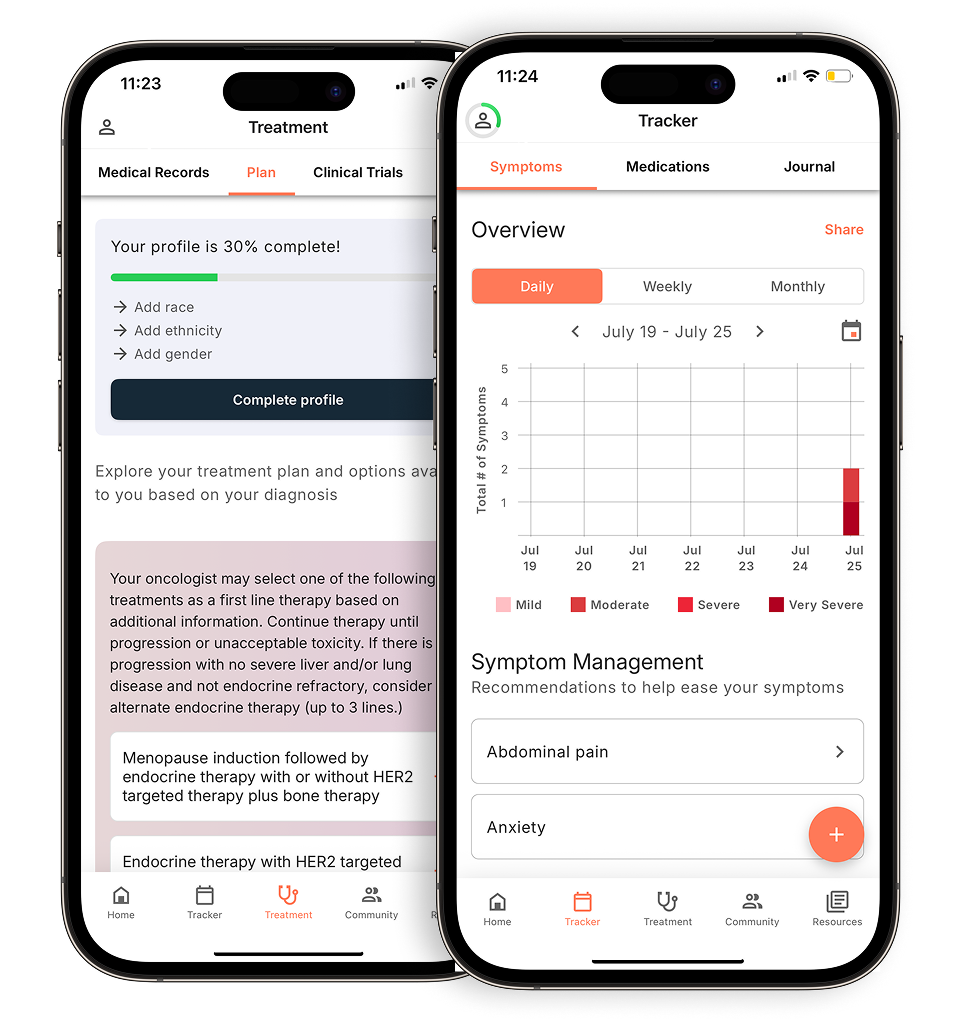
How was the ROSELLA trial designed?
The study enrolled 381 patients with platinum-resistant ovarian, fallopian tube, or primary peritoneal cancer. All participants had previously received bevacizumab (Avastin) and one to three prior treatment regimens.
Patients were randomly assigned to receive either:
- Relacorilant plus nab-paclitaxel
- Nab-paclitaxel alone
Researchers tracked several outcomes, including overall survival, progression-free survival, tumor response, and safety.
What did the study find?
The final analysis showed a clear survival advantage for patients who received the combination treatment.
Patients treated with the combination treatment lived longer compared to those receiving only chemotherapy. This translated to a 35% reduction in the risk of death.
The combination treatment also helped slow down cancer growth. Patients lived about 6.5 months without their cancer getting worse compared with 5.5 months for those who received chemotherapy alone. While this difference may seem small, even modest gains are very meaningful in platinum-resistant ovarian cancer, where it has historically been difficult to find treatments that both slow the disease and help patients live longer.
Why are the new subgroup findings important?
Researchers wanted to understand whether prior treatment with taxane chemotherapy (such as paclitaxel) affected how well this new combination worked. Almost all patients in the ROSELLA trial had already received a taxane before, but some had more recent exposure, while others had not been treated with one for a longer time.
The combination appeared to help patients even if they had already been treated with this common type of chemotherapy before. This is important because many people with recurrent ovarian cancer have previously received taxanes, and these results suggest that relacorilant may safely benefit a wide range of patients.
What about side effects?
The safety profile remained consistent with earlier reports, and researchers didn’t identify any new safety concerns.
The most common side effects included low white blood cell counts, anemia, fatigue, nausea, and diarrhea. Rates of nerve damage (peripheral neuropathy), a common concern with taxane chemotherapy, were similar between treatment groups.
As with any cancer treatment, patients should discuss the potential benefits and risks with their healthcare team.
What do these results mean for patients?
The ROSELLA trial represents one of the most important advances in platinum-resistant ovarian cancer in recent years. Not only did the combination of relacorilant and nab-paclitaxel help patients live longer, but the benefit was seen across multiple patient groups.
For patients facing platinum-resistant disease, these findings offer evidence that a newly approved treatment can provide a meaningful survival advantage. While ovarian cancer researchers continue to search for even more effective therapies, the ROSELLA results mark an encouraging step forward and provide a new FDA-approved option for patients and their care teams to consider.
Want a summary of ASCO 2026 ovarian cancer highlights? Here’s an overview of key takeaways from this year’s event.
Personalized support for real care decisions
Understand your diagnosis, explore clinical trials, and track symptoms--all in one place.
Get started
Compare treatments, prepare for appointments, and track side effects—all in the app
Built for your diagnosis, Outcomes4Me gives you the tools to make confident, informed decisions—right when you need them.
Continue in app