
At the 2026 ASCO Annual Meeting, early-stage studies explored new approaches to immunotherapy in ovarian cancer, including combinations designed to help the immune system better recognize and attack cancer cells.
To help explain what these findings could mean for patients, we spoke with Dr. Kari Hacker, gynecologic oncologist and Associate Professor of Medicine at the UNC Lineberger Comprehensive Cancer Center, about the current state of immunotherapy research and where the field may be headed.
Why has immunotherapy been challenging in ovarian cancer?
When most people think about immunotherapy, they may think of treatments that help the immune system fight cancer. One of the most common types of immunotherapy used today is checkpoint inhibition, which works by helping immune cells recognize and attack cancer.
Dr. Hacker explains, “Pembrolizumab is probably the one that’s been studied the most in different cancer types and it has been looked at in ovarian cancer.”
The response rate was only about 8%, and the progression-free survival was only about 2 months, “so not better than traditional chemotherapy in these patients,” Dr. Hacker shares.
Evidence-based guidance powered by NCCN Guidelines®
Personalized treatment plans shaped by the latest oncology standards—tailored to your diagnosis.
Get started
View your personalized treatment plan in the Outcomes4Me app
Use your diagnosis to unlock personalized NCCN Guidelines®-aligned recommendations.
Continue in app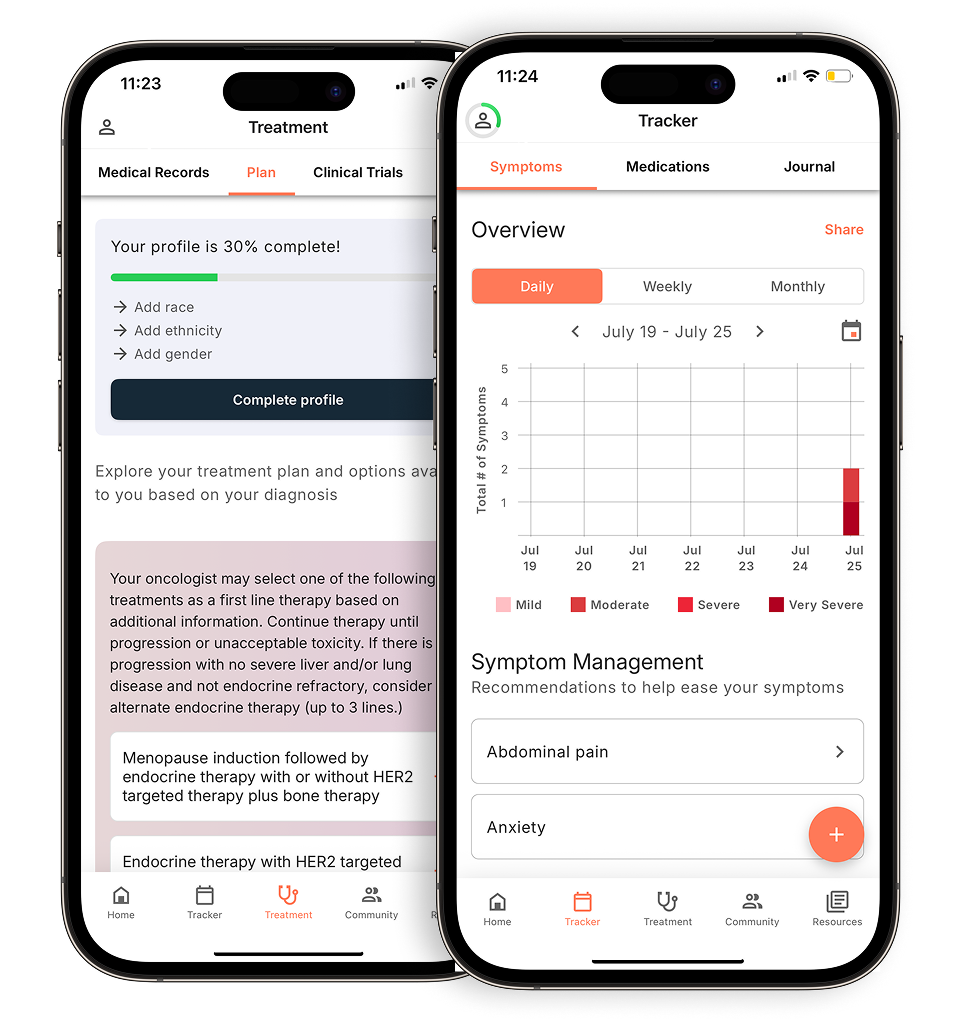
Researchers have found that some patients may be more likely to benefit from checkpoint inhibitors. This includes people with certain biomarkers, such as Lynch syndrome-associated ovarian cancer, mismatch repair-deficient (dMMR) ovarian cancer, or MSI-high/tumor mutational burden-high ovarian cancer.
However, these groups represent a smaller subset of ovarian cancer patients, and they are less likely to include people with high-grade serous ovarian cancer, the most common type of ovarian cancer.
Exploring new combinations to improve immunotherapy
Since checkpoint inhibitors alone have had limited success in ovarian cancer, researchers are now exploring whether combining immunotherapy with other treatments could improve outcomes.
“The question is, are we targeting the wrong checkpoints?” Dr. Hacker says. “Are we needing to combine it with some sort of other tumor-modifying agent, like chemotherapy or small molecule inhibitors, or other immune-modulating agents?”
At ASCO 2026, two studies explored combinations that paired pembrolizumab with other immune-modulating therapies.
Targeting the tumor environment
One study looked at a treatment approach targeting TNF-alpha, an immune-signaling pathway involved in the tumor environment.
The goal of this approach is to reduce immune-suppressive cells that can prevent the immune system from attacking cancer while increasing the activity of cancer-fighting T cells.
Dr. Hacker explains that the study showed some encouraging early results.
“They did see that they had responses in patients with that combination, so about 24% of patients responded, 60% of patients had either stable disease or decreased disease, and the progression-free survival was 10 months.” However, she emphasizes that more research is needed and researchers are “still looking at the translational endpoints.”
A new targeting approach
Another phase II study presented at ASCO evaluated gotistobart (a novel antibody targeting CTLA-4) in combination with pembrolizumab.
Dr. Hacker explains, “The experimental agent here is a novel antibody against a different checkpoint called CTLA-4, and it helps by specifically depleting some of the suppressive T cells seen in the tumor.”
The study included 83 patients and looked at two different doses of the medication. Interestingly, the lower dose appeared to provide better overall survival outcomes than the higher dose.
“The overall survival in this cohort which received the lower dose was almost 19 months, which is great for our patients,” Dr. Hacker says.
She also noted an interesting finding: although overall survival appeared promising, progression-free survival remained short. “Progression-free survival was only 2 months, so it kind of makes you think it’s changing future response to treatment, potentially,” Dr. Hacker notes.
While researchers are still learning what this means, Dr. Hacker believes the results are encouraging. “I think it’s exciting, and we can kind of see where it goes from here. And it was pretty well tolerated, so patients did okay on it.”
What’s next for ovarian cancer immunotherapy?
While immunotherapy has not yet become a standard treatment approach for most ovarian cancer patients, researchers are continuing to investigate ways to make these treatments more effective.
The future may involve finding the right combination of therapies, identifying which patients are most likely to benefit, and better understanding how the ovarian cancer tumor environment affects the immune response.
As Dr. Hacker emphasized, these studies are still early, but they represent important steps toward improving treatment options for people with ovarian cancer.
Tune into our full webinar discussion where Dr. Hacker shares additional insights on the latest ovarian cancer findings.
Personalized support for real care decisions
Understand your diagnosis, explore clinical trials, and track symptoms--all in one place.
Get started
Compare treatments, prepare for appointments, and track side effects—all in the app
Built for your diagnosis, Outcomes4Me gives you the tools to make confident, informed decisions—right when you need them.
Continue in app