
A chemotherapy delay due to low blood counts is one of the most frustrating moments in cancer treatment. You’ve prepared, you’ve shown up, and then you’re told to go home and wait. That pause protects you while your care team works to keep you safe.
Here’s what’s happening biologically. Chemotherapy targets all rapidly dividing cells, including the healthy cells in your bone marrow that continuously produce white blood cells, red blood cells, and platelets. When treatment suppresses that production, your counts fall below the threshold needed to safely continue.
Bone marrow suppression, also called hematologic toxicity, is the medical term for this drop. It’s a predictable biological response to how chemotherapy works, and it doesn’t mean treatment isn’t working.
And the safety stakes are real. Proceeding without addressing a chemotherapy delay due to low blood counts is a clinical boundary your care team won’t cross. Low white blood cell counts mean your immune system can’t fight infection effectively. Low platelets increase the risk of uncontrolled bleeding. Either scenario can become life-threatening quickly, which is why your care team won’t move forward until your numbers recover.
The encouraging news? A delay is often a sign that your body is responding exactly as expected. Understanding what that means for your treatment effectiveness is worth exploring next.
Does a delay mean my treatment won’t work?
A short chemotherapy delay due to neutropenia is rarely the setback it feels like. Most clinical protocols are designed with built-in flexibility precisely for this reason.
A delay of 7 to 14 days is a standard safety protocol and typically does not impact long-term outcomes. Chemotherapy is given in cycles with rest periods between doses to allow normal cells to recover, and treatment plans may need to be adjusted if side effects occur, though your cancer care team will work to keep you on schedule when possible to give you the best chance of maximum benefit from treatment. A brief pause doesn’t undo the work already done.
There’s also a biological reason your care team builds recovery time into the plan. After each chemotherapy cycle, your bone marrow hits what’s known as the nadir, the lowest point of blood cell production, before it begins to rebound. Trying to push the next round of treatment before that rebound happens doesn’t speed things up; it can actually compromise how well your body tolerates and responds to the drugs.
A body that has had time to recover is better equipped to handle the next cycle than one that’s still depleted. Rushing the process can increase the risk of serious complications, potentially causing longer interruptions down the road.
Evidence-based guidance powered by NCCN Guidelines®
Personalized treatment plans shaped by the latest oncology standards—tailored to your diagnosis.
Get started
View your personalized treatment plan in the Outcomes4Me app
Use your diagnosis to unlock personalized NCCN Guidelines®-aligned recommendations.
Continue in app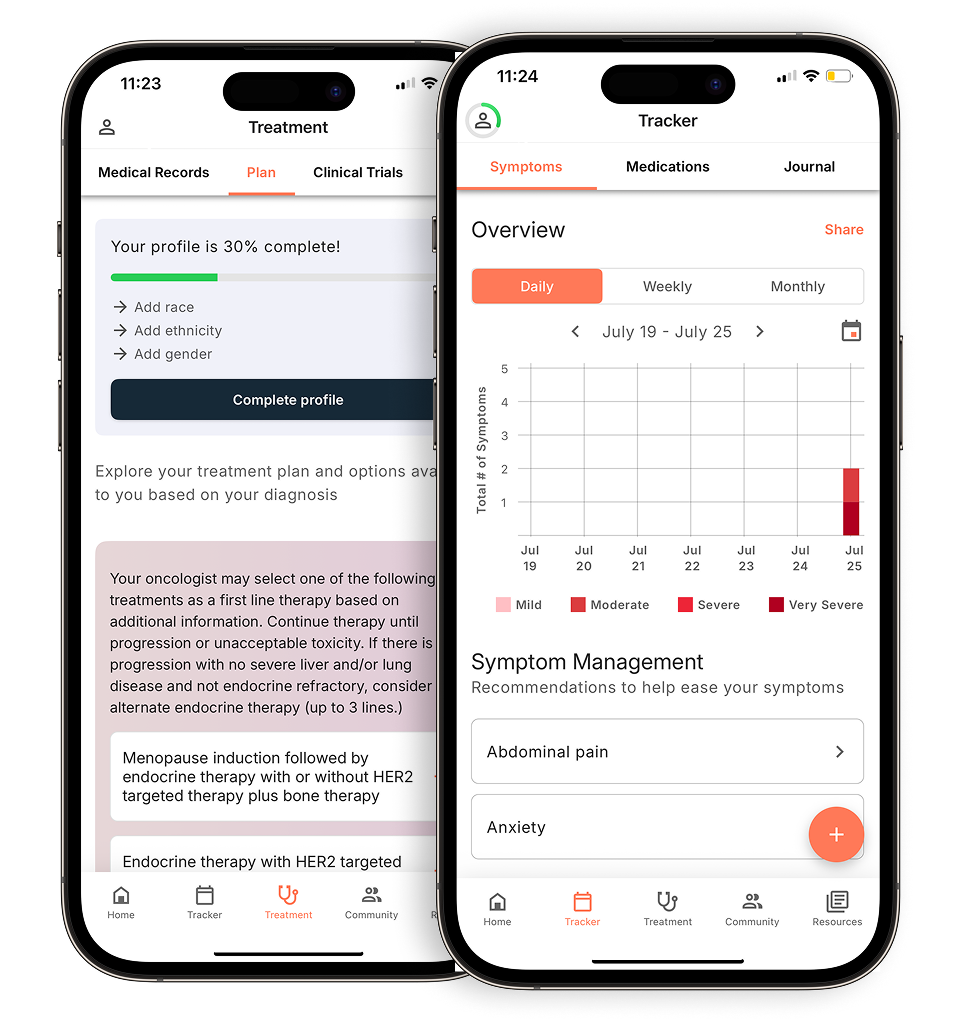
Your care team isn’t pausing because the plan isn’t working. They’re protecting the conditions that give your personalized care plan the best chance of success. To understand exactly what your blood work needs to show before treatment can resume, the next section breaks down the specific numbers your oncologist is watching most closely.
Understanding the numbers: ANC, anemia, and platelets
Your care team isn’t pausing treatment arbitrarily. They’re responding to specific signals in your bloodwork that show whether your body can safely handle the next cycle. Understanding what those numbers actually mean puts you in a much stronger position to have informed conversations with your oncologist and to feel less blindsided if a delay happens.
Chemotherapy works by targeting rapidly dividing cells, but it can’t distinguish between cancer cells and the healthy cells in your bone marrow that produce your blood supply. That’s why three blood components are monitored so closely throughout treatment.
| Cell type | Role | Low count term |
|---|---|---|
| White blood cells (neutrophils) | Fight bacterial and fungal infections | Neutropenia |
| Red blood cells | Carry oxygen to organs and tissues | Anemia |
| Platelets | Control bleeding and support clotting | Thrombocytopenia |
Neutropenia is the most common reason chemo gets delayed. Neutrophils are your frontline defense against infection, and when counts drop too low, even a minor infection can become life-threatening. Anemia develops when red blood cell production slows, leaving tissues starved of oxygen, which explains the crushing fatigue many patients describe mid-cycle. Thrombocytopenia reduces your blood’s ability to clot, raising the risk of bruising, bleeding gums, or more serious internal bleeding.
The number your care team watches most closely is your Absolute Neutrophil Count (ANC). An ANC of about 1,500 cells/mm³ is recognized as a standard lower limit for normal neutrophil levels in adults, though some standards use 1,800 cells/mm³ instead. If your neutrophil count falls below this threshold during chemotherapy, your oncologist may delay your next treatment to allow your blood counts to recover.
The complete blood count (CBC) report captures white blood cells, red blood cells, and platelets values at once. Knowing what to look for on that report and what the thresholds mean helps you participate actively in your care and supports better outcomes. The next section covers what actually happens during a delay period, including how your care team works to bring those numbers back up.
What happens during the delay period?
A treatment pause is an active monitoring phase designed to protect you and preserve the impact of your treatment over the long run.
Cancer care guidance for every step of your journey
Get treatment options, clinical trials, and support tailored to your diagnosis--all in one place.
Get started
See treatment options, manage symptoms, and stay informed—all in the app
View treatment options and trials personalized to your diagnosis—plus track progress in real time.
Continue in appFrequent blood draws are the backbone of this period. Your care team will track your complete blood count (CBC) every few days to watch for upward trends in your absolute neutrophil count (ANC), hemoglobin, and platelets. These numbers tell them precisely when your bone marrow has recovered enough to safely resume treatment, removing any guesswork from the decision.
When recovery needs a nudge, growth factor injections, such as Neulasta or Neupogen, are a common and well-supported intervention. Doctors may prescribe growth factors or adjust the chemotherapy dosage for the next cycle to prevent further hematologic toxicity. These injections signal your bone marrow to ramp up white blood cell production, often shortening the delay significantly.
Dose adjustments are another tool your care team may consider. Rather than repeating the same regimen and risking a recurring delay, they might recalibrate the next cycle’s dosage to a level your body can handle more consistently. This is a personalized care plan in action.
Throughout all of it, staying organized matters. Keeping a clear record of your recovery trends gives both you and your care team a sharper picture of how your body is responding. That kind of active participation supports your recovery.
5 ways to support your recovery at home
While your care team manages the clinical side of bone marrow suppression, what you do at home during a treatment pause has a real impact on how quickly your counts rebound.
Nutrition: Prioritize high-protein foods like eggs, lean poultry, legumes, and dairy. Getting enough protein during cancer treatment is important for maintaining your body’s nutritional needs and staying as strong as possible. Low counts make infection a serious risk, so follow a neutropenic diet by avoiding raw or undercooked foods until your numbers recover.
Infection prevention: Wash your hands frequently and thoroughly. Avoid large crowds, anyone who’s recently been sick, and enclosed public spaces where possible. Your immune system has limited reserves right now, and even a mild exposure can escalate quickly.
Hydration: Fluids support kidney function, help flush treatment byproducts, and maintain blood volume. Aim for consistent water intake throughout the day, not just when you feel thirsty.
Fever monitoring: Know your threshold. A temperature of 100.4°F or higher can signal neutropenic fever, which requires immediate medical attention. Neutropenic fever is a medical emergency, so don’t wait to see if it resolves on its own.
Rest: Anemia-related fatigue is physical, not psychological. If your red cell counts are low, your body is genuinely working harder to deliver oxygen. Listen to that signal. Rest is productive recovery, not inactivity.
These practical steps, taken together, help you understand the bigger picture of what a delay means and doesn’t mean for your overall treatment plan.
The bottom line: what you need to know
A chemo delay shows that your care team is paying close attention. Hematologic toxicity, meaning the suppression of blood cell production caused by chemotherapy, is one of the most common and well-understood side effects oncologists manage. When your counts drop too low to proceed safely, pausing is the medically sound choice.
Here’s what the evidence consistently shows:
- Delays are expected, not exceptional. A pause of one to two weeks is common and, in most cases, does not significantly compromise overall treatment efficacy.
- Management tools are well-established. Growth factor injections, dose adjustments, and supportive medications are standard parts of a personalized care plan, not last resorts.
- Your data matters. Tracking your blood counts, symptoms, and treatment timeline gives you the information you need to have informed conversations with your care team.
Outcomes4Me is committed to empowering patients through knowledge and evidence-based resources to help you make informed decisions about your care. Being informed about your treatment can help you move through each phase with greater confidence.
Understanding the why behind a delay builds a strong foundation. Knowing how to act on that understanding by asking the right questions and using the right tools turns awareness into better care. That’s exactly where your personalized care plan comes in.
Taking control of your personalized care plan
The most empowered patients are the ones who come to every appointment with specific questions.
Start with your numbers. Ask your care team directly: “What was my specific ANC today, and what does that mean for my next scheduled dose?” That single question shifts the conversation from vague reassurance to concrete data you can track over time. And if your counts have been consistently low, ask: “Are there clinical trials focused on managing hematologic side effects like mine?” Research into supportive care is ongoing, and you may have options you haven’t been told about yet.
Take an active role in understanding where your treatment is headed, because staying informed is one of the most powerful things you can do right now.
Disclaimer: The information provided in this article is for informational purposes only and is not intended to be a substitute for professional medical advice, diagnosis, or treatment. Outcomes4Me is not acting as your caregiver, and any suggestions or guidance offered should not replace the advice of your healthcare provider or qualified medical professional. Always seek the guidance of your physician or other qualified health provider with any questions you may have regarding a medical condition.
Personalized support for real care decisions
Understand your diagnosis, explore clinical trials, and track symptoms--all in one place.
Get started
Compare treatments, prepare for appointments, and track side effects—all in the app
Built for your diagnosis, Outcomes4Me gives you the tools to make confident, informed decisions—right when you need them.
Continue in app