
Managing FOLFOX chemotherapy side effects is one of the most pressing challenges patients face when treating colorectal and gastrointestinal cancers, and the stakes are high enough that a reactive, wait-and-see approach simply isn’t enough.
FOLFOX is a combination of three agents consisting of Fluorouracil (5-FU), Leucovorin, and Oxaliplatin. FOLFOX is widely considered a primary first-line option for colorectal cancer treatment. Its effectiveness is well-documented. Effectiveness and tolerability are different things, and that distinction matters enormously when you’re the one sitting in the infusion chair.
Here’s what the clinical literature consistently shows. Every body processes chemotherapy differently. Your age, overall health, genetic makeup, and even your gut microbiome can influence how intensely you experience nausea, nerve sensitivity, or fatigue. What feels manageable for one patient can be debilitating for another on the exact same regimen and dose. A fixed, generic management plan often falls short for exactly this reason, as it can’t account for what’s uniquely happening in your body.
That’s why the most effective approach to FOLFOX requires becoming an active participant in your own care. Working closely with your care team, asking specific questions, tracking symptoms between appointments, and communicating changes early puts you in a position to adjust your personalized care plan before small discomforts escalate into serious complications. The sections ahead will walk you through the most common side effects you’re likely to encounter and how to manage them on your terms.
Navigating the three main side effects: cold sensitivity, neuropathy, and fatigue
Three side effects stand out as the most disruptive for patients on FOLFOX, and understanding each one is the first step toward managing them effectively.
Cold sensitivity is a nerve reaction driven by oxaliplatin. FOLFOX can make you more sensitive to cold, a side effect you should watch for during treatment and report to your care team. According to Rocky Mountain Cancer Centers, this acute response occurs in nearly all patients during or shortly after infusion. Touching cold surfaces, drinking cold liquids, or even stepping into air conditioning can trigger sharp, painful sensations in the hands, throat, or mouth. This reaction is temporary. Practical steps include wearing gloves before opening the refrigerator, drinking beverages at room temperature, and letting your care team know if symptoms worsen between cycles.
FOLFOX neuropathy management is a more complex challenge because the tingling and numbness in the hands and feet can build gradually with each cycle. Because neuropathy can develop or worsen with extended oxaliplatin use, your care team may recommend adjusting your FOLFOX dosing or dropping oxaliplatin from your regimen after a certain number of treatment cycles. Research highlights early reporting of neuropathy as essential, since catching worsening neuropathy early gives your care team more options to respond. Don’t wait for symptoms to become unbearable before raising them.
Evidence-based guidance powered by NCCN Guidelines®
Personalized treatment plans shaped by the latest oncology standards—tailored to your diagnosis.
Get started
View your personalized treatment plan in the Outcomes4Me app
Use your diagnosis to unlock personalized NCCN Guidelines®-aligned recommendations.
Continue in app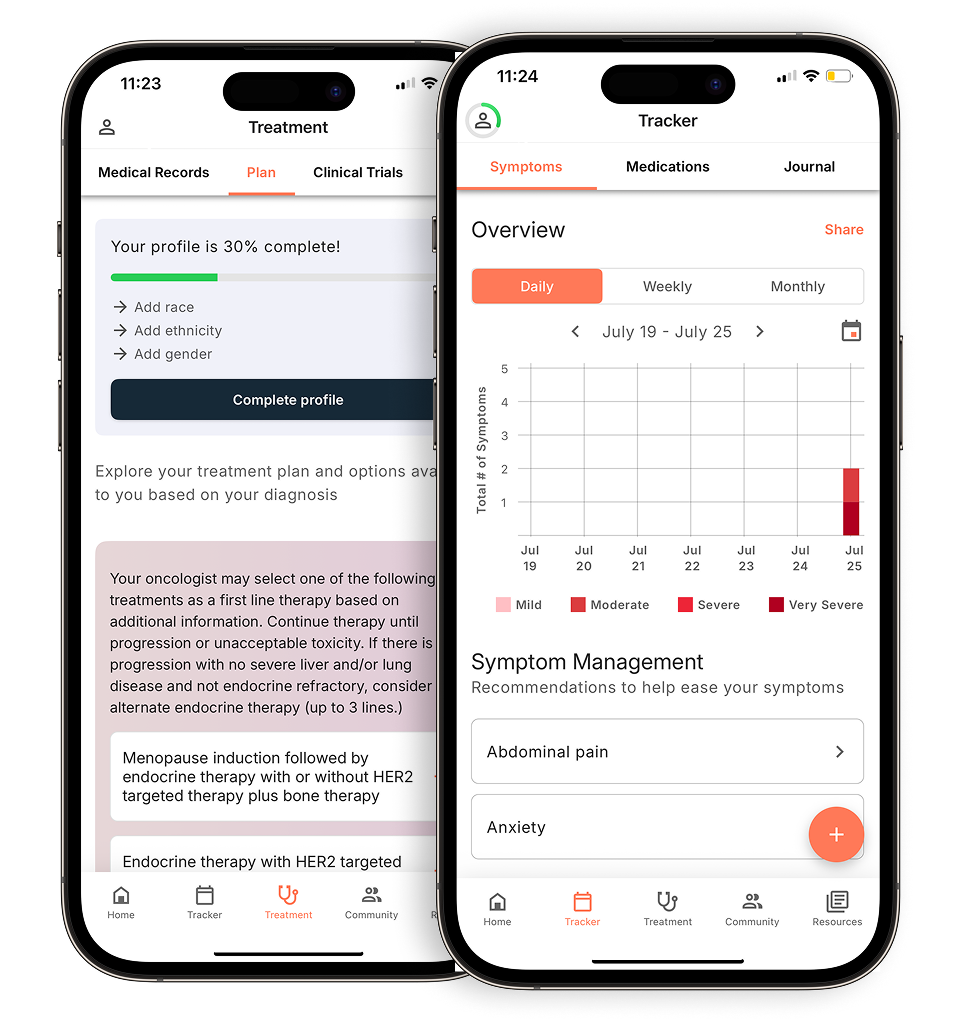
Fatigue from FOLFOX typically starts in the days after your infusion and usually improves before your next treatment. Complete rest isn’t always the answer. A practical approach many oncology teams recommend is the “10-minute walk” rule. On days when energy is lowest, committing to just a short, gentle walk can help maintain circulation and mood without overexerting the body. And if even that feels like too much, that’s important information to share with your care team. How your body responds to fatigue may also be influenced by factors beyond lifestyle, which leads to a closer look at your individual biology and genetics.
The role of genetics. Understanding DPYD and 5-FU toxicity
Your genetic makeup can directly shape how severe your FOLFOX side effects are, and one gene in particular deserves your attention before treatment begins.
The DPYD gene is responsible for producing an enzyme called dihydropyrimidine dehydrogenase, which your body uses to break down 5-fluorouracil (5-FU), a cornerstone drug in FOLFOX. Under normal circumstances, this enzyme clears 5-FU efficiently. But when a DPYD gene mutation is present, that clearance process slows dramatically and 5-FU can accumulate to toxic levels in the body.
Patients with a DPYD gene mutation face a substantially higher risk of severe, potentially life-threatening reactions, including extreme mucositis, profound bone marrow suppression, and life-threatening diarrhea. These reactions can occur even at standard doses that would be well-tolerated by someone without the mutation.
What makes this particularly important is that DPYD testing is available and can identify whether you carry a DPYD variant. Before you start FOLFOX, ask your care team directly about pharmacogenomic testing. If a mutation is detected, your care team can adjust your dosing or explore alternative approaches to protect you from avoidable harm. This is a core part of building a truly personalized care plan.
Beyond genetics, the FOLFOX experience also involves day-to-day physical management, especially during the demanding 48-hour pump phase, when digestive health and hydration become critical priorities.
Managing the pump days. Digestive health and oral care
The 48 hours you spend connected to the portable pump are when proactive self-care makes the biggest difference in how you feel.
What you do during pump days directly shapes your recovery window. While oxaliplatin-induced peripheral neuropathy tends to get most of the attention, the digestive and oral side effects of 5-FU can be just as disruptive, and they’re highly manageable with the right approach.
Digestive comfort starts with what you eat. The BRAT diet consists of Bananas, Rice, Applesauce, and Toast, and is a practical framework for keeping diarrhea under control during this phase. These bland, low-fiber foods are gentle on an already-irritated gut and easy to tolerate when nausea is also in the mix. Avoid greasy, spicy, or high-fiber foods while the pump is running.
Hydration is equally critical. Drinking plenty of fluids, ideally water or clear broths, helps flush the kidneys and supports your body in processing the chemotherapy drugs. Your care team may have specific fluid targets for you; if they haven’t, ask. Staying consistently hydrated, rather than drinking large amounts all at once, tends to be easier on the stomach.
Cancer care guidance for every step of your journey
Get treatment options, clinical trials, and support tailored to your diagnosis--all in one place.
Get started
See treatment options, manage symptoms, and stay informed—all in the app
View treatment options and trials personalized to your diagnosis—plus track progress in real time.
Continue in appOral care shouldn’t be an afterthought. 5-FU increases your risk of mucositis, painful mouth sores that can make eating and drinking genuinely difficult. Rinsing with a baking soda and salt solution several times a day can help prevent mouth sores from developing. Always use an alcohol-free rinse; alcohol-based mouthwashes dry out the tissue and make irritation worse.
These straightforward interventions compound. Staying ahead of digestive stress and oral inflammation during pump days sets you up far better for what comes next. The cycle’s recovery window, which we’ll walk through day by day in the following section.
The FOLFOX timeline. What to expect from day 1 to day 14
Understanding the rhythm of your 14-day FOLFOX cycle is one of the most practical things you can do to reduce anxiety and stay ahead of side effects. As the Colontown Patient Community puts it, “Knowing the rhythm of your cycle is the best way to plan your life around treatment.” Here’s how that rhythm typically unfolds.
Day 1 starts at the infusion center, where you’ll receive oxaliplatin and leucovorin over several hours. FOLFOX can make you more sensitive to cold, a side effect you should watch for during treatment and report to your care team. Many patients are surprised by how quickly it sets in. Avoiding cold drinks and keeping gloves handy before you even leave the clinic is a smart first move.
Days 2–3 are shaped by the portable pump delivering your 46-hour 5-FU dose at home. Some patients report that nausea may intensify during days 2–3 of the FOLFOX cycle, and a few note that it sometimes occurs after the pump disconnects rather than during the infusion itself. Your care team can help you understand your personal pattern and plan accordingly. Staying on top of your anti-nausea medications, rather than waiting until symptoms spike, makes a measurable difference in how manageable these days feel.
Days 4–7 are what many patients informally call “the crash.” Oregon Cancer Specialists note that fatigue and digestive symptoms tend to reach their peak during this phase. Rest during this window, lean on your support network, and keep nutrition simple and consistent.
Days 8–14 bring the recovery window. Many patients report feeling more like themselves during days 8–14, a period when side effects often begin to ease. Your own recovery pattern may differ, so it can help to track how you feel during this window and discuss the timeline with your care team. And that’s exactly when the next cycle begins, which is why the strategies covered throughout this article, from genetic testing to digestive self-care, work best as a coordinated, consistent approach rather than isolated fixes. The next section pulls all of it together into a practical checklist you can start using right away.
The bottom line. Your FOLFOX management checklist
Managing FOLFOX side effects well comes down to consistent habits, smart preparation, and staying ahead of symptoms before they compound.
Proactive symptom tracking is a strategy many patients and care teams use to help manage treatment and stay on top of side effects. Ask your care team whether keeping track of your symptoms might help you during FOLFOX treatment. The notes you keep between appointments genuinely matter to how your treatment unfolds.
Here’s what to keep in focus across every 14-day cycle:
- Track neuropathy daily. Note tingling, numbness, or weakness in your hands and feet. Sharing this with your care team early gives them the data they need to adjust doses before nerve damage becomes harder to reverse.
- Avoid cold for the first five days. Oxaliplatin sensitivity to cold air and surfaces is intense and immediate. Keep gloves, warm drinks, and a scarf close, as it’s a straightforward step that meaningfully reduces discomfort.
- Lean on the BRAT diet and electrolyte fluids when 5-FU disrupts your digestion. Bland, binding foods and steady hydration protect your gut when it’s most vulnerable during pump days.
- Ask about screening for DPYD variants. If you haven’t already, talk to your care team about screening that signals high-risk toxicity before your next cycle.
- Centralize your records. Downloading the Outcomes4Me app puts your symptoms, questions, and care history in one place so nothing falls through the cracks between visits.
Some days will be harder than others, even with the best preparation. The next section covers exactly when those difficult moments cross into territory where your care team needs to hear from you right away.
When to call your care team: safety first
Knowing which symptoms demand an immediate call to your care team, not a wait-and-see approach, is the single most important safety skill you can develop during FOLFOX treatment.
Most side effects are manageable at home with the strategies covered throughout this article. But some signals cross a line that requires urgent medical attention. A fever above 100.4°F is a medical emergency during chemotherapy. FOLFOX chemotherapy can increase your risk of infection by reducing your white blood cell count, and what might feel like a mild fever in another context can signal neutropenia, a dangerous drop in infection-fighting white blood cells. Call your care team immediately rather than waiting to see if it resolves on its own.
Two other red flags warrant the same urgency. Uncontrollable vomiting or diarrhea that prevents you from keeping fluids down puts you at serious risk of dehydration and electrolyte imbalance, complications that can escalate quickly and may require IV fluids. And while rare, some chemotherapy medicines used in FOLFOX can increase the risk of serious heart complications, including heart attack and changes in heart rhythm, which is why heart monitoring may be recommended during and after treatment. Call for emergency care immediately if you experience chest pain, shortness of breath, or heart palpitations, as oncology providers consistently flag these as priority concerns.
Disclaimer: The information provided in this article is for informational purposes only and is not intended to be a substitute for professional medical advice, diagnosis, or treatment. Outcomes4Me is not acting as your caregiver, and any suggestions or guidance offered should not replace the advice of your healthcare provider or qualified medical professional. Always seek the guidance of your physician or other qualified health provider with any questions you may have regarding a medical condition.
Personalized support for real care decisions
Understand your diagnosis, explore clinical trials, and track symptoms--all in one place.
Get started
Compare treatments, prepare for appointments, and track side effects—all in the app
Built for your diagnosis, Outcomes4Me gives you the tools to make confident, informed decisions—right when you need them.
Continue in app