A stem cell transplant for multiple myeloma depends on many factors. Dr. Saad Z. Usmani, a leading myeloma expert at Memorial Sloan Kettering Cancer Center, breaks down how treatment typically unfolds and explains why these decisions are often highly personalized. His insights help patients better understand when a transplant may be recommended, and when it might be reasonable to wait.
The following questions and responses have been lightly edited for grammatical purposes.
1) Who should receive a stem cell transplant and when?
Dr. Usmani: Stem cell transplant comes later. The first phase is called the induction treatment phase. It’s typically with three or four drugs. Most patients now actually get four drugs.
All of that is usually outpatient. It just involves getting shots, taking pills, and maybe some infusions, but it’s all outpatient. So typically, the first four to six months of treatment is induction therapy, and it’s all done outside the hospital.
Then, depending on a patient’s disease response and their fitness level, stem cell transplant is something we talk about after induction treatment. For patients who have high-risk disease and are eligible for transplant, it is preferred that we offer a stem cell transplant in that situation.
Even for standard-risk patients under the age of 70, in today’s day and age, stem cell transplant is still considered a standard-of-care treatment. The essential idea in that first year after diagnosis is: can we get patients into really deep responses with initial therapy?
But this is a nuanced discussion, because patient preferences have to be kept in mind. Many times, we collect the stem cells and store them in the freezer, and then wait until the myeloma comes back to use them.
So patients either go straight to transplant, or we collect the stem cells and move on to the maintenance phase of treatment. We wouldn’t typically advise delaying transplant for high-risk patients. For them, you want to make sure you use all the right treatments upfront to give the best chance of a longer remission. It’s hard to achieve that without a transplant.
2) Do you see a big impact on progression-free survival or overall survival if they defer a stem cell transplant at the outset?
Dr. Usmani: We don’t have head-to-head data for that situation in patients who are getting four-drug treatments. I think this is a very individualized decision.
If patients get to a deep response in their bone marrow after initial induction treatment, they may choose to defer the stem cell transplant for later. That’s a discussion we have to have.
It may or may not impact progression-free survival. We just don’t have that data in this specific setting yet.
What we do know is that for patients who do get a stem cell transplant, the likelihood of the myeloma coming back is lower than for those who don’t. That data comes from groups of patients, not necessarily predictions for an individual.
It’s still something we recommend, but it may not be the optimal choice for every patient’s situation, and that’s totally fine.
For more insights on treatment options and living with multiple myeloma, watch Dr. Usmani’s full webinar recording.
Personalized support for real care decisions
Understand your diagnosis, explore clinical trials, and track symptoms--all in one place.
Get started
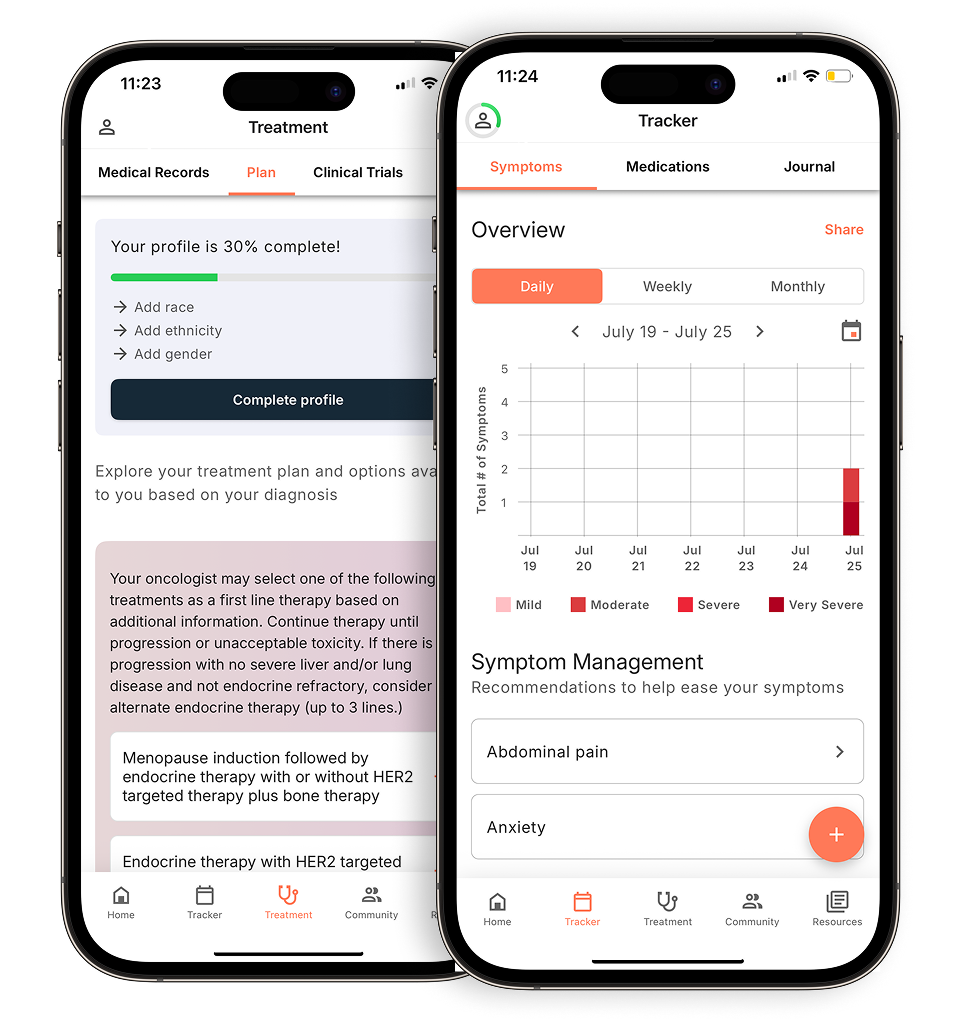
Compare treatments, prepare for appointments, and track side effects—all in the app
Built for your diagnosis, Outcomes4Me gives you the tools to make confident, informed decisions—right when you need them.
Continue in app