
A muscle-invasive bladder cancer (MIBC) diagnosis lands differently than other diagnoses, and the questions you ask your care team in the first weeks will shape every decision that follows. Knowing exactly where the cancer is, and how far it may have spread, is the foundation of any personalized care plan.
The term “muscle-invasive” is precise. It means the cancer has grown into the detrusor muscle, the thick muscle wall of the bladder. That distinction, from a superficial growth into actual muscle tissue, changes the urgency, the staging workup, and the treatment options your care team will consider.
Before treatment discussions begin, you need clarity on the full picture. Here are the core staging questions to raise with your care team:
- How deep is the invasion? Ask your care team to confirm exactly which layers of the bladder wall the tumor has reached and what the pathology report shows.
- What imaging has been ordered? CT scans, MRI, or PET scans are essential tools to rule out lymph node involvement or spread to other organs. Don’t assume they’re automatic.
- What is the tumor grade? A high-grade tumor behaves more aggressively than a low-grade one, and that distinction directly influences how urgently your care team will move.
- What is the risk of micrometastasis? Microscopic cancer cells may have already traveled beyond the bladder even when scans appear clear. Ask how your care team is accounting for that possibility.
Surgery vs. bladder preservation
Understanding your treatment options for MIBC is one of the most consequential steps you’ll take after a staging conversation with your care team. Two primary paths exist, and choosing between them requires careful consideration.
Radical cystectomy (surgical removal of the bladder) remains the standard of care for most MIBC cases. Radical cystectomy is a surgical procedure to remove the bladder, surrounding lymph nodes, and nearby organs. After surgery, your care team may recommend additional treatments to help reduce the risk of cancer recurrence. However, it’s major surgery with a real recovery burden, and it permanently changes how your body manages urine, something the next section addresses in depth.
For patients who aren’t surgical candidates, or who want to preserve their bladder, tri-modality therapy (TMT) is a well-established alternative. TMT combines a maximal TURBT (tumor resection), radiation, and chemotherapy delivered together. Not everyone qualifies. Your care team will assess tumor size, location, and kidney function before recommending this path.
Evidence-based guidance powered by NCCN Guidelines®
Personalized treatment plans shaped by the latest oncology standards—tailored to your diagnosis.
Get started
View your personalized treatment plan in the Outcomes4Me app
Use your diagnosis to unlock personalized NCCN Guidelines®-aligned recommendations.
Continue in app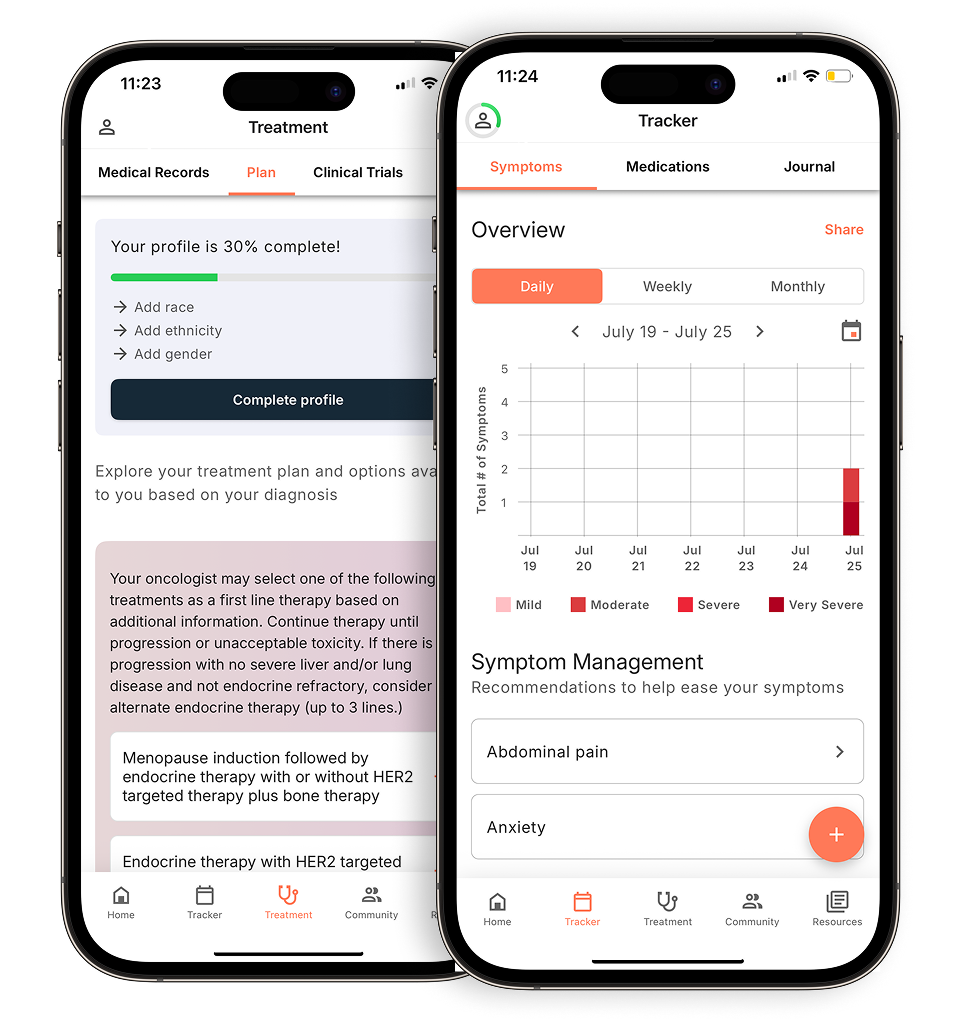
The American Cancer Society and other resources recommend asking your care team these targeted questions:
- Am I a candidate for bladder-preserving TMT, and what criteria disqualify me?
- Is neoadjuvant chemotherapy appropriate for my case before any surgery?
- What does coordination between my urologist, oncologist, and radiation oncologist look like?
- How will each option affect my quality of life beyond treatment?
A well-coordinated care team, ideally including a urologic oncologist, medical oncologist, and radiation oncologist, is essential to navigating this decision. Because the tradeoffs extend far beyond the operating room, what happens after surgery deserves its own focused conversation.
Life after surgery. Navigating urinary diversion options
Choosing how your body will manage urine after a radical cystectomy is a personal and practical decision. When the bladder is removed, your care team will reconstruct a urinary pathway using one of three main approaches:
- Ileal conduit (urostomy bag): A segment of small intestine channels urine to a stoma on the abdomen, draining continuously into an external pouch. It’s the most established option and typically involves the shortest recovery time.
- Neobladder: A new reservoir is fashioned from bowel tissue and connected to the urethra. It allows urination through the natural path, but it requires retraining the new reservoir, which takes commitment and patience.
- Indiana pouch (catheterizable reservoir): An internal pouch that you drain yourself several times daily using a catheter through a small abdominal opening. It offers discretion without an external bag and suits patients who aren’t candidates for a neobladder.
Your diversion type will shape daily life for years, so it deserves a candid conversation with your care team before the operating room. Key questions to raise include.
- What’s the long-term risk of urinary tract infections or bladder stones with each option?
- Will nerve-sparing techniques be used to preserve sexual function, and what outcomes are realistic for your anatomy?
- Who will support your adjustment, physically and emotionally, in the months after surgery?
Each option involves real trade-offs, and the right fit depends on your anatomy, activity level, and personal priorities. The American Cancer Society recommends ongoing follow-up care after surgery, which makes establishing a clear long-term maintenance plan with your care team just as important as the surgical decision itself. As you work through these questions, you may find that your tumor’s biology also opens doors to more targeted approaches, which is where personalized medicine and clinical trials come in.
Cancer care guidance for every step of your journey
Get treatment options, clinical trials, and support tailored to your diagnosis--all in one place.
Get started
See treatment options, manage symptoms, and stay informed—all in the app
View treatment options and trials personalized to your diagnosis—plus track progress in real time.
Continue in appThe role of personalized medicine and clinical trials
Standard chemotherapy is no longer the only path forward for MIBC, and understanding how genomic data shapes your personalized care plan could meaningfully change the options your care team puts on the table.
Tumor genomic sequencing is now a critical starting point. Asking your care team to sequence your tumor tissue can reveal specific mutations driving your cancer’s growth. Those findings may identify biomarkers, molecular signals that indicate whether immunotherapy is likely to work for you. Checkpoint inhibitors have shown real promise in MIBC patients whose tumors express certain markers, and that eligibility isn’t visible without testing.
The question of radical cystectomy vs. bladder preservation becomes more nuanced when genetic results enter the conversation. Some biomarker profiles suggest a tumor may respond well enough to chemoradiation that surgery isn’t the first, or only, option worth pursuing. That’s why integrating your genetic results into the overall care plan, rather than treating them as a separate data point, matters so much.
Clinical trials are often the best way to access the latest advancements in MIBC care. Ask your care team which trials are currently enrolling MIBC patients and whether your genomic profile makes you eligible.
Three questions worth bringing to your next appointment:
- Has my tumor been tested for biomarkers that could make me a candidate for immunotherapy?
- Are there active clinical trials enrolling patients with my tumor profile right now?
- How will my genetic results be factored into my overall care plan going forward?
The Outcomes4Me app can help you search for trials matched to your diagnosis and connect with oncology nurse practitioners who can help you interpret what your results actually mean for your next steps, including the practical and emotional dimensions of recovery, which we’ll turn to next.
Quality of life and support systems
Recovery from MIBC treatment extends well beyond the operating room, and understanding what that looks like at home is just as important as any clinical decision you make.
The weeks after a radical cystectomy demand real, sustained support. Recovery after radical cystectomy typically involves a hospital stay of a week or more, followed by several additional weeks of healing at home. Your care team can discuss what to expect during your individual recovery process. During that time, you’ll likely need a full-time caregiver, someone who can help manage wound care, medications, activity restrictions, and the practical adjustments that come with adapting to types of urinary diversion like a neobladder or ileal conduit. This isn’t a minor ask. Planning for that caregiver role before surgery, not after, gives both you and your support person time to prepare.
Emotional challenges are a legitimate part of treatment. A life-altering diagnosis like MIBC can bring anxiety, grief, and uncertainty that persist long after the physical recovery. Ask your care team for referrals to oncology social workers, counselors, or peer support groups. The Outcomes4Me app and community offers resources specifically designed for people navigating advanced bladder cancer.
Surveillance after treatment is ongoing. After treatment for bladder cancer, follow-up typically includes regular exams and tests, often every three to six months in the first years, to monitor for recurrence. If your bladder is still present, regular cystoscopy exams will also be part of your monitoring plan, typically about every three months for the first couple of years. Ask your care team exactly what your surveillance schedule looks like and who coordinates those appointments.
Your MIBC advocacy checklist
Start with staging clarity. Before any treatment conversation goes further, confirm whether the cancer has spread beyond the muscle wall.
- Evaluate bladder preservation early. Ask directly whether you’re a candidate for trimodal therapy (TMT) before committing to radical cystectomy. Not every patient qualifies, but you deserve a clear explanation of why or why not.
- Discuss urinary diversion options now, not later. The lifestyle differences between a neobladder and an ileal conduit are significant. Raise this conversation early so your preferences can meaningfully inform the surgical plan.
- Request tumor genomic sequencing. Sequencing your tumor can unlock access to immunotherapy and open doors to bladder cancer clinical trials that standard staging alone would miss.
- Get a second opinion at a high-volume center. Bladder cancer is complex, and treatment decisions at specialized centers can differ meaningfully from those at general hospitals. A second opinion is a sign of informed advocacy.
The Outcomes4Me app integrates NCCN guidelines to provide personalized treatment plans aligned with the latest oncology standards for your specific diagnosis.
Disclaimer: The information provided in this article is for informational purposes only and is not intended to be a substitute for professional medical advice, diagnosis, or treatment. Outcomes4Me is not acting as your caregiver, and any suggestions or guidance offered should not replace the advice of your healthcare provider or qualified medical professional. Always seek the guidance of your physician or other qualified health provider with any questions you may have regarding a medical condition.
Personalized support for real care decisions
Understand your diagnosis, explore clinical trials, and track symptoms--all in one place.
Get started
Compare treatments, prepare for appointments, and track side effects—all in the app
Built for your diagnosis, Outcomes4Me gives you the tools to make confident, informed decisions—right when you need them.
Continue in app