
When evaluating muscle-invasive bladder cancer (MIBC) treatment, it’s important to understand the key differences. A muscle-invasive bladder cancer diagnosis can be overwhelming, and it’s completely normal if your first response is not immediate action.
That moment of shock is real, and it deserves acknowledgment. But once it passes, what you need most is clarity. Muscle-invasive bladder cancer treatment is time-sensitive, and understanding what you’re dealing with is the first step toward making confident decisions.
What “muscle-invasive” actually means: MIBC is classified as stages T2 through T4, meaning the cancer has grown into the detrusor muscle, the thick muscle wall of the bladder itself. This is a critical distinction from non-invasive types, where cancer remains in the bladder lining. Once the muscle wall is involved, the risk of the cancer spreading beyond the bladder increases significantly, which is why your care team will move quickly.
This faster timeline is a reason to get organized. Unlike early-stage bladder cancer, where a watch-and-wait approach is sometimes appropriate, many patients with MIBC find that starting treatment soon after diagnosis is part of their care plan. Your care team can discuss the appropriate timing for your individual situation. Understanding what shapes your outlook early can help you ask better questions and advocate for yourself at every appointment.
The foundation of that advocacy starts with a critical structure: a multidisciplinary team (MDT). This is a coordinated group of specialists, urologic oncologists, medical oncologists, radiation oncologists, and others, who review your case together. Personalized MIBC care is built on that collective expertise. The sections ahead will show you exactly how each piece of that plan fits together, starting with the treatment approach most oncologists recommend first.
Why neoadjuvant chemotherapy comes first
Neoadjuvant chemotherapy (NAC), chemo given before the main treatment, is one of the most important factors shaping a positive MIBC prognosis, and understanding why helps you feel more confident in the plan your care team recommends. By the time MIBC is diagnosed, cancer cells may have already spread beyond the bladder wall in ways no imaging scan can detect. NAC circulates through the entire body, reaching those hidden cells early, before they have a chance to establish themselves elsewhere.
A common concern is whether waiting three to four months for chemo to run its course puts surgery dangerously out of reach. In practice, this timeline is clinically intentional. Patients who complete NAC before surgery have better long-term outcomes than those who proceed to surgery immediately. The chemotherapy is doing essential work, and the window it creates is part of the strategy. You can explore how treatment sequencing affects outcomes to better understand how each step connects.
Evidence-based guidance powered by NCCN Guidelines®
Personalized treatment plans shaped by the latest oncology standards—tailored to your diagnosis.
Get started
View your personalized treatment plan in the Outcomes4Me app
Use your diagnosis to unlock personalized NCCN Guidelines®-aligned recommendations.
Continue in app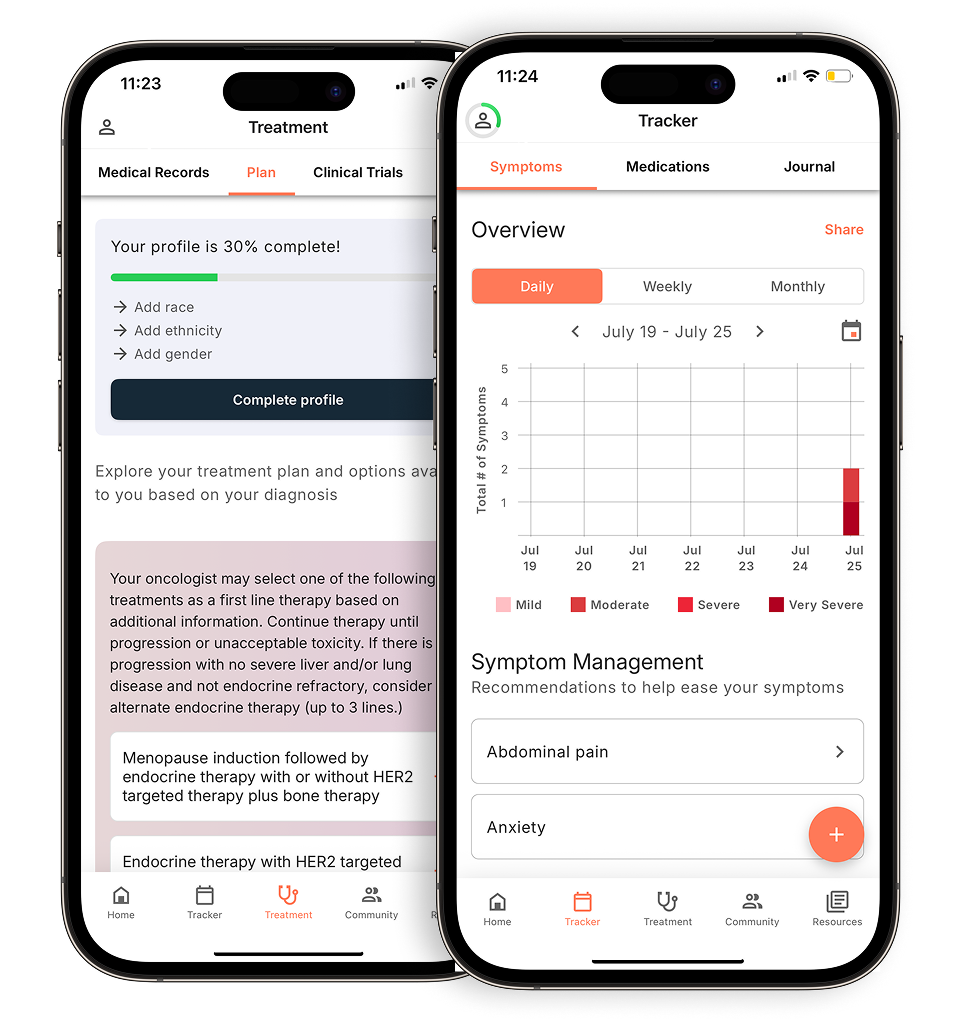
Key benefits your team weighs when recommending NAC include:
- Tumor downsizing, reducing the tumor before surgery or radiation, making the main treatment more effective
- Systemic reach, targeting cancer cells throughout the body, at the primary site and beyond
- Response data, how the tumor reacts to chemo informs what comes next
With NAC complete, you and your care team will face one of the most significant decisions in your treatment plan: whether radical cystectomy or bladder preservation is the right path forward.
Radical cystectomy vs. bladder preservation
When it comes to MIBC treatment, the choice between radical cystectomy and bladder preservation is one of the most consequential decisions you’ll face, and there’s no single right answer for everyone.
Radical cystectomy is the traditional standard of care. It involves surgically removing the bladder, nearby lymph nodes, and in some cases, adjacent organs. It offers a definitive approach to eliminating the primary tumor, and for many patients, it remains the most reliable path to long-term cancer control. The trade-off is permanence: once the bladder is removed, urinary function must be rerouted entirely.
Trimodality therapy (TMT) is a clinically validated alternative that combines three treatments: a transurethral resection of the bladder tumor (TURBT) to remove as much visible tumor as possible, followed by concurrent radiation and chemotherapy. TMT is an effective option for patients who want to preserve their bladder or who aren’t surgical candidates. You can explore how trimodal therapy works in practice for muscle-invasive bladder cancer, including the key patient and tumor factors that influence whether this bladder-preserving approach is right for you.
Not everyone qualifies for TMT, tumor size, location, and the presence of hydronephrosis (blocked kidney drainage) all influence eligibility. A solitary, well-defined tumor without involvement of the bladder’s trigone area is generally a more favorable candidate profile for TMT.
Navigating urinary diversion: life after bladder removal
For many patients, the prospect of bladder removal is the most emotionally charged part of an MIBC diagnosis, but understanding your urinary diversion options can replace fear with clarity. If radical cystectomy is part of your plan (often following neoadjuvant chemotherapy for bladder cancer), your surgical team will reconstruct how urine exits your body using one of three primary approaches, each with distinct lifestyle implications.
Cancer care guidance for every step of your journey
Get treatment options, clinical trials, and support tailored to your diagnosis--all in one place.
Get started
See treatment options, manage symptoms, and stay informed—all in the app
View treatment options and trials personalized to your diagnosis—plus track progress in real time.
Continue in appThe ileal conduit is the most established option. A short segment of the small intestine is repurposed as a channel, routing urine continuously into a small external pouch worn against the abdomen. It requires no catheterization, involves a shorter surgical time, and tends to have a well-understood long-term complication profile. For many patients, managing the pouch becomes second nature quickly.
The neobladder is a more complex reconstruction where surgeons fashion a new internal reservoir from the small intestine, connecting it to the urethra so you can urinate in a near-normal way. It demands significant post-operative retraining, learning to void using abdominal pressure, and isn’t suitable for everyone. However, patients who are good candidates often report a strong sense of physical normalcy.
The Indiana Pouch offers a middle path: an internal reservoir that you drain yourself several times daily using a catheter through a small, discreet abdominal opening called a stoma. There’s no external bag, and the schedule is predictable, many patients appreciate the control it provides.
The most important takeaway: life goes on. Many survivors return to full activity, working, traveling, and staying active, within months of surgery. Connecting with others who’ve navigated these choices can reduce that burden; hearing from the MIBC community offers a practical way to calibrate your expectations before making any decisions.
As treatment options continue to expand, surgery is only part of the picture, and for some patients, emerging therapies may reshape what’s possible altogether.
The new frontier: immunotherapy and clinical trials
Personalized medicine is reshaping MIBC treatment, and for many patients, immunotherapy and clinical trials are now legitimate first-line considerations, valued approaches that deserve serious evaluation.
Checkpoint inhibitors like pembrolizumab are changing what’s possible for MIBC treatment. These drugs work by releasing the brakes on your immune system, enabling it to recognize and attack cancer cells. While checkpoint inhibitors were initially approved for advanced or metastatic bladder cancer, ongoing research is actively testing them at earlier MIBC stages, meaning your MIBC staging results could now open doors to treatments that simply didn’t exist as standard options a few years ago.
Central to this shift is genomic profiling: blood tests can analyze DNA from your cancer cells to help doctors monitor whether cancer might be returning and guide decisions about additional treatment after surgery. This is how oncologists match you to targeted therapies and relevant trials. Without it, you’re working with an incomplete picture. With it, your team can identify whether a drug like Pembrolizumab, or something newer, is likely to work for your specific cancer biology.
Emerging trial data is particularly promising. The SunRISe-2 trial is evaluating how TAR-200 plus cetrelimab compares to standard chemoradiotherapy in MIBC patients, to help doctors and patients understand treatment options for bladder preservation, a signal that the research community is seriously evaluating alternatives to the current standard of care.
Seeking a second opinion at an NCI-designated cancer center also matters here. These institutions run the trials, have tumor boards reviewing complex cases, and often have access to therapies not yet available elsewhere. With so many moving pieces, staging, genomics, surgery versus preservation, and now immunotherapy, knowing exactly where to focus first makes all the difference. The next section breaks that down into five concrete steps.
The bottom line: 5 steps to take this week
Moving forward with clarity on your treatment options requires taking action now. The gap between diagnosis and first treatment is often shorter than patients expect, so these five steps matter now, not later.
1. Confirm your exact stage. Knowing whether you’re T2, T3, or T4 determines which conversations you need to have and how urgently. Your pathology and imaging reports should spell this out, ask your provider to walk you through them.
2. Assemble your “Big Three.” MIBC requires input from a urologist, a medical oncologist, and a radiation oncologist. This multidisciplinary team is essential whether you’re exploring radical cystectomy or bladder-sparing trimodality therapy (TMT). Getting all three in the room, or at least on the same page, early gives you the most complete picture of your options.
3. Ask about neoadjuvant chemotherapy. Neoadjuvant chemotherapy (NAC) before surgery or radiation may be considered for eligible patients with muscle-invasive bladder cancer as part of personalized treatment planning.
4. Request genomic testing. Your tumor’s DNA can open doors to targeted clinical trials that standard staging alone won’t reveal. Precision medicine in bladder cancer works by tailoring treatments based on the specific characteristics of your individual cancer, which is why discussing genetic testing and personalized treatment options with your care team is an important part of your treatment plan.
5. Organize your records in one place. Patients who understand their NCCN guidelines have better dialogues with their care teams. A platform like Outcomes4Me keeps your pathology reports, imaging, and treatment history centralized, so nothing gets lost between appointments.
Personalized support for real care decisions
Understand your diagnosis, explore clinical trials, and track symptoms--all in one place.
Get started
Compare treatments, prepare for appointments, and track side effects—all in the app
Built for your diagnosis, Outcomes4Me gives you the tools to make confident, informed decisions—right when you need them.
Continue in app