
Hearing the words “muscle invasive” changes everything. In that moment, many patients open a browser, type “muscle-invasive bladder cancer survival rates,” and brace for whatever comes next. What they find are percentages, stages, and statistics that can feel more frightening than clarifying.
Here’s what those numbers actually mean and why they tell only part of your story.
Survival statistics are snapshots of the past. The 5-year survival rates you’ll encounter today are calculated from patients diagnosed at least five years ago, often before newer treatment protocols became standard. Debates around trimodality therapy vs. cystectomy survival rates, for instance, continue to evolve as outcomes data matures.
According to the American Cancer Society, survival rates are grouped by how far the cancer has spread: localized, regional, or distant. Understanding which category applies to you is the critical first step, and that’s exactly what the next section breaks down, stage by stage.
MIBC survival rates by stage: Breaking down the percentages
Understanding survival statistics becomes far more useful when you see the numbers tied to specific stages.
Stage | Definition | 5-Year Relative Survival Rate
|
|---|---|---|
Stage II (Localized) | Confined to bladder muscle wall | ~70% |
Stage III (Regional) | Spread to nearby tissue or lymph nodes | ~38% |
Stage IV (Distant/Metastatic) | Spread to distant organs | ~8% |
Source: NCI SEER Database via BCAN.org
Stage II: Localized disease and curative intent
The stage II bladder cancer survival rate of approximately 70% reflects something important. At this point, treatment is still being pursued with curative intent. Stage II MIBC means the cancer has grown into the thick muscle layer of the bladder wall but hasn’t reached the fatty tissue or lymph nodes. That distinction matters enormously. Aggressive treatment gives patients a genuine shot at long-term, recurrence-free survival. The 5-year recurrence-free survival rate for MIBC data at this stage is the most encouraging across all muscle-invasive presentations.
Evidence-based guidance powered by NCCN Guidelines®
Personalized treatment plans shaped by the latest oncology standards—tailored to your diagnosis.
Get started
View your personalized treatment plan in the Outcomes4Me app
Use your diagnosis to unlock personalized NCCN Guidelines®-aligned recommendations.
Continue in app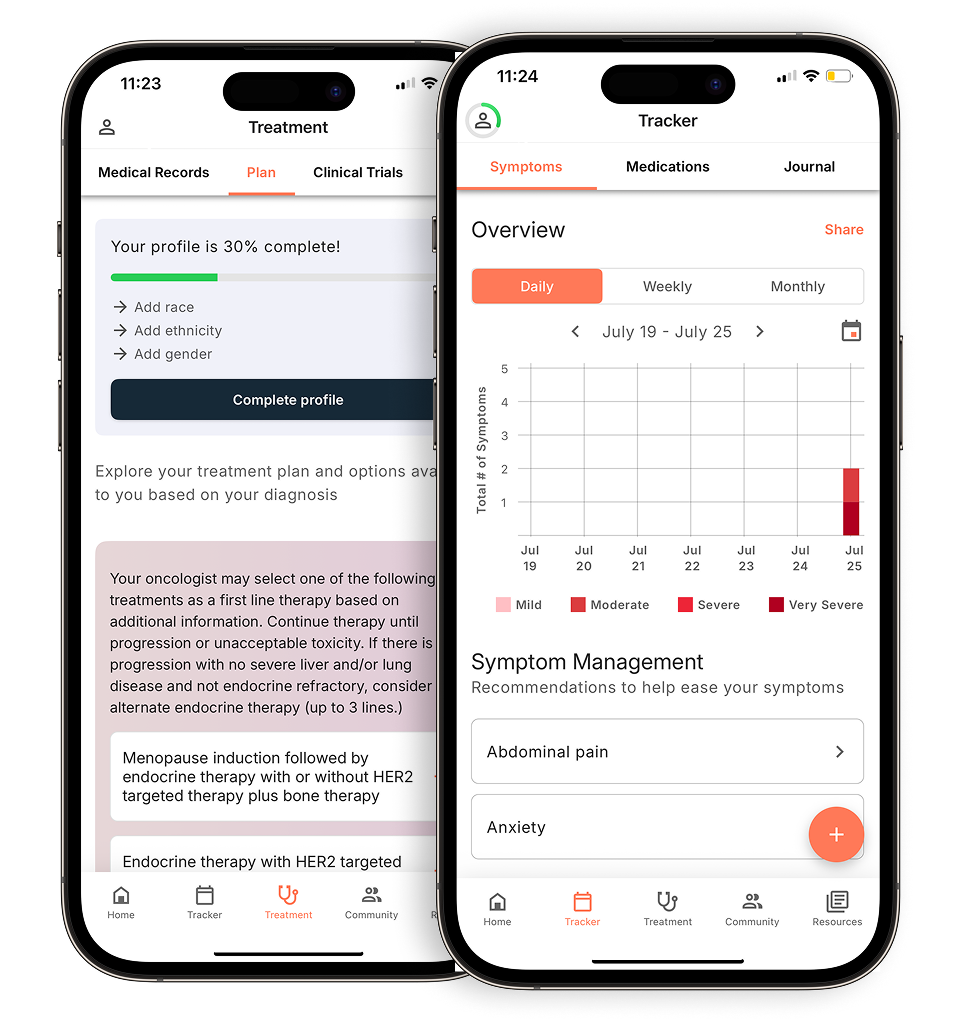
Stage III: When lymph nodes enter the picture
Once the cancer reaches regional lymph nodes, the prognosis shifts. The 5-year relative survival rate drops to roughly 38%, according to the NCI. Lymph node involvement signals the cancer has found a potential pathway to travel further — which is why treatment strategies at this stage often involve more intensive systemic approaches alongside surgery.
Stage IV: Shifting the goal toward management
At stage IV, distant metastasis changes the conversation. An approximately 8% 5-year survival rate reflects the reality that treatment focus typically moves from cure toward controlling the disease, preserving quality of life, and extending meaningful time. However, emerging therapies are actively reshaping what’s possible even here.
The stage you’re diagnosed at fundamentally determines the treatment goal and that goal directly shapes what “success” looks like.
Can MIBC be cured?
Yes, MIBC can be cured for many patients, and that goal is what drives the entire treatment plan from day one.
In oncology, “cured” typically means reaching NED (No Evidence of Disease), which is a point where scans, biopsies, and markers show no detectable cancer. It’s a meaningful milestone, though most oncologists prefer to discuss curability in terms of sustained, long-term outcomes rather than a single declaration.
The factors that most influence whether curative outcomes are achievable include:
- Stage at diagnosis
- Lymph node involvement
- Response to neoadjuvant chemotherapy
- Overall fitness and health status
- Surgical or treatment quality
The 5-year recurrence-free survival mark carries particular weight. Patients who remain NED at five years have a meaningfully lower risk of the cancer returning, which is why that milestone is treated as a practical benchmark for long-term cure.
However, reaching NED isn’t the finish line. Structured follow-up care is what protects and confirms that status over time.
Importantly, how aggressively and promptly treatment begins plays a central role in these outcomes. That brings us directly to one of the most consequential decisions patients face: which treatment path to pursue.
The impact of treatment choice: Cystectomy vs. trimodality therapy
Two primary approaches dominate the conversation for MIBC, and understanding how their outcomes compare puts you in a much stronger position to have an informed conversation with your care team.
Radical cystectomy: The traditional standard
Radical cystectomy — the surgical removal of the bladder — has long been considered the gold standard for treating MIBC. The standard of care protocol typically pairs it with neoadjuvant chemotherapy (chemo given before surgery) to shrink the tumor and eliminate microscopic disease before the bladder is removed. For patients who are good surgical candidates, this approach offers strong, well-documented survival outcomes and remains the most widely used treatment path globally.
Trimodality therapy: Keeping the bladder
Trimodality therapy (TMT) combines maximal transurethral resection of the tumor, chemotherapy, and radiation — all without removing the bladder. For patients who want to preserve their bladder or who aren’t fit enough for major surgery, TMT offers a clinically validated alternative rather than a compromise.
Why patient fitness is a key factor
A patient with significant heart or kidney conditions may face higher surgical risks that actually shift the survival calculus in favor of TMT, not because surgery is inferior, but because fitness for the procedure directly affects outcomes.
In practice, the survival data for each group is shaped by who’s in it. Cystectomy data often reflects healthier patients who could tolerate surgery, while TMT cohorts can include a broader mix. That context matters when you’re comparing numbers directly.
The bottom line: there’s no universally “better” option. The right choice depends on tumor characteristics, overall health, personal priorities, and shared decision-making with your oncology team. Treatment strategy is evolving, which brings us to one of the most exciting developments reshaping MIBC outcomes today.
The future of MIBC survival
The survival statistics you’ll find in most published resources were built on past data. What they don’t yet fully capture is how rapidly the treatment landscape has shifted. For patients diagnosed today, that gap matters enormously. New research and advances in targeted therapies are changing the landscape of MIBC care, which current statistics aren’t capturing.
Knowing the numbers is only the first step. What you do with them, how you track your response to treatment, assess emerging options, and stay informed, determines so much more.
That’s exactly where Outcomes4Me comes in. Our app helps you become an active participant in your treatment plan from organizing your care, surfacing relevant clinical trials, and giving you the tools to have sharper conversations with your care team.
Download the Outcomes4Me app and take an informed, proactive role in your care today.
Personalized support for real care decisions
Understand your diagnosis, explore clinical trials, and track symptoms--all in one place.
Get started
Compare treatments, prepare for appointments, and track side effects—all in the app
Built for your diagnosis, Outcomes4Me gives you the tools to make confident, informed decisions—right when you need them.
Continue in app