
We recently spoke with Fox Chase Cancer Center’s Dr. Elizabeth Plimack to discuss how patients can navigate a bladder cancer diagnosis. In our conversation, she shares the differences between non–muscle invasive bladder cancer (NMIBC) and muscle-invasive bladder cancer (MIBC). While both begin in the bladder, the difference between the two determines how the cancer behaves, how it’s treated, and how likely it is to spread.
What is non–muscle invasive bladder cancer (NMIBC)?
NMBIC is bladder cancer that remains on the inner lining of the bladder and has not spread into the bladder’s muscle wall. Dr. Plimack describes it as cancer that “stay[s] on the surface of the bladder, almost like a wart that grows there but doesn’t invade or cause major issues.”
Since the cancer is confined to the surface, treatment is often focused directly on the bladder. For low-grade tumors, doctors may remove the cancer during a minimally invasive procedure and then monitor the bladder closely. Dr. Plimack explains, “If it’s low-grade, we often manage it with scrapings and close monitoring.”
If the cancer is high-grade, treatment may involve intravesical therapy, where medication is placed directly into the bladder to destroy cancer cells and reduce the chance of recurrence. According to Dr. Plimack, advances in this area have given patients more options than ever before, with “many options for intravesical therapy… to target disease that’s limited to the surface.”
Evidence-based guidance powered by NCCN Guidelines®
Personalized treatment plans shaped by the latest oncology standards—tailored to your diagnosis.
Get started
View your personalized treatment plan in the Outcomes4Me app
Use your diagnosis to unlock personalized NCCN Guidelines®-aligned recommendations.
Continue in app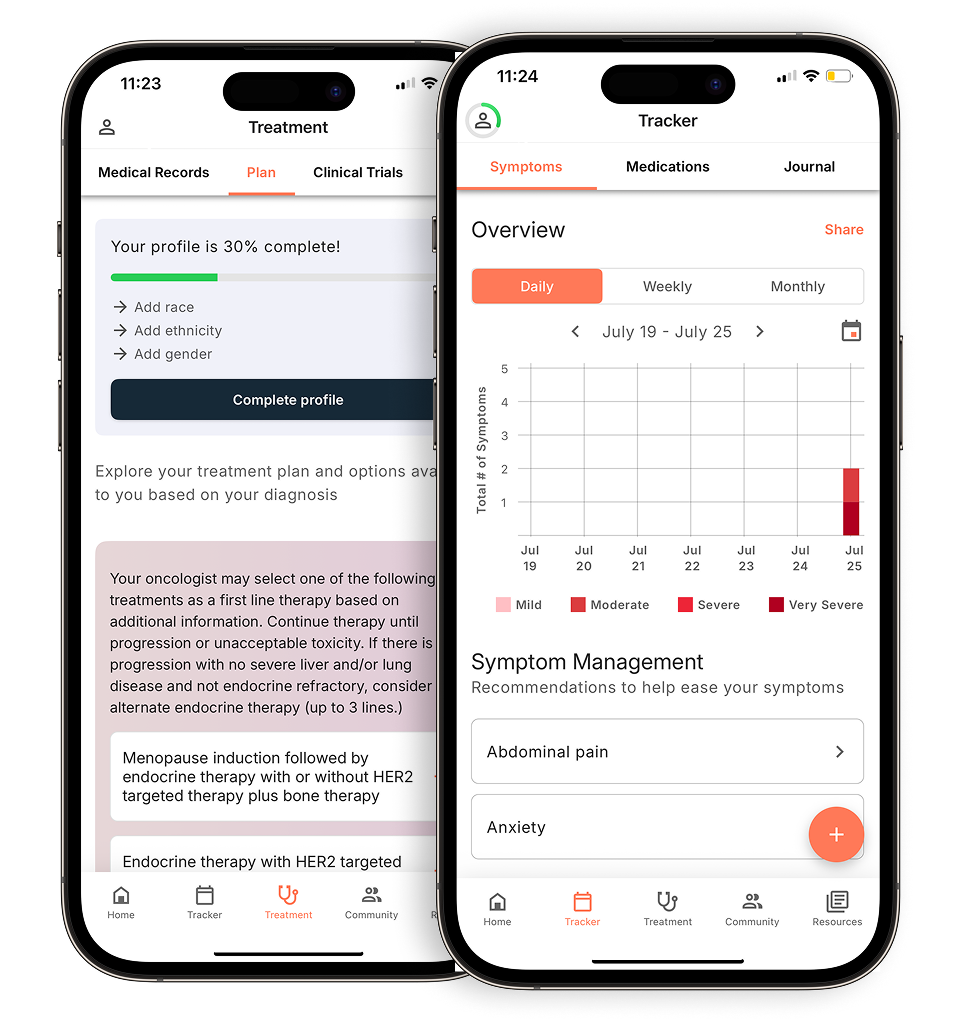
What is muscle-invasive bladder cancer (MIBC)?
MIBC occurs when the tumor grows beyond the bladder lining and into the bladder muscle wall. This deeper invasion significantly raises the risk that cancer cells can spread elsewhere in the body.
Dr. Plimack explains this stage by noting that once the cancer reaches the muscle wall, it is “on the move, not staying confined to the surface.” Treatment usually needs to address the whole body, not just the bladder because MIBC is more likely to spread.
How treatment differs between NMIBC and MIBC
For NMIBC, treatment is typically localized to the bladder. For MIBC, doctors often use systemic therapy, meaning treatment circulates throughout the body to kill cancer cells wherever they may be.
Dr. Plimack explains, “In MIBC, we treat it with systemic therapy to kill cancer cells wherever they may be hiding.” This may include chemotherapy, immunotherapy, or other targeted treatments.
Systemic treatment is often given before surgery, a strategy called neoadjuvant therapy, which can shrink the tumor and help eliminate microscopic cancer cells. Dr. Plimack notes that bladder removal is often considered “only after giving neoadjuvant therapy to shrink the tumor and eliminate any microscopic spread.”
After systemic treatment, patients may move on to:
- Bladder removal surgery (radical cystectomy)
- Radiation therapy
- Close surveillance in select cases
For some patients, if the treatment response is strong enough, surgery may not be needed immediately. In those situations, Dr. Plimack says doctors may “observe the bladder without needing to remove it.”
Imaging and staging: Why the difference matters
For non-muscle invasive disease, Dr. Plimack notes, “Imaging is usually limited to the bladder area, since we don’t expect it to have spread.”
For MIBC, however, imaging is much more extensive.“We image the chest, abdomen, and pelvis to check whether it has spread,” says Dr. Plimack. This determines whether the cancer has spread beyond the bladder.
The staging process is essential because it helps guide treatment decisions and determines whether the cancer is still potentially curable.
Bladder preservation vs. bladder removal
Another key difference between NMIBC and MIBC is the possibility of preserving the bladder.
With NMIBC, bladder preservation is often possible through local treatments. However, preserving the bladder comes with trade-offs. These treatments require “frequent visits, ongoing surveillance, and some risk of progression,” according to Dr. Plimack.
With MIBC, bladder removal is often recommended because of the higher risk of spread. Still, some patients may be candidates for bladder-preserving radiation. Dr. Plimack explains that radiation “is another bladder-preserving option, but it’s suitable for a smaller group of patients.”
To qualify, the cancer must remain confined to the bladder, and the bladder itself must still function well enough after treatment. In the right circumstances, radiation “can be curative,” offering an alternative to surgery for select patients.
What happens if the cancer has spread?
If bladder cancer spreads beyond the bladder to other parts of the body, it is considered metastatic bladder cancer. At that point, treatment focuses on controlling the disease, slowing its progression, and helping patients live longer.
Dr. Plimack acknowledges that metastatic disease is “technically not curable,” but she emphasizes that “we now have very effective treatments that can help people live for many years.”
Thanks to advances in systemic therapies, patients with metastatic bladder cancer now have more treatment options and more hope than ever before. Dr. Plimack notes, “It’s an area with a lot of exciting new research.”
The bottom line
The main difference between NMIBC and MIBC is how deeply the cancer has grown into the bladder wall, and that distinction shapes every treatment decision.
With NMIBC, the cancer remains on the bladder surface and can often be treated with local therapies that preserve the bladder. With MIBC, the cancer has invaded the muscle wall, making it more aggressive and more likely to spread, often requiring systemic treatment and surgery.
Navigating a bladder cancer diagnosis? Watch the full webinar discussion with Dr. Plimack for more expert insights.
Personalized support for real care decisions
Understand your diagnosis, explore clinical trials, and track symptoms--all in one place.
Get started
Compare treatments, prepare for appointments, and track side effects—all in the app
Built for your diagnosis, Outcomes4Me gives you the tools to make confident, informed decisions—right when you need them.
Continue in app