
Why hasn’t immunotherapy worked well for most people with prostate cancer?
To understand why immunotherapy has been challenging in prostate cancer, it helps to look beyond the tumor itself.
Cancer cells exist within what researchers call the tumor microenvironment, the surrounding cells, tissue, and other factors that make up the tumor’s “habitat.” This environment can influence how cancer grows and how the immune system responds to it.
As Dr. Zarrabi explains, “The surrounding cells and the surrounding tissue are [ones] that does not allow our immune systems to recognize that tumor and to kill off those cells using the immune system.”
This has been a major challenge in developing effective immunotherapies for prostate cancer.
How do immune checkpoint inhibitors work?
One of the best-known forms of immunotherapy is an immune checkpoint inhibitor. These drugs work by helping the immune system recognize cancer as abnormal and mount an immune response against it.
Evidence-based guidance powered by NCCN Guidelines®
Personalized treatment plans shaped by the latest oncology standards—tailored to your diagnosis.
Get started
View your personalized treatment plan in the Outcomes4Me app
Use your diagnosis to unlock personalized NCCN Guidelines®-aligned recommendations.
Continue in app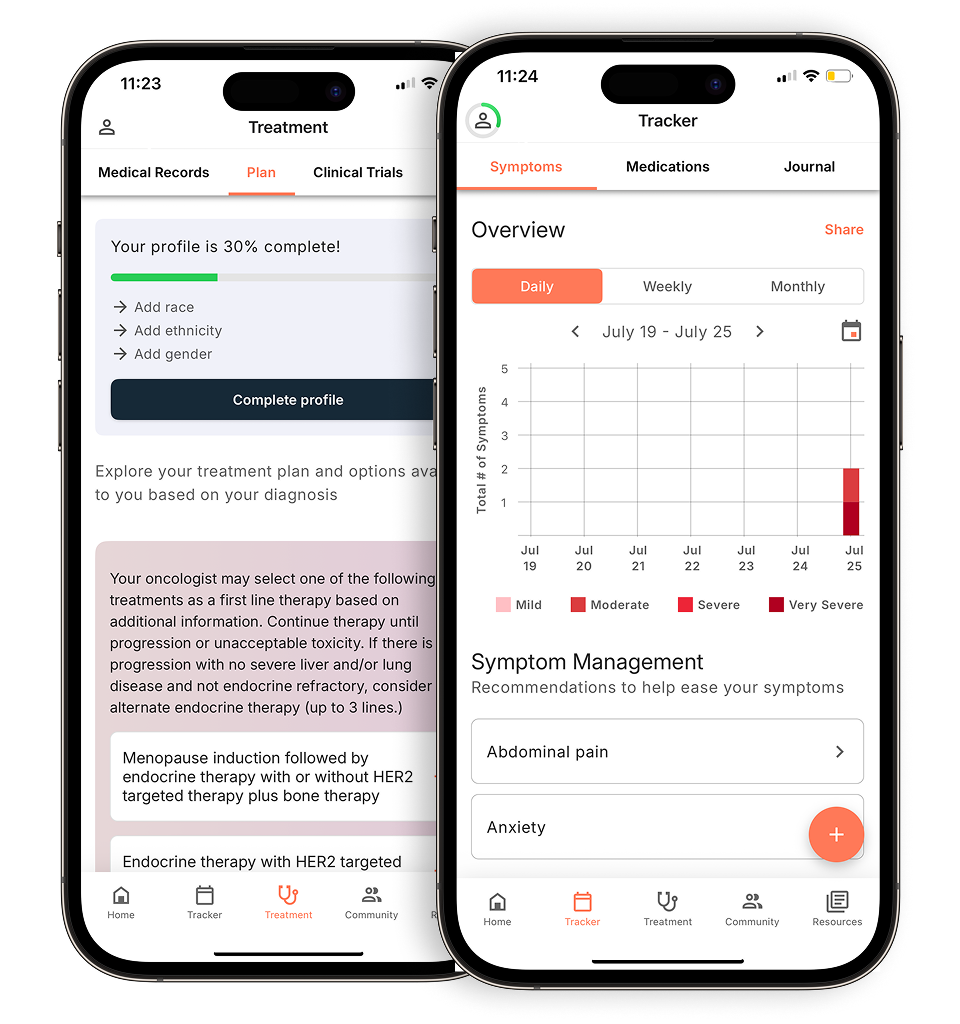
Dr. Zarrabi describes checkpoint inhibitors as infusions containing antibodies that “reinitiate the body’s ability” to recognize that cancer is present. When successful, this approach can allow a person’s own immune system to attack cancer cells rather than relying on treatments such as chemotherapy or radiation.
Checkpoint inhibitors have produced dramatic results in several cancers, but prostate cancer has been different.
“In prostate cancer, it has not worked for the majority of patients,” Dr. Zarrabi said.
For a small group of people with prostate cancer, however, checkpoint inhibitors can be effective. “Three to five percent of patients may benefit from checkpoint inhibitors,” Dr. Zarrabi explains. “But that just also means that 95 to 97% of our patients don’t.”
Researchers are therefore looking for other ways to help the immune system recognize and attack prostate cancer.
What are T-cell engagers?
One promising area of research involves T-cell engagers, including a type of drug called a bispecific antibody.
T cells are immune cells that can attack abnormal cells, including cancer cells. The challenge in prostate cancer is getting these immune cells to effectively recognize and reach the cancer.
T-cell engagers are designed to help solve that problem.
“They’re simply small proteins that have two sticky ends to them,” Dr. Zarrabi explains. “One sticky end binds onto the cancer. The other sticky end binds onto the T cell or engages with the T cell.”
By attaching to both the cancer cell and the T cell, the drug brings the immune cell into close proximity to the cancer. This is particularly important in prostate cancer because the tumor microenvironment can otherwise prevent T cells from effectively engaging with the cancer.
Rather than simply taking the brakes off the immune system, as checkpoint inhibitors do, T-cell engagers are designed to physically bring a cancer-fighting T cell to the cancer cell.
What have researchers seen in clinical trials?
T-cell engagers are being studied in prostate cancer clinical trials, and Dr. Zarrabi says some of the results have been encouraging.
“In a number of clinical trials, these T-cell engagers have worked,” he says. “And in some cases they provide really robust responses.”
Researchers have observed substantial decreases in PSA levels, including some patients whose PSA dropped from very high levels to undetectable levels. Imaging has also shown dramatic responses in some patients with cancer that had spread to the bones and lymph nodes.
Dr. Zarrabi emphasizes that these are examples of particularly strong responses, but shares they are not isolated observations: “We see this regularly with a number of these drugs.”
It’s important to put these findings into context. These treatments are still being studied, and results from early clinical trials do not mean that every patient will respond. Researchers need results from larger, later-stage trials to better understand how well these treatments work, which patients are most likely to benefit, and what side effects they may cause.
When could these treatments become available?
T-cell engagers for prostate cancer are being studied across phase 1, phase 2, and phase 3 clinical trials. Phase 3 trials are generally designed to provide the larger-scale evidence needed to determine whether a treatment’s benefits outweigh its risks and whether it should become a standard treatment.
According to Dr. Zarrabi, several phase 3 studies have completed enrollment, with researchers awaiting final results that could potentially support future FDA applications.
“These drugs are available through clinical trials,” he says. “So if you are in need of a therapy or are interested in immunotherapy, it’s certainly something to talk to your doctor about.”
For someone with advanced or treatment-resistant prostate cancer, a clinical trial may provide an opportunity to access an investigational treatment while also contributing to research that could help define future treatment options.
What does this mean if you have prostate cancer?
If you’re interested in immunotherapy or have prostate cancer that has progressed despite previous treatments, ask your care team whether a clinical trial testing an immunotherapy or T-cell engager might be appropriate for you. Your eligibility will depend on factors such as your cancer’s characteristics, previous treatments, overall health, and the specific requirements of the trial.
As Dr. Zarrabi concludes, “It’s a very exciting time for immunotherapy and prostate cancer.”
Disclaimer: The information provided in this article is for informational purposes only and is not intended to be a substitute for professional medical advice, diagnosis, or treatment. Outcomes4Me is not acting as your caregiver, and any suggestions or guidance offered should not replace the advice of your healthcare provider or qualified medical professional. Always seek the guidance of your physician or other qualified health provider with any questions you may have regarding a medical condition.
Personalized support for real care decisions
Understand your diagnosis, explore clinical trials, and track symptoms--all in one place.
Get started
Compare treatments, prepare for appointments, and track side effects—all in the app
Built for your diagnosis, Outcomes4Me gives you the tools to make confident, informed decisions—right when you need them.
Continue in app