“Let me know if you need anything.” It’s well-meaning, but it can also be exhausting. That phrase can quietly become its own burden. If you find yourself responding with “I’m fine, thank you,” rather than accepting help, learning how to say yes to support can make a meaningful difference with a cancer diagnosis.
Figuring out how to accept help with cancer treatment is harder than it sounds. There’s also what can be called the “burden of choice:” vague offers of help force patients to do the emotional labor of identifying a need, articulating it, and risking the discomfort of asking. That mental load is real, and it compounds daily.
Accepting support doesn’t just matter emotionally, but it also helps clinically.
The clinical case for community: Support as a survival factor
Accepting help during cancer treatment isn’t a sign of weakness; it’s a clinical strategy. Social support directly influences survival outcomes, not just quality of life.
Research shows that patients with strong support systems often experience better mental health, improved quality of life, and even better survival outcomes. Healthcare professionals are especially important in helping patients identify and build these support networks, whether through family, friends, counseling, support groups, or practical resources like transportation and financial assistance. Because a patient’s needs can change throughout their cancer journey, ongoing conversations about support are essential. Ultimately, every interaction with a healthcare provider can help ensure patients feel supported, informed, and connected to the resources that best fit their individual needs.
Evidence-based guidance powered by NCCN Guidelines®
Personalized treatment plans shaped by the latest oncology standards—tailored to your diagnosis.
Get started
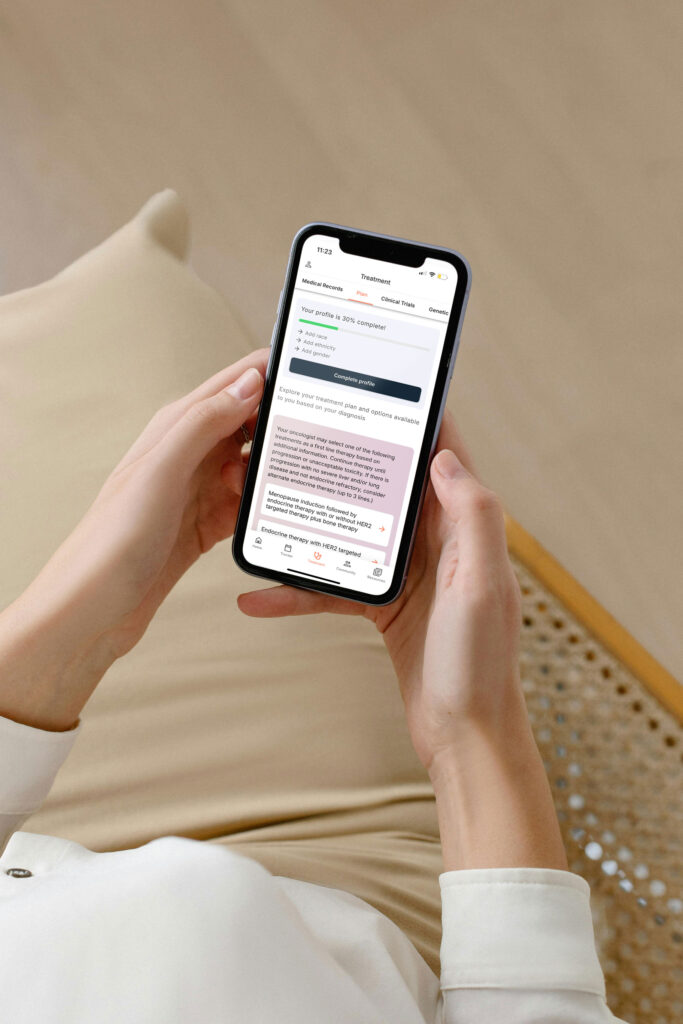
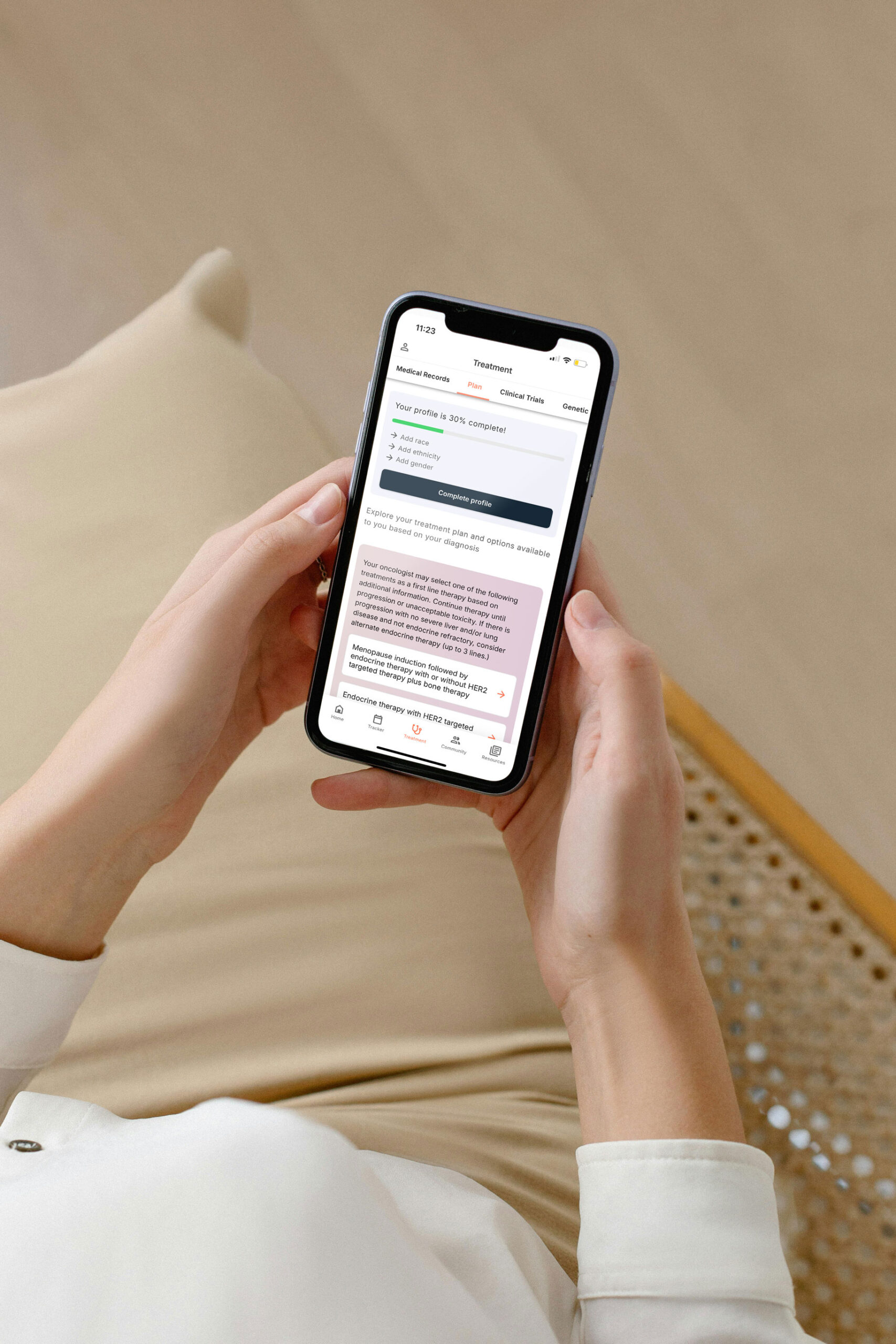
View your personalized treatment plan in the Outcomes4Me app
Use your diagnosis to unlock personalized NCCN Guidelines®-aligned recommendations.
Continue in app
Instead of viewing your support network as a “help group,” think of them as an extension of your care team. Your oncologist manages the clinical protocol. Your support network can help handle the things in between to make it more manageable. Both roles matter.
From vague to tangible: How to answer ‘What can I do to help?’
“Let me know if you need anything” puts the burden back on you to identify a need, decide if it’s worth mentioning, and then make the ask. That’s three emotional hurdles when you’re already exhausted. It’s much easier to respond and accept help if someone says, “I’m going to run by the grocery store today. What can I get for you?“ Specific offers remove the friction of asking, but not everyone communicates in that way.
Below are three categories to help you delegate tasks when someone offers help:
- Physical: Meal prep and delivery, transportation to appointments, childcare, housecleaning, pharmacy pickups,
- Emotional: Scheduled check-in calls, distraction activities (movie nights, walks), simply sitting with you without an agenda
- Administrative: Managing insurance paperwork, tracking bills, coordinating calendars, handling communications with friends and family
How to turn vague offers into real support
What they say | What you can say back
|
|---|---|
“Let me know if you need anything.” | “Actually — could you take over my Thursday grocery run this week?” |
“I want to help somehow.” | “Handling one insurance call would genuinely take something off my plate.” |
“Can I come by?” | “Yes — Tuesday works. You don’t need to bring anything, just your company.” |
“I’d love to bring food.” | “That would be wonderful. Low-sodium works best for me right now.” |
Having these responses ready transforms well-meaning but vague offers into real, usable support. Of course, delegating logistics is only one layer of what’s weighing on most patients — there’s also the relentless weight of medical information itself, which deserves its own strategy.
Delegating the ‘information burden’
Informational distress is the overwhelm that sets in when medical data, treatment options, and conflicting advice pile up faster than you can process them. If you find yourself researching your diagnosis during your free time, this burden may be adding to your existing stress. While it’s important to stay informed, information overload can exacerbate anxiety.
One way to offload the stress is to delegate information management, whether it’s to a trusted person or a specialized tool like Outcomes4Me. This role is especially valuable for tasks like clinical trial matching, where the landscape shifts constantly and irrelevant results create false hope or unnecessary fear.
For the helpers: How to offer support without adding stress
Good intentions don’t always translate into good support. One of the most common ways friends and family unintentionally add stress is by creating emotional labor for the patient.
The single most effective shift a helper can make: swap “How are you doing?” for something specific and actionable.
3 ways to offer real support
- Get concrete, not general. Instead of “Let me know if you need anything,” say “I’m dropping off dinner Thursday — does 6:00pm work?” Specificity removes the burden of asking.
- Show up consistently. A weekly dog walk beats a one-time flower delivery every time. Reliability is the real gesture.
- Respect silence. Sometimes presence matters more than conversation. Sit with them. Watch a show. Don’t require them to perform gratitude.
Reclaiming your energy for healing
Cancer treatment can make even the smallest daily tasks feel overwhelming, and accepting help is one way to protect your energy for what matters most: your care and well-being. Support doesn’t have to look dramatic to make a difference; sometimes it’s a ride to an appointment, help managing paperwork, or simply having someone sit beside you during a difficult day. You don’t have to navigate cancer alone, and allowing others to help can create more space for rest, healing, and connection.
Outcomes4Me is here to help you better understand your diagnosis and treatment options. You deserve clear, trustworthy information at every step.
Personalized support for real care decisions
Understand your diagnosis, explore clinical trials, and track symptoms--all in one place.
Get started
Compare treatments, prepare for appointments, and track side effects—all in the app
Built for your diagnosis, Outcomes4Me gives you the tools to make confident, informed decisions—right when you need them.
Continue in app