A cancer diagnosis changes your medical chart and everything about how you and your partner show up for each other, often within hours of hearing the words.
Cancer becomes a third party in your relationship: one that dictates your schedule, shapes your mood, and drains your finances without ever asking permission.
Before the diagnosis, you were partners navigating life together. Afterward, new roles quietly take over: one of you becomes a patient, the other a caregiver, and that shift carries real friction. The dynamic you’d spent years building doesn’t disappear, but it does get reorganized around treatment calendars, side effect management, and an anxiety that never fully leaves the room.
This reorganization touches every dimension of your relationship, including intimacy during cancer treatment, which often becomes one of the first casualties: exhaustion, fear, and role confusion crowd it out. Relationship quality is closely tied to how openly partners communicate through disruption.
Understanding why cancer strains relationships starts with recognizing that you’re not failing each other. You’re each responding, sometimes in opposite directions, to an uninvited presence that has fundamentally rewritten the rules. The question is what happens when those responses pull you apart instead of together, and one of the most common patterns behind that distance is something researchers call protective buffering.
Why we pull away: the trap of protective buffering
Cancer and relationships are fundamentally altered the moment one partner begins shielding the other from fear: a well-meaning instinct that quietly drives them apart.
Protective buffering is when one person, whether the patient or their partner, hides worries, downplays fears, or forces optimism specifically to avoid upsetting the other. It looks like love. In practice, it functions like a wall.
The mechanism behind it is straightforward: both partners want to protect each other from pain, so they each stop saying what they’re actually feeling. The patient doesn’t mention how scared they are because they don’t want to burden their partner. The partner stays relentlessly upbeat because they’re terrified of saying the wrong thing. Over time, both people feel increasingly alone, each performing a kind of emotional bravado for the other’s sake, while privately struggling. Research indicates that this pattern is linked to higher levels of psychological distress in both patients and partners, making it one of the more counterproductive coping strategies couples adopt.
Evidence-based guidance powered by NCCN Guidelines®
Personalized treatment plans shaped by the latest oncology standards—tailored to your diagnosis.
Get started
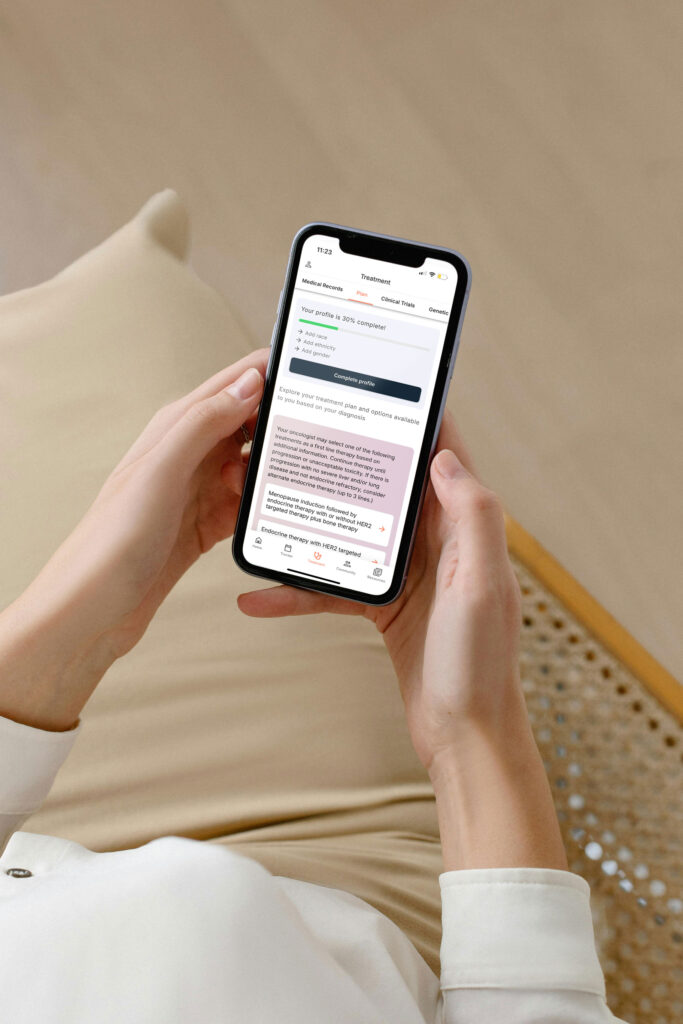
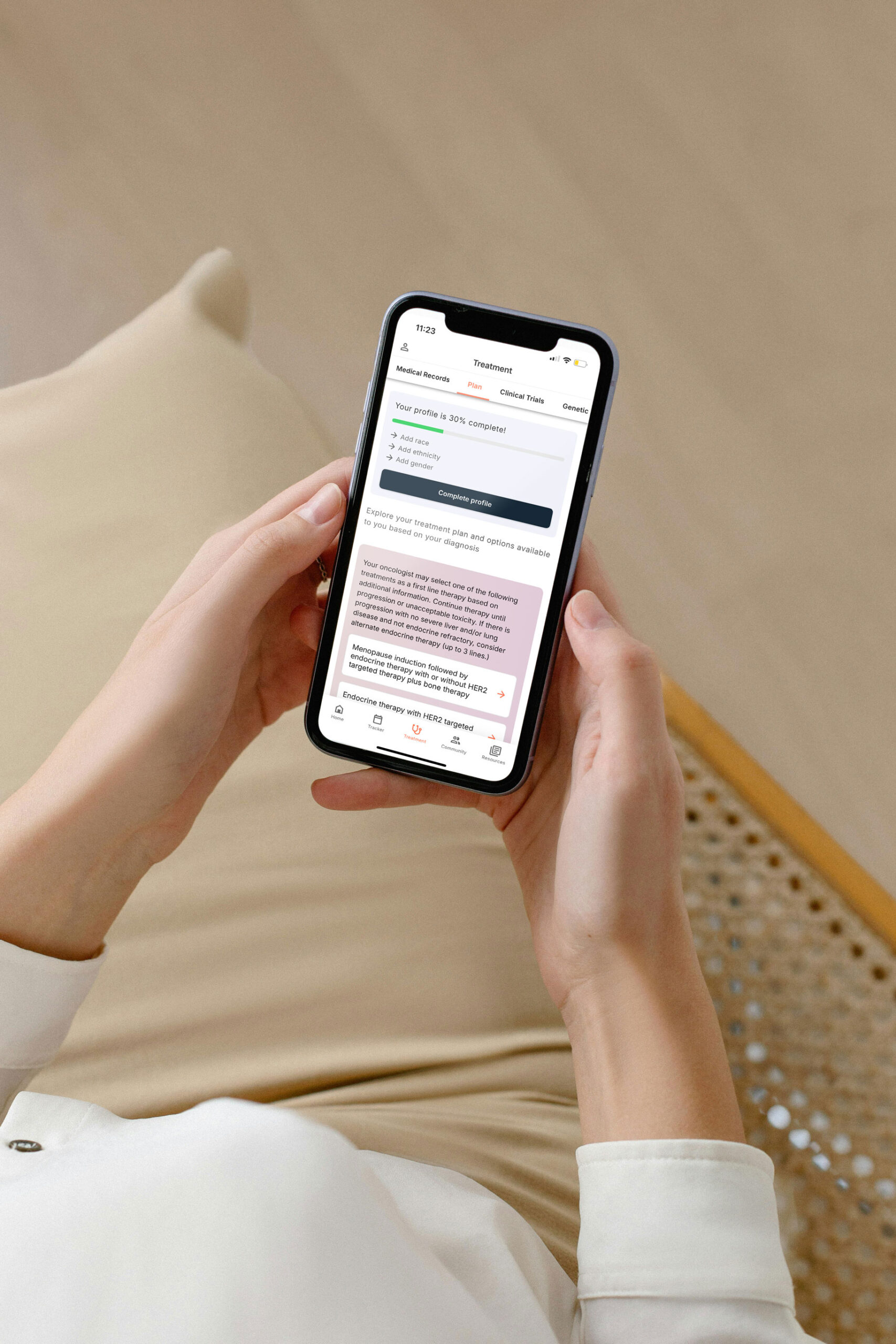
View your personalized treatment plan in the Outcomes4Me app
Use your diagnosis to unlock personalized NCCN Guidelines®-aligned recommendations.
Continue in app
The fear of saying the wrong thing is a particularly powerful driver of this silence. Partners often worry that naming a difficult emotion: grief, anger, even exhaustion, will make things worse or signal a lack of faith in recovery. That hesitation is understandable, but the silence it creates can feel like indifference to the person on the receiving end. What begins as caution hardens into distance.
This emotional withdrawal isn’t a sign that a relationship is failing. It’s a sign that two people are each trying, imperfectly, to carry something enormous. Understanding that distinction is the first step, and it opens the door to rethinking what genuine closeness can look like when the body itself has become unfamiliar territory.
Redefining intimacy during and after treatment
Understanding how cancer affects intimacy means looking beyond the physical, but the physical still matters enormously. Fatigue, hormonal shifts, surgical changes, and medication side effects can make a patient’s relationship with their body feel unrecognizable. For partners, navigating those changes without a roadmap often leads to avoidance: not from lack of love, but from fear of causing more pain.
Intimacy can be meaningful without sexual performance. Cancer treatment can affect intimacy, but experts recommend that couples explore physical closeness and touch in ways that feel comfortable without pressure for intercourse, and consider broadening their definition of what sexual activity and intimacy can include. This might look like:
- Holding hands during a treatment appointment
- Offering a gentle back rub without expectations
- Lying together in comfortable silence
- Slowly reintroducing touch as energy and comfort allow
These small, intentional acts rebuild the physical language of a relationship when words fall short.
Couples who openly discuss physical changes with their care team, and with each other, tend to maintain stronger connection through treatment and beyond. Regaining intimacy after cancer is often a gradual process. Many couples find that patience, open communication, and professional support, when available, can help navigate this challenge.
Cancer care guidance for every step of your journey
Get treatment options, clinical trials, and support tailored to your diagnosis--all in one place.
Get started
See treatment options, manage symptoms, and stay informed—all in the app
View treatment options and trials personalized to your diagnosis—plus track progress in real time.
Continue in appThe emotional weight of these changes is significant. Caregivers can prioritize their own well-being by seeking support through mental health professionals, support groups specifically for caregivers, and by maintaining open communication with their spouse or partner and loved ones. Managing the physical dimension of intimacy is hard enough, but underneath it lies an even greater challenge: the uncertainty that shapes nearly every decision a couple makes together.
Managing the mental load: data as a tool for connection
Uncertainty is the greatest driver of emotional distance after cancer diagnosis: more than pain, more than fatigue, and often more than the diagnosis itself. When neither partner knows what treatment comes next, or whether the current path is the right one, fear fills that gap.
Understanding the reasoning behind treatment choices helps reduce conflict. A common pattern is for disagreements to erupt not over facts, but over the absence of them.
In practice, empowerment through reliable information allows a couple to position themselves on the same side: together against the disease, rather than across from each other. That reorientation matters beyond the clinical. When both people feel informed, the power balance within the relationship stabilizes. Of course, even the most well-informed couples face exhaustion that data alone can’t resolve, which is something the person doing the caregiving often feels most acutely.
The caregiver’s dilemma: burnout and the myth of the tireless supporter
Caregiver burnout in marriage is one of the most underacknowledged consequences of a cancer diagnosis and one of the most damaging to long-term relationship health. The partner who steps into the caregiver role rarely does so with any expectation of recognition. They simply show up. But over months of managing medications, attending appointments, absorbing fear, and suppressing their own needs, emotional exhaustion sets in. This cycle, left unaddressed, can create emotional distance.
The patient-caregiver dynamic creates an inherent power imbalance that both partners often feel but rarely name. The patient carries the physical burden; the caregiver carries the invisible one. Caregivers frequently experience emotional exhaustion and withdrawal from the relationship as direct manifestations of burnout, not selfishness, but a natural human response to sustained output. Validating that experience isn’t a betrayal of the patient. It’s a prerequisite for the relationship surviving treatment intact. Caregivers who find their own support, whether through peer communities, therapy, or connecting with others navigating the same role, are better equipped to stay present without disappearing into the role entirely. Protecting a sense of individual identity outside of “caregiver” isn’t optional. It’s what makes sustained support possible. These dynamics are worth naming clearly before turning to practical strategies for rebuilding connection.
The bottom line: strategies for reconnection
Reconnection after a cancer diagnosis results from deliberate, consistent choices that both partners make together. Addressing fear of loss in relationships requires moving from avoidance into action, and the strategies below offer a practical starting point.
Establish cancer-free zones. Set aside dedicated time, even 20 minutes a day, where the disease simply isn’t the topic. No treatment updates, no symptom check-ins. This boundary protects the relationship’s identity and reminds both partners that they’re more than a diagnosis and a caregiver.
Practice radical transparency. As covered in earlier sections, protective buffering quietly erodes trust. Breaking that cycle means naming what you’re actually feeling: fear, grief, exhaustion, rather than presenting a curated version of it. Open cancer-related communication is directly linked to stronger relationship intimacy.
Broaden your definition of intimacy. When sexual intercourse isn’t feasible due to cancer treatment side effects, couples can explore alternate forms of intimacy such as holding hands, cuddling, and massage to maintain physical connection.
Use personalized health data to reduce uncertainty. When both partners can access clear, organized clinical information, the cognitive load on the relationship drops significantly. Communication exercises and psycho-oncology counseling are proven methods for reducing relationship distress. You can also connect with others managing similar dynamics.
None of these strategies require perfection. What they require is willingness, and that’s a resource both partners already have.
Personalized support for real care decisions
Understand your diagnosis, explore clinical trials, and track symptoms--all in one place.
Get started
Compare treatments, prepare for appointments, and track side effects—all in the app
Built for your diagnosis, Outcomes4Me gives you the tools to make confident, informed decisions—right when you need them.
Continue in app