
Triple-negative breast cancer (TNBC) follows a distinct recurrence pattern that sets it apart from every other breast cancer subtype, and understanding that pattern can change how you approach your recovery and monitoring.
TNBC behaves differently from hormone receptor-positive cancers, which can return quietly a decade or more after treatment. TNBC relapse shows a sharp peak at two to three years, followed by a rapid decline. Most recurrences happen within the first three years of diagnosis. This timeline has real implications for the conversations you have with your care team right now.
If the cancer hasn’t returned by year five, your ongoing risk drops significantly. TNBC has a high rate of recurrence within the first three years after treatment, but there’s a marked reduction after five years. Of course, that doesn’t mean surveillance ends.
It’s also worth understanding what “recurrence” means in practice. A local recurrence means cancer returns in or near the original site, the breast, chest wall, or nearby lymph nodes. A distant recurrence, or metastasis, means cancer has spread to other organs, most commonly the lungs, liver, or brain. The distinction matters because it shapes treatment options and monitoring intensity.
Your risk level after treatment depends on several factors, including tumor size, lymph node involvement, and how well the cancer responded to chemotherapy, a measure your care team may assess using a residual cancer burden score. How well your cancer responded to treatment turns out to be one of the strongest predictors of what comes next.
The power of pCR. Why your response to chemotherapy matters
Pathologic complete response (pCR) is the single most meaningful predictor of long-term outcomes for people with TNBC, and understanding what it means can genuinely change how you interpret your treatment results.
Neoadjuvant chemotherapy: Chemotherapy is given before surgery for TNBC. Doctors assess how well the tumor responds to this treatment when they examine the tissue removed during surgery.
Achieving pCR has an outsized impact on the TNBC recurrence rate. Patients who achieve pCR after neoadjuvant chemotherapy see their recurrence rate drop dramatically compared to those with residual disease remaining after treatment. How your tumor responds to chemotherapy may tell your care team more about your future risk than almost any other single factor.
Evidence-based guidance powered by NCCN Guidelines®
Personalized treatment plans shaped by the latest oncology standards—tailored to your diagnosis.
Get started
View your personalized treatment plan in the Outcomes4Me app
Use your diagnosis to unlock personalized NCCN Guidelines®-aligned recommendations.
Continue in app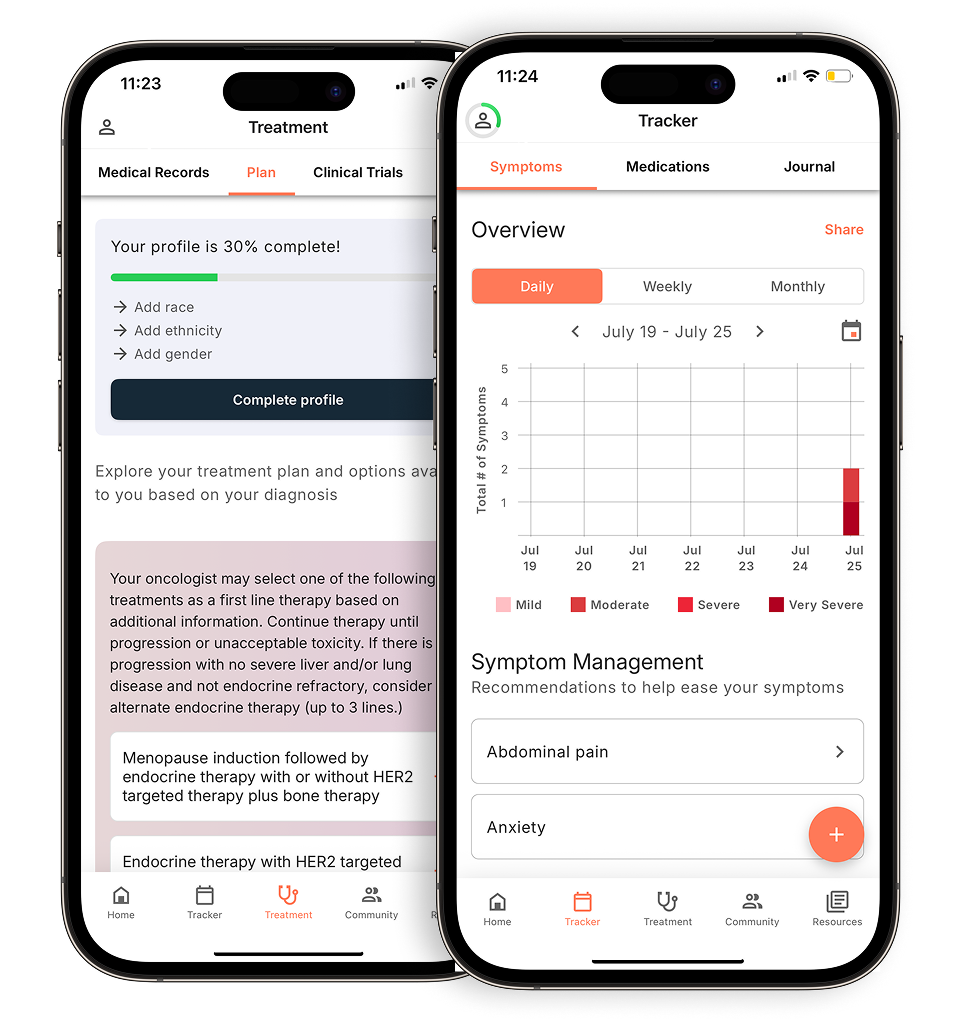
For patients who don’t achieve pCR, clinicians turn to the residual cancer burden (RCB) index, a standardized scoring system that quantifies how much disease remains after neoadjuvant treatment. The RCB score factors in tumor size, cellularity, and lymph node involvement to place patients into risk categories ranging from minimal residual disease (RCB-I) to extensive disease (RCB-III). This gives your care team a clearer, more nuanced picture than a simple “pCR or not” binary.
Not achieving pCR doesn’t mean recurrence is inevitable. It does, however, signal that closer monitoring and potentially additional therapies, such as capecitabine or immunotherapy, may be appropriate within your personalized care plan. Your care team should use this information proactively to shape the next steps in your treatment.
Clinical markers: tumor size, nodal status, and Ki-67
Staging variables remain the foundation of TNBC risk stratification. Tumor size and lymph node involvement are still the most established predictors of whether triple negative breast cancer may return. Larger tumors that have already spread to nearby lymph nodes signal a higher likelihood of systemic disease, which directly influences treatment intensity and follow-up frequency. Variables such as age 35 or younger, larger tumor size, and nodal status are primary drivers of recurrence rate.
Ki-67 is a tumor biomarker that is measured at the time of diagnosis and has been associated with treatment response in triple-negative breast cancer. Ki-67 is a marker that your care team may use to help assess how quickly your TNBC cells are dividing. Your doctor can explain what your specific Ki-67 results mean for your treatment plan.
Age adds another layer of complexity. Being under 35 at diagnosis is considered an independent risk factor in TNBC, separate from tumor biology. Younger patients may also face unique decisions around fertility preservation and hormonal health that intersect with broader conversations about how to lower risk of triple negative breast cancer recurrence. And as research evolves, metabolic health is entering this picture too. Visceral fat and metabolic status are emerging as prognostic indicators that clinicians are beginning to track alongside traditional staging.
Cancer care guidance for every step of your journey
Get treatment options, clinical trials, and support tailored to your diagnosis--all in one place.
Get started
See treatment options, manage symptoms, and stay informed—all in the app
View treatment options and trials personalized to your diagnosis—plus track progress in real time.
Continue in appLiquid biopsies and genomic testing
Traditional imaging like CT and PET scans are valuable tools, but they have limitations. They can only detect disease that’s already visible. For TNBC, where the recurrence rate is highest in the first three years, that lag time matters. Genomic testing for TNBC recurrence is changing what’s possible by moving surveillance from reactive to proactive at the molecular level.
circulating tumor DNA (ctDNA) is one of the most promising advances in this space. Shed by cancer cells into the bloodstream, ctDNA can signal the presence of residual disease long before it shows up on a scan. Tests like Signatera analyze tumor-specific mutations to detect what’s called molecular residual disease (MRD), essentially microscopic cancer activity that standard imaging simply can’t see. Liquid biopsies that detect ctDNA can help predict which patients with early-stage triple-negative breast cancer are at higher risk for recurrence after surgery.
BRCA1/2 genetic testing plays an equally important role in long-term planning. Because TNBC has a strong association with BRCA mutations, knowing your BRCA status directly shapes both surveillance intensity and treatment eligibility, including whether PARP inhibitors may be appropriate for you. Genomic testing helps identify patients who may benefit from targeted therapies in this context.
One clarification worth noting: Oncotype DX was originally developed for use in ER-positive breast cancers. Your oncologist can discuss whether genetic testing might be helpful in understanding your individual recurrence risk. Your care team will instead rely on tools calibrated specifically for TNBC biology, including BRCA testing and emerging MRD assays. Understanding how these options fit into a personalized care plan is exactly the kind of decision worth discussing with your oncologist, and where proactive therapies, explored in the next section, become especially relevant.
Proactive prevention. Adjuvant therapies and clinical trials
Researchers are investigating a 17-gene signature that may help identify which patients with TNBC are at higher risk for recurrence, potentially allowing clinicians to make more informed treatment decisions for individual patients. Adjuvant therapies, treatments given after primary therapy, are now standard of care for high-risk TNBC patients, and they’re directly lowering the odds of recurrence.
Two options have reshaped the adjuvant landscape in recent years:
- Immunotherapy (Pembrolizumab): For patients with high-risk TNBC, pembrolizumab is now used in both the neoadjuvant (pre-surgery) and adjuvant settings. Pembrolizumab works by helping your immune system recognize and destroy any remaining cancer cells that imaging can’t detect.
- PARP inhibitors (Olaparib): For patients with BRCA1 or BRCA2 mutations, olaparib is a targeted option that blocks a key DNA repair pathway cancer cells depend on. PARP inhibitors work by blocking DNA repair enzymes that cancer cells use to grow and spread. Both immunotherapy and PARP inhibitors are now recognized as standard adjuvant options for eligible high-risk patients.
For patients with high RCB scores or residual disease after neoadjuvant chemotherapy, clinical trials offer access to the next generation of prevention strategies, combinations, novel agents, and emerging targeted therapies that aren’t yet widely available. Enrolling in a trial isn’t a last resort; it’s often the most proactive step a high-risk patient can take.
The challenge is finding the right trial. Talk to your care team about whether adjuvant clinical trials make sense for your personalized care plan. The evidence, as the next section shows, gives real reason for optimism.
Talk to your care team about what resources and tools can help you track your health, understand your options, and prepare meaningful questions for your follow-up appointments. Taking an active role in the care decisions that matter most over the next five years is one of the most powerful things you can do.
Personalized support for real care decisions
Understand your diagnosis, explore clinical trials, and track symptoms--all in one place.
Get started
Compare treatments, prepare for appointments, and track side effects—all in the app
Built for your diagnosis, Outcomes4Me gives you the tools to make confident, informed decisions—right when you need them.
Continue in app