
What is biomarker testing?
Biomarker testing, also called molecular profiling, looks for specific features within a tumor that can help guide treatment decisions. Dr. Fuh explains that “molecular profiling” is actually a broad term that can mean different types of testing.
One common method is immunohistochemistry (IHC), which is performed directly on tumor tissue by a pathologist. Dr. Fuh adds that this testing “can be done by immunohistochemistry, which is something that the pathologist can do within the same lab that the surgery was performed in.”
Another type of testing is next-generation sequencing (NGS), which looks deeper at the tumor’s DNA and RNA. Dr. Fuh notes that this type of testing is “more like DNA and RNA level” analysis and is often sent out to specialized labs.
Evidence-based guidance powered by NCCN Guidelines®
Personalized treatment plans shaped by the latest oncology standards—tailored to your diagnosis.
Get started
View your personalized treatment plan in the Outcomes4Me app
Use your diagnosis to unlock personalized NCCN Guidelines®-aligned recommendations.
Continue in app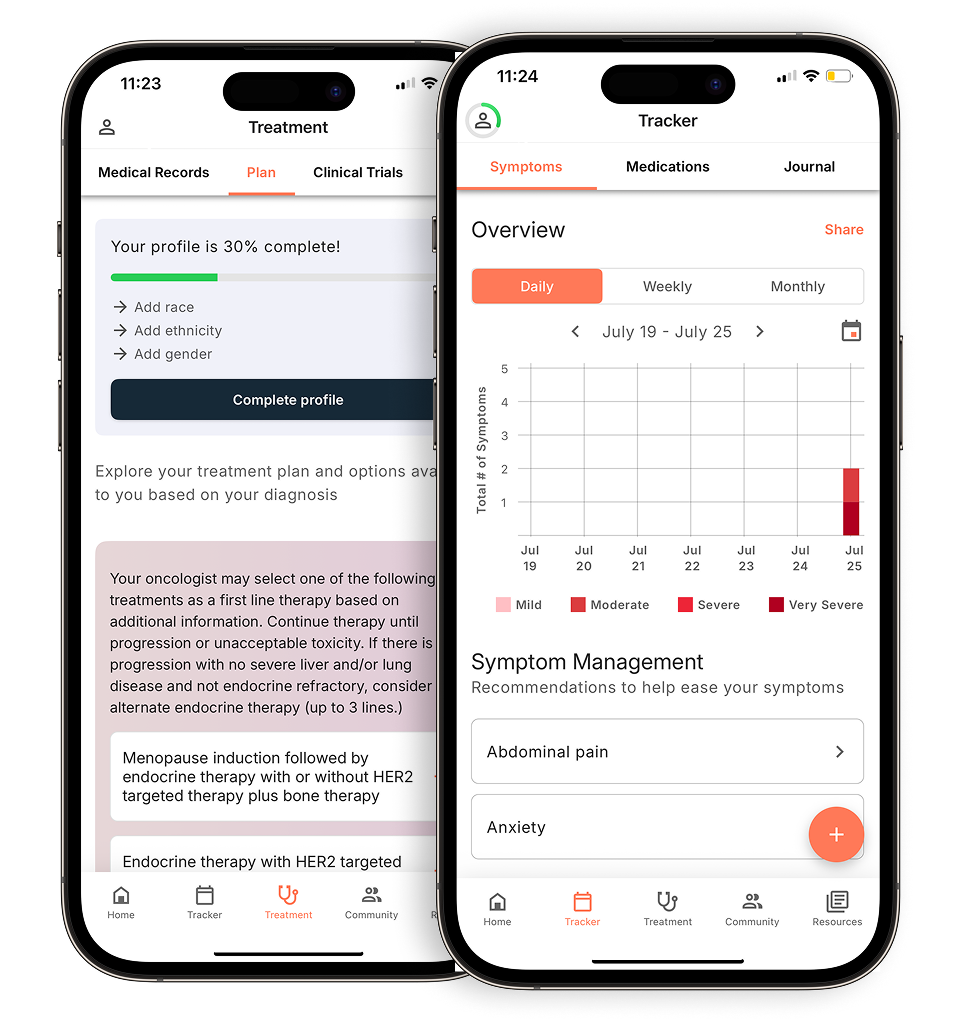
She describes the difference between the two approaches by explaining that immunohistochemistry looks at “what the signals are, the expression levels are, at that tumor level,” while next-generation sequencing examines “alterations or mutations” within the tumor’s DNA and RNA.
Should all patients with uterine (endometrial) cancer receive biomarker testing?
Patients often wonder whether molecular testing is only necessary for advanced cancers. Dr. Fuh explains that baseline molecular testing should be performed for essentially all patients with uterine (endometrial) cancer, regardless of stage.
“The type of molecular subtyping that should be done for all early-stage, advanced-stage, everything,” she says.
This testing can help doctors better classify the tumor and may become important later if treatment decisions need to be made after recurrence or progression.
Understanding common biomarkers in uterine (endometrial) cancer
Several biomarkers now play an important role in uterine (endometrial) cancer care. Here’s what patients should know about some of the most common findings.
MMR deficiency (dMMR) and MSI-high
Mismatch repair deficiency (dMMR) and microsatellite instability-high (MSI-high) are two biomarkers that patients commonly see on pathology or sequencing reports.
Dr. Fuh explains that these markers are closely related, saying, “This wording of mismatch repair deficiency and microsatellite instability high, those are very much the same.”
These biomarkers have become especially important because they may predict how well a patient responds to immunotherapy. Dr. Fuh shares, “Tumors that have MMRD, or MSI high, respond better to immunotherapy.”
While dMMR is typically identified through immunohistochemistry, MSI-high status is usually evaluated through next-generation sequencing at the DNA level.
p53 abnormalities
Another commonly discussed biomarker is p53, which Dr. Fuh describes as “a tumor suppressor.”
Under normal conditions, p53 helps prevent abnormal cell growth. However, when the gene is altered or mutated, “it then no longer can suppress the tumor as well,” Dr. Fuh adds.
P53 abnormalities can be identified through both protein-level testing with immunohistochemistry and DNA-level testing through sequencing.
POLE mutations
POLE mutations are another important molecular finding in uterine (endometrial) cancer. Unlike some other biomarkers that may be associated with more aggressive disease, POLE mutations are often linked to better outcomes. POLE mutations are identified through next-generation sequencing.
Dr. Fuh notes, “Tumors that have POLE mutations tend to do well,” adding that they are generally associated with good responses to standard therapy.
How biomarker testing influences treatment decisions
Biomarker testing is increasingly helping doctors tailor treatment plans, particularly for patients with advanced or recurrent uterine (endometrial) cancer.
For example, recent clinical trials have shown strong benefits for combining chemotherapy with immunotherapy in patients whose tumors are dMMR or MSI-high. Dr. Fuh explains that these biomarkers “correlate well with chemotherapy plus immunotherapy.”
She emphasizes that the major phase III trials evaluating these combinations “were really looking at advanced-stage or recurrent uterine (endometrial) cancer.”
As a result, immunotherapy is currently most commonly used in patients with advanced or recurrent disease. Dr. Fuh explains that oncologists often “focus the addition of immunotherapy to chemotherapy, followed by maintenance immunotherapy, to those with advanced and recurrent uterine (endometrial) cancer.”
For patients with earlier-stage disease, biomarker results still help guide conversations about prognosis, recurrence risk, and whether additional treatment should be considered based on other clinical factors.
Why biomarker testing matters
The understanding of endometrial cancer has evolved significantly over the past decade. Instead of treating all endometrial cancers the same way, doctors now recognize that tumors can behave very differently depending on their molecular characteristics.
Biomarker testing helps doctors:
- Better classify uterine (endometrial) cancer
- Identify patients who may benefit from immunotherapy
- Better predict prognosis
- Personalize treatment plans
- Guide future treatment decisions if the cancer recurs
As research continues to evolve, biomarker testing is expected to play an even larger role in helping patients receive more individualized care.
For more insights from Dr. Fuh, watch the full webinar recording here.
Personalized support for real care decisions
Understand your diagnosis, explore clinical trials, and track symptoms--all in one place.
Get started
Compare treatments, prepare for appointments, and track side effects—all in the app
Built for your diagnosis, Outcomes4Me gives you the tools to make confident, informed decisions—right when you need them.
Continue in app