
Your prostate cancer is unique. So, shouldn’t your treatment plan be too? This is the core idea behind personalized medicine, and a ctDNA test is a powerful tool to achieve it. By analyzing tiny fragments of tumor DNA in your blood, this simple test reveals your cancer’s specific genetic makeup. For those with ctdna prostate cancer, this form of circulating tumor dna testing gives your doctor a detailed genetic picture without an invasive procedure. This information helps identify the most effective targeted therapies, moving you toward a truly tailored care plan.
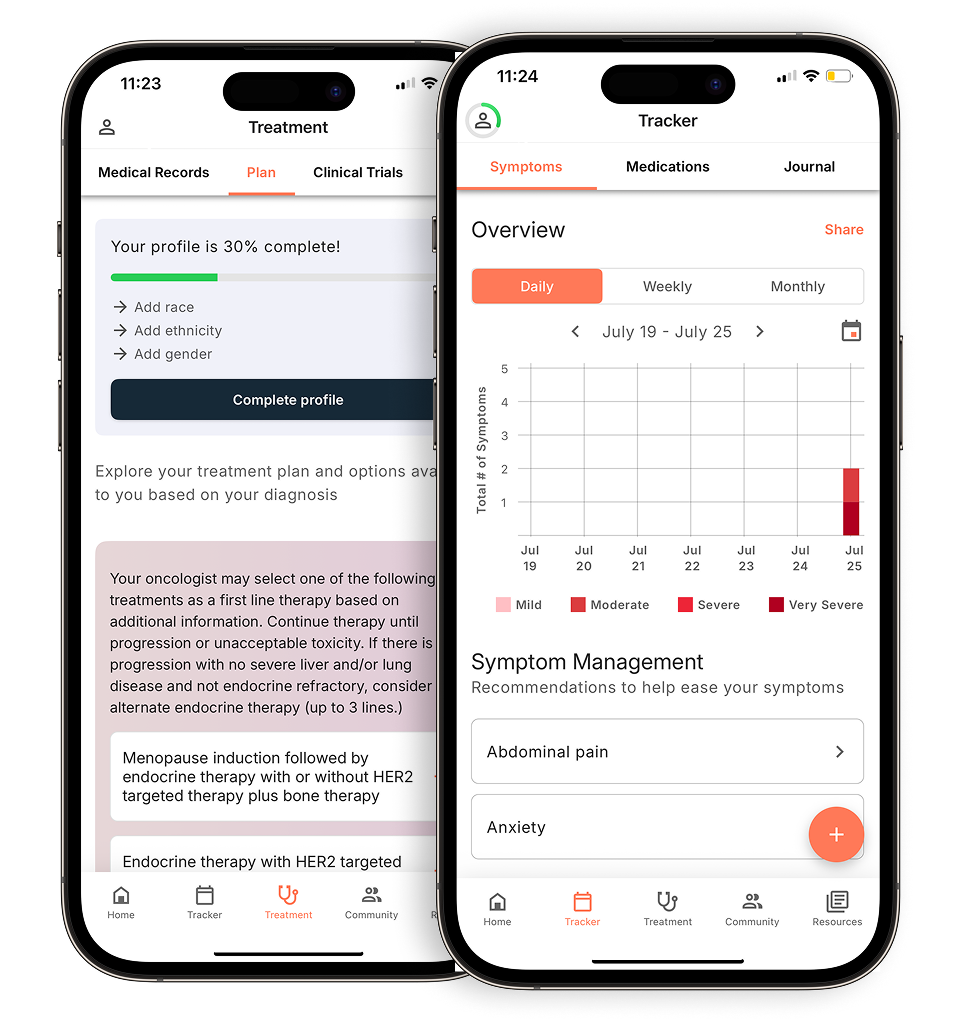
View your personalized treatment plan in the Outcomes4Me app
Use your diagnosis to unlock personalized NCCN Guidelines®-aligned recommendations.
Key Takeaways
- Get a complete picture with a simple blood test: A ctDNA test, or “liquid biopsy,” analyzes tumor DNA from your bloodstream, providing a comprehensive look at your cancer’s genetics without the need for an invasive tissue biopsy.
- Guide your treatment with precision: By identifying specific genetic mutations, ctDNA results help your care team choose targeted therapies that are more likely to be effective against your cancer’s unique profile.
- Track your treatment response quickly: Regular ctDNA testing allows your doctor to see how well a therapy is working much sooner than traditional scans, enabling proactive adjustments to your care plan to keep it effective.
What is circulating tumor DNA (ctDNA)?
If you or a loved one is managing prostate cancer, you’ll likely hear a lot of new terms. One you might come across is circulating tumor DNA, or ctDNA. Think of it as a set of genetic clues that cancer cells leave behind in your bloodstream. When tumor cells break down, they release tiny fragments of their DNA, and these fragments can be detected with a special blood test.
For many people with metastatic castrate-resistant prostate cancer, ctDNA can be a valuable biomarker. This means it can provide important information about your health. By analyzing this DNA, your care team can get a clearer picture of the cancer’s genetic makeup, which can help them understand your prognosis and see how well a treatment is working. It’s a way to monitor the cancer without needing to perform an invasive procedure.
How ctDNA enters your bloodstream
You might be wondering how DNA from a tumor ends up in your blood. It’s a natural process. As cancer cells grow and multiply, some of them also die and break apart. When this happens, they release their contents, including small pieces of their DNA, into the bloodstream.
These DNA fragments then circulate throughout your body along with your blood cells. Because this DNA comes directly from the tumor, it carries the same genetic mutations and characteristics as the cancer itself. This allows doctors to study the tumor’s genetics simply by taking a sample of your blood.
How often is ctDNA found in advanced prostate cancer?
If you have advanced prostate cancer, there’s a good chance ctDNA can be found in your blood. Research shows that it’s detectable in the majority of men with metastatic castrate-resistant prostate cancer (mCRPC)—a form of prostate cancer that has spread and is no longer responding to hormone therapy. For example, one study found that about 64% of blood samples from men with mCRPC had detectable ctDNA. This is significant because the presence of ctDNA can act as a prognostic biomarker, giving your care team valuable insights into how your cancer might progress and helping to inform your treatment plan.
What is a ‘liquid biopsy’?
A ctDNA test is often called a “liquid biopsy.” The name might sound complex, but the idea is simple: it’s a way to get information about a tumor from a liquid sample—in this case, blood—instead of a solid tissue sample. A traditional biopsy often requires a needle or surgery to remove a piece of the tumor for analysis. A liquid biopsy, on the other hand, is a non-invasive test that just requires a standard blood draw.
This approach offers a powerful way to learn about a tumor’s genetic profile. The information gathered from a liquid biopsy can help your care team make more informed decisions, moving you toward a more personalized treatment plan that is tailored to the specific characteristics of your cancer.
How does ctDNA help manage prostate cancer?
Think of ctDNA testing as another helpful tool in your care team’s toolkit. It offers a unique, real-time window into what’s happening with the cancer, providing valuable information that can help guide decisions at several key moments in your journey. From understanding the cancer at diagnosis to monitoring it over the long term, this simple blood test can play a significant role in personalizing your care plan and giving you and your doctors a clearer picture of your health.
Can ctDNA testing find cancer earlier?
The amount of ctDNA found in a blood sample can give your doctor important clues about the cancer. Generally, higher levels of ctDNA can suggest that a tumor is larger or more advanced. This is because as a tumor grows, it sheds more of its DNA into the bloodstream. This information helps your care team better predict how the cancer might behave and choose the most effective treatment path right from the start. Understanding the circulating tumor DNA landscape provides a baseline that can be used to measure progress and make informed decisions throughout your care.
How ctDNA shows if your treatment is working
One of the most powerful uses of ctDNA testing is to see how well a treatment is working, often much sooner than a traditional scan could. By measuring ctDNA levels shortly after you begin a new therapy, your doctor can get an early indication of whether the cancer is responding. For example, studies show that changes in ctDNA levels just four weeks after starting treatment can be a reliable sign of its effectiveness. This quick feedback loop allows your care team to confirm you’re on the right track or, if needed, pivot to a different approach without losing valuable time.
Using ctDNA to monitor your cancer over time
Beyond the initial diagnosis and treatment response, ctDNA tests can be used over time to monitor the cancer. If ctDNA levels that were once undetectable reappear, it could be an early sign that the cancer is active again, sometimes before any symptoms appear. Research has shown that the amount of ctDNA in the blood can be a strong predictor of how the cancer might progress. In fact, the percentage of ctDNA in a sample has been shown to be a powerful indicator of treatment response and overall survival. Having detectable ctDNA is an important piece of information for your care team as they create your long-term monitoring plan.
What can ctDNA levels tell you about your prognosis?
Understanding your prognosis, or the likely course of your cancer, can feel overwhelming. It’s a conversation filled with complex information. Circulating tumor DNA (ctDNA) testing adds a new, personalized layer to this discussion. By measuring the amount of ctDNA in your bloodstream, your care team can gain valuable insights into how your cancer might behave over time, helping to create a clearer picture of the road ahead. This information isn’t about predicting the future with certainty, but about using every available tool to make the most informed decisions for your care.
How ctDNA levels relate to your prognosis
Think of the amount of ctDNA in your blood as a signal. Generally, the strength of this signal can be connected to your prognosis. Research shows that the percentage of ctDNA in a blood sample strongly predicts overall survival and how long you might go without the cancer progressing. Patients with detectable ctDNA in their blood may have different outcomes than those with undetectable levels. This doesn’t tell the whole story, of course, but it provides your doctor with a crucial piece of information to consider alongside everything else they know about your health.
The link between ctDNA fraction and survival rates
The specific percentage of ctDNA in your blood sample, known as the ctDNA fraction, is a key piece of the puzzle. Research has shown this number is a strong indicator of how aggressive the cancer is and can provide insight into survival rates. For example, one study found that patients with very high ctDNA levels had a greater chance of their cancer worsening on treatment compared to patients with very low levels. This doesn’t define your journey, but it gives your care team a clearer, data-driven understanding of the cancer’s behavior. This allows them to tailor your treatment and monitoring plan more precisely to your specific situation from the very beginning.
Can ctDNA predict your response to treatment?
One of the most powerful aspects of ctDNA testing is its ability to offer quick feedback on your treatment. Instead of waiting months for a scan to see if a therapy is working, your doctor can look for changes in your ctDNA levels. In some studies, significant changes in ctDNA levels just four weeks after starting a new treatment helped show whether it was effective. A drop in ctDNA is an encouraging sign that the cancer is responding. This allows your care team to confirm you’re on the right track or, if needed, quickly pivot to a different approach.
How ctDNA changes during treatment predict outcomes
Watching your ctDNA levels change over time gives your care team a dynamic report card on your treatment. A significant drop in ctDNA, especially within the first few weeks of starting a new therapy, is a powerful early indicator that the treatment is working effectively. This isn’t just a hopeful sign; research shows that a reduction in ctDNA predicts longer survival and more time before the cancer may progress. For example, patients in some studies whose ctDNA levels went from detectable to undetectable after about a month of treatment had significantly better outcomes. This real-time feedback allows your doctor to confirm you’re on the right path or make timely adjustments to your care plan, ensuring you’re always receiving the most effective therapy for your specific cancer.
Understanding your personal risk with ctDNA
Your ctDNA level is another piece of the puzzle that helps your care team understand your individual situation. For example, some research has found that patients with detectable ctDNA when they start treatment may have a different prognosis than those with undetectable levels. Knowing this helps your doctor tailor your monitoring and treatment plan specifically to you. If your ctDNA levels are higher, your team might recommend more frequent check-ins or consider different treatment strategies. It’s all about personalizing your care plan based on the unique biology of your cancer.
How cancer location affects ctDNA levels
Where cancer has spread in the body can also influence the amount of ctDNA in your bloodstream. For instance, research shows that ctDNA levels are often highest in people whose cancer has spread to the liver. This is likely because the liver has a rich blood supply, allowing more tumor DNA to enter circulation. In prostate and other cancers, higher ctDNA levels can indicate that the disease is more advanced or aggressive. This information doesn’t tell the whole story, but it gives your care team another layer of insight, helping them build a more complete picture of your cancer’s behavior and tailor your care plan accordingly.
Why choose a ctDNA test over a traditional biopsy?
If you’ve been diagnosed with prostate cancer, you’re likely familiar with tissue biopsies. They are a standard and essential tool for diagnosis and for learning about the characteristics of a tumor. However, getting a tissue sample can be an invasive process. This is where a ctDNA test, often called a “liquid biopsy,” comes in as a valuable alternative. It’s a different way to get similar, and sometimes even more comprehensive, information about the cancer.
A ctDNA test isn’t meant to replace traditional biopsies in every situation, but it offers some clear advantages that can make a real difference in your care. Think of it as another powerful tool your care team can use. These tests are less invasive, can provide a more complete genetic picture of the cancer throughout your body, and allow for easier, more frequent monitoring of your treatment. Understanding these benefits can help you have more informed conversations with your doctor about the best approach for you.
Why a liquid biopsy is a less invasive option
One of the most significant benefits of a ctDNA test is that it’s much simpler and more comfortable than a traditional tissue biopsy. The entire process involves a routine blood draw, just like the ones you’ve probably had many times before. There’s no need for a surgical procedure, sedation, or recovery time.
This is a major contrast to a tissue biopsy, which can be an invasive procedure that may cause discomfort and carry a small risk of complications like bleeding or infection. Because a liquid biopsy is so much easier on the body, it can be a welcome option, especially if you need to have your cancer’s genetics checked more than once during your treatment journey.
How ctDNA compares to PSA testing
If you’re managing prostate cancer, you’re probably very familiar with the Prostate-Specific Antigen, or PSA, test. For a long time, it has been the go-to blood test for monitoring the disease. However, PSA levels can sometimes be misleading since they measure a protein produced by both healthy and cancerous prostate cells. This can sometimes lead to false positives or negatives. A ctDNA test, on the other hand, offers a more direct and precise look at the cancer itself by analyzing DNA shed directly from the tumor. Research shows that changes in ctDNA levels after treatment are better at predicting how well a therapy is working and for how long compared to changes in PSA. This gives your care team a more sensitive and timely tool to understand your response to treatment.
How ctDNA provides a fuller picture of your cancer
A single tumor can be made up of cells with different genetic mutations. A traditional biopsy takes a sample from just one part of one tumor, which means it might not capture the full story. It’s like trying to understand a whole puzzle by looking at just one piece.
A ctDNA test, however, gathers genetic material that has been shed from cancer cells all over your body. This gives your doctors a more comprehensive, system-wide view of your cancer’s genetic makeup. This broader perspective is incredibly useful for personalizing your care. As research from UroToday highlights, this analysis can help show if you’re likely to benefit from certain targeted drugs, guiding more effective treatment decisions.
Monitoring changes in your cancer in real time
Cancer can change over time, and so can its response to treatment. Since ctDNA tests are simple blood draws, they can be done more often than tissue biopsies. This allows your care team to monitor how your cancer is responding to therapy in almost real time.
This frequent monitoring provides a dynamic view of your health. If a treatment is working well, your ctDNA levels may decrease. If the cancer is becoming resistant, ctDNA levels might rise, signaling that it may be time to adjust your treatment plan. This ability to get quick and reliable feedback helps your doctor stay one step ahead, making timely changes to keep your care on the right track. It transforms cancer management from a series of snapshots into a continuous movie.
What genetic mutations can ctDNA find in prostate cancer?
A ctDNA test acts like a genetic detective, searching your bloodstream for clues about your cancer’s unique makeup. These clues come in the form of genetic mutations—tiny changes in the cancer cells’ DNA that control how they grow, spread, and respond to treatment. By identifying these specific mutations, your care team can get a much clearer picture of what’s driving your cancer. This information is powerful because it can help pinpoint which therapies are most likely to be effective for you, opening the door to more personalized and targeted treatment plans. Let’s look at some of the key genetic mutations a ctDNA test can find in prostate cancer.
Finding androgen receptor (AR) alterations
The androgen receptor, or AR, acts like a docking station for hormones like testosterone, which can fuel the growth of prostate cancer. Many treatments work by blocking this receptor to cut off the cancer’s fuel supply. However, cancer can be clever and sometimes develops changes in the AR gene to get around these treatments. A ctDNA test can spot these AR gene alterations, which can help explain why a certain therapy might not be working as well as it used to. Identifying these changes allows your doctor to monitor your cancer’s evolution and make informed decisions about the next steps in your care plan.
Identifying BRCA1 and BRCA2 gene mutations
You may have heard of BRCA genes in relation to other cancers, but they play an important role in prostate cancer, too. BRCA1 and BRCA2 are genes that are supposed to help repair damage in your DNA. When they have mutations, this repair system breaks down, which can allow cancer to grow. A ctDNA test can identify BRCA1 and BRCA2 mutations, and finding them can be a positive turning point. That’s because cancers with these mutations are often vulnerable to a specific class of drugs called PARP inhibitors. This knowledge helps your care team personalize your treatment by choosing a therapy designed to target that exact weakness.
Detecting changes in TP53 and PTEN genes
Think of TP53 and PTEN as your body’s internal supervisors. They are tumor suppressor genes, and their job is to keep cells from growing and dividing out of control. When there are mutations in the TP53 and PTEN genes, these supervisors can’t do their job effectively, which can sometimes lead to more aggressive cancer. Detecting these mutations with a ctDNA test provides your care team with valuable information about the nature of your cancer. For instance, it might suggest that the cancer could be resistant to certain treatments, helping your doctor create a more proactive and realistic care plan tailored to your specific situation.
Detecting MYC, BRAF, and PIK3CA amplifications
Beyond looking for changes within a gene, a ctDNA test can also check if there are too many copies of certain genes. This is called an amplification, and it’s another important clue that can tell your doctors more about how the cancer is behaving. Think of it like a volume knob—an amplification means the signal from that particular gene is turned way up. Identifying these amplifications helps your care team build an even more detailed picture of your cancer’s unique biology, which is key to personalizing your treatment plan.
The prognostic impact of specific gene amplifications
Recent research shows that amplifications in a few specific genes can be especially insightful for metastatic castration-resistant prostate cancer. For example, extra copies of the MYC gene can be a sign of a more aggressive cancer. Similarly, BRAF amplifications can also point to more active disease. Finding an amplification in the PIK3CA gene may suggest a higher likelihood of the cancer spreading to the liver or lungs. This information doesn’t define your journey, but it gives your care team a clearer understanding of the cancer’s potential behavior, allowing them to create a more proactive and tailored care plan for you.
What to expect during a ctDNA test
If your doctor has recommended a ctDNA test, you might be wondering what the process involves. The good news is that it’s usually a simple and straightforward experience. Unlike a traditional tissue biopsy, a ctDNA test doesn’t require an invasive procedure. It’s all done with a blood sample, which is why it’s often called a “liquid biopsy.” This approach gives your care team valuable information about the cancer without the discomfort of a surgical biopsy. Let’s walk through the steps, from the initial blood draw to discussing the results with your care team, so you know exactly what to expect.
Your ctDNA test: from blood draw to lab
The process for a ctDNA test starts just like any other routine blood test. A nurse or phlebotomist will draw a small sample of blood from a vein in your arm. That’s it—no special preparation is needed on your part. Once collected, your blood sample is sent to a specialized laboratory. There, scientists use advanced technology to find and isolate the tiny bits of tumor DNA floating in your blood. This process allows them to analyze the genetic makeup of the cancer cells without ever needing a piece of the tumor itself.
How to read your results and when they’ll arrive
After your blood is analyzed, the lab will send a report to your doctor. It usually takes a couple of weeks to get the results back, but your care team can give you a more specific timeline. The report will detail if ctDNA was found and in what amount. More importantly, it can identify specific genetic mutations in the cancer cells. Research shows that changes in ctDNA levels, sometimes in as little as four weeks, can be a quick indicator of whether a treatment is working. Your doctor will go over the report with you, explaining what each finding means for your specific situation.
Where ctDNA testing fits in your overall care plan
A ctDNA test isn’t just a one-off piece of information; it’s a tool that can become an active part of your care plan. The results can help your doctor make more personalized treatment decisions, like choosing a therapy that targets a specific mutation found in your cancer. Because the test is so simple, it can be repeated over time to monitor your cancer’s response to treatment. This ongoing monitoring helps your care team see if a treatment is still effective or if the cancer is developing resistance. This information is key to guiding treatment choices and making timely adjustments to your plan, keeping your care as effective as possible.
Using ctDNA to personalize your prostate cancer treatment
One of the most powerful aspects of ctDNA testing is its ability to help your care team create a treatment plan that’s tailored specifically to you. By analyzing the genetic makeup of the cancer cells circulating in your blood, your doctor gets a detailed blueprint of what’s driving the cancer. This information isn’t just interesting—it’s actionable. It helps guide decisions about which therapies might be most effective, allows for real-time adjustments to your plan, and can signal when it might be time to try a different approach. Think of it as giving your care team a direct line of communication with the cancer, so they can stay one step ahead.
How ctDNA helps select the right targeted therapy
A ctDNA test can identify specific genetic mutations in the cancer cells, which can open the door to targeted therapies. For example, the test might find mutations in genes like BRCA1 or BRCA2. When doctors know these mutations are present, they can select targeted drugs like PARP inhibitors that are designed to work against cancers with those exact genetic changes. This approach is much more precise than traditional chemotherapy because it attacks the cancer’s specific vulnerabilities. By matching the treatment to the tumor’s genetic profile, your care team can choose a therapy with a higher chance of success from the start.
Making adjustments to your treatment plan
Once you’ve started a treatment, ctDNA tests can offer a quick and reliable way to see if it’s working. By measuring the amount of ctDNA in your blood over time, your doctor can get a sense of how the cancer is responding. If the ctDNA levels are going down, it’s a good sign that the treatment is effective. If the levels stay the same or increase, it might mean the treatment isn’t having the desired effect. This information helps your care team assess your response to treatment much sooner than imaging scans might, allowing for timely conversations about adjusting your care plan.
Can ctDNA detect treatment resistance sooner?
Cancers can be clever, and sometimes they develop ways to resist a treatment that was once working well. A major benefit of ctDNA testing is its ability to detect signs of treatment resistance early on. Changes in the ctDNA can show up weeks or months before they would be visible on a scan. For instance, a study showed that changes in ctDNA levels just four weeks after starting a new therapy could predict how well it would work long-term. This allows your care team to be proactive, guiding early treatment switches to a more effective option without losing valuable time.
Tracking cancer evolution through ctDNA
Cancer isn’t a static disease; it can change and adapt over time, a process often called cancer evolution. A ctDNA test gives your care team a powerful way to track these changes as they occur. Since the test is just a simple blood draw, it can be done regularly to provide a near real-time view of how the cancer is behaving. This frequent monitoring creates a dynamic picture of your health. If a treatment is working well, your ctDNA levels will likely decrease. If the cancer is developing resistance, the levels might rise, giving your doctor an early signal—often weeks or months before a scan could—that it may be time to adjust your treatment plan. This allows your care team to stay proactive, making informed decisions based on the most current information about your cancer’s evolution.
What to discuss with your doctor before a ctDNA test
A ctDNA test can offer valuable information, but it’s natural to have questions about what to expect. Understanding the process, from the results to the emotional side of things, can help you feel more prepared. It’s all about arming yourself with knowledge so you can have productive conversations with your care team and feel confident in your treatment path. Think of this test as another tool in your toolkit, helping you and your doctors make the most informed decisions possible for your health.
How to make sense of your ctDNA test results
After your blood is drawn and analyzed, your care team will receive a report. This report isn’t just a one-time snapshot; it’s a dynamic piece of information. By tracking your ctDNA levels over time, your doctor can see how your cancer is responding to treatment. For example, rising ctDNA levels might suggest a treatment isn’t as effective as hoped, while falling levels are a good sign. Because ctDNA testing can show changes quickly, it allows your doctor to adjust your care plan sooner. This means you can switch to a more effective therapy without losing valuable time on one that isn’t working for you.
Finding emotional support during the testing process
Waiting for test results can be stressful, and it’s completely normal to feel a mix of hope and anxiety. While it might seem like more information could lead to more worry, many people find the opposite to be true. In fact, studies show that most patients feel more reassured and confident in their care after receiving personalized ctDNA results. Having this detailed information can make you feel more in control and involved in your treatment decisions. Remember to lean on your support system—family, friends, and your care team—and don’t hesitate to share how you’re feeling.
Key questions to ask your care team about ctDNA
Open communication with your doctor is key. Before your test, you might want to ask how the results will be used to guide your treatment and what the possible outcomes could mean. Your doctor can use ctDNA tests to get a faster understanding of how you are responding to therapy. You can also ask if a liquid biopsy is the right choice for you at this time. Researchers have even developed tools that use your health information to predict if a blood test for cancer DNA will be useful, helping your doctor make the best recommendation. Being prepared with questions helps ensure you and your care team are on the same page.
How ctDNA technology is improving
The science behind ctDNA testing is moving forward at an incredible pace. Researchers and doctors are constantly finding new ways to make these tests more sensitive, accurate, and useful for people with prostate cancer. These advancements are making it easier to get a clear picture of what’s happening with the cancer, often with just a simple blood draw. Let’s look at a few of the most exciting improvements happening right now.
Improving accuracy with smaller blood samples
One of the biggest challenges with ctDNA is that the amount of cancer DNA in the blood can be very small and hard to find. But newer tests are becoming much more sensitive. For example, researchers have developed a test that can successfully find ctDNA in men with advanced prostate cancer, even when working with small blood samples. This is a significant step forward because it means more people may be able to get reliable results from a liquid biopsy, helping their care team gather the information needed to guide treatment decisions.
The push for earlier and more accurate detection
Beyond just finding ctDNA, new methods are helping doctors understand what it means for your prognosis and treatment. Studies show that measuring the amount of ctDNA in your blood at the beginning of treatment can help predict how the cancer might progress. Even more, checking those levels again just four weeks after starting a new therapy can give a quick indication of whether the treatment is working effectively. This rapid feedback allows you and your care team to make timely adjustments to your care plan, ensuring you’re on the most effective path possible.
How AI is making ctDNA tests even smarter
Technology like artificial intelligence (AI) is also playing a big part in improving ctDNA testing. Sometimes, the amount of ctDNA in a blood sample is too low to provide a clear genetic picture. To address this, scientists are using machine learning to predict whether a patient has enough ctDNA for a test to be informative. This smart technology helps doctors decide if a liquid biopsy is the right choice at that moment, preventing inconclusive results and making the testing process more efficient. It’s a great example of how advancements in AI are helping to personalize cancer care.
Future research and clinical trials
The field of ctDNA is constantly evolving, and researchers are working hard to make this technology even more helpful for people with prostate cancer. A major focus is on making treatment more personal. For example, ongoing studies are exploring how to personalize treatment choices based on ctDNA results. Scientists are also working to better understand how specific genetic changes found in ctDNA affect outcomes, which will help refine which therapies work best for whom. Looking ahead, future clinical trials may even group patients based on their ctDNA levels to get clearer results. There’s also exciting research into whether ctDNA information could be used earlier to guide decisions about initial treatments, potentially leading to more effective care right from the start.
What are the limitations of ctDNA testing?
While ctDNA testing is an exciting development in cancer care, it’s helpful to know that the technology still has some limitations. Like any medical test, it isn’t perfect, and understanding its current challenges can help you have more informed conversations with your care team about whether it’s the right choice for you. Researchers are working hard to improve the technology, but for now, there are a few key things to keep in mind when considering a liquid biopsy. These factors include the stage of your cancer, the consistency of testing methods, and the practical issues of cost and access.
Why it can be challenging to detect early-stage cancer
One of the main challenges with ctDNA testing is its effectiveness in early-stage prostate cancer. Tumors in the early stages often shed very little ctDNA into the bloodstream, which can make it difficult for a test to detect. This means a liquid biopsy might not be sensitive enough to find cancer when it first develops or to monitor it effectively if it hasn’t spread. Because of this, ctDNA tests are currently more reliable for tracking advanced or metastatic cancer, where the amount of tumor DNA in the blood is typically higher and easier to measure.
The importance of consistent standards across labs
Another area of focus is creating consistent standards for how ctDNA tests are performed and analyzed. Right now, there can be variability in testing methods and interpretation from one lab to another. This can sometimes lead to different results, which makes it harder for doctors to apply the information to your care plan with complete confidence. The medical community is actively working to standardize these processes to ensure that no matter where you get a ctDNA test, the results are consistent, reliable, and can be trusted to guide important treatment decisions.
Addressing challenges with cost and insurance coverage
Finally, there are practical considerations like cost and insurance coverage. Liquid biopsies can be expensive, and they may not always be covered by insurance plans, which can make them inaccessible for some people. For ctDNA testing to become a routine part of cancer care, it needs to be affordable and widely available. Doctors, researchers, and patient advocates are working together to address the challenges of cost and access so that more people can benefit from the valuable insights this technology can provide.
Related Articles
- Prostate cancer risk groups: a simple guide
- What genetic markers are relevant for prostate cancer patients?
- Prostate cancer screening: when should you get screened?
- Prostate cancer archives
- Blood test predicts breast cancer outcomes (ctDNA study)
View your personalized treatment plan in the Outcomes4Me app
Use your diagnosis to unlock personalized NCCN Guidelines®-aligned recommendations.
Frequently Asked Questions
How is a ctDNA test different from a traditional tissue biopsy? Think of a traditional biopsy as taking a single, detailed photo of one part of a tumor. It’s an essential tool, but it requires an invasive procedure to get that picture. A ctDNA test, or liquid biopsy, is more like a video of the entire system. It uses a simple blood draw to capture genetic information that cancer cells from all over your body have shed into your bloodstream. This gives your care team a broader, more current view of the cancer’s genetic makeup without the need for a surgical procedure.
What does it mean if my ctDNA test comes back with ‘undetectable’ levels? Seeing an “undetectable” result is generally very encouraging news. It often means that your treatment is working effectively and has reduced the amount of cancer DNA in your blood to a level so low that the test can’t find it. However, it’s important to remember that this is just one piece of information. Your care team will use it alongside your scans and other check-ins to monitor your health. It’s a positive sign, but not a final declaration that the cancer is gone forever.
How quickly can a ctDNA test show if my treatment is working? This is one of the most powerful aspects of ctDNA testing. While traditional scans can take a few months to show changes in a tumor’s size, a ctDNA test can give your doctor an early signal much faster. In some cases, changes in your ctDNA levels can be seen in as little as four weeks after starting a new therapy. This quick feedback allows you and your care team to confirm you’re on the right path or, if needed, discuss other options without losing valuable time.
Can this test predict my future with certainty? While a ctDNA test provides powerful insights into your prognosis, it isn’t a crystal ball. The amount of ctDNA in your blood is strongly linked to outcomes and can help your doctor understand how the cancer might behave. However, it’s just one tool among many that your care team uses to build a complete picture of your health. It helps guide the most informed decisions for your care plan, but it doesn’t predict the future with absolute certainty.
Do I need to do anything special to prepare for a ctDNA test? No, you don’t. One of the biggest advantages of a ctDNA test is its simplicity. The entire process is just a standard blood draw, exactly like one you would have during a routine check-up. There’s no need to fast or make any other special preparations beforehand. A nurse or phlebotomist will take a small sample of blood from your arm, and that’s all there is to it.