
Every major breakthrough in cancer care began in a research study. These clinical trials are the engine of medical progress, powered by patients who choose to participate. But joining a trial is a personal decision that has to fit your life, including your finances. It’s practical to think about the logistics, from travel to time off work. That’s why a search for “clinical trials for money near me” is a completely valid starting point. This guide will explain how these studies work and what you can expect, putting you in control of your health journey.
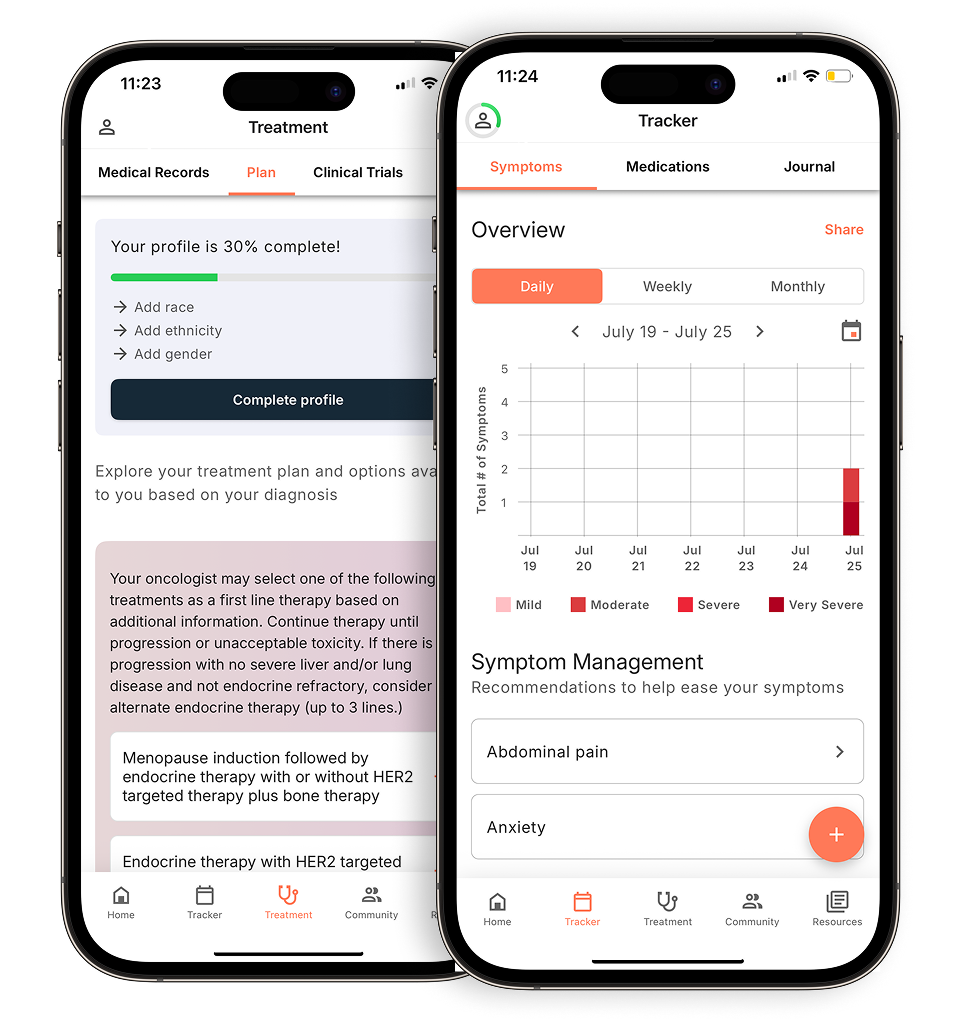
View your personalized treatment plan in the Outcomes4Me app
Use your diagnosis to unlock personalized NCCN Guidelines®-aligned recommendations.
Key Takeaways
- View clinical trials as a proactive treatment option: They provide access to innovative therapies at various points in your cancer journey and are a key part of advancing medical research for everyone.
- Your care team is your most important partner: Discussing trials with your oncologist is essential, as they can help you find studies that match your diagnosis and understand the potential benefits and risks.
- Eligibility involves both medical and practical details: A good fit means meeting the study’s specific health criteria and ensuring the trial’s time and travel commitments are manageable for you and your support system.
What is a clinical trial for stage 3 breast cancer?
When you’re looking at all your options for stage 3 breast cancer, you might hear about clinical trials. Simply put, research studies that test new treatments or new ways of using treatments we already have. The main goal is to find out if these new approaches are safe and if they work better than what’s currently available.
Think of them as the final, careful steps before a new therapy can become a standard of care for everyone. These studies are behind many of the major improvements in breast cancer treatment over the years, helping doctors and scientists find better ways to diagnose, treat, and prevent the disease.
How do clinical trials work?
Clinical trials are carefully structured in steps called phases, and each one has a different goal. In Phase 1, researchers focus on safety, figuring out the right dose of a new treatment and watching for side effects. If that goes well, Phase 2 tests how effective the treatment is for a specific cancer, like breast cancer.
Phase 3 is the largest phase, where the new treatment is compared directly against the current standard treatment. In this phase, participants are often randomly assigned to one group or the other to ensure the results are unbiased and clear.
Why consider a clinical trial?
Joining a clinical trial can feel like a big decision, but it comes with some unique benefits. For one, you may get access to innovative treatments before they are available to the public, which could be more effective than current options.
Beyond the personal benefits, your participation is a powerful way to contribute to medical progress. The information gathered from trials helps researchers learn more about breast cancer and develop better treatments for future patients. Every standard therapy used today was once tested and proven effective in a clinical trial, and by participating, you become part of that important history.
Am I eligible for a stage 3 breast cancer clinical trial?
Thinking about a clinical trial can bring up a lot of questions, and one of the first is usually, “Can I even join one?” It’s a completely valid question. Every clinical trial has a specific set of rules about who can participate. These are called eligibility criteria, and they’re not there to be exclusive. Instead, they help make sure the study is safe for participants and that the information gathered is clear and useful for future treatments.
These criteria can feel a bit like a checklist. They often include details about your specific type of breast cancer, what treatments you’ve already had, and your general health. Because every study is designed to answer a different question, the eligibility criteria can vary quite a bit from one trial to another. For example, one trial might be for people who have just been diagnosed, while another might be for those who have already completed a standard course of chemotherapy. Finding a trial that’s a good fit is a lot like solving a puzzle—it’s all about matching your specific situation to the study’s requirements. Your care team can be a huge help in figuring out which trials might be right for you.
What are the medical requirements?
When you look at a clinical trial’s requirements, you’ll see that many are based on your specific medical situation. Researchers need to be very precise to get clear results, so they set rules based on factors like your cancer subtype (for example, if it’s hormone receptor-positive or HER2-positive) and, of course, the stage of your cancer. These rules, or eligibility criteria, help ensure that the people in the study are similar enough to make the results meaningful. This is why providing your exact diagnosis is so important when exploring your options.
Examples of specific eligibility criteria
To give you a clearer picture, the criteria for a clinical trial can get quite specific. Think of it as a checklist designed to find the exact group of people a new treatment might help the most. For a stage 3 breast cancer trial, this list will often include details about your unique diagnosis and health history. Common criteria might specify:
- Your cancer subtype: A trial might be designed only for people with HER2-positive, hormone receptor-positive, or triple-negative breast cancer.
- Your treatment history: Some studies are for patients who have not yet started treatment, while others may be for those who have already completed a specific type of chemotherapy.
- Your overall health: Most trials have requirements related to your general health, such as your age or the absence of other conditions like heart disease, to ensure your safety.
- Specific biomarkers: Increasingly, trials are designed for patients whose tumors have certain genetic markers, which can help predict if a treatment will be effective.
How past treatments can affect eligibility
Your treatment history is another key piece of the eligibility puzzle. Some trials are designed for people who have already had certain treatments, like a specific type of chemotherapy or radiation. Others might be looking for people who haven’t started treatment yet. For example, a trial might be studying a new therapy to see if it can shrink a tumor before surgery. In that case, you would need to join before having your operation. It’s important to remember that your past treatments don’t disqualify you from all trials—they just help narrow down which ones are the best match for you right now.
What health and lifestyle factors matter?
Beyond your cancer diagnosis and treatment history, clinical trials also consider your overall health. This can include your age, your ability to perform daily activities, and whether you have other health conditions like heart disease or diabetes. The research team needs to make sure you are healthy enough to participate and that the study treatment is unlikely to cause you harm. These requirements help protect you and ensure that any side effects recorded are likely from the treatment being studied, not from another health issue. It’s all part of making sure the trial is as safe and effective as possible for everyone involved.
What are the different types of clinical trials?
When you hear the term “clinical trial,” you might picture a single kind of study, but the reality is much more varied. Clinical trials for Stage 3 breast cancer are designed to answer different questions at various points in the treatment journey. Some studies focus on brand-new drugs, while others explore better ways to use treatments we already have.
Think of them as different tools for different jobs. One trial might test a new therapy to shrink a tumor before surgery, while another might look at a drug designed to prevent cancer from returning after treatment is complete. There are also trials that focus on improving quality of life by finding better ways to manage side effects. Understanding these distinctions can help you and your care team find a study that aligns with your specific diagnosis and treatment goals.
Testing new treatments and therapies
This is often the first thing that comes to mind when thinking about clinical trials. These are research studies that test new treatments, new ways to use existing treatments, or new approaches to diagnosing and preventing breast cancer. The main goal is to determine if these new methods are both safe and effective. A trial for a new treatment might involve a medication that has never been used in people before, or it could be testing a new combination of already-approved drugs. Researchers are constantly working to find more effective options with fewer side effects, and these trials are the essential final step in that process.
Understanding trials before and after surgery
Clinical trials aren’t just for situations where standard treatments have stopped working. Many studies are designed for people who are about to begin or have just completed a primary treatment like surgery. A trial before surgery (neoadjuvant therapy) might test a new drug’s ability to shrink a tumor, potentially making it easier to remove. A trial after surgery (adjuvant therapy) might explore a treatment aimed at destroying any remaining cancer cells to lower the chances of recurrence. Each trial has specific rules, or eligibility criteria, that determine who can participate based on factors like cancer type and treatment history.
What are immunotherapy and targeted therapy trials?
Some of the most promising areas of cancer research involve immunotherapy and targeted therapy. Immunotherapy trials test treatments that help your own immune system recognize and fight cancer cells. Targeted therapy trials focus on drugs that attack specific features of cancer cells, like certain proteins or genetic mutations, while leaving healthy cells largely unharmed. Many clinical trials for Stage 3 breast cancer are exploring these new medicines with the goal of stopping or slowing the cancer’s growth. These studies are a key part of moving toward more personalized and effective cancer care.
Trials for various health conditions
While many clinical trials focus on new ways to treat the cancer itself, others are dedicated to improving your overall well-being during and after treatment. These studies might explore better methods for managing treatment side effects, such as fatigue or nausea, or look at ways to support your long-term health. The goal is to find approaches that not only fight the cancer effectively but also help you maintain the best possible quality of life. This research is incredibly important because it recognizes that your health is more than just the absence of disease. It’s about feeling as good as you can, both physically and emotionally, throughout your entire cancer journey.
What are the pros and cons of joining a clinical trial?
Deciding whether to join a clinical trial is a deeply personal choice, and it’s one you don’t have to make alone. Like any treatment path, it comes with potential benefits and drawbacks. Thinking through these points with your family and care team can help you feel confident in whatever decision you make. The goal is to find the path that feels right for you, your health, and your life.
It’s helpful to see the full picture—from the exciting possibility of new treatments to the practical realities of time and travel. Let’s walk through some of the key things to consider.
Accessing new treatments and specialized care
One of the most significant benefits of joining a clinical trial is the chance to receive a new treatment before it becomes widely available. You could be among the first to benefit from a therapy that may be more effective than the current standard of care. Throughout the trial, your health will be monitored very closely by a dedicated team of medical experts, which can provide an extra layer of support and oversight.
It’s also important to remember that your participation is completely voluntary. You can choose to leave a study at any time, for any reason, and it won’t impact your access to standard medical care. People who volunteer for clinical trials play a vital role in medicine, helping researchers improve treatments for everyone affected by breast cancer.
Understanding the potential risks and side effects
Because clinical trials study new treatments, there can be some unknowns. A new therapy might have side effects that are unexpected or different from standard treatments. The research team is there to help manage any side effects that come up, but it’s something to be aware of. You may also find that you need more frequent doctor visits, blood tests, or imaging scans than you would with standard care.
Before you agree to join, the study team will walk you through a process called informed consent. They will explain the trial’s purpose, procedures, potential benefits, and possible risks in detail. This is your opportunity to ask every question you have so you can make a fully informed decision.
The role of placebos in clinical research
It’s completely understandable to worry about receiving a placebo, or an inactive substance, in a clinical trial. The good news is that their use in cancer research is rare and strictly controlled. Researchers use placebos to create a baseline, which helps them understand if a new treatment is effective on its own, separate from the psychological effect of simply being treated. Your safety and well-being always come first, which is why you will not be given a placebo alone if an effective standard treatment already exists. Instead, a trial will often compare the standard treatment against the new one. In some studies, one group might receive the standard treatment plus the new drug, while the other group receives the standard treatment plus a placebo. This ensures everyone gets at least the current standard of care. The research team will explain every detail, including if a placebo is involved, during the informed consent process so you can make a clear choice.
What is the time and travel commitment?
Practical considerations are a big part of the decision. Some trials may require more of your time than standard treatment due to extra appointments or longer visits. It’s also possible that the study is located at a hospital or clinic that isn’t close to your home, which could mean you’ll need to factor in travel time and expenses.
Before enrolling, it’s a good idea to talk with the trial staff and your insurance provider about what costs are covered. Asking questions upfront about reimbursement for travel, lodging, or other out-of-pocket expenses can help you plan and avoid financial surprises. Understanding the full commitment of time and resources will help you decide if the trial is a good fit for your life.
Understanding compensation and who can participate
When you start looking into clinical trials, some of the first practical questions that come to mind are often about who can join and what the commitment really looks like. It’s completely normal to wonder about things like financial costs, compensation, and whether your specific health situation is a match. These are important details that can influence your decision. The good news is that this information is usually very clear. Trial organizers want to make participation as straightforward as possible, so they outline the requirements and any financial details upfront. Let’s break down what you can generally expect when it comes to compensation and eligibility.
Financial compensation for participants
It’s a common misconception that participating in a clinical trial will be a financial burden. While health insurance typically covers the routine costs of your care, many trials also offer payment for your time and effort. This isn’t about “getting paid to be sick”—it’s a recognition of the valuable contribution you’re making to medical science. Compensation can help cover travel, lodging, and other related expenses. The amount varies widely depending on the study; for example, some nationwide studies offer compensation for time and travel that can add up to several thousand dollars. The research team will provide all of these details before you agree to join, so you’ll have a clear picture of what to expect.
Who is eligible to join a trial?
Every clinical trial has a specific set of rules about who can participate. These are called eligibility criteria, and they’re not there to be exclusive. Instead, they help make sure the study is safe for participants and that the information gathered is clear and useful for future treatments. Think of it as a way to ensure the research answers the exact question it sets out to ask. These criteria can include your age, the specific type and stage of your cancer, and your overall health. Because each study is unique, the requirements can differ significantly from one trial to the next, which is why finding the right match is so important.
Participation for people with medical conditions
For trials focused on breast cancer, the medical requirements are very specific. Your eligibility will often depend on your treatment history. Some trials are designed for people who have already had certain treatments, like a specific type of chemotherapy or radiation. Others might be looking for people who haven’t started treatment yet. This level of detail is necessary to test the new therapy in the right context. It doesn’t mean your past treatments disqualify you; it just helps narrow down which studies are the best fit for your current situation.
Participation for healthy volunteers
It’s also worth knowing that many clinical trials are open to healthy people. While this article focuses on trials for stage 3 breast cancer, some studies need healthy volunteers to serve as a comparison group. This helps researchers understand what happens in a body without the condition they are studying, providing a baseline that makes the results clearer. By participating, healthy volunteers play a crucial role in advancing our understanding of diseases and developing new treatments for everyone.
How can I find a clinical trial?
Starting the search for a clinical trial can feel like a huge task, but there are several clear paths you can take to find options that might be right for you. Think of it as a three-pronged approach: using online resources, talking with your trusted medical team, and connecting with major cancer research centers. Each of these avenues offers a different way to gather information, so you can build a complete picture of what’s available. You don’t have to do it all at once. Start with the path that feels most comfortable, whether that’s doing some initial research on your own or bringing it up at your next oncology appointment.
Using online tools to find a trial
The internet is a powerful tool for finding clinical trials, and many organizations have created search tools specifically for people with breast cancer. Finding the right study can be difficult, but several websites are dedicated to listing trials that are currently looking for participants. You can also use dedicated search tools like Breastcancertrials.org or the Metastatic Breast Cancer Trial Search to narrow down your options. Additionally, pharmaceutical companies often list their studies online. For example, you can look at Pfizer’s website for their breast cancer trials or join a registry to be notified of future opportunities. These resources can be a great first step to see what’s out there.
Using specific search filters to narrow your options
When you first land on a clinical trial website, the sheer number of studies can feel overwhelming. This is where search filters become your best friend. Think of them as a way to cut through the noise and create a manageable list of trials that are actually relevant to you. Most search tools allow you to narrow your options by key details like your specific condition (stage 3 breast cancer), your location, age, and the trial phase. Using the specific details from your diagnosis—like your cancer subtype and stage, which you can track in the Outcomes4Me app—will make these filters even more powerful. This targeted approach helps you focus your energy on the opportunities that are the best potential fit for your unique situation.
Setting up email alerts for new trials
You don’t have to check for new clinical trials every single day. Many of the major trial registries, like ClinicalTrials.gov, offer a feature that lets you set up email alerts. It’s a simple but incredibly helpful tool. You can save the search criteria that are important to you—like your diagnosis, location, and the types of therapies you’re interested in—and the website will automatically notify you by email whenever a new study that matches your filters is added. This lets you stay informed about new opportunities without the stress of constantly searching, ensuring you won’t miss a trial that could be a good fit for you.
Talking with your oncology team
Your oncologist and care team are your most important partners in this process. They have a deep understanding of your medical history and can help you weigh the pros and cons of any potential trial. It’s essential to discuss the benefits and risks of joining a clinical trial with your healthcare provider before making any decisions. They can help you understand the study’s goals, what participation would involve, and how it might fit into your overall treatment plan. Your doctor can also help determine if a trial is a good clinical fit for you. If it is, they will likely encourage you to consider joining and can help you take the next steps.
Exploring options at cancer research centers
Major cancer centers and research organizations are hubs for clinical trials. These institutions are often at the forefront of cancer research and may be running studies that aren’t widely listed elsewhere. Many of the trials you’ll find are in “Phase III,” which means they are comparing a new treatment to the current standard one to see if it works better. For extra support, you can also reach out to patient advocacy groups. For instance, the Komen Patient Care Center is a great resource you can contact for help finding trials and better understanding the process. They can provide guidance and help you make sense of the information you find.
Finding trials in your local area
Looking for a clinical trial close to home is a practical and important step. You can start by exploring online databases that list studies actively recruiting participants. These resources often allow you to filter your search by location and diagnosis to find studies that match your needs. Your oncologist is also an invaluable guide in this process, as they are often connected to local cancer centers and research organizations conducting trials. They can help you sort through the options and identify studies that are a good fit for your specific situation, making the search feel much more manageable.
While online tools are helpful, your care team is your most important partner. They can provide insight into which studies might be right for you and help you understand how a trial fits into your overall treatment plan. It’s essential to discuss the benefits and risks with your doctor before making a decision. They can also connect you with patient support services that offer additional guidance on finding trials and making sense of the process. By using these resources together, you can take a proactive role in exploring all the options available to you.
What does the enrollment process look like?
If you’ve found a clinical trial that seems like a good fit, you might be wondering what happens next. The enrollment process is a series of steps designed to make sure the trial is right for you and that you have all the information you need to make a decision. It generally involves a detailed screening, a thorough consent process, and a clear schedule of what to expect during the study. This process ensures that every participant is a good match for the study and feels fully informed and comfortable with their role. Your care team will guide you through each step, answering any questions you have along the way.
What to expect during screening
The first step is to see if you qualify for the trial. Every study has a specific set of rules, known as eligibility criteria, that outline who can participate. This isn’t meant to be exclusive; it’s to ensure the safety of the participants and the accuracy of the study’s results. These criteria often include factors like your age, the specific type and stage of your breast cancer (such as HR-positive or HER2-positive), treatments you’ve had in the past, and your overall health. The study team will review your medical history and may perform some initial tests to confirm if you meet the requirements to move forward.
Understanding informed consent and your rights
Once it’s determined that you’re eligible, the next step is the informed consent process. This is a detailed conversation with a member of the research team who will explain everything about the trial. They’ll cover the study’s purpose, what participation involves, potential benefits and risks, and other available treatment options. You’ll receive a consent form that outlines all these details. It’s important to know that signing this form isn’t a binding contract. Joining a trial is completely your choice, and you have the right to leave the study at any time, for any reason, without it affecting your standard medical care.
What to expect from testing and study visits
If you decide to join a trial, your health will be monitored very closely. This often means you’ll have more frequent doctor visits, blood tests, or imaging scans than you would with standard treatment. While it might feel like a lot, this careful monitoring is a key part of the process. It allows the research team to gather important data on the treatment’s effectiveness and, most importantly, to keep a close eye on your health and safety. Your study coordinator will provide a clear schedule of all your appointments so you know exactly what to expect and when.
Understanding the duration of a study
There’s no one-size-fits-all answer for how long a clinical trial lasts. The timeline depends entirely on what the study is trying to learn. Clinical trials are structured in steps called phases, each with a different goal. A Phase 1 trial focused on safety might be shorter, while a Phase 3 trial comparing a new treatment to the standard one could last for several years. Your active treatment period might only be for a few months, but the study could require long-term follow-up to monitor your health over time. The full commitment, from the first visit to the last follow-up, will be clearly explained to you during the informed consent process so you know exactly what to expect.
What participation might involve (visits, calls, diaries)
Being part of a clinical trial often involves more than just receiving treatment. It’s a partnership with the research team, and your participation might include a mix of activities. For example, a study could involve a combination of in-person visits to the clinic, check-in phone calls, and online doctor appointments. You might also be asked to help track your progress by keeping a diary of your symptoms or how you’re feeling. The schedule can vary, with more frequent appointments at the beginning of the trial and fewer as time goes on. The study coordinator will give you a clear calendar of all required activities so you can plan accordingly.
What are some common challenges with clinical trials?
While clinical trials can open doors to new treatments, it’s also helpful to go in with a clear picture of the potential challenges. Thinking through these hurdles ahead of time can help you and your family prepare and decide if a trial is the right fit for you right now. Most challenges fall into three main areas: meeting the study’s requirements, handling the logistics of participation, and managing the emotional experience of being in a trial. Knowing what to expect can make the process feel much more manageable.
Working through the eligibility criteria
Every clinical trial has a specific list of requirements, called eligibility criteria, that participants must meet. These rules are not meant to be exclusive; they are in place to keep you safe and to ensure the researchers get clear, reliable results from the study. As the National Cancer Institute explains, criteria can include your specific type and stage of breast cancer, your past treatment history, and your overall health. It can feel disappointing if you don’t qualify for a trial you’re interested in, but remember that these guidelines are a standard part of the research process.
Managing travel and logistics
Participating in a clinical trial often requires a significant time commitment. The study might be located at a cancer center far from your home, which means you’ll need to plan for travel and possibly overnight stays. It’s also common to have more frequent appointments for tests and check-ins than you would with standard treatment. Before you enroll, ask the research coordinator about the expected schedule and if any resources are available to help. Some organizations offer assistance with lodging or transportation, which can help ease the financial and logistical load on you and your family.
The emotional side of participating
It’s completely normal to feel a mix of hope and anxiety when joining a clinical trial. You’re stepping into the unknown, and while the potential for a new, effective treatment is exciting, there can also be uncertainty. New treatments can come with unexpected side effects, and the extra appointments can feel draining. It’s so important to have a strong support system in place, whether it’s family, friends, or a support group. Leaning on these resources and maintaining open communication with your care team can help you cope with the emotional side of your cancer experience and trial participation.
What questions should I ask before joining a trial?
Deciding whether to join a clinical trial is a significant step, and it’s completely normal to have a long list of questions. Feeling prepared and informed is key to making a choice that feels right for you. Think of your conversation with the research team as an interview—you are gathering the information you need to make the best choice for your health and your life. It can be helpful to bring a friend or family member to your appointment to take notes and help you remember everything that’s discussed. Don’t hesitate to ask for clarification on anything you don’t understand; there are no bad questions when it comes to your health. The research team expects you to have questions and is there to provide answers. To make sure you cover all your bases, you can group your questions into a few main categories: the study’s logistics, the financial impact, and your rights as a participant. This approach can help you organize your thoughts and ensure you walk away with a clear understanding of what participation would mean for you and your family. The goal is to feel confident and empowered, whether you decide to join the trial or pursue another path. Remember, this is your decision, and taking the time to gather all the facts is a critical part of the process.
Questions about the study’s plan and timeline
First, you’ll want to get a clear picture of the study itself and what your participation would look like day-to-day. Understanding the purpose of the study can help you see how it fits into the bigger picture of cancer research. Ask the research team what specific tests and treatments are involved and how often you’ll need to come in for appointments. It’s also important to clarify the full timeline. Knowing how long you’ll be in the study is essential for planning your time and understanding the commitment involved in different breast cancer clinical trials. This information will help you figure out how the trial might affect your work, family life, and other personal responsibilities.
Questions about costs and insurance
Talking about money can be uncomfortable, but it’s a crucial part of the conversation. You need to know what to expect financially before you agree to participate. Be sure to ask exactly what costs the trial will cover, such as the new treatment, extra doctor visits, or lab tests. Then, find out what you or your insurance provider will be responsible for. Every trial is different, so it’s a good idea to speak with both the study’s financial coordinator and your insurance company to avoid any surprises down the road. Getting these details in writing can also provide peace of mind as you make your decision.
Questions about leaving the study or other options
It’s important to remember that joining a clinical trial is completely voluntary. You should feel empowered to explore all of your options. Ask your doctor about other available treatments so you can weigh the benefits and risks of the trial against standard care. Most importantly, you should know that you have the right to leave the study at any time, for any reason. Your decision to stop participating will not affect your relationship with your medical team or your ability to receive other medical care. You are always in control of your health journey, and the research team will respect your choice, no matter what you decide.
Where can I find support during a clinical trial?
Considering or participating in a clinical trial is a significant step, and you absolutely don’t have to go through it alone. Building a strong support system can make a world of difference, helping you feel more confident and informed throughout the process. This network can include a mix of professional organizations that specialize in patient support, digital tools designed to simplify your search, and the trusted medical professionals you already know.
Think of it as assembling your personal team. Patient advocacy groups can offer guidance and resources tailored to your experience, connecting you with people who truly understand what you’re going through. Online services can help you sort through the options to find trials that fit your specific needs, taking some of the guesswork out of the search. And, of course, your own healthcare team remains your most important partner, providing medical advice and personalized care every step of the way. Tapping into these resources can help you manage the logistics, understand the medical details, and handle the emotional side of participating in a trial. You have people and tools ready to help you at every stage, ensuring you have a solid foundation of support as you explore this part of your treatment journey.
Connecting with patient advocacy groups
Patient advocacy groups are organizations dedicated to supporting people with cancer. They can be an incredible source of information, guidance, and community. Many offer free services, from helping you understand your diagnosis to providing resources for finding financial assistance. When it comes to clinical trials, they can be especially helpful. For example, the Komen Patient Care Center offers assistance in finding trials and making sense of the process. You can connect with them for one-on-one support to talk through your questions and explore your options.
Using online resources for support
Searching for a clinical trial can sometimes feel like looking for a needle in a haystack. This is where online matching services come in. These digital tools are designed to help you find clinical trials that fit your specific situation. Instead of sifting through endless lists, you can input your information and get a curated list of potential matches. A great resource is BreastCancerTrials.org, which works to connect people with relevant trials based on their unique medical profiles. It’s a more personalized way to see what research opportunities might be available to you.
Finding resources for specific communities
It’s important to find support that speaks to your unique experience, and for many, that means connecting with others who share a similar background. Several organizations are dedicated to providing resources and advocacy for specific communities within the breast cancer world. For example, groups like TOUCH, The Black Breast Cancer Alliance, focus on the needs of Black women, while others might cater to young adults or LGBTQ+ individuals. These organizations offer a space where you can find information and a community that understands the specific cultural, social, or medical questions you might have. Seeking out these tailored resources can be a powerful way to feel seen and supported, ensuring you have access to care and information that truly resonates with you.
Leaning on your healthcare team and getting a second opinion
Your own healthcare team is your anchor throughout your cancer treatment, and that includes any involvement in a clinical trial. It’s so important to have an open conversation with your oncologist about the potential benefits and risks of joining a study. They can help you understand how a trial might fit into your overall treatment plan. Don’t hesitate to ask questions or even seek a second opinion. Getting another expert’s perspective can provide extra clarity and peace of mind, helping you feel confident in the path you choose.
How to decide if a clinical trial is right for you
Making the choice to join a clinical trial is a big one, and it’s entirely personal. It involves weighing the potential benefits against the unknowns and thinking about what feels right for you, your health, and your life. There’s no single right answer, but taking a structured approach can help you feel more confident in your decision. Thinking through your health, talking with your trusted medical team, and understanding the long-term commitment are all key steps in this process.
Considering your personal health and goals
Before you can find the right trial, it’s helpful to have a clear picture of your own health. Clinical trials have specific rules, or eligibility criteria, about who can join based on factors like your type of breast cancer, past treatments, and other health conditions. This isn’t meant to be exclusionary; it’s to ensure the safety of the participants and the quality of the research. Take some time to gather your medical records and talk with your doctor to be sure you have a full understanding of your diagnosis. This will make it much easier to identify studies that could be a good match.
Discussing the decision with your care team
Your oncology team is your most valuable resource in this process. They understand the nuances of your diagnosis and can help you see the full picture. It’s essential to discuss the benefits and risks of joining a clinical trial with your healthcare provider. They can translate complex study protocols into plain language and offer their medical opinion on whether a trial aligns with your treatment goals. It’s also a good idea to ask your doctor about trials before you begin a new treatment, as timing can affect eligibility. Think of this as a partnership where you and your care team make an informed choice together.
Thinking about long-term follow-up care
Participating in a clinical trial is a commitment that often continues long after the main treatment is over. You might need more doctor visits, blood tests, or scans than with standard treatment. This close monitoring is part of the study’s design to track your progress and gather important data. Some trials even continue to study long-term side effects after a treatment is approved in what’s known as a Phase 4 study. It’s important to think about how these additional appointments might fit into your life. Being realistic about the time and energy required will help you decide if the commitment is manageable for you.
Related Articles
- Clinical Trials for Advanced Triple-Negative Breast Cancer | Outcomes4Me Community
- SABCS 2023 Research Updates: What patients need to know
- Outcomes4Me – Explore Clinical Trials
View your personalized treatment plan in the Outcomes4Me app
Use your diagnosis to unlock personalized NCCN Guidelines®-aligned recommendations.
Answering your top questions
Will I get a placebo instead of a real treatment? This is a very common and understandable concern. In cancer research, especially for a diagnosis like stage 3 breast cancer, it’s rare for a trial to use a placebo by itself. Instead, studies usually compare the new treatment against the current best standard treatment. This means that all participants in the study receive active care, ensuring no one goes without treatment. You would either receive the new therapy being studied or the established, effective therapy that is already in use.
Does joining a clinical trial mean I’ve run out of other options? Not at all. Clinical trials are an option at many different points in a cancer treatment plan, not just as a last resort. In fact, many trials for stage 3 breast cancer are designed for people who are about to start treatment, such as testing a new therapy to shrink a tumor before surgery. Others might explore ways to prevent recurrence after standard treatment is complete. A trial is simply another path to consider alongside standard care.
How is my safety protected during a clinical trial? Your safety is the top priority in any clinical trial. Before a study even begins, it must be approved by an Institutional Review Board (IRB), an independent committee that ensures the trial is ethical and that your rights and welfare are protected. Throughout the trial, you will be monitored very closely by a dedicated research team that watches for any side effects and manages your health. You also have the right to ask questions at any time and to leave the study if you choose.
Can I keep seeing my own oncologist if I join a trial? Yes, you can. Your regular oncologist remains a central part of your care team. The research team running the clinical trial will work in partnership with your doctor, keeping them updated on your progress and collaborating on your overall care plan. Think of the trial team as specialists who are joining your existing support system, not replacing it.
What happens if I change my mind and want to leave the trial? You are always in control of your healthcare decisions, and that includes your participation in a clinical trial. You have the right to leave a study at any time, for any reason. If you decide to stop, it will not affect your access to standard medical care or your relationship with your medical team. The research staff will support your decision and work with your oncologist to ensure a smooth transition to another treatment plan.