
Your relationship with your care team is a partnership, and you are a key player. Taking an active role means exploring all your treatment possibilities, including clinical trials. These studies are how doctors discover better ways to care for people with cancer, and joining one could be a valuable option for you. But starting that conversation can feel intimidating. This guide is here to help you feel prepared and confident, giving you the tools you need to ask your doctor, “How can I find clinical trials that might be relevant for my type of cancer?” and work together to explore what’s available.
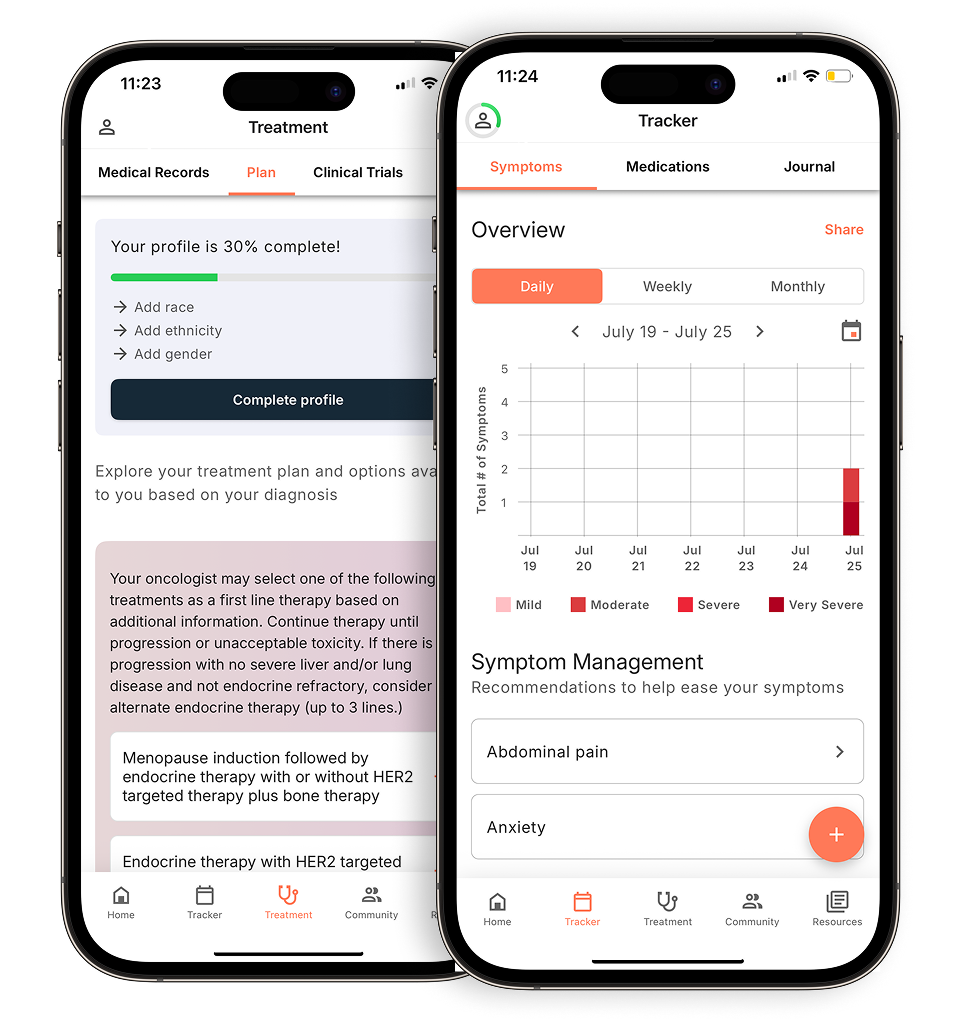
View your personalized treatment plan in the Outcomes4Me app
Use your diagnosis to unlock personalized NCCN Guidelines®-aligned recommendations.
Key Takeaways
- Prepare for your search: Having your specific diagnosis, cancer stage, and treatment history on hand is the first step. This information helps you and your doctor quickly find trials that are a potential match.
- Use your team and trusted tools: Your doctor is your most important resource for finding trials. You can also use reliable databases from government and cancer organizations to see a wider range of options.
- Evaluate the practical details: Finding a promising trial is just the start. Be sure to review the eligibility criteria, understand the trial phase, and consider the logistics like travel and time commitment to make an informed decision.
What is a clinical trial and why does it matter?
When you’re looking at your treatment options, you might hear the term “clinical trial.” It can sound intimidating, but a clinical trial is simply a research study that helps doctors find better ways to care for people with cancer. These studies are a fundamental part of medical progress and can open up new possibilities for your own treatment plan. Understanding what they are and how they work is the first step in deciding if a trial might be a good fit for you. It’s about giving you more choices on your health journey.
A simple definition of clinical trials
So, what exactly is a clinical trial? Simply put, cancer clinical trials are research studies that test new treatments in people. Every cancer treatment available today was first tested in a clinical trial to see if it was safe and effective. These studies are carefully designed to answer specific questions about a new approach and are essential for finding better ways to prevent, detect, and treat cancer. By participating, you’re exploring a new option for yourself while contributing to knowledge that will help others in the future.
How trials help move cancer care forward
Clinical trials are the engine of progress in cancer care. They are how we move from a promising idea in a lab to a new standard of care. For you, a trial can provide access to new, cutting-edge therapies that aren’t widely available yet. This gives you more treatment choices and can offer hope for better results. You’ll also receive care from a dedicated team of doctors and researchers who are experts in your cancer type. By joining a trial, you play an active role in your own care while helping to advance cancer research for generations to come.
Why your participation matters
Joining a clinical trial is a personal decision, but its impact extends far beyond your own treatment. When you participate, you become a partner in the scientific process, providing essential information that helps researchers learn and refine new therapies. This contribution is what paves the way for future breakthroughs and improved standards of care for countless others. At the same time, it allows you to take an active role in your own health care, giving you access to innovative treatments and a dedicated team of experts. Your involvement helps create a legacy of progress, turning your personal health journey into a source of hope for the entire cancer community.
Understanding the different types of clinical trials
Not all clinical trials are the same. They have different goals, and the one that’s right for you depends on your situation. Most people with cancer join treatment trials, but it’s helpful to know about the other types. Here are the main categories:
- Prevention trials: These studies look for better ways to lower the risk of developing cancer.
- Screening or diagnostic trials: The goal here is to test new methods for finding cancer earlier, when it may be easier to treat.
- Treatment trials: This is the most common type, testing new treatments like drugs, surgeries, or radiation therapies.
- Quality of life trials: Also known as supportive care trials, these focus on improving comfort and managing the side effects of cancer and its treatment.
What information should you gather before your search?
Before you start looking for a clinical trial, it helps to get a few key pieces of your health information in order. Think of it as creating a personal health snapshot. Having these details ready will make your search much more focused and efficient, helping you and your care team quickly identify trials that could be a good fit. It saves you from sifting through studies that aren’t relevant and allows you to have more productive conversations with your doctor.
This preparation step is all about empowering you with the information you need to find the right opportunities. When you have a clear picture of your diagnosis, treatment history, and overall health, you can confidently assess your options. It also makes it easier for trial coordinators to determine if you meet their specific criteria. Let’s walk through exactly what you’ll want to have on hand.
Start with your diagnosis and cancer stage
This is the most important starting point. Clinical trials are designed for very specific situations, so knowing your exact cancer type, subtype, and stage of cancer is essential. For example, a trial for stage III HER2-positive breast cancer will have different requirements than one for stage I triple-negative breast cancer. Having this precise information allows you to filter out trials that don’t apply to you, so you can focus your energy on the ones that do. If you’re unsure about any of these details, ask your oncologist for clarification.
Gather your complete treatment history
What treatments you’ve already had can play a big role in your eligibility for a clinical trial. Many studies have rules about which prior therapies participants can or cannot have received. Be ready to list all your past cancer treatments, including surgeries, specific chemotherapy drugs, radiation therapy, immunotherapy, or targeted therapies. Keeping a simple log of what you received and when can be incredibly helpful. This history gives researchers important context and helps ensure the trial is a safe and appropriate option for you.
Collect your recent medical records
Beyond your cancer diagnosis, clinical trials have rules about who can join based on a person’s overall health. This is to ensure the safety of every participant. It’s a good idea to have a summary of your general health, including any other medical conditions you have (like diabetes or high blood pressure) and any medications you take. Recent lab results can also be important. Having access to your medical records makes it easier to check if you meet a trial’s specific health requirements.
Consider your location and ability to travel
Finally, consider the practical side of participating in a trial. While some trials may be available at your local cancer center, others might be located in a different city or state. Think about what’s realistic for you and your family. Are you willing and able to travel for appointments? If so, how far? Knowing your geographic limits and travel preferences ahead of time can help you narrow your search to trials that are logistically possible. Some organizations even offer programs to help with travel and lodging costs.
Where can you find clinical trials for your cancer type?
Once you have your key information organized, you can begin looking for clinical trials. Finding the right one can feel like searching for a needle in a haystack, but there are several excellent resources designed to make the process easier. You don’t have to rely on just one source; using a combination of these tools can give you a comprehensive view of your options. From large government websites to specialized advocacy groups, here are the best places to start your search.
Search government databases like ClinicalTrials.gov
A great place to begin your research is ClinicalTrials.gov. It’s a large government database where you can search for thousands of clinical trials for all types of conditions, including cancer. The site provides detailed information for each study, including what the trial is for, who is eligible to join, where the study is located, and who to contact for more information. While the amount of information can seem overwhelming at first, its search filters can help you narrow down the results to find studies that are most relevant to your diagnosis and location. It’s one of the most thorough resources available for trial information.
Check databases from trusted cancer organizations
Many cancer organizations focus on specific types of cancer and can help you find trials tailored to your diagnosis. These groups, like the American Cancer Society or LUNGevity for lung cancer, often maintain their own databases of clinical trials. Because they are specialized, their resources can be easier to sort through than larger, more general databases. Many of these organizations also have dedicated support staff or patient navigators who can answer your questions and personally assist you in your search, offering a more guided and supportive experience as you look for the right trial.
Get personalized help from cancer organizations
Beyond broad databases, several major cancer organizations offer more personalized support to help you find a clinical trial. These groups often have trained specialists who can talk with you one-on-one, understand your specific situation, and guide you toward relevant studies. This human touch can make a huge difference when you’re feeling overwhelmed by information. They can help you make sense of complex trial descriptions and prepare you for conversations with your care team. Think of them as your dedicated support crew, ready to help you explore all your options.
The National Cancer Institute (NCI)
The National Cancer Institute, part of the U.S. National Institutes of Health, is a leading authority on cancer research. They offer a free and confidential service where a specialist can conduct a personalized clinical trial search for you. You can call them at 1-800-4-CANCER (1-800-422-6237) and select option 2 to speak with someone. This service can be a great way to get a curated list of potential trials without having to sort through a large database on your own. Just remember that their search results are a starting point for a conversation with your doctor, not a replacement for their medical advice.
The American Cancer Society (ACS)
The American Cancer Society is another trusted resource with a program specifically designed to help people find clinical trials. Their program, called ACS ACTS (Access to Clinical Trials and Support), provides education about how trials work and can help you find studies that match your specific cancer. A key benefit of this program is the ability to connect with ACS cancer information specialists who can offer guidance and support throughout your search. This can be especially helpful if you have questions or need help understanding the details of a particular trial.
The Cancer Support Community
The Cancer Support Community emphasizes the importance of working closely with your healthcare team. They remind us that your doctor is often the best person to help you find a trial because they have a deep understanding of your medical history and treatment needs. They may already know about relevant studies or have connections at institutions that are running them. The Cancer Support Community encourages you to be proactive and ask your doctor directly if there are any trials that might be a good fit for your cancer type and stage.
Look into specific medical and research institutions
In addition to using databases and support organizations, you can also go directly to the source. The hospitals, cancer centers, and companies that conduct research are often the best places to find the most up-to-date information on their studies. This direct approach can sometimes give you access to trials that may not be listed yet on larger databases. It also allows you to learn more about the institutions themselves and the specific researchers leading the studies, which can help you feel more connected to the process.
Cancer centers and hospitals
Many leading cancer centers and hospitals have their own clinical trial programs. If you are being treated at a major medical center, ask your oncologist about studies being conducted right there. You can also look at the websites of other cancer centers in your area or those known for specializing in your type of cancer. These institutions often have a dedicated section on their website listing their ongoing trials, making it easy to see what research they are currently focused on and if any of their studies might be an option for you.
Pharmaceutical companies
The companies that develop new cancer drugs, known as pharmaceutical companies, are the sponsors for many clinical trials. They are always looking for eligible participants to help test new treatments. You can often find information about the trials they are running by visiting their websites. Some companies also have dedicated phone numbers you can call to inquire about their studies. This can be a direct way to learn about trials for a specific drug you may have heard about from your doctor or your own research.
International trial registries
If you’re open to opportunities outside of your home country, international trial registries can broaden your search. For example, the WHO International Clinical Trials Registry Platform allows you to search for trials happening all over the world. This can be particularly useful if you have a rare type of cancer, as it gives you access to a much larger pool of research studies. While the logistics can be more complex, looking at international options ensures you are exploring every possible avenue for your care.
Talk to your local hospital or cancer center
Your own healthcare team is one of your most valuable resources. Talking to your doctor is one of the best ways to find a clinical trial that’s right for you, as they have a deep understanding of your medical history and treatment journey. Your oncologist can provide insights into ongoing trials at their own hospital or cancer center and may also be able to refer you to specialists at other institutions who are conducting relevant research. Don’t hesitate to bring up clinical trials at your next appointment. Your care team can help you understand your options and determine if a specific trial is a good fit.
Use AI tools to find a personalized match
Newer technologies are also making it simpler to find potential trials. Some organizations offer online tools that use your specific cancer type and treatment history to help you identify matching trials. For example, the Cancer Research Institute offers a Clinical Trial Finder and navigator service to help with your search. These platforms can quickly sort through thousands of studies to give you a personalized list of options. This can save you a significant amount of time and provide you with a curated list of trials to discuss with your doctor, making the search process feel much more manageable.
How do you know if a clinical trial is right for you?
Once you’ve found a few clinical trials that seem promising, the next step is to look at them more closely. Evaluating a trial is about understanding the details and figuring out if it’s truly a good fit for you, your health, and your life. It’s a personal decision, and having all the information helps you make the best choice for your care. Here are some key things to consider as you review your options.
Understand the eligibility criteria
Every clinical trial has a specific set of rules, called eligibility criteria, that determine who can participate. Think of it as a checklist to make sure the study is safe and the results are meaningful. These criteria often include your specific cancer type and stage, what treatments you’ve had in the past, your age, and your overall health. It’s completely normal not to qualify for every trial you find. The goal is to find the one that’s the right match for your unique situation, and checking the eligibility requirements is the first step in that process.
What are the different phases of a trial?
Clinical trials happen in stages, called phases, to make sure a new treatment is safe and effective. Understanding the phases of clinical trials can help you know what to expect. Phase 1 trials are the first step, focusing on safety and finding the right dose in a small group. Phase 2 trials check how well the treatment works for a specific cancer. Phase 3 trials compare the new treatment to the standard one in a large group of people. Finally, Phase 4 trials monitor the long-term effects after a treatment is approved. Knowing the phase gives you a better idea of where the treatment is in its development.
A note on early-stage trials
You might come across early-stage trials, like Phase 1 and Phase 2, during your search. These trials are the first steps in testing a new treatment. Phase 1 studies focus on finding a safe dose, while Phase 2 studies begin to look at how well the treatment works for a specific cancer. Because these trials are exploring newer therapies, they are often conducted at large medical centers with specialized research teams. This doesn’t mean they are out of reach, but it’s a practical detail to keep in mind as you consider the logistics of participating.
A note on immunotherapy trials
Immunotherapy is a type of treatment that uses your own immune system to fight cancer, and many clinical trials are exploring new ways to use it. It’s helpful to know that these treatments can work differently than chemotherapy or radiation. For example, it might take longer to see results, and side effects can appear later. It’s also important to remember that clinical trials aren’t just for when other options have been exhausted. Many trials, including those for immunotherapy, test new treatments earlier in the disease, sometimes even as a first-line option.
Think about the location and daily logistics
Beyond the science, there are practical details to think about. A clinical trial might require you to travel to a different hospital or cancer center, which could be in another city or state. It’s important to consider how that travel would fit into your life. Think about the time commitment for appointments, tests, and follow-ups, and how that might affect your work, family, and daily routine. These logistical factors are a big part of the decision, so it’s helpful to map out what participating would look like for you and your support system before you find a clinical trial.
Weigh the potential risks and benefits
Like any treatment, joining a clinical trial comes with potential benefits and risks. On the plus side, you could get early access to a new treatment and receive extra medical attention from the research team. You’d also be contributing to research that could help others in the future. On the other hand, there could be side effects, some of which might be unexpected. The new treatment may not work better than the standard one, and it might require more of your time. Deciding about a clinical trial involves carefully thinking through these points with your doctor and loved ones.
How trials are designed for safety and accuracy
It’s completely normal to have questions about safety when you’re thinking about a clinical trial. You should know that every trial has multiple layers of protection built in to make sure participants are as safe as possible. These studies are not just experiments; they are carefully planned and monitored processes designed to protect you while gathering important information. From independent review boards to specific scientific methods, the entire system is set up with your well-being as the top priority.
Institutional Review Boards (IRBs)
Before any clinical trial can begin, it must be reviewed and approved by an Institutional Review Board, or IRB. Think of an IRB as a safety and ethics committee made up of doctors, scientists, and members of the community. Their main job is to protect the rights and welfare of the people participating in the research. All cancer clinical trials follow strict rules from the FDA and these special review boards. Most importantly, they ensure you have all the information you need to make a decision, and they confirm that you can choose to stop participating at any time, for any reason.
Control groups, randomization, and blinding
To make sure the results of a trial are accurate and trustworthy, researchers use a few key methods. You’ll usually be put into one of two groups by chance: one gets the new treatment, and the other (the control group) gets the current standard treatment. In cancer trials, it’s rare to be given a placebo (an inactive pill) if an effective treatment already exists. A computer typically decides which group you’re in, a process called randomization, to make sure the groups are fair and the comparison is unbiased. Sometimes, neither you nor the researchers know which treatment you’re getting, which is called blinding. This helps make sure the results are fair and not influenced by anyone’s expectations.
Considering the practical and financial details
Finding a trial that looks like a good medical fit is the first step, but it’s just as important to think about how it will work for you and your family on a practical level. Before you commit, take some time to consider the logistics. Think about the time commitment for appointments, tests, and follow-ups, and how that might affect your work, family, and daily routine. You’ll also want to ask about costs. While the treatment being studied is usually free, you should clarify what other expenses, like travel or lodging, might be involved. Some organizations even offer programs to help with these costs, so it’s always worth asking the trial coordinator what support is available.
How to talk to your doctor about clinical trials
Starting a conversation about clinical trials with your doctor is one of the most important steps you can take. This isn’t a one-time discussion; you can bring it up at any point during your cancer journey, whether you’re newly diagnosed or exploring different treatment options down the line. Think of it as a partnership. Your doctor has the medical expertise, but you are the expert on your own body, your life, and what feels right for you.
Approaching this topic can feel intimidating, but your care team is there to help you. The goal is to gather information, understand your options, and make a decision that aligns with your health goals and personal values. Having an open and honest dialogue ensures that you and your doctor are on the same page. It empowers you to take an active role in your care plan and explore all the avenues available to you. Remember, this conversation is about exploring possibilities, and your doctor is your best guide through that process.
Come prepared with a list of questions
Walking into your appointment with a list of questions can help you feel more confident and ensure you don’t forget anything important. It helps focus the conversation and makes the most of your time with your doctor. You can write them down in a notebook or on your phone—whatever works best for you.
Some questions you might consider asking include:
- Is a clinical trial a good option for me at this time?
- What trials are available for my type and stage of cancer?
- What is the purpose of the trial?
- What are the potential benefits and risks involved?
- How might this trial affect my daily life?
There are no wrong questions. The Cancer Support Community offers a helpful list of questions you can use as a starting point for your conversation.
Ask to see the protocol summary
When you find a trial that seems like a good fit, ask your doctor if you can see the “protocol summary.” Think of this document as the official game plan for the research study. It outlines everything from the trial’s main goal to the specific treatments being tested and where the study is taking place. These summaries are written for medical professionals, so they often contain technical language that can be hard to understand on your own. Don’t let that discourage you. This is a perfect opportunity to sit down with your doctor or a research nurse and have them walk you through it, translating the medical jargon into plain English so you can fully grasp the details.
Clarify the trial’s main goal
It’s also important to understand what the trial is trying to accomplish, as this can help you decide if it aligns with your personal health goals. Ask your doctor, “What is the main goal of this study?” Some trials aim to test if a new treatment can cure a specific cancer, while others are designed to see if it can slow the cancer’s growth or simply reduce symptoms and improve quality of life. Other early-phase trials are focused on determining a treatment’s safety. Knowing the primary objective helps you manage your own expectations and ensures that the purpose of the trial is a good match for what you are hoping to achieve.
Ask about potential risks and compensation
Just like any medical treatment, clinical trials have potential benefits and risks. Be sure to ask for a clear explanation of the possible side effects, including how they compare to your current treatment options. It’s also wise to ask about the practical and financial side of things. Find out which costs are covered by the trial—such as the study drug and extra doctor visits—and what your insurance may be expected to pay for. You can also ask if there is any compensation for non-medical costs like travel or lodging, as some trials offer this to help ease the burden on participants. Getting a full picture of the financial considerations is a key part of making an informed decision.
Find out how you’ll get the final results
Participating in a clinical trial is a significant contribution to medical science, and it’s natural to want to know what the researchers learn. Before you agree to join, ask the study team how they plan to share the final results with participants. It can take a long time for a trial to be completed and for the data to be analyzed and published, so it’s helpful to know what to expect. Will they mail you a summary, or will the results be discussed with you by your doctor? Understanding how you’ll be kept in the loop helps you see your participation through to the end and appreciate the impact you’ve made on advancing cancer care for others in the future.
Be open about your concerns and preferences
A clinical trial is more than just a medical treatment; it’s a commitment that has to fit into your life. Be open with your doctor about your hopes, worries, and practical considerations. Are you concerned about potential side effects? Do you have limitations on travel or time away from work and family? Are you worried about the costs?
Sharing these details helps your doctor find trials that are not only a good medical match but also a realistic fit for your personal circumstances. For example, if traveling to a distant cancer center isn’t feasible, your doctor can focus on local opportunities. Being honest about your feelings and priorities allows your care team to provide the best possible support and guidance for you as a whole person, not just a patient.
Ask your doctor what trials might be a fit
Don’t hesitate to be direct and ask your doctor if they know of any clinical trials that could be right for you. Your oncologist is often the best source of information for trials relevant to your specific diagnosis. They are connected to networks of researchers and are often aware of studies happening at their own institution and others.
Sometimes, the most promising trial for you might be located at a different hospital or treatment center. If that’s the case, your doctor can provide more information and may be able to offer a referral. Simply asking, “Are there any clinical trials I should consider?” opens the door for your doctor to share their knowledge and help you explore your options.
Lean on your care team for support
Your oncologist is a key player, but they are part of a larger care team dedicated to supporting you. Nurses, patient navigators, and social workers can be incredible resources. They can help you understand complex information, talk through your feelings about a decision, and connect you with resources for practical challenges like transportation and lodging.
While it’s helpful to look for trials online, it’s crucial to discuss anything you find with your doctor. They can help you determine if a trial is legitimate and appropriate for your situation. Your entire care team is there to help you feel supported and informed, so don’t be afraid to lean on them throughout this process.
What are some common challenges when searching for trials?
Finding the right clinical trial can feel like a big project, and it’s completely normal to run into a few hurdles along the way. Knowing what to expect can make the process feel much more straightforward. From understanding the fine print to figuring out logistics, these are some of the common challenges you might encounter and how you can think through them. Remember, you don’t have to figure this all out on your own—your care team is there to help you with each step.
Making sense of complex eligibility rules
Every clinical trial has a specific set of requirements for who can participate, known as eligibility criteria. These rules are there to keep participants safe and to make sure the research results are as accurate as possible. The criteria might include your specific cancer type and stage, what treatments you’ve had in the past, your overall health, and even recent lab results. It can be disappointing to find a promising trial only to learn you don’t qualify, but try not to get discouraged. The right fit is out there, and these rules help ensure the study is appropriate for you. Your doctor can help you understand the criteria for any trial you’re considering.
Finding trustworthy information
When you start looking for trials, you’ll find a lot of information from many different places. It can be tough to sort through it all. While online search sites can be a good starting point, it’s wise to be thoughtful about where you get your information. Some websites may have outdated listings or prioritize sponsored trials. The American Cancer Society suggests checking how a site protects your personal information and how they choose which trials to list. Sticking to trusted sources like government databases, major cancer organizations, and your own cancer center can help you find the most reliable and relevant options for your situation.
Managing the logistics of travel
Sometimes, the best clinical trial for you might not be located close to home. Many trials take place at large cancer centers, which can mean traveling for appointments. This adds a layer of logistics to consider, such as transportation, time off from work, and a place to stay. For some, the opportunity to receive care at a center with deep experience in a specific area makes the travel worthwhile. If you’re considering a trial that requires travel, ask the study coordinator if they offer any assistance. Some trials provide stipends or resources to help ease the financial and logistical burden on patients and their families.
Understanding the costs and insurance coverage
Questions about cost are one of the first things that come to mind for many people, and for good reason. The good news is that the medical costs related to the research itself—like the investigational drug or procedure—are typically covered by the trial sponsor. Your health insurance is usually billed for any routine care you would receive whether you were in a trial or not, such as doctor visits and standard tests. It’s always a good idea to talk with the trial’s financial coordinator and your insurance provider beforehand to understand what is covered. The National Cancer Institute has helpful information on how trial costs are managed.
How to make an informed decision about joining a trial
Deciding whether to join a clinical trial is a significant choice, and it’s one that you should feel completely comfortable with. This isn’t about making a quick decision; it’s about gathering information, asking questions, and understanding what participation really means for you and your life. The process is designed to give you control and ensure you have all the details you need. From the first screening appointment to understanding your role in the study, every step is an opportunity to learn more. Think of it as a partnership with the research team. Your voice, your questions, and your comfort are central to the entire experience. Let’s walk through what you can expect.
What happens during screening and enrollment?
The first step in joining a trial is the screening and enrollment process. This is where you and the research team get to know each other. During this phase, you’ll learn all about the trial’s goals, what participation involves, and what the potential risks and benefits are. It’s your chance to ask every question on your mind—nothing is too small. As the Cancer Research Institute explains, “You’ll learn about the trial, ask questions, and sign a form.” The screening also involves tests to confirm that the trial is a safe and appropriate option for you based on your specific diagnosis and health history.
What is informed consent?
Informed consent is a key part of any clinical trial, and it’s much more than just a signature on a document. It is “a process that ensures you understand the trial, including its purpose, procedures, risks, and potential benefits.” This is an ongoing conversation between you and the research team. You’ll receive a detailed document that outlines everything, and the team will walk you through it to make sure it’s all clear. Remember, you can ask questions at any point, even after the trial begins. Participation is always voluntary, and you have the right to leave the study at any time, for any reason.
What happens during the trial?
Once you’re enrolled, the research team will provide a clear plan for your care. “You’ll get a schedule for visits, tests, and medicines, often with extra monitoring.” This might mean more frequent appointments or tests than you’re used to, but it also means your health is being watched very closely. The trial team is dedicated to your safety and well-being. They will be in constant communication with you to track your progress, manage any side effects, and answer any questions that come up along the way. This structured approach ensures that the research is conducted safely and effectively while prioritizing your health.
Staying supported and connected during a trial
Going through a clinical trial is easier when you have a strong support system. This includes your friends, family, and the dedicated clinical trial team. Don’t hesitate to lean on them and share how you’re feeling. It’s also helpful to connect with others who understand what you’re going through. Organizations like the Cancer Support Community offer incredible resources. For instance, “You can call the Cancer Support Community Helpline for free, personal help and guidance.” Having people to talk to—whether it’s a professional, a loved one, or a peer—can make a world of difference during your treatment journey.
Related Articles
- Answering your questions on colorectal cancer clinical trials
- 8 clinical trial myths debunked
- A guide on chronic lymphocytic leukemia clinical trials
- The importance of clinical trial research for cancer patients
- How can you benefit from a bladder cancer clinical trial?
View your personalized treatment plan in the Outcomes4Me app
Use your diagnosis to unlock personalized NCCN Guidelines®-aligned recommendations.
Frequently Asked Questions
Are clinical trials only an option when other treatments have failed? Not at all. This is a common misconception, but clinical trials are available for people at all different stages of their cancer journey. Some trials are designed for newly diagnosed patients as a first-line treatment, while others might be for those who have already gone through standard therapies. A trial can be a proactive choice at any point, offering access to new and promising approaches alongside or instead of standard care.
Will I get a placebo if I join a cancer trial? It’s very rare for a person in a cancer treatment trial to receive only a placebo, or sugar pill. Your health and safety are the top priority. In most cases, a trial will compare a new treatment against the current best-known treatment, which is called the standard of care. This means you would receive either the new treatment or the best available standard treatment, ensuring everyone in the study gets active care.
How is being in a clinical trial different from my regular cancer care? While you’ll still receive excellent medical attention, care within a clinical trial is more structured. It follows a specific plan, known as a protocol, to answer the study’s research questions. This often means you’ll have more frequent appointments, tests, and check-ins with the research team. This close monitoring is part of the process to ensure your safety and gather precise information about the new treatment.
Who pays for the costs associated with a clinical trial? Questions about cost are completely valid. Generally, the new drug or procedure being studied is paid for by the trial’s sponsor. Your health insurance is typically responsible for covering the routine patient care costs—the things you would need whether you were in a trial or not, like doctor visits and standard lab tests. Before you join, a financial coordinator from the trial team will walk you through all the details so you know exactly what to expect.
Can I change my mind after I agree to join a trial? Yes, absolutely. Your participation in a clinical trial is completely voluntary from start to finish. The informed consent process ensures you understand this. You have the right to leave a trial at any time, for any reason. Your decision will not affect your relationship with your doctors or the quality of the standard care you receive moving forward.