
You’ve probably heard your doctor ask about your family’s health history. It’s a standard question, but it holds real weight, especially if uterine or colorectal cancer is part of your family’s story. This might lead you to wonder, is uterine cancer hereditary? While family stories can be fuzzy, genetic testing for uterine cancer can provide clear answers. Finding an inherited link isn’t just a piece of trivia; it’s powerful information. It can help explain health patterns in your family, shape your care plan, and empower you to take proactive steps for your long-term health.
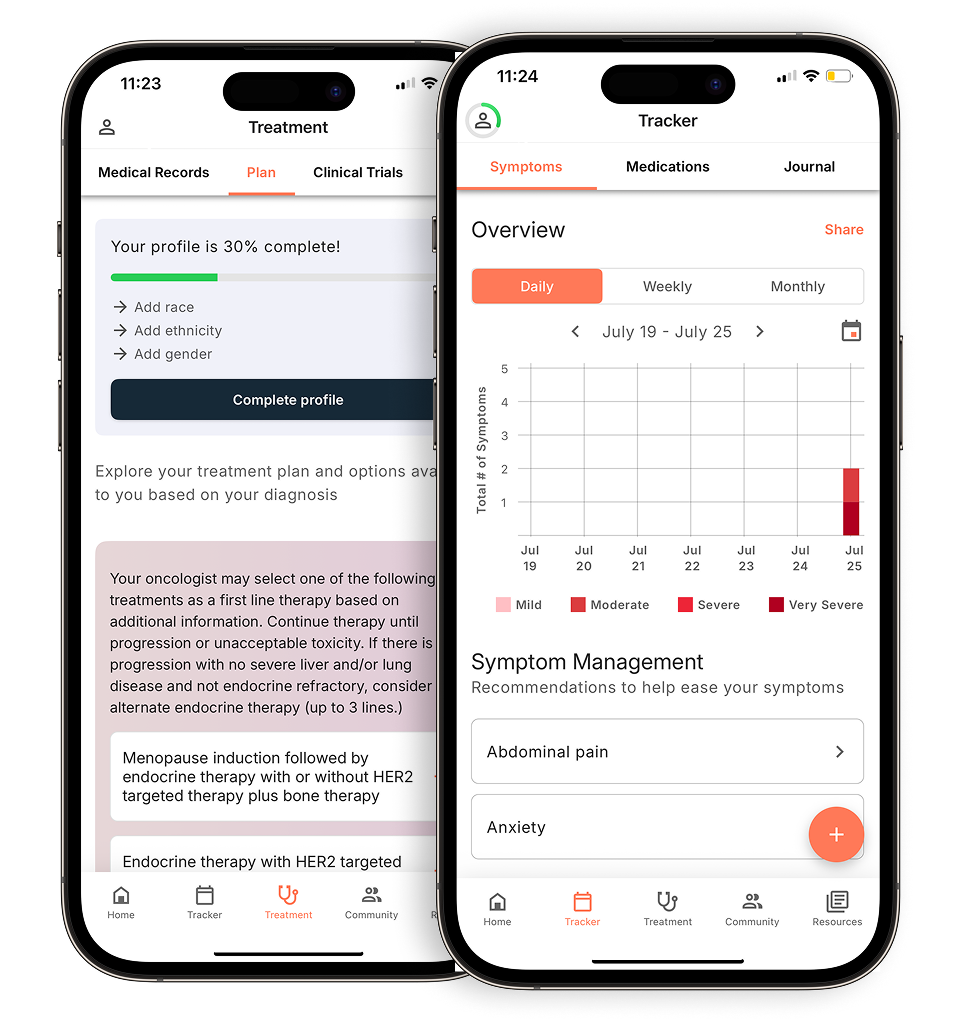
View your personalized treatment plan in the Outcomes4Me app
Use your diagnosis to unlock personalized NCCN Guidelines®-aligned recommendations.
Key Takeaways
- Certain genetic conditions influence uterine cancer risk: While most cases happen by chance, inherited syndromes like Lynch syndrome can significantly increase your risk. Understanding your family’s health history is the first step in talking with your doctor about whether genetic testing is right for you.
- Genetic counseling offers essential support and clarity: You don’t have to figure this out alone. A genetic counselor can help you understand the pros and cons of testing, make sense of your results, and create a personalized health plan based on the findings.
- A positive test result empowers you to manage your health proactively: Learning you have a gene mutation is not a diagnosis—it’s information you can use. This knowledge allows you to work with your care team on a plan that may include enhanced screening, preventive options, and lifestyle changes.
Uterine cancer: A closer look at the numbers
When you hear a cancer diagnosis, numbers and statistics can feel overwhelming, but they can also provide a sense of clarity. Understanding the landscape of uterine cancer can help you contextualize your own experience and feel more informed as you speak with your care team. Uterine cancer is the most common cancer of the female reproductive system, which means you are far from alone. There is a large community of women who have been where you are, and a wealth of research dedicated to improving outcomes. Let’s look at some of the key figures to get a clearer picture of what a uterine cancer diagnosis means today.
How common is uterine cancer?
Uterine cancer is the fourth most common cancer for women in the United States, so it’s a diagnosis that many people face. The good news is that the outlook is often positive. Across all stages, about 80.8% of women live for five or more years after their diagnosis. However, it’s important to acknowledge that outcomes aren’t the same for everyone, with research showing a disparity in survival rates between Black women and White women. A small but significant number of uterine cancers are also linked to genetics. For instance, an inherited condition called Lynch syndrome is responsible for about 3% of all endometrial cancers, highlighting why knowing your family health history is so valuable.
Survival rates by stage and demographic
One of the most critical factors in any cancer diagnosis is the stage at which it’s found. For uterine cancer, early detection makes a huge difference. When the cancer is confined to the uterus, the five-year survival rate is about 95%. This is why it’s so important to listen to your body and talk to a doctor about any unusual symptoms, like abnormal bleeding. If the cancer has spread to distant parts of the body (stage IV) by the time it’s diagnosed, that rate drops significantly. These numbers aren’t meant to cause alarm but to underscore the power you have in seeking early medical advice, which can lead to more effective and less invasive treatment options.
Understanding the types of uterine cancer
Just as no two people are exactly alike, not all uterine cancers are the same. The term “uterine cancer” is an umbrella that covers different types of cancer that can start in the uterus. The most common type begins in the endometrium, which is the lining of the uterus. A much rarer type starts in the myometrium, the muscle wall of the uterus. Knowing the specific type of cancer you have is fundamental because it shapes your entire treatment plan, from the kinds of surgery you might need to the therapies that will work best. Your pathology report will have this detailed information, which is key to creating a personalized care strategy with your oncology team.
Type I vs. Type II endometrial cancer
Endometrial cancer, the most prevalent form of uterine cancer, is generally divided into two main categories. Type I endometrial cancers make up about 80-90% of cases. These cancers are typically less aggressive, meaning they tend to grow more slowly and are less likely to spread. They are often linked to an excess of the hormone estrogen. On the other hand, Type II endometrial cancers account for 10-20% of cases and are considered more aggressive. These cancers are not associated with high estrogen levels and have a greater tendency to grow and spread outside the uterus. Distinguishing between these two types helps doctors predict the cancer’s behavior and choose the most effective treatment approach.
Uterine sarcoma
While most uterine cancers start in the lining, a small number begin in the muscle wall or other supporting tissues of the uterus. These are called uterine sarcomas, and they are quite rare, making up only about 3-7% of all uterine cancers. Because they develop from different cells than endometrial cancers, they behave differently and are treated differently. There are several subtypes of uterine sarcoma, each with its own unique characteristics. Getting an accurate diagnosis is crucial, as the treatment plan for a uterine sarcoma is very distinct from the plan for a more common endometrial cancer. Your doctor will use imaging and biopsy results to determine the exact type of cancer you have.
The four molecular groups of endometrial cancer
In recent years, scientists have discovered that we can classify endometrial cancers even more precisely by looking at their genetic makeup. This approach, known as molecular subtyping, divides endometrial cancers into four distinct groups based on specific genetic changes within the tumor cells. This is a huge step forward in personalized medicine. Knowing a cancer’s molecular group can give your care team powerful insights into how it might behave and, most importantly, which treatments are most likely to be effective. This level of detail allows for a more tailored treatment plan, sometimes pointing toward targeted therapies or immunotherapies that might not have been considered otherwise.
What are the risk factors for uterine cancer?
When we talk about risk factors, it’s simply a way of looking at what might make someone more likely to develop a certain health condition. It’s not about blame, and it’s definitely not a guarantee. Many people with several risk factors never develop uterine cancer, while others with no obvious risk factors do. Understanding these factors is about empowerment—it gives you information you can use to have proactive conversations with your doctor about your overall health and any screening or lifestyle changes that might be right for you. It’s about being aware of your body and your personal health profile so you can be your own best advocate.
Health and lifestyle risk factors
Several aspects of your general health and lifestyle can influence your risk for uterine cancer. One of the most significant factors is obesity, as excess fat tissue can produce estrogen, which may encourage the growth of cancer cells in the endometrium. In fact, women with obesity are about three times more likely to develop uterine cancer. Other factors include your age, as risk increases as you get older, and having other health conditions like type 2 diabetes. A family history of uterine, ovarian, or colon cancer can also play a role. Discussing these factors with your doctor can help you create a plan to manage your health in a way that feels supportive and achievable.
Reproductive and hormonal risk factors
Your reproductive and hormonal history can also affect your risk for developing uterine cancer. Factors that increase your body’s exposure to estrogen over your lifetime can play a part. This includes things like starting your period at an early age, going through menopause later in life, or never having been pregnant. The biggest genetic risk factor is Lynch syndrome, an inherited condition that significantly increases the risk for several cancers. Women with Lynch syndrome have a 40% to 60% lifetime risk of developing endometrial cancer. If you have a strong family history of uterine or colorectal cancer, your doctor may suggest genetic counseling to see if testing for this condition is a good option for you.
How are genetics linked to uterine cancer?
Think of your DNA as a detailed instruction manual for your body. Genetic markers are like specific pages or sentences in that manual that can give clues about your health, including your risk for developing certain types of cancer. For uterine cancer, researchers have identified several of these markers, which are often changes, or mutations, in specific genes.
Having one of these genetic markers doesn’t mean you will definitely get cancer. It just means your risk may be higher than someone without the marker. Understanding these genetic factors can be empowering. It gives you and your care team important information to create a personalized screening and prevention plan that’s right for you. Some of these genetic changes are passed down through families (hereditary), while others can happen randomly during a person’s life (sporadic). Knowing which type you might be dealing with is a key step in understanding your personal health story and what it might mean for your family.
What a genetic mutation means for your cancer risk
Our genes contain the instructions that tell our cells how to function, including when to grow, divide, and die. A genetic mutation is essentially a change in those instructions. Sometimes these changes are harmless, but other times they can disrupt normal cell behavior. For instance, certain mutations can affect genes responsible for cell survival, which may influence endometrial cancer risk.
Researchers have studied the differences between cancerous and normal uterine tissue to pinpoint which genes are most involved. They’ve identified several key players, including the TP53 and PTEN genes, which normally work to control cell growth. When these genes have mutations, they may not be able to do their job correctly, allowing cells to grow out of control.
Hereditary vs. sporadic uterine cancer: What’s the difference?
When we talk about uterine cancer, it’s helpful to know whether it’s considered hereditary or sporadic. Most uterine cancers are sporadic, meaning the genetic mutations that cause the cancer happen by chance during a person’s lifetime and are not inherited.
A smaller portion, about 2% to 5%, are hereditary. This means a specific gene mutation that increases cancer risk was passed down from a parent. The most well-known condition linked to hereditary uterine cancer is Lynch syndrome. Understanding this distinction is important because if a cancer is hereditary, other family members may also have an increased risk.
What is Lynch syndrome, a key genetic risk factor
If you’re exploring the genetic side of uterine cancer, one of the first terms you’ll likely come across is Lynch syndrome. This inherited condition is the most common genetic reason for a higher risk of uterine (endometrial) cancer. It’s important to remember that having Lynch syndrome doesn’t mean you will definitely get cancer, but it does mean your chances are higher than average. This knowledge isn’t meant to be frightening; instead, think of it as a tool that you and your care team can use to be more proactive about your health.
Understanding if you have this condition can be a powerful step in managing your well-being. It’s caused by changes, or mutations, in specific genes that are passed down through families. When these genes don’t work as they should, it can pave the way for certain cancers to develop. Besides uterine cancer, Lynch syndrome also increases the risk for colorectal, ovarian, and stomach cancers, among others. This is why identifying it is so crucial. It provides a more complete picture of your health risks, allowing for a comprehensive and personalized screening plan. It opens up conversations about what you can do to manage that risk, putting you in a better position to make informed decisions.
Which genes are associated with Lynch syndrome?
Lynch syndrome is tied to mutations in a group of genes known as mismatch repair (MMR) genes. Think of these genes as your body’s genetic proofreaders. Their main job is to find and fix errors that can happen when your cells divide and copy their DNA. The primary genes involved are MLH1, MSH2, MSH6, and PMS2. When there’s a mutation in one of these genes, the proofreading system doesn’t work correctly. As a result, DNA errors can build up in your cells over time, which may lead to the uncontrolled cell growth that causes cancer. Learning about these specific genetic susceptibility factors is a key part of understanding your personal risk.
The role of the EPCAM gene
While the four MMR genes are the usual suspects in Lynch syndrome, there’s another gene called EPCAM that’s also part of the conversation. The EPCAM gene isn’t a mismatch repair gene itself, but it sits right next to MSH2 on the chromosome. A mutation in EPCAM can cause the neighboring MSH2 gene to be turned off, which leads to the same DNA proofreading problems. Because of this close relationship, mutations in EPCAM can increase the risk for colorectal and endometrial cancers, just like a direct mutation in MSH2 would.
Understanding the role of EPCAM is important not just for assessing risk, but also for understanding how a cancer might behave. For instance, in endometrial cancer, studies have shown that lower levels of the protein made by the EPCAM gene can be associated with a poorer prognosis. This is because EPCAM is involved in helping cells stick together, and when it’s not working correctly, cancer cells may be more likely to break away and invade other tissues. This kind of information helps researchers and doctors get a more complete picture of the cancer’s biology, which can be valuable when considering treatment approaches.
On a cellular level, EPCAM is involved in several key cell signaling pathways that regulate how cells grow, survive, and communicate with each other. When a mutation disrupts these pathways, it can contribute to the uncontrolled cell growth that is a hallmark of cancer. Knowing about a mutation in EPCAM or any of the other Lynch-associated genes provides you with powerful information. It allows you and your care team to create a proactive health plan tailored to your specific genetic makeup, focusing on early detection and prevention strategies.
How Lynch syndrome mutations affect your cancer risk
A mutation in one of the Lynch syndrome genes significantly changes your personal risk profile for certain cancers. For women, the lifetime risk of developing endometrial cancer can be as high as 60%. This makes Lynch syndrome the most common inherited cause of the disease. It’s a big number, but it’s also valuable information. Knowing you have an increased risk empowers you to take control of your health journey. It’s the kind of knowledge that allows you and your doctor to create a more vigilant health plan, tailored specifically to you and your body’s needs. This information is not about fear; it’s about awareness and action.
What is the lifetime cancer risk with Lynch syndrome?
The term “lifetime risk” can sound intimidating, so let’s break it down. When we say women with Lynch syndrome may have up to a 60% lifetime risk of endometrial cancer, it means that out of 100 women with the condition, about 60 are likely to be diagnosed by age 70. It’s a statistical probability, not a certainty for any one person. This perspective on endometrial cancer helps frame why genetic information is so useful. Instead of waiting for symptoms to appear, you can work with your healthcare provider on a proactive strategy. This might include more frequent screenings or other preventive options, giving you a head start on managing your health.
Are there other genetic conditions that increase uterine cancer risk?
While Lynch syndrome is the most well-known genetic link to uterine cancer, it’s not the only one. A few other hereditary conditions, though less common, can also affect your risk. These syndromes are caused by mutations in different genes that are responsible for keeping cell growth in check. Think of these genes as the body’s internal “brakes” for cell division. When a mutation occurs, those brakes might not work as well as they should, which can sometimes lead to the development of cancer.
If you have a personal or family history of conditions like Cowden syndrome or Peutz-Jeghers syndrome, it’s helpful to understand how they might relate to uterine health. It’s also worth noting that researchers are always learning more about how other genetic mutations, like those in the BRCA1 and BRCA2 genes, might be connected to different types of cancer. Knowing about these connections can help you and your doctor make informed decisions about your screening and care plan. It allows for a more personalized approach, creating a strategy that is tailored specifically to you and your genetic makeup, rather than a one-size-fits-all plan.
The link between Cowden syndrome and uterine cancer
Cowden syndrome is a condition caused by mutations in the PTEN gene, which is a tumor suppressor gene. Its job is to help control cell division. When the PTEN gene is altered, cells can grow and divide too quickly, which may lead to the formation of both noncancerous and cancerous tumors. For women, Cowden syndrome is associated with a higher lifetime risk of developing certain cancers, including breast, thyroid, and uterine (endometrial) cancer. The estimated lifetime risk for endometrial cancer for women with this syndrome is about 20% to 30%.
The link between Peutz-Jeghers syndrome and uterine cancer
Peutz-Jeghers syndrome (PJS) is a rare genetic disorder caused by a mutation in the STK11 gene. This gene also acts as a tumor suppressor. PJS is most known for causing noncancerous growths, called polyps, in the gastrointestinal tract and dark freckle-like spots on the skin. However, it also increases the risk of developing several types of cancer over a person’s lifetime. For women with Peutz-Jeghers syndrome, there is an increased risk for gynecologic cancers, including those of the ovaries, cervix, and uterus.
Are BRCA1 and BRCA2 mutations linked to uterine cancer?
You may have heard of BRCA1 and BRCA2 mutations in relation to breast and ovarian cancer risk. More recently, researchers have been exploring their connection to uterine cancer. Some studies suggest that a BRCA1 mutation may be linked to a small increased risk of developing a rare and more aggressive type of uterine cancer called serous endometrial cancer. It’s important to know that this risk is considered very small, and the research is still ongoing. Scientists are working to better understand this link and what it means for screening and prevention.
Other common gene mutations in endometrial cancer
Beyond the hereditary syndromes we’ve discussed, the cancer cells themselves can have their own unique set of genetic mutations. In fact, most endometrial cancers are sporadic, meaning these genetic changes happen by chance during a person’s lifetime and are not inherited. This is why your care team may recommend genomic testing of the tumor tissue itself. Understanding these tumor-specific mutations is a key part of personalized medicine, as it helps your doctors see what’s driving the cancer’s growth. This information allows them to select the most effective treatments for your specific type of cancer, moving beyond a one-size-fits-all approach.
Researchers have identified several frequently mutated genes in endometrial tumors, including PTEN, PIK3CA, ARID1A, and TP53. Many of these are tumor suppressor genes, which you can think of as the brakes that normally control cell growth. When a mutation occurs in one of these genes, that braking system can fail, allowing cells to grow and divide without control. Genes like PTEN and TP53 are some of the most well-studied in cancer research. Knowing which specific mutations are present in a tumor gives your doctor a more detailed roadmap for your treatment plan and can sometimes open the door to targeted therapies.
How a genetic mutation can lead to uterine cancer
Our bodies have incredible, built-in systems to keep us healthy. Our cells are constantly dividing and creating new copies of themselves, and our DNA provides the blueprint for this process. A genetic mutation is like a typo in that blueprint. Most of the time, our bodies are excellent at catching and fixing these typos before they cause a problem.
However, sometimes a mutation occurs in a gene that plays a critical role in controlling cell growth. When this happens, the cell’s instructions can get scrambled, telling it to grow and divide without the usual checks and balances. This uncontrolled growth is what can lead to cancer. Understanding how these specific mutations affect cell behavior can help clarify why some people have a higher risk for developing uterine cancer. It’s a complex process, but it often comes down to a breakdown in the body’s natural safety mechanisms.
The role of DNA repair genes
Think of your DNA as a long instruction manual that gets copied every time a cell divides. With so much information, mistakes can happen. That’s why your body has a proofreading system, run by a group of genes called mismatch repair (MMR) genes. Their job is to scan the new DNA and fix any errors. When a mutation occurs in one of these MMR genes, the proofreading system can’t do its job effectively. This genetic susceptibility means that errors can build up in the cell’s DNA over time. This accumulation of errors is what can eventually lead to cancer and is the primary mechanism behind Lynch syndrome.
The role of tumor suppressor genes in cell growth
Another key safety feature in our cells is a group of genes called tumor suppressor genes. A great way to think of them is as the brakes for cell growth. They tell cells when to slow down, stop dividing, or even self-destruct if they become damaged. Key examples of these genes include PTEN and TP53. When a mutation happens in a tumor suppressor gene, it’s like the brakes have been cut. The cell loses its ability to stop growing at the right time, which can lead to uncontrolled proliferation. Scientists often identify specific genes involved in cancer by comparing the genetic changes in cancerous tissue with those in healthy tissue.
How some mutations lead to uncontrolled cell growth
The TP53 gene is a particularly powerful tumor suppressor, often called the “guardian of the genome.” It plays a central role in maintaining the stability of our DNA. When TP53 senses DNA damage, it hits the pause button on cell division, giving the cell time to make repairs. If the damage is too extensive, TP53 can trigger a process of programmed cell death to eliminate the faulty cell. A mutation in TP53 can cause a loss of this crucial function. This allows cells to ignore the normal stop signals and continue dividing, even with damaged DNA, which is a major factor in the genetics of endometrial cancers.
Should you consider genetic testing for uterine cancer?
Deciding whether to pursue genetic testing is a personal choice, and it’s one you can make with the support of your healthcare team. While most uterine cancers happen by chance, some are linked to inherited genetic mutations passed down through families. Understanding if certain clues in your health history point to a higher risk can be an empowering step. It helps you and your doctor make more informed decisions about your care plan, screening, and potential risks for other cancers.
Thinking about your family’s health history, your own medical background, and your age when you were diagnosed can help you and your doctor figure out if genetic testing is the right next step for you. This information can provide a fuller picture of your health and open up conversations about personalized ways to manage it.
What your family health history can tell you
Your family’s health history is one of the most important pieces of the puzzle. If you have close relatives who have had uterine or colorectal cancer, it could be a sign of an inherited condition. One of the most common is Lynch syndrome, which can significantly increase the lifetime risk of developing several types of cancer, including uterine cancer. Take some time to learn about the health history of your parents, siblings, and children. It’s also helpful to know about more distant relatives like grandparents, aunts, uncles, and cousins. Having this information ready can help your doctor see potential patterns and guide your conversation about genetic testing.
What to look for in your personal health history
Your own health journey also provides valuable clues. A personal history of certain cancers, especially colorectal cancer diagnosed before age 50, can be an indicator of an underlying genetic mutation. This is because some inherited conditions, like Lynch syndrome, are caused by mutations in genes responsible for repairing DNA mistakes. When these genes don’t work correctly, it can lead to a higher risk of developing specific cancers. Be sure to share your complete medical history with your care team, as it helps them connect the dots and determine if genetic testing could offer useful insights for your treatment and long-term health monitoring.
Other factors to consider
The age you were diagnosed with uterine cancer is another key factor. Generally, if you were diagnosed before the age of 50, your doctor may be more likely to suggest genetic testing. Cancers that develop at a younger-than-average age are more often linked to an inherited predisposition. Your doctor will also consider the specific type of uterine cancer you have, as some types are more closely associated with genetic mutations. Combining these factors—your age, your personal health history, and your family’s health history—helps create a clearer picture and guides the decision-making process for both you and your care team.
What to expect from the genetic testing process
If you and your doctor decide genetic testing is a good next step, you might wonder what the experience will be like. The process is usually straightforward and starts with a conversation. It’s all about gathering information so you can make informed decisions about your health. From the type of test you’ll take to understanding what the results mean for you and your family, having a clear picture of the process can help you feel more prepared.
The standard testing process for endometrial cancer
The journey to understanding the genetics behind your cancer often follows a clear path. It typically begins with an analysis of the tumor tissue that was removed during a biopsy or surgery. This initial step looks for specific characteristics in the cancer cells themselves. If certain red flags are found, it can point toward the possibility of an inherited condition. This is when your care team may recommend a second step: genetic testing to see if a mutation is present in all the cells of your body, which would confirm that the risk was passed down through your family.
Tumor testing for MSI or dMMR
After an endometrial cancer diagnosis, it is standard practice for the tumor tissue to be tested for two specific markers: mismatch repair deficiency (dMMR) or microsatellite instability-high (MSI-H). Think of the mismatch repair system as your body’s DNA proofreader. When it’s deficient (dMMR), it can’t fix errors that occur when cells divide, leading to a high number of mutations (MSI-H). Finding these markers in the tumor is a major clue that an inherited condition like Lynch syndrome may be the root cause. This initial screening is incredibly helpful because it identifies who would benefit most from further genetic counseling and testing.
Confirming an inherited condition
If your tumor test shows signs of dMMR or MSI-H, the next step is to confirm whether this is due to an inherited condition. This is done with a genetic test, usually from a blood or saliva sample, that looks for a specific mutation in genes associated with Lynch syndrome. This is an important step, as up to 15 out of every 100 people with endometrial cancer have an inherited gene change. It is highly recommended that you meet with a genetic counselor both before and after testing. These specialists can help you understand the process, interpret the results, and discuss what the findings mean for your health and for your family members, who may share the same risk.
What are the different types of genetic tests?
Genetic testing for uterine cancer risk involves looking for specific changes (mutations) in your genes associated with a higher cancer risk. Think of it as checking for typos in your body’s instruction manual. The tests usually look for mutations in genes related to Lynch syndrome, such as MLH1, MSH2, MSH6, and PMS2. They may also check for mutations in the BRCA1 and BRCA2 genes, which are often linked to hereditary breast and ovarian cancer but can also affect uterine cancer risk. Identifying these mutations can help clarify your personal risk and guide future health decisions.
The genetic testing process, step by step
The genetic testing process typically follows a few simple steps. It begins with a consultation with a genetic counselor or another genetics expert. During this meeting, you’ll discuss your personal and family health history to determine if testing is right for you. If you decide to proceed, the next step is collecting a sample, usually a simple blood draw or saliva sample. This is sent to a lab for analysis. After a few weeks, your results will be ready, and you’ll have a follow-up appointment to go over them with your counselor or doctor.
Understanding your genetic test results
When you get your results back, they will generally fall into one of three categories. A positive result means a specific gene mutation associated with a higher cancer risk was found. A negative result means no known high-risk mutations were detected in the tested genes. Remember that a negative result doesn’t completely eliminate your cancer risk, especially with a strong family history. Sometimes, you might get a Variant of Uncertain Significance (VUS). This means a gene change was found, but it’s not yet clear if it affects your cancer risk. Your healthcare provider can help you interpret your results and figure out the best path forward.
Practical considerations for testing
Once you’ve decided to explore genetic testing, you’ll likely have some practical questions about things like cost and timing. It’s completely normal to think about these details, and getting clear answers can make the process feel much more manageable. Understanding the logistics ahead of time helps you focus on what’s most important: your health and making informed choices. This is all part of taking an active role in your care. Let’s walk through a couple of key considerations so you know what to expect and can feel confident in your next steps.
Insurance coverage for testing
The question of cost is often top of mind, and thankfully, many people have coverage for genetic testing. Most private insurance plans will cover specific tests like MSI or dMMR for endometrial cancer if your doctor determines it’s medically needed. However, coverage for other biomarker tests or broader genetic panels can vary depending on your specific plan and diagnosis. The best first step is to talk with your doctor’s office. They often have staff who are very familiar with this process and can help you understand your benefits or get pre-authorization from your insurance company. Don’t hesitate to call your insurance provider directly to ask about your coverage.
Why you might consider re-testing
The field of genetics is constantly evolving, which means our understanding and testing capabilities are always getting better. If you had genetic testing in the past and received a negative result, you might benefit from new testing. This is especially true if your previous test was done before 2014 or was limited to only a few genes. Modern multi-gene panels are much more comprehensive and can provide a fuller picture. You might also consider re-testing if your personal or family health history has changed since your last test. A conversation with your doctor or a genetic counselor can help you decide if an updated test could offer valuable new insights for your health plan.
How genetic counseling can support you
Deciding whether to pursue genetic testing is a big step, and you don’t have to take it alone. Genetic counseling is a process that gives you a dedicated partner—a genetic counselor—to help you understand your options and what they might mean for you and your family. Think of them as your personal guide to the world of genetics. They are trained professionals who can translate complex medical information into clear, understandable terms.
A genetic counselor will work with you to review your personal and family health history, discuss the benefits and limitations of genetic testing, and help you decide if it’s the right choice for you. If you do move forward with testing, they will be there to help you interpret the results and understand the next steps for your health care. This partnership is all about empowering you with the information you need to make confident decisions.
Why talk to a genetic counselor before testing
Meeting with a genetic counselor before you get tested can help you feel prepared for any outcome. They can explain what a specific test is looking for and what the results could reveal about your health. This conversation is a chance to ask all your questions in a safe, supportive space. You can discuss the pros and cons of testing, including the potential emotional, financial, and medical implications.
A counselor helps you think through how the results might affect not just your own screening and prevention plans, but also your family members. By understanding the full picture beforehand, you can make a choice that feels right for you, without any pressure.
Creating a personalized plan to manage your risk
If you decide to get tested and the results show an inherited gene change, your genetic counselor will help you create a clear, actionable plan. This isn’t just about knowing your risk; it’s about doing something with that information. Your counselor will explain what the specific gene mutation means for your future health and your potential risk for other types of cancer.
Based on your results, they will connect you with established guidelines for cancer screenings and prevention strategies. This could involve more frequent check-ups, different types of imaging, or other risk-reducing options. Having this personalized roadmap can help you feel more in control of your health journey.
Managing the emotional side of genetic testing
Learning about your genetic makeup can bring up a lot of emotions. It’s completely normal to feel a mix of anxiety, relief, or concern, especially since the results can have implications for your relatives. A genetic counselor understands the emotional weight of this process and provides a space to talk through your feelings.
They are a key part of your support system, trained to help you process this new information. Whether you’re worried about sharing your results with family or just need to talk, your counselor is there to listen and offer resources. Having this professional support can make a significant difference as you move forward.
What are your options if you test positive?
Receiving a positive result from a genetic test can bring up a lot of emotions. It’s completely normal to feel overwhelmed. But it’s also important to remember that this information gives you power. Knowing you have an increased risk for uterine cancer means you can take proactive steps to manage that risk and protect your health. This knowledge opens up a conversation with your healthcare team about creating a personalized plan that feels right for you.
There isn’t a single path forward, and your plan will be unique to your health, family history, and personal preferences. Generally, there are three main approaches you can discuss with your doctor: creating a plan for enhanced screening to catch any changes early, considering preventive surgeries to lower your risk, and making lifestyle changes that support your overall well-being. Think of these as tools in your toolkit. You and your care team can decide which ones are the best fit for you right now.
How test results can guide your treatment plan
Genetic information does more than just help you understand your risk; it can be a critical part of your treatment plan if you are diagnosed with uterine cancer. Knowing the specific genetic makeup of a tumor allows your care team to move beyond a one-size-fits-all approach and toward a more personalized strategy. This is where the science gets really exciting. Certain genetic markers can act like signposts, pointing your doctors toward treatments that are most likely to be effective for your specific type of cancer. This tailored approach can lead to better outcomes and is a key part of modern cancer care. Understanding these options is the first step in having an informed conversation with your doctor about the best path forward for you.
Immunotherapy for MSI-high or dMMR tumors
If testing shows that a tumor is MSI-high (microsatellite instability-high) or dMMR (deficient mismatch repair), it tells doctors something very important about the cancer cells. Essentially, it means the cells have trouble fixing mistakes when their DNA is copied, a common feature in cancers linked to Lynch syndrome. This weakness, however, can be turned into a strength in treatment. Tumors with these features often respond very well to immunotherapy, a type of treatment that helps your own immune system recognize and attack cancer cells. It’s a way of harnessing your body’s natural defenses to fight the cancer more effectively, using the tumor’s own genetic signature as a target.
PARP inhibitors and other targeted therapies
Targeted therapies are another powerful tool in personalized cancer treatment. Unlike traditional chemotherapy, which affects all rapidly dividing cells, targeted drugs are designed to zero in on the specific vulnerabilities of cancer cells. For uterine cancers linked to certain inherited gene changes, such as those in Lynch syndrome or BRCA mutations, a class of drugs called PARP inhibitors can be particularly effective. These treatments work by exploiting the existing DNA repair weaknesses in the cancer cells, making it harder for them to survive. This approach attacks the cancer at its genetic core, offering a more precise and often more effective treatment option.
Understanding your enhanced screening options
Enhanced screening simply means you and your doctor will monitor your health more closely than someone at average risk. This might involve more frequent check-ups or different types of tests to detect any potential issues as early as possible. For example, experts often recommend that all endometrial cancers are tested for specific biomarkers like microsatellite instability (MSI). This information helps your doctor understand your cancer better and can guide decisions about your screening plan. Your personalized screening schedule will depend on your specific genetic mutation, age, and overall health, so it’s something you’ll develop in partnership with your care team.
Learning about preventive surgery
For some people with a high-risk genetic mutation, preventive surgery can be an effective way to significantly lower the chance of developing uterine cancer. For example, women with genetic changes linked to Lynch syndrome may consider a hysterectomy (the removal of the uterus) to reduce their risk. This is a deeply personal decision that comes with its own set of considerations, including your plans for having children and the potential impacts of surgery. It’s a choice that requires a thorough conversation with your doctors to weigh all the benefits and risks and make sure it aligns with your life goals.
Medications to reduce cancer risk (chemoprevention)
Beyond surgery, there are other proactive steps you can discuss with your doctor. One of these is chemoprevention, which is the use of certain medications to help reduce your risk of developing cancer. This approach is sometimes considered for individuals with a confirmed Lynch syndrome gene mutation. It’s not the right path for everyone, but it’s a valuable option to be aware of. Think of it as another tool you and your care team can consider as you build a comprehensive health plan tailored to your specific genetic profile. The goal is to use the information from your genetic test to make informed, proactive choices about your health.
Considering fertility preservation
For younger women, a conversation about fertility is a critical part of the decision-making process. Some cancer treatments can affect your ability to have children in the future, so it’s important to talk about this with your doctor before you begin treatment. This conversation allows you to explore all your options for preserving fertility. Knowing what’s possible can help you make choices that align with your long-term life goals. It’s your health and your future, and having these discussions early ensures that your care plan reflects what’s most important to you, both now and down the road.
Lifestyle changes to help manage your risk
You can also take an active role in managing your risk through your daily habits. Research shows that certain lifestyle choices can make a real difference. Focusing on things you can control, like maintaining a healthy weight, getting regular physical activity, and eating a balanced diet, can help lower your risk of developing endometrial cancer. These changes are not just about cancer prevention—they contribute to your overall health and well-being. You can start with small, sustainable steps that feel good to you, knowing that each one is a positive move for your health.
Sharing your genetic test results with your family
Learning about your genetic makeup is a personal experience, but the results can have a ripple effect, reaching parents, siblings, and children. A genetic mutation linked to uterine cancer doesn’t just affect you; it can also have implications for your relatives’ health. Bringing up this topic can feel daunting, but it’s an opportunity to give your family information that could help them take charge of their own health.
These conversations are a way to offer support and share knowledge. Remember, the goal isn’t to cause worry but to empower your loved ones with information. Your test results can be the first step in helping your family understand their own potential risks and the proactive steps they can take. Approaching these discussions with care and preparation can make a significant difference, creating a supportive environment where everyone feels comfortable making the health decisions that are right for them.
How to talk to your relatives about your results
Sharing your genetic test results with family is a generous act. Because you share genes with your relatives, a mutation found in your DNA might also be present in theirs. Letting them know about your results can help family members understand their own risk and decide if they want to speak with their doctor about getting tested.
Before you start the conversation, you might want to talk with your genetic counselor. They can help you figure out who in your family should be informed and give you tips on how to explain the results clearly. You can frame the conversation as sharing information that empowers them to make their own health choices, not as telling them what to do.
What this means for family planning
If you are thinking about starting or growing your family, understanding your genetic risk can be an important piece of the puzzle. A known genetic mutation can influence decisions around pregnancy and future children’s health. This is a deeply personal area, and there is no one-size-fits-all path. For some, this knowledge might lead to conversations with specialists about options for monitoring their health during pregnancy.
Knowing your genetic status provides valuable information for family planning, allowing you and your partner to make choices that feel right for you. A genetic counselor can also be a great resource here, walking you through any potential implications and helping you think through your options in a supportive, non-judgmental space.
Related Articles
- Personalized uterine cancer care: The role of genetic and biomarker testing
- Uterine (endometrial) cancer research offers new hope for patients
- Uterine (Endometrial) Cancer Community | Outcomes4Me
- Genetic Testing for Ovarian Cancer Explained
- Genetic testing explained for ovarian cancer patients – Outcomes4Me
View your personalized treatment plan in the Outcomes4Me app
Use your diagnosis to unlock personalized NCCN Guidelines®-aligned recommendations.
Frequently Asked Questions
If I have a genetic marker for uterine cancer, does that mean I’ll definitely get it? Not at all. Think of a genetic marker as a sign that your risk may be higher than average, not as a diagnosis. Many people with these markers never develop cancer. The real value of this information is that it empowers you and your doctor to be proactive. You can create a personalized screening plan to monitor your health more closely and make informed decisions about your well-being.
How do I know if I should get genetic testing for uterine cancer risk? A good starting point is to look at your personal and family health history. If you were diagnosed with uterine cancer before age 50, or if you have close relatives who have had uterine, colorectal, or ovarian cancer, it might be a good idea to discuss testing with your doctor. They can help you review your history and decide if learning more about your genetics could be beneficial for your long-term health plan.
What’s the first step if I’m worried about my family history of uterine cancer? The best first step is to gather as much information as you can about your family’s health history and schedule a conversation with your doctor or a genetic counselor. They can help you understand potential patterns and discuss whether genetic testing is a reasonable next step for you. This initial conversation is all about exploring your options and getting expert guidance tailored to your specific situation.
I’m scared of what genetic testing might reveal. How can I handle the anxiety? It’s completely normal to feel anxious about genetic testing. Speaking with a genetic counselor can be incredibly helpful. They are trained to support you through the emotional side of this process, providing a safe space to talk about your fears and what the results might mean. They can help you feel prepared for any outcome and remind you that this information is a tool to help you take control of your health, not something to fear.
If I test positive for a mutation, what does that mean for my kids or siblings? Since genetic mutations are inherited, a positive result means your close biological relatives, like your children, siblings, and parents, have a chance of carrying the same mutation. Sharing this information with them can be a powerful gift, as it gives them the opportunity to understand their own health risks and speak with their doctors about their options. A genetic counselor can offer great advice on how to approach these important family conversations.