
A cancer diagnosis can make you feel like you’ve lost control, but knowledge is a powerful tool to get some of that control back. Understanding your tumor at a genetic level empowers you to have more meaningful conversations with your care team. This is where genetic testing for colon cancer comes in. It allows you to be an active participant in your own care, asking informed questions and understanding the “why” behind your treatment recommendations. Learning about this process is a proactive step toward gaining crucial insight and ensuring your care plan is as personalized and effective as possible.
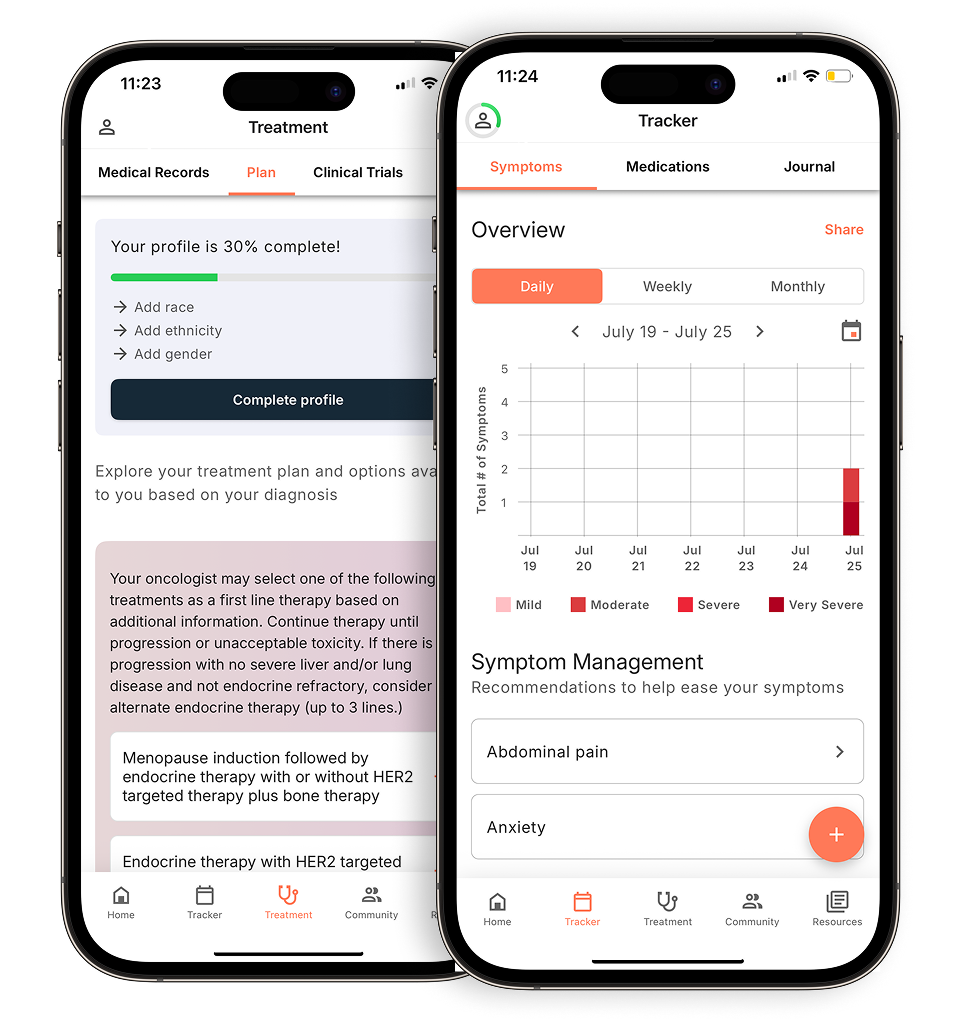
View your personalized treatment plan in the Outcomes4Me app
Use your diagnosis to unlock personalized NCCN Guidelines®-aligned recommendations.
Key Takeaways
- Genetic testing can personalize your treatment plan: The results give your care team a detailed look at the cancer’s unique characteristics, helping them select therapies that are more likely to be effective for you.
- Your health history holds important clues: If you were diagnosed with colon cancer under 50 or have multiple relatives with colon or related cancers, it’s a good reason to start a conversation with your doctor about genetic testing.
- The testing process is straightforward and supportive: It usually begins with a simple blood or saliva sample, and a genetic counselor can help you understand the results and what they mean for your care plan and your family.
What is genetic testing for colon cancer?
Genetic testing for colon cancer is a process that analyzes your DNA to look for specific changes, or mutations, that may increase the risk of developing colorectal cancer. Think of it as getting a personalized look at your genetic blueprint. This information can help you and your care team understand if your cancer might be linked to a gene change you inherited.
Knowing whether your cancer has a genetic link is important for a few key reasons. It can provide clues about why the cancer developed, influence which treatments might work best for you, and help determine the most effective screening plan to manage your health long-term. It can also be valuable information for your family members.
How common is hereditary colon cancer?
While most cases of colon cancer happen by chance, a notable portion has a family connection. Research shows that about 1 in 10 people diagnosed with colorectal cancer have an inherited gene change that contributed to its development. This means that for a significant number of individuals, the risk was passed down through their family tree. Understanding if you fall into this group is a key step in tailoring your healthcare, as it can influence not just your own treatment and screening plans, but also provide important health insights for your relatives. It’s one of the first big questions to explore with your doctor after a diagnosis.
The role of inherited genes in cancer risk
When we talk about inherited risk, we’re often referring to specific genetic syndromes. The most common of these is Lynch syndrome, which can significantly increase a person’s lifetime risk for colorectal cancer. According to the American Cancer Society, genetic testing helps identify inherited gene mutations linked to conditions like Lynch syndrome or Familial Adenomatous Polyposis (FAP) in about 5% to 10% of all colon cancer cases. Finding one of these mutations doesn’t just explain why the cancer may have developed; it gives your care team critical information that can guide personalized treatment decisions and help create a long-term screening strategy to protect your health moving forward.
Limitations of current genetic testing
It’s also important to know that genetic testing isn’t perfect and may not always provide a simple yes-or-no answer. Sometimes, a test can identify a “Variant of Uncertain Significance,” or VUS. This means a change was found in a gene, but experts don’t yet have enough information to know if that specific change actually increases cancer risk. Getting a VUS result can feel confusing, but it doesn’t mean you should panic. It simply means more research is needed. In these situations, a genetic counselor becomes an invaluable resource, helping you understand what the result means for you and advising on whether family members should consider testing.
How does a colon cancer genetic test work?
The process of genetic testing is usually quite simple, often starting with just a blood or saliva sample. A doctor or a genetic counselor will guide you through the steps, explaining what the test is looking for and what the results might mean for you. Once the sample is collected, it’s sent to a lab for analysis.
For colorectal cancer, testing often begins by looking at the tumor tissue itself for specific markers. According to Facing Our Risk of Cancer Empowered, experts recommend that all colorectal cancers first be tested for something called “mismatch repair deficiency” (dMMR) or “microsatellite instability-High” (MSI-High). These are signs that the cancer cells have trouble repairing DNA, which can be a clue to an underlying inherited condition.
How DNA analysis shapes your care plan
Understanding the genetic details of your cancer can make a real difference in your treatment plan. The results from genetic testing can help your doctor choose the most effective therapies for your specific situation. As the American Cancer Society notes, this information can point toward newer, targeted treatments that are designed to work against cancers with certain genetic profiles, while helping you avoid treatments that are less likely to be effective.
Beyond immediate treatment decisions, these results can also shape your future health management. If testing reveals an inherited gene mutation, your doctor might recommend starting colorectal cancer screenings at a younger age or having them more often. This proactive approach helps you stay on top of your health and manage your cancer risk over time.
Is genetic testing for colon cancer right for you?
Deciding whether to get genetic testing is a personal choice, and it’s one you should make with your care team. It isn’t necessary for everyone, but for some people, it can provide incredibly valuable information about your health and your treatment path. The goal of testing is to find out if your cancer, or your risk for it, is connected to a gene change that can be passed down through families.
So, how do you know if it’s something you should bring up with your doctor? Generally, the conversation around genetic testing starts when there are specific clues in your personal or family health history. Think of yourself as a health detective—you’re gathering information to build a complete picture. Looking at the health of your close relatives and the specifics of your own diagnosis can help you and your doctor decide if genetic testing is a logical next step for you. It’s all about understanding your unique situation to make the most informed decisions about your care.
Does colon cancer run in your family?
Your family’s health history is one of the most important pieces of the puzzle. If you have a strong family history of colorectal polyps or cancer, your own chances of developing it may be higher. This is especially true if your close relatives—like parents, siblings, or children—have been diagnosed.
Pay attention to patterns. Did more than one relative have colorectal cancer? Were they diagnosed at a young age (under 50)? Is there a history of other related cancers in your family, such as uterine or ovarian cancer? Answering yes to these questions doesn’t guarantee you have a genetic mutation, but it does mean a conversation with your doctor about genetic testing is a good idea.
Specific family history criteria for testing
So, what are the specific signs in your family history that might point toward genetic testing? Your doctor will likely recommend a discussion with a genetic counselor if you were diagnosed with colorectal cancer before age 50. The American Cancer Society highlights that your risk is higher if multiple close relatives have been diagnosed. Other key indicators include having a close blood relative with a known gene change linked to colorectal cancer, or a personal history of 10 or more adenomatous polyps. These criteria aren’t a diagnosis, but they are important clues that help you and your care team decide if genetic testing is a useful step for you.
What to look for in your own health history
Your own health story also provides critical clues. If you’ve been diagnosed with colorectal cancer, particularly before age 50, your doctor might suggest testing. Another key reason is if you already know that a close relative has an inherited gene change linked to colorectal cancer.
Your personal history also includes any colorectal polyps you’ve had, especially if you’ve had many of them over time. Certain types of polyps can also point to a higher genetic risk. All of this information helps your care team understand the full context of your diagnosis and determine if your cancer might have a hereditary component that could influence your treatment plan.
Specific polyp criteria for testing
It’s not just about whether you have polyps, but also how many and what kind. Specific patterns can be a strong signal that it’s time to discuss genetic testing with your doctor. For example, you should consider testing if you’ve had 10 or more adenomatous polyps, which are a common type. Other important indicators include having two or more hamartomatous polyps or five or more serrated polyps. These findings can point to inherited conditions like Familial Adenomatous Polyposis (FAP) or Lynch syndrome. Identifying one of these syndromes is a critical step because it changes how your health is managed, often leading to earlier and more frequent screenings to catch any potential issues as early as possible.
When your doctor might suggest testing
Your doctor or a genetic counselor is your best partner in figuring this out. You can start the conversation by simply saying, “I’m concerned about my family history of cancer,” or “I’d like to know if my cancer could be genetic.” They will likely recommend testing if your personal or family history points to a possible hereditary cancer condition.
These conditions are caused by inherited gene mutations that increase the risk for certain types of cancer. By looking at your complete health picture, your doctor can assess whether you fit the criteria for testing. This discussion is the first step toward getting clear answers and creating a care plan that’s truly personalized to you.
What genetic mutations are linked to colon cancer?
While most colon cancers happen by chance, some are linked to genetic mutations that can be passed down through families. When a specific gene change that increases cancer risk is inherited, it’s often part of a genetic syndrome. Identifying these syndromes can be a powerful step in understanding your health and your family’s health. It allows you and your care team to create a more personalized screening and treatment plan.
Think of these genes as the body’s instruction manual for cell growth. When there’s a “typo” or mutation in certain genes, the instructions can go wrong, sometimes leading to uncontrolled cell growth and cancer. Genetic testing can help find these specific typos. Knowing which mutation you might have helps your doctor understand your personal risk and what to watch for. Below are some of the most well-understood genetic conditions connected to colon cancer.
What is Lynch syndrome?
Lynch syndrome is the most common inherited cause of colorectal cancer. It’s associated with mutations in several different genes that are supposed to repair mistakes in DNA, including MLH1, MSH2, MSH6, PMS2, and EPCAM. When one of these genes isn’t working correctly, it can lead to a higher risk of developing cancer. People with Lynch syndrome have a significantly increased risk of colorectal cancer. They also have a higher likelihood of developing other cancers, such as endometrial, stomach, and ovarian cancer. Learning about genetic testing for colorectal cancer can help you and your doctor decide on the right screening plan.
Lifetime cancer risk with Lynch syndrome
Having Lynch syndrome changes the conversation about cancer risk, but it’s important to remember that a higher risk doesn’t mean a cancer diagnosis is inevitable. According to the American Cancer Society, Lynch syndrome can increase a person’s lifetime risk for colorectal cancer significantly, with the exact percentage depending on the specific gene involved. This knowledge is a powerful tool. It empowers you and your doctor to be proactive, creating a personalized screening schedule with more frequent colonoscopies to catch any potential issues as early as possible. It’s about shifting from a reactive to a proactive stance on your health.
Other cancers linked to Lynch syndrome
While it’s most often associated with colorectal cancer, Lynch syndrome can also increase the risk for other types of cancer. People with Lynch syndrome have a higher likelihood of developing other cancers, including endometrial (uterine), stomach, and ovarian cancer, among others. This is a crucial piece of the puzzle because it highlights the need for a comprehensive health plan that goes beyond just colon health. Knowing about these additional risks allows your care team to recommend appropriate screenings for other parts of your body, ensuring you receive complete and well-rounded care tailored to your specific genetic profile.
What is Familial Adenomatous Polyposis (FAP)?
Familial Adenomatous Polyposis, or FAP, is another hereditary condition, this one linked to mutations in the APC gene. The APC gene’s job is to act as a tumor suppressor, preventing cells from growing and dividing too rapidly. In people with FAP, this gene doesn’t work properly, leading to the growth of hundreds or even thousands of polyps in the colon and rectum. If left untreated, it’s almost certain that one or more of these polyps will become cancerous. Because of this high risk, cancer can develop at a much younger age, making early and regular screening absolutely essential for anyone with FAP.
Lifetime cancer risk with FAP
The risk associated with FAP is significant, but it’s also very well understood, which is a good thing when it comes to managing your health. According to the American Cancer Society, individuals with FAP have a nearly 100% lifetime risk of developing colorectal cancer *if the condition is not managed*. This is why a diagnosis of FAP is always followed by a proactive plan. It’s not just about knowing the risk; it’s about using that knowledge to take control. This typically involves more frequent and earlier screenings than the general population, and often includes discussions about preventive surgery to remove the colon before cancer has a chance to develop. This approach dramatically reduces the cancer risk, turning a scary statistic into a manageable health plan.
Are there other related genetic conditions?
Beyond Lynch syndrome and FAP, there are other, rarer inherited conditions that can increase the risk of colorectal cancer. One is MUTYH-associated polyposis (MAP), which is caused by mutations in the MUTYH gene. Another is Peutz-Jeghers syndrome, which is linked to mutations in the STK11 gene. Both of these conditions can cause polyps to develop in the digestive tract and increase the risk of certain cancers. While less common, understanding the full scope of colorectal cancer genetic testing is important for anyone with a strong family history of colon cancer or polyps.
PTEN Hamartoma Tumor syndrome
PTEN Hamartoma Tumor syndrome, or PHTS, is an umbrella term for a group of related conditions caused by a mutation in the PTEN gene. This gene’s job is to help manage cell growth, so when it isn’t working as it should, it can lead to a higher risk of developing certain cancers, including breast, thyroid, and endometrial cancers. While it’s not as frequently connected to colon cancer as Lynch syndrome or FAP, a genetic test for PHTS is often included in broader testing panels that look for hereditary cancer risk. Finding a mutation in this gene helps you and your doctor create a complete screening plan that addresses all related cancers, giving you a proactive strategy for your long-term health.
Li-Fraumeni syndrome
Li-Fraumeni syndrome is a rare inherited condition connected to a mutation in a powerful tumor-suppressing gene called TP53. Because the TP53 gene plays such a vital role in preventing tumors from forming, a mutation can significantly increase the risk for a wide range of cancers, often at a young age. According to the National Cancer Institute, these can include soft tissue sarcomas, breast cancer, and brain tumors, among others. Although it is a rare condition, identifying a TP53 mutation through genetic testing provides crucial information. It allows for a highly personalized and vigilant cancer screening schedule, helping you and your care team stay ahead of potential risks with a clear plan for early detection.
How does genetic testing affect your treatment plan?
Genetic information acts like a personalized guide for your oncology team. It helps them understand the specific characteristics of the cancer, moving beyond a general diagnosis to see what makes it unique at a molecular level. This information is key to creating a treatment plan that’s tailored specifically to you. Think of it as getting a detailed blueprint of the cancer, which allows your doctors to choose the most effective tools to fight it. When your care team has this blueprint, they can see the specific pathways the cancer is using to grow and survive.
This approach, often called precision medicine, uses your unique genetic makeup to inform decisions about which therapies might work best. It can also help identify treatments that are less likely to be effective, saving you valuable time and helping you avoid unnecessary side effects. By understanding the genetic drivers of your cancer, your care team can make more informed choices about targeted therapies, immunotherapies, and even clinical trials that might be right for you. It’s a powerful way to ensure your care is as precise and effective as possible from the very beginning, giving you confidence that your treatment is designed for your specific situation.
Using your results to find targeted therapies
Genetic testing can reveal if your cancer has specific gene changes, or mutations, that are driving its growth. In fact, up to 10 out of every 100 people with colorectal cancer have an inherited gene change that caused their cancer. Knowing about these mutations is incredibly valuable because it helps your doctor match you with the right targeted therapies. These are newer medicines designed to attack cancer cells with specific genetic markers, often with fewer side effects than traditional chemotherapy. The results can help your care team choose the best treatments for you and steer clear of those that are less likely to be effective.
How testing can help monitor your treatment
Genetic testing isn’t just for choosing your initial treatment; it can also play a role in monitoring how well that treatment is working. One developing tool is the analysis of circulating tumor DNA (ctDNA), which are tiny pieces of DNA from cancer cells that can be found in your bloodstream. By taking a simple blood sample, doctors can look for ctDNA to see if your tumor is shrinking or to detect a recurrence early on, sometimes before it would show up on a scan. This information helps your care team make timely decisions about your treatment, whether that means staying the course or exploring a different approach.
Screening and prevention guidelines for high-risk individuals
If genetic testing shows you have an inherited mutation, the conversation with your doctor will expand beyond your immediate treatment. This knowledge is also a powerful tool for long-term health management, as it helps create a personalized screening plan designed to catch any potential issues as early as possible. For individuals with a known genetic risk, standard screening timelines often don’t apply. Instead, your care team will recommend a more proactive schedule to stay on top of your health. These guidelines are tailored to your specific situation, giving you a clear and actionable roadmap for the future.
Screening timelines for Lynch syndrome
If you have Lynch syndrome, your screening schedule will look different from that of someone with an average risk for colon cancer. According to the American Cancer Society, individuals with this condition should begin colonoscopy screenings in their early 20s. Another way to time it is to start two to five years younger than the age your youngest family member was when they were diagnosed with colorectal cancer. Because the risk is higher, these screenings are typically recommended every one to two years. This frequent monitoring is a key strategy for managing cancer risk and detecting any changes early.
Screening timelines for FAP
For those with Familial Adenomatous Polyposis (FAP), the screening recommendations start even earlier in life. Because FAP can cause hundreds or thousands of polyps to develop at a young age, colonoscopy screening is advised to begin between the ages of 10 and 15. Due to the extremely high likelihood that these polyps will become cancerous, many healthcare providers recommend surgery to remove the colon, often in a person’s 20s. While this can feel like a significant step, it is considered the most effective way to prevent cancer from developing for individuals with FAP.
Screening for untested family members
A genetic diagnosis doesn’t just impact you; it can also be important information for your relatives. If you have a known genetic mutation or were diagnosed with colorectal cancer at a young age, it’s a good idea for your family members to be aware of this. This knowledge empowers them to have informed conversations with their own doctors. They may want to consider genetic counseling and testing to understand their own risk, which can help them create a personalized screening plan that’s right for them.
How new technology makes your treatment more precise
The field of precision medicine is constantly evolving, thanks to incredible progress in technology. Modern genomic sequencing technologies allow scientists to analyze the DNA of cancer cells in more detail than ever before. This deep dive can uncover even rare genetic variants that might be driving the cancer. By identifying these specific markers, researchers and doctors are finding new ways to treat colorectal cancer and improve outcomes for patients. This ongoing innovation means that treatment plans are becoming more and more personalized, offering new hope and more effective options for care.
What to expect from the genetic testing process
If your doctor has mentioned genetic testing, you might be wondering what’s involved. The good news is that the process is often simpler than it sounds. It’s a collaborative effort between you, your healthcare team, and specialized lab experts, broken down into a few clear steps. From providing a small sample to understanding your results, you’ll have guidance along the way. Let’s walk through what you can expect.
How your sample is collected and tested
The first step is giving a sample for analysis, which is usually a simple and quick process. In most cases, genetic testing is done using a small blood or saliva sample. A doctor, nurse, or genetic counselor will handle the collection, making sure you’re comfortable. Once collected, your sample is carefully labeled and sent to a specialized laboratory. There, trained technicians will examine your DNA, looking for specific changes in genes that are known to be associated with colon cancer. It’s a detailed process, but on your end, it all starts with one simple sample.
Why testing an affected family member first is ideal
When possible, genetic testing is most effective when it starts with a family member who has already been diagnosed with cancer. Think of it as starting your search where the clues are strongest. According to the Centers for Disease Control and Prevention (CDC), this approach provides the clearest information about whether a hereditary gene change is present in the family. If a mutation is found, that discovery serves as a guide for other relatives. It allows them to be tested for that specific mutation, which is a much more straightforward process.
This targeted approach helps everyone understand their own risk more clearly and can prevent unnecessary or less informative testing. Knowing this information empowers your entire family to make proactive decisions about their health, like starting cancer screenings earlier or more frequently. It’s about turning genetic insights into actionable steps that can help everyone stay ahead of potential health risks.
Questions to ask your care team and genetic counselor
Before and after the test, you’ll have conversations with your care team. A key person in this process is often a genetic counselor. Think of them as your guide for this part of your health journey. They have special training to help you understand the medical, emotional, and family aspects of genetic testing. They’ll review your personal and family health history to help you decide if testing is the right step for you. After you get your results, they will sit down with you to explain what everything means in a way that makes sense, answering all your questions so you feel informed and supported.
How to understand your genetic test results
Your test results contain a lot of information, but you won’t have to figure them out alone. Your doctor and genetic counselor will help you understand what they mean for your health. The results can show if your cancer is linked to an inherited gene change, which can directly influence your care. For example, this information can help your doctor choose the best treatments for you, like targeted therapies that work on cancers with specific mutations. It’s also important to remember that having a gene mutation means you have a higher risk, but it is not a guarantee of developing cancer. Your results provide a clearer picture of your health, empowering you and your doctor to create a more personalized care plan.
Understanding a Variant of Uncertain Significance (VUS) result
Sometimes, genetic testing identifies a change in a gene, but science hasn’t yet determined if that change actually increases cancer risk. This result is called a Variant of Uncertain Significance, or VUS. It can be frustrating to get an answer that feels uncertain, but it’s a common outcome. A VUS simply means that while a genetic difference was found, more research is needed to understand its effect on your health. Because the impact is unknown, your care team will not typically change your medical plan based on a VUS. It’s also important to know that the classification of a VUS can change over time as more research becomes available. A genetic counselor is the best person to help you understand what this result means for you and your family. They can also explain why family members usually should not be tested for that specific variant until its meaning is better understood.
What are the pros and cons of genetic testing?
Deciding whether to get genetic testing is a personal choice, and it’s helpful to weigh the potential benefits and drawbacks with your care team. Understanding what testing can—and can’t—tell you is the first step. The results can provide valuable information for you and your family, but they can also bring up complex emotions. Thinking through these aspects ahead of time can help you feel more prepared for the process and ready to make informed decisions about your health, no matter what the results show.
Using your results to make health decisions
One of the biggest benefits of genetic testing is the clarity it can offer. It helps determine if your colorectal cancer, or your risk for it, is connected to an inherited gene change. In fact, up to 10% of colorectal cancers are caused by an inherited mutation. Knowing this information can be incredibly powerful. The results can guide your doctors in choosing the most effective treatments for you. This might mean using newer targeted therapies designed for specific genetic mutations or, just as importantly, avoiding treatments that are unlikely to work. This personalized approach helps ensure your care plan is tailored specifically to you.
Common myths about genetic testing
It’s easy to run into misconceptions about genetic testing, so let’s clear a few things up. First, genetic tests aren’t perfect and don’t always provide a simple “yes” or “no” answer. Sometimes, the results can be unclear or uncertain, which is something a genetic counselor can help you understand. Another common point of confusion is who should get tested. You don’t necessarily need to have cancer for your doctor to suggest testing. For example, if a condition like Lynch syndrome appears to run in your family, your doctor might recommend genetic counseling and testing as a preventive measure for you and your relatives.
Preparing for the emotional side of testing
The process of genetic testing can bring up a lot of feelings, and it’s important to acknowledge and prepare for that. Waiting for results can be stressful, and learning about your genetic makeup can feel overwhelming, regardless of the outcome. Some studies have shown that women with colorectal cancer may experience depression after testing. This isn’t meant to discourage you, but to highlight the importance of having a strong support system. This is where genetic counseling becomes so valuable. A counselor can provide emotional support, help you process the information, and discuss what the results mean for you and your family, helping you feel more in control.
View your personalized treatment plan in the Outcomes4Me app
Use your diagnosis to unlock personalized NCCN Guidelines®-aligned recommendations.
Frequently Asked Questions
How do I start the conversation about genetic testing with my doctor? Starting this conversation can feel like a big step, but it doesn’t have to be complicated. You can simply bring it up at your next appointment by saying something like, “I’ve been thinking about my family’s health history and I’m wondering if genetic testing is something I should consider.” You can also mention specific concerns, such as, “Several of my relatives have had cancer, and I’d like to understand my own risk.” Your doctor is your partner in this, and opening the door to the topic is the perfect first step.
If I have a gene mutation, what does this mean for my family? Finding out you have an inherited gene mutation means your close biological relatives, like your parents, siblings, and children, have a chance of having the same mutation. This information can be very helpful for them, as it allows them to make informed decisions about their own health, such as starting cancer screenings earlier or more frequently. A genetic counselor can help you think through how to share this information with your family in a supportive and constructive way.
What if my genetic test results are negative? A negative result means that no known inherited mutations linked to colon cancer were found in the genes that were tested. This can be very reassuring news. However, it doesn’t completely eliminate your risk, as most cancers are not caused by inherited mutations. It’s important to continue with your regular screening schedule and maintain open communication with your doctor about your personal and family health history.
Is this different from the testing done on my tumor? Yes, it can be. Doctors often test the tumor tissue itself to look for genetic changes that are only in the cancer cells. This is called somatic testing, and it helps guide treatment choices. The genetic testing discussed here, called germline testing, looks for inherited gene mutations that are in all the cells of your body. This type of testing helps explain why the cancer may have developed and what it might mean for your future health and your family’s risk.
Will my insurance cover genetic testing? Coverage for genetic testing has become much more common, especially when it’s considered medically necessary based on your personal or family health history. Many insurance plans will cover the cost if you meet certain criteria. The best approach is to talk with your doctor’s office or a genetic counselor, as they can often help you understand your benefits and work with your insurance provider to determine your coverage.
Practical considerations for genetic testing
Beyond the medical and emotional aspects, there are a couple of practical things to think about when considering genetic testing. It’s completely normal to have questions about the cost and how your genetic information will be protected. Getting clear answers to these questions can help you feel more secure as you make your decision. Understanding the financial side and your legal rights ensures you have a full picture of what to expect, allowing you to move forward with confidence. Let’s look at these two key areas so you can feel fully prepared.
Cost of genetic testing
It’s natural to wonder about the cost of genetic testing. The price can vary quite a bit, with the American Cancer Society noting that costs can range from around $100 to over $2,000. The good news is that insurance often covers the expense if your doctor determines the test is medically necessary based on your personal or family health history. Before you move forward, it’s a great idea to talk with your genetic counselor or someone in your doctor’s billing office. They can help you understand your insurance benefits and give you a clearer idea of any potential out-of-pocket costs, so there are no surprises.
Understanding your legal protections (GINA)
Another common concern is privacy and the potential for discrimination based on your genetic information. It’s important to know that there are laws in place to protect you. The primary one is the Genetic Information Nondiscrimination Act, or GINA. According to the CDC, this federal law makes it illegal for health insurance companies and employers to treat you unfairly because of your genetic information. However, it’s also important to understand the limits of this protection. GINA does not apply to long-term care, disability, or life insurance policies. A genetic counselor can discuss these details with you, helping you understand your rights and what to consider before getting tested.
Related Articles
- Genetic Testing for Colon Cancer Treatment: A Guide
- Have You Been Diagnosed with Lynch Syndrome? | Outcomes4Me Community
- How do I cope with Lynch Syndrome and regular cancer screenings? | Outcomes4Me Community
- How Is Genetic Testing for Cancer Done? What to Expect
- Did my Crohn’s cause my colon cancer? – Outcomes4Me