
Every person is unique, and so is every cancer. This simple fact is at the heart of one of the most important shifts in modern medicine: personalized care. Instead of treating all breast cancers the same way, doctors can now analyze the specific genetic makeup of a tumor to understand what fuels its growth. This allows them to match you with therapies designed to attack your cancer’s specific vulnerabilities. This tailored approach is making treatment more effective and is opening up new possibilities for patients. Let’s explore how this strategy is shaping the new treatments for stage 3 breast cancer and what it means for creating a plan that is truly designed for you.
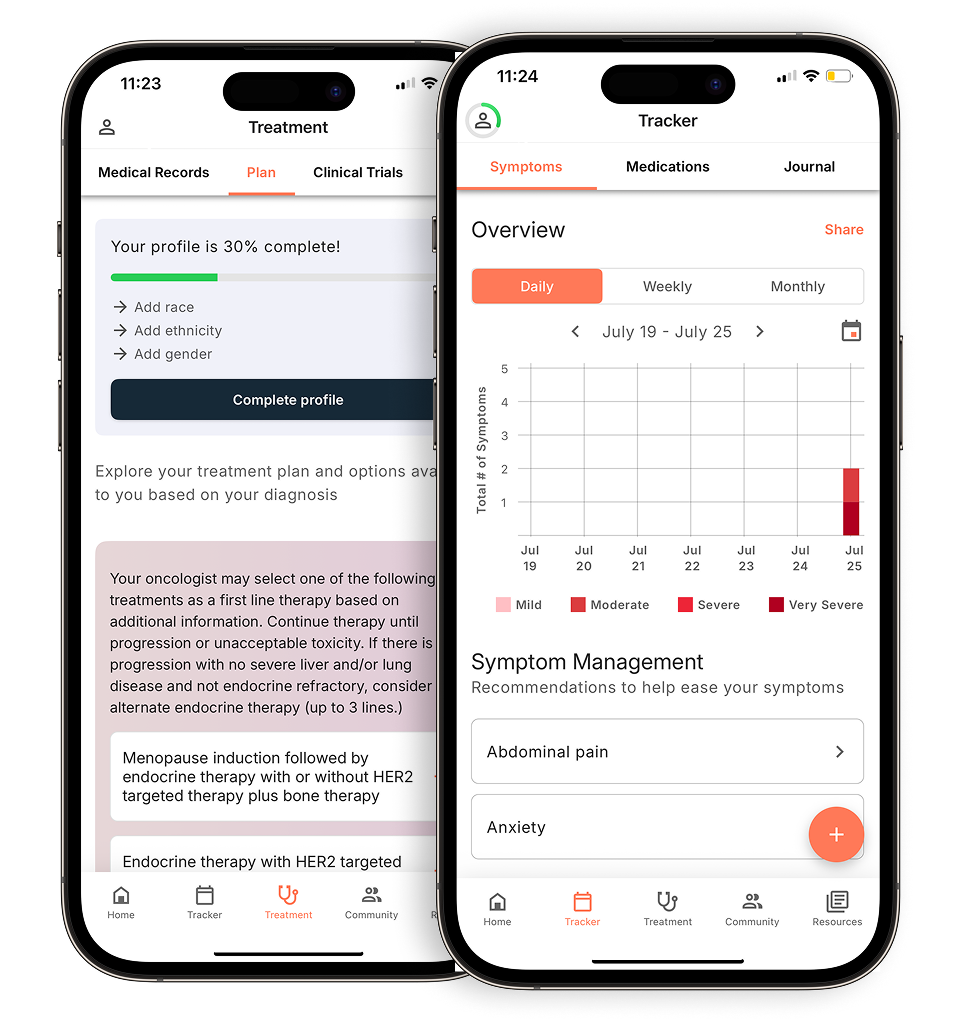
View your personalized treatment plan in the Outcomes4Me app
Use your diagnosis to unlock personalized NCCN Guidelines®-aligned recommendations.
Key Takeaways
- Your treatment can be tailored to your tumor’s biology: New therapies work by targeting the specific genes and proteins that make cancer grow. This personalized approach allows your care team to select treatments that are more likely to be effective for your specific cancer.
- Improving your quality of life is a key goal: Many new treatments are designed to be more precise, which can mean fewer or less severe side effects. This focus on your well-being helps you maintain your strength and daily routine while undergoing care.
- Be an active partner in your treatment decisions: Your input is crucial for creating a plan that works for you. Ask questions about new therapies, discuss your personal goals, and openly share how you are feeling so your care team can provide the best support.
What are the latest treatments for stage 3 breast cancer?
Breast cancer research is constantly evolving, bringing new and more effective treatments to the forefront. These advancements are creating more personalized and targeted ways to manage stage 3 breast cancer, often with the goal of improving outcomes and quality of life. Many of these newer therapies work by targeting the specific characteristics of cancer cells, which helps to spare healthy cells from damage. This approach is a significant shift from traditional chemotherapy, which can affect the whole body. Here’s a look at some of the promising approaches that are changing how stage 3 breast cancer is treated, offering new hope and options for patients.
Antibody-drug conjugates (ADCs)
Think of antibody-drug conjugates, or ADCs, as a type of “smart” chemotherapy. They are designed to find cancer cells and deliver powerful cancer-fighting drugs directly to them, which can help reduce damage to surrounding healthy tissue. This targeted approach is showing great promise. For example, recent clinical trial results have shown that certain ADCs can significantly improve survival for people with specific types of advanced breast cancer, including triple-negative breast cancer. This approach represents a major step forward in creating more precise and effective cancer treatments that can attack the cancer while minimizing some of the side effects associated with traditional chemotherapy.
Selective estrogen receptor degraders (SERDs)
For hormone receptor-positive (HR-positive) breast cancer, hormone therapy is a cornerstone of treatment. Selective estrogen receptor degraders, or SERDs, are a newer class of hormone therapy that works by breaking down the estrogen receptors that fuel cancer growth. Some newer SERDs can be taken as a pill, making them a more convenient option than injections. Studies on new oral SERDs, like imlunestrant, have shown they can reduce the risk of cancer progression. Importantly, these studies also found that patients taking the new medication reported a better quality of life compared to those on standard hormone therapy, which is a meaningful benefit for everyday living.
Advanced immunotherapy combinations
Immunotherapy is a type of treatment that uses your body’s own immune system to find and destroy cancer cells. Researchers are now exploring how to make it even more effective by combining it with other treatments. One exciting area of research involves pairing immunotherapy drugs with ADCs. This combination is being studied as a potential new first-line treatment for some people with advanced triple-negative breast cancer. By using two different methods to attack cancer cells, these combination therapies aim to deliver a more powerful response than either treatment could alone. This strategy shows how doctors are getting more creative in their approach to fighting cancer.
PARP inhibitors for BRCA mutations
Personalized medicine is all about tailoring treatment to your unique situation, and PARP inhibitors are a great example of this. These drugs are a type of targeted therapy that works especially well for people who have an inherited BRCA1 or BRCA2 gene mutation. PARP inhibitors block a protein that helps cancer cells repair their DNA, causing the cancer cells to die. Other targeted therapies, like capivasertib, are also available for HR-positive, HER2-negative breast cancers that have certain other gene mutations. These treatments highlight how understanding the genetic makeup of a tumor can open up new, effective treatment paths specific to your cancer.
How personalized medicine targets your cancer
Personalized medicine is an approach that tailors your cancer treatment to the unique characteristics of your tumor. Instead of a one-size-fits-all plan, your care team can now look at the specific genetic makeup of the cancer cells to understand what makes them grow and what might stop them. Think of it like having a specific key for a specific lock. By identifying the tumor’s unique vulnerabilities, doctors can choose therapies that are more likely to be effective for you, specifically. This is a significant shift from traditional treatments that affect all fast-growing cells, both cancerous and healthy.
This approach is changing how we think about and treat stage 3 breast cancer. It allows for more precise, targeted attacks on cancer cells, which can often mean better results with fewer side effects compared to broader treatments. It’s a hopeful and empowering shift that puts the focus on your individual biology. Understanding how your cancer works on a molecular level is the first step toward finding the smartest, most effective path forward. This is done through a few key methods that give your care team the detailed information they need to design a plan that’s truly yours. This knowledge also helps you have more informed conversations with your oncologist about why a certain treatment is being recommended for you.
Genetic profiling and biomarker testing
Every cancer has a unique biological fingerprint. Genetic profiling and biomarker testing are the tools doctors use to analyze that fingerprint. These tests examine your tumor tissue for specific genes, proteins, and other substances, known as biomarkers or mutations. For example, identifying an ESR1 mutation in ER+, HER2-negative breast cancer can point your oncologist toward specific therapies designed to target that exact mutation. Finding these unique markers helps your care team match you with a treatment that directly attacks the cancer’s growth signals. This makes your therapy much more precise and can lead to better outcomes by focusing the treatment where it will do the most good.
Using liquid biopsies to monitor treatment
A liquid biopsy is a simple blood test that can provide powerful insights into your cancer. Instead of requiring an invasive tissue biopsy, this test can detect tiny fragments of tumor DNA circulating in your bloodstream. This is a major step forward in monitoring how well a treatment is working. Liquid biopsies can give your care team real-time information, helping them see if the tumor is responding to therapy or if it’s time to consider a different approach. This allows your treatment plan to be flexible and responsive, adapting as needed throughout your journey without the need for repeated surgical biopsies.
Tailoring treatment to your tumor’s characteristics
Putting it all together, the information from genetic tests and liquid biopsies allows your care team to create a truly customized treatment plan. This is the core of personalized medicine. For instance, clinical trials have shown that new drugs can significantly slow cancer progression in patients who have specific mutations, like the ESR1 mutation. This shows the power of matching the right drug to the right person at the right time. By focusing on your tumor’s specific characteristics, your treatment can be more effective and better suited to your individual needs, helping you feel more confident in the path you and your care team have chosen.
How immunotherapy helps treat stage 3 breast cancer
Immunotherapy is a type of treatment that uses your body’s own immune system to find and destroy cancer cells. Think of your immune system as your personal security team, constantly on the lookout for invaders. Sometimes, cancer cells are clever and find ways to hide from this security team by using specific proteins on their surface to trick immune cells into thinking they are normal, healthy cells. Immunotherapy helps your immune system see through this disguise so it can recognize and attack the cancer.
For a long time, the main cancer treatments were surgery, chemotherapy, and radiation. Immunotherapy is a newer approach that has become a powerful fourth pillar of cancer care. For certain types of stage 3 breast cancer, especially triple-negative breast cancer (TNBC), immunotherapy has become an important part of the treatment plan. It’s often given alongside other treatments like chemotherapy to create a more powerful, combined approach. By helping your own body join the fight, immunotherapy offers another way to manage cancer and can be a key part of a personalized treatment strategy.
Pembrolizumab for triple-negative breast cancer
If you have triple-negative breast cancer (TNBC), your care team may talk to you about a drug called pembrolizumab (Keytruda®). This is a type of immunotherapy that has become a standard part of the initial treatment plan for many people with advanced TNBC. It is typically given in combination with chemotherapy. Studies have shown that adding pembrolizumab to chemotherapy can significantly improve outcomes. This approach helps your immune system better identify cancer cells, allowing the chemotherapy to work more effectively. It’s a great example of how combining different types of cancer treatments can lead to better results.
Combining immunotherapy with other treatments
Immunotherapy often works best as a team player. Researchers are constantly exploring new combinations to make treatments more effective. For example, recent studies have looked at pairing immunotherapy with an antibody-drug conjugate called sacituzumab govitecan (Trodelvy®). This combination has shown promise in delaying cancer growth for people with advanced TNBC. By using different methods to attack cancer cells at the same time, these combination therapies can be more powerful than a single treatment alone. This strategy is a key part of modern cancer care, aiming to create a comprehensive plan that targets cancer from multiple angles.
How immunotherapy works with your immune system
Your immune system is designed to protect you from harm, but cancer cells can sometimes develop ways to go undetected. They might have proteins on their surface that act like a “don’t see me” signal to your immune cells. Immunotherapy drugs, known as checkpoint inhibitors, work by blocking these signals. This essentially takes the blindfold off your immune system, allowing it to recognize the cancer cells as a threat and attack them. This process helps your body’s natural defenses do the job they were meant to do, making it a powerful tool in treating breast cancer.
What to know about new oral medications
For many people with hormone receptor-positive (HR+) breast cancer, hormone therapy (also called endocrine therapy) is a cornerstone of treatment. For a long time, this meant injections or pills that came with challenging side effects. Now, a new class of oral medications is changing the landscape of hormone therapy, offering more effective and targeted ways to stop cancer from growing.
These newer drugs, called selective estrogen receptor degraders (SERDs), work by finding estrogen receptors on cancer cells and breaking them down. This approach can be especially helpful when cancer has become resistant to other treatments. Because they are pills, they also offer a more convenient option for many people. These advancements are giving patients and their care teams powerful new tools to manage stage 3 breast cancer, often with fewer side effects and better results.
The role of elacestrant and imlunestrant
Two of the most promising new oral SERDs are elacestrant (brand name Orserdu) and imlunestrant. Elacestrant is already approved for metastatic breast cancer that has a specific genetic change called an ESR1 mutation. Researchers are also finding that it may work well when combined with other drugs, even for cancers without this mutation.
Imlunestrant is another oral SERD that has shown great potential in clinical trials. One major study found that it significantly reduced the risk of cancer progression compared to standard hormone therapy for people with an ESR1 mutation. These new developments in breast cancer are creating more personalized and effective treatment paths.
Improving quality of life with fewer side effects
One of the most exciting aspects of these new oral medications is their potential to improve your well-being during treatment. Traditional hormonal therapies can cause difficult treatment side effects like joint pain, hot flashes, and fatigue by lowering estrogen levels in your body.
In contrast, studies on imlunestrant have shown that people taking the drug reported a better quality of life and physical function than those on standard hormone therapy. Having a treatment that not only fights cancer effectively but also helps you feel better day-to-day is a huge step forward. This focus on well-being means you can maintain more of your daily routine and activities while on treatment.
Overcoming resistance to endocrine therapy
One of the biggest challenges in treating HR+ breast cancer is that the cancer can eventually stop responding to standard hormone therapies. This is called endocrine resistance. It often happens when the cancer develops mutations, like the ESR1 mutation, that help it grow despite treatment.
New oral SERDs are showing they can overcome this resistance. Because they work differently than older drugs, they can be effective even when other treatments have stopped working. For example, research shows that combining elacestrant with other targeted therapies can help overcome drug resistance and extend the time before cancer grows again. These breast cancer breakthroughs provide new hope and options when facing treatment challenges.
How to manage the side effects of new treatments
Starting a new treatment can bring up a lot of questions, especially about side effects. While it’s a valid concern, remember that managing side effects is a key part of your cancer care plan. Your care team is there to help you through it, and there are many ways to feel more comfortable and in control during treatment.
Being prepared for potential side effects can help you understand what’s happening and take steps to manage them. Think of it as another way you and your care team can work together. Open communication is essential, as it allows your team to adjust your plan and provide the support you need to maintain your quality of life.
Common side effects to expect
Every treatment plan is different, so the side effects you experience will depend on the specific therapies you receive. For example, radiation can cause fatigue and skin irritation. Chemotherapy might lead to short-term effects like nausea, hair loss, or changes in your nails. If your treatment includes hormonal therapy to block estrogen, you might experience hot flashes or joint pain.
For some targeted therapies, your team will monitor you closely for specific issues. For instance, women receiving certain treatments for HER2+ breast cancer will have periodic heart tests to ensure everything is working as it should. It’s helpful to know which side effects are common for your specific treatment so you can recognize them if they appear.
Practical tips for managing side effects
One of the most helpful things you can do is keep a simple log of your symptoms. Documenting how often you experience a side effect, how severe it feels, and how it impacts your day can give your care team a clear picture of what’s going on. This information helps them find the most effective ways to help you feel better.
Good nutrition can also play a big role in helping your body heal and minimizing side effects. Simple, nourishing meals can make a real difference in your energy levels and overall well-being. For specific issues like skin rashes or mouth sores, it’s important to let your team know right away. They can provide prompt treatment, sometimes by working with other specialists like dermatologists, to keep you comfortable.
When to call your care team
Please never hesitate to reach out to your care team. You are not bothering them; you are giving them important information they need to care for you. It’s especially important to call if you experience any severe side effects, new symptoms, or side effects that are becoming difficult to manage on your own.
When you talk with your team, it helps to be organized. Having your log of symptoms handy can make the conversation more focused and productive. Your input is a crucial part of the process. By sharing what you’re experiencing, you help your team tailor your care plan and ensure your treatment side effects are managed effectively, allowing you to feel your best.
How new treatments can improve your quality of life
When you hear about new cancer treatments, the focus is often on how well they fight the cancer itself. While that’s incredibly important, another major goal of cancer research is to improve your quality of life during and after treatment. Living with stage 3 breast cancer is about more than just survival rates; it’s about feeling as good as you can, maintaining your strength, and continuing to do the things you love.
Newer therapies are often designed to be more targeted than older treatments. This means they can attack cancer cells more precisely, sometimes leaving healthy cells alone. The result can be treatments that are not only effective but also come with fewer or less severe side effects. Researchers are constantly looking for ways to make treatments easier to tolerate, whether that means finding new drug combinations, adjusting treatment schedules, or developing medications that cause less disruption to your daily life. This focus on your well-being is a central part of modern cancer care, ensuring that your treatment plan supports your whole health, not just the part of you that has cancer.
Extending progression-free survival
One of the most important goals of any new treatment is to give you more time before the cancer grows or spreads. This is often called “progression-free survival.” It’s a measure of how long you can live without the cancer getting worse. For many people, this extended time is invaluable. It means more time spent with loved ones, more opportunities to pursue hobbies, and more moments of normalcy. For example, recent clinical trials for newer oral medications have shown they can significantly reduce the risk of cancer progression compared to some standard therapies. Importantly, these studies also show that patients taking these newer drugs often report a better quality of life and physical function, which is a key part of the treatment journey.
Experiencing fewer treatment-related complications
Living with fewer side effects can make a world of difference in your day-to-day experience. Many newer treatments are designed to be more targeted, which can lead to fewer treatment-related complications. For instance, some modern hormone therapies, like anti-aromatase drugs, have been found to produce fewer serious side effects than older options like tamoxifen for some patients. When your body isn’t working as hard to manage difficult side effects like blood clots or fatigue, you have more energy for your life. The goal is to find a treatment that is tough on cancer but gentler on you, allowing you to maintain your strength and well-being throughout your care.
Improving your tolerance to treatment
How well you tolerate treatment can directly impact its effectiveness and your overall health. If side effects are too severe, your care team may need to lower your dose or pause treatment, which isn’t ideal. Researchers have found that sometimes the best breakthroughs come from changing how existing treatments are used. This can involve combining certain drugs to make them work better together or changing the order of your treatments to maximize their impact while minimizing side effects. This thoughtful approach to sequencing your care helps make your treatment plan more sustainable, so you can get the full benefit of your therapy without feeling completely worn down by it.
How to access new treatments
Getting the latest treatments often means exploring a few different avenues. From participating in research studies to working with specialized hospitals, there are several ways to access care that is tailored to you. Understanding your options can help you and your care team make the best decisions for your health.
Finding and joining clinical trials
Clinical trials are research studies that give patients access to new treatments before they are widely available. They are a core part of how medicine advances and can be an excellent option for some people. Your doctor can help you decide if a trial is a good fit by creating a personalized treatment plan that considers your specific diagnosis. If you’re interested, start by asking your care team about trials you might be eligible for. They can explain the potential benefits and risks. Joining a trial is a big decision, so it’s important to have all the information you need to feel confident in your choice.
Understanding insurance and the approval process
When a new treatment becomes available, one of the first questions is often, “Will my insurance cover it?” The approval process for new drugs can take time, and coverage policies vary. It’s a good idea to become familiar with your insurance plan. Don’t hesitate to call your provider to ask about coverage for specific medications. Many hospitals have financial counselors or patient navigators who can help you understand your benefits and find financial assistance programs if needed. As advances in breast cancer treatment continue, staying in communication with your care team and insurer can help you get the care you need.
Finding specialized cancer centers
Specialized cancer centers, particularly those designated by the National Cancer Institute (NCI), are often hubs for the latest research and treatments. These centers have expert teams who focus on breast cancer and may offer more clinical trials and newer therapies. Getting care at one of these centers means you have a multidisciplinary team collaborating on your treatment plan. If you’re interested in a second opinion or want to explore more options, ask your oncologist for a referral. You can also find an NCI-Designated Cancer Center online. Traveling for care isn’t possible for everyone, but knowing these centers exist is an important part of understanding all your options.
Combining new and traditional treatments
When we hear about treatment breakthroughs, we often picture a brand-new medication. While that’s sometimes the case, many advances come from finding smarter ways to use the treatments we already have. For stage 3 breast cancer, this often means combining therapies or changing the order in which they’re given. This strategic approach can make treatments more effective and may even help reduce side effects by targeting the cancer from multiple angles.
Effective treatment for stage 3 breast cancer requires a two-part approach: local therapy to treat the breast and nearby areas, and systemic therapy to treat cancer cells that may have traveled throughout the body. Your care team’s goal is to find the right combination and sequence of surgery, radiation, chemotherapy, and newer targeted drugs to give you the best possible outcome. This careful planning is highly personalized, taking into account your specific diagnosis and health. Think of it like a carefully choreographed dance where each step is planned to support the next, leading to the best result.
Integrating with neoadjuvant therapy
For stage 3 breast cancer, treatment often begins before surgery. This is called neoadjuvant therapy, and it’s a perfect example of how treatment order can make a big difference. By giving you systemic treatments like chemotherapy, targeted therapy, or immunotherapy first, your doctors aim to shrink the tumor. This can make the tumor easier to remove completely during surgery and may even allow for a less extensive operation, like a lumpectomy instead of a mastectomy. Neoadjuvant therapy also gives your care team valuable information about how the cancer responds to certain drugs, which can help guide treatment decisions after surgery.
Coordinating surgery, chemotherapy, and new drugs
Your cancer care is a team effort. Your surgeon, medical oncologist, and radiation oncologist will work together to prepare a treatment plan that is personalized for you. This plan maps out how different treatments will be coordinated. For example, after neoadjuvant chemotherapy and surgery, you might have radiation therapy. Following that, you may continue with other drug therapies, like hormone therapy or a targeted drug, for an extended period to reduce the risk of the cancer returning. Each piece of the plan is carefully timed to build on the success of the previous step, creating a comprehensive strategy to treat the cancer.
How your treatments are sequenced for the best results
The sequence of your treatments is just as important as the treatments themselves. Your care team considers many factors, including the tumor’s size, location, and specific biomarkers, to decide the optimal order. For instance, giving chemotherapy before surgery can destroy cancer cells that may have spread but are too small to be detected. In other cases, new oral medications might be used after initial treatments if the cancer stops responding. As researchers learn more about how to maximize effectiveness, treatment sequencing continues to evolve, making it a critical part of modern, personalized cancer care.
How to discuss new treatments with your care team
Talking with your doctor about treatment options can feel overwhelming, but it’s one of the most important parts of your care. Think of it as a partnership. You bring your personal experiences, goals, and questions, and your care team brings their medical expertise. Open and honest conversations ensure that the treatment plan you create together not only targets the cancer effectively but also fits your life and what matters most to you. Feeling prepared for these discussions can help you feel more confident and in control of your health journey.
Key questions to ask your oncologist
Walking into an appointment with a few questions ready can make a huge difference. It helps focus the conversation on what’s most important to you. Consider asking about the latest treatment options for your specific diagnosis and what the potential benefits and risks are for each. It can also be helpful to ask how these newer options compare to more traditional treatments in terms of effectiveness and side effects. Asking these direct questions helps you get the clear information you need to weigh your options and prepare for your visit with your healthcare team.
Preparing for your treatment discussions
A little prep work before your appointment can help you make the most of your time with your oncologist. Try to jot down any symptoms or side effects you’ve been experiencing, no matter how small they seem. It’s also a good idea to think about your personal preferences and write down any specific concerns you have. If you’ve heard about a new treatment you’re curious about, do some initial reading so you can ask informed questions. This preparation helps ensure all your concerns are addressed and allows you to have a more productive, in-depth conversation with your doctor.
Defining your personal treatment goals
Your treatment plan should align with your personal goals. It’s important to be open with your care team about what you hope to achieve. For some, the primary goal might be extending life as long as possible. For others, maintaining a certain quality of life or managing difficult symptoms is the top priority. There is no right or wrong answer. Sharing your values helps your oncologist recommend a plan that fits you as a person, not just a patient. This dialogue is a key part of following stage 3 breast cancer treatment guidelines in a way that respects your individual wishes.
Related Articles
- Navigating stage 3 breast cancer treatment options
- Stage 3 breast cancer treatment guidelines explained
View your personalized treatment plan in the Outcomes4Me app
Use your diagnosis to unlock personalized NCCN Guidelines®-aligned recommendations.
Frequently Asked Questions
How are these newer treatments different from standard chemotherapy? The main difference is how they work in your body. Traditional chemotherapy is designed to attack all rapidly dividing cells, which includes cancer cells but can also affect healthy cells like hair follicles and the lining of your stomach. Newer treatments, like targeted therapies and antibody-drug conjugates, are more precise. They are designed to identify and attack specific features on cancer cells, which can help spare many of your healthy cells from damage.
How do doctors figure out which personalized treatment is right for me? Your care team can learn about the unique characteristics of your tumor through tests on your biopsy tissue. These tests look for specific biomarkers, which are like biological signposts on the cancer cells. For example, they might test for hormone receptors or certain gene mutations. The results of these tests give your doctor the information they need to match you with a therapy designed to target those exact signposts.
Are these new treatments only available through clinical trials? Not always. While clinical trials are an important way to access the very latest therapies, many of the treatments discussed, like pembrolizumab and elacestrant, are already approved for specific types of breast cancer. The availability of a particular drug depends on your exact diagnosis, your treatment history, and what has been approved for use. Your oncologist is the best person to tell you which standard and trial options are a good fit for you.
My treatment plan includes both chemotherapy and a newer therapy. Why combine them? Combining treatments is a common and powerful strategy. Think of it as using two different tools to tackle one job. Chemotherapy can provide a strong, broad attack on the cancer, while a newer targeted or immunotherapy drug can attack it in a more specific way. Using them together can often be more effective than using either one alone, creating a comprehensive plan that targets the cancer from multiple angles.
What’s the best way to talk to my doctor if I’m interested in one of these newer options? It’s a great idea to be an active partner in your care. Before your appointment, write down your questions so you don’t forget anything. You can start the conversation by simply saying, “I’ve been reading about some newer treatments for stage 3 breast cancer, and I’d love to know if any of them might be an option for me.” This opens the door for a collaborative discussion about your personal treatment goals and all the available paths to reach them.