
Have you ever noticed a change in your breast and felt a wave of uncertainty? It’s a common experience. Creating a simple habit of checking in with your body transforms that worry into confidence. Think of it as your personal breast cancer symptom checker that helps you understand what’s normal for you. Knowing how to feel for breast cancer doesn’t need to be complicated. This guide gives you the clear, specific details needed to detect changes early at home and partner with your doctor about your health.
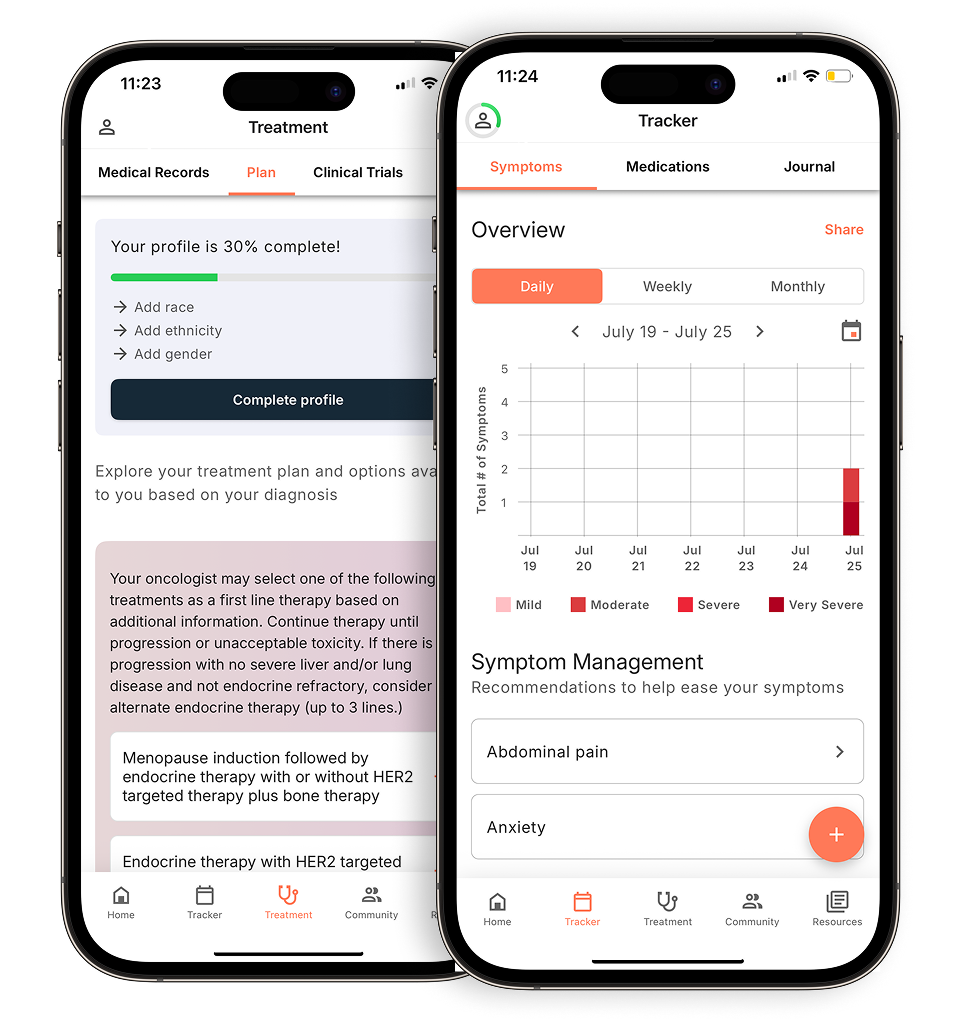
View your personalized treatment plan in the Outcomes4Me app
Use your diagnosis to unlock personalized NCCN Guidelines®-aligned recommendations.
Key Takeaways
- Get to know your normal: Understanding the typical look and feel of your breasts through regular self-checks is the best way to spot changes early. This awareness empowers you to have more specific and confident conversations with your doctor.
- Communicate openly with your doctor: If you find a new lump or notice any other difference, the most important step is to see your doctor. They are your best partner for getting answers and creating a personalized screening plan based on your age and health history.
- Take control of what you can: While some risk factors are out of your hands, you can support your breast health through positive lifestyle habits like staying active and eating well. Building a support system of trusted medical experts and peers also provides strength and reliable information.
Understanding breast cancer and its prevalence
Before we talk about specific symptoms, it helps to have some context about breast cancer. Understanding how common it is and who it can affect reinforces why being in tune with your body is so valuable. It’s not about creating worry; it’s about building knowledge. When you’re informed, you can feel more confident in conversations with your doctor and more in control of your health. This awareness is the foundation for recognizing when something might be different and knowing that it’s time to seek professional advice. It’s a simple but powerful step in advocating for your own well-being.
How common is breast cancer?
You may have heard that breast cancer is one of the more well-known types of cancer, and the statistics support that. After skin cancer, breast cancer is the most common cancer diagnosed in women in the United States. While that fact might sound intimidating, it also means there has been a great deal of research and progress in detection and treatment. The widespread awareness encourages regular screenings and conversations with healthcare providers, which are essential for early detection. Knowing how frequently it occurs helps underscore the importance of prioritizing breast health as a routine part of your overall wellness plan, just like any other aspect of your health care.
Can men get breast cancer?
Yes, men can get breast cancer. While it is far less common in men than in women, it’s important to know that anyone can develop it because everyone has breast tissue. The symptoms, such as a lump in the chest area, are often similar to those women experience. Because there is generally less awareness that men can get breast cancer, it is sometimes diagnosed at a later stage. This makes it crucial for men to also pay attention to any changes in their chest area and to speak with a doctor if they notice something unusual. Health awareness is for everybody, and breaking down the myth that this is exclusively a women’s disease helps ensure everyone gets the care they need.
Why breast self-awareness is important
Breast self-awareness is simply the practice of becoming familiar with how your breasts normally look and feel. It’s different from the structured, step-by-step breast self-exams of the past. Instead, the goal is to establish a baseline for your body. As the National Breast Cancer Foundation notes, knowing your normal is key to finding changes early. This can be done during routine activities like showering or getting dressed. When you have a strong sense of what’s typical for you—including the usual lumps, bumps, and monthly changes—you are much more likely to recognize a new or different change that you should bring to your doctor’s attention. It’s an empowering habit that puts you in the driver’s seat of your own health.
What are the signs of breast cancer?
Knowing your body is one of the most powerful tools you have for your health. When it comes to breast health, being familiar with how your breasts normally look and feel makes it much easier to spot any changes. While finding something new or different can feel unsettling, it’s helpful to remember that most breast changes are not cancer. Normal hormonal shifts from your menstrual cycle, pregnancy, or menopause can all cause temporary changes in breast tissue.
The goal of breast self-awareness isn’t to cause worry, but to empower you to notice what’s new for your body and feel confident about when to reach out to your doctor. Think of it as building a partnership with your own body and your healthcare team. The most common sign of breast cancer is a new lump or mass, but there are other changes to be aware of as well. These can include shifts in the size or shape of your breast, changes to the skin, or anything different about your nipple. Understanding these potential breast cancer signs and symptoms helps you play an active role in your health and have more informed conversations with your doctor.
What physical changes should I look for?
The most well-known sign is a new lump or a thick area in your breast or underarm that feels different from the surrounding tissue. While cancerous lumps are often hard and painless with uneven edges, they can also be soft, round, or tender. It’s important to know that most breast lumps are not cancerous.
Other physical changes can include swelling in all or part of a breast, even if no lump is felt. You might also notice skin dimpling that looks like the peel of an orange. Keep an eye out for changes in the color of your breast skin, which may look pink or red on lighter skin, or darker, red, or purple on darker skin. Nipple changes are also important, such as a nipple that turns inward, or any discharge other than breast milk.
What a cancerous lump can feel like
When you think of breast cancer, a lump is probably the first thing that comes to mind. It’s the most common sign, often appearing as a new lump or a distinct area of thickened tissue in your breast or underarm. It’s helpful to know that these lumps don’t all feel the same. While some can be hard, painless, and have irregular edges, others might feel soft, round, and even be tender to the touch. The most important thing to remember is that the vast majority of breast lumps are not cancerous. Still, any new lump or change that feels different from the rest of your breast tissue is worth a conversation with your doctor.
Skin texture and color changes
Beyond lumps, your skin can also offer clues about your breast health. Be aware of any swelling in all or part of your breast, which can occur even without a noticeable lump. Another change to look for is skin dimpling or puckering that might resemble the texture of an orange peel. It’s also a good idea to pay attention to any changes in the color of your breast skin. On lighter skin, this might look like a pink or reddish rash, while on darker skin, it may appear as a darker, red, or even purple area. These changes are always a reason to schedule a check-up with your healthcare provider.
Nipple changes and discharge
Your nipples are another key area to monitor. One potential sign is a nipple that begins to turn inward or retract into the breast when it previously pointed outward. Any spontaneous nipple discharge—meaning fluid that comes out without you squeezing the nipple—is also something to note. This is particularly true for any discharge that is not breast milk, whether it’s clear, bloody, or another color. While many things can cause nipple changes, they are always worth discussing with your doctor to get clarity and peace of mind.
Persistent breast pain
It’s a common misconception that breast cancer is always painful. In fact, many cancerous lumps cause no pain at all. More often, painful lumps are related to harmless conditions like cysts that fluctuate with your menstrual cycle. However, you shouldn’t ignore pain completely. If you experience breast pain that is persistent, stays in one specific spot, and doesn’t seem connected to your monthly cycle, it’s a good idea to bring it up with your doctor. They can help you understand the cause and determine if any further steps are needed.
When do symptoms typically appear?
Changes in your breasts can appear at any time, which is why regular breast self-awareness is so valuable. There isn’t a specific timeline for when symptoms might show up, as everyone’s body is different. The key is to pay attention to what is normal for you so you can identify any new or persistent changes.
Finding breast cancer early can lead to more successful treatment, so it’s important to take any new signs seriously. If you notice a lump, skin change, or any other difference in your breast that doesn’t go away after your next menstrual cycle, it’s a good idea to see a doctor for an evaluation. Acting on these changes promptly allows you to get the answers and care you need without delay.
When breast cancer has no symptoms
It’s possible for breast cancer to develop without any noticeable signs or symptoms, especially in the early stages. This is often because the cancer is too small to be felt or to cause physical changes. This is precisely why routine screenings like mammograms are so important—they can often detect cancer long before you or your doctor could feel a lump. The Centers for Disease Control and Prevention (CDC) notes that some people might not have any symptoms at all, which underscores the value of these preventive health checks. Regular screenings are a key part of a proactive approach to your health, giving you the best chance for early detection when treatment is most effective.
What causes breast cancer and what are the risk factors?
Understanding what causes breast cancer can feel complicated because there isn’t one single answer. At its core, breast cancer starts when the DNA in breast cells changes, causing them to grow and divide uncontrollably. These abnormal cells can then form a tumor. While doctors often can’t pinpoint the exact reason this process begins in one person and not another, they have identified several risk factors that can increase the likelihood of developing the disease. It’s helpful to think of these risk factors in two categories: those you can’t change, like your genetics and age, and those related to lifestyle that you can influence.
Having one or even several risk factors doesn’t mean you will definitely get breast cancer. Many women who develop breast cancer have no known risk factors other than simply being a woman. However, being aware of these factors is important because it helps you and your doctor make informed decisions about your health and screening schedule. This knowledge empowers you to focus on the aspects of your health you can control while staying mindful of the things you can’t. It’s all about creating a complete picture of your personal health landscape.
How breast cancer develops in the body
Breast cancer begins on a microscopic level when cells in the breast tissue start to grow abnormally. Normally, your body’s cells grow and divide in a controlled way to replace old or damaged cells. But sometimes, this process goes wrong. A change, or mutation, in a cell’s DNA can cause it to multiply without stopping, creating a mass of extra cells that form a tumor. After skin cancer, breast cancer is the most common cancer diagnosed in women in the United States. Understanding this basic process can help demystify the disease and ground your conversations with your healthcare team.
Common risk factors to be aware of
Your personal risk for breast cancer is a combination of many different factors. Some of the most significant ones are simply out of your control, such as getting older or having a family history of the disease. Other factors include starting your period at a young age or beginning menopause later, as both extend your lifetime exposure to hormones like estrogen. Your reproductive history also plays a role; never having been pregnant or having your first child after age 30 can slightly increase risk. It’s also important to consider past medical history, such as previous radiation therapy to the chest area.
The role of inherited genes like BRCA1 and BRCA2
While most breast cancers are not inherited, genetics can play a significant role for some people. About 15% of breast cancers are linked to harmful gene mutations passed down through families. The most well-known of these are the BRCA1 and BRCA2 genes. Everyone has these genes, and their job is to repair cell damage and keep breast, ovarian, and other cells growing normally. But when you inherit a mutated version of one of these genes, that repair process doesn’t work as well, which can greatly increase your risk of developing cancer. Genetic testing can identify these mutations and help you and your doctor create a personalized screening and prevention plan.
Understanding racial disparities in breast cancer
It’s also important to recognize that breast cancer risk and outcomes are not the same for everyone. Research shows that there are significant racial disparities in how breast cancer affects different communities. For example, while white women are slightly more likely to be diagnosed with breast cancer overall, Black women are more likely to be diagnosed at a younger age and with more aggressive forms of the disease. These differences are the result of a complex mix of genetic, social, and economic factors. Acknowledging these disparities is a critical step toward ensuring everyone has access to the personalized care and early detection they need.
What causes normal, non-cancerous breast changes?
It’s completely normal for your breasts to change throughout your life, and the vast majority of these changes are not caused by cancer. Your body’s natural hormonal cycles are the most common reason for shifts in breast tissue. Many women experience temporary swelling, tenderness, or lumpiness that lines up with their menstrual cycle. Other life stages, like pregnancy, breastfeeding, and menopause, also bring their own set of hormonal fluctuations that can affect how your breasts look and feel. Conditions like cysts (fluid-filled sacs) and fibrocystic breast changes (lumpy or rope-like tissue) are also very common and benign, meaning they are not cancerous.
How to do a breast self-exam at home
A breast self-exam is a simple way to check your breasts for any changes. Think of it as getting to know your body better. When you know what your breasts normally look and feel like, you’re more likely to notice when something is different. It’s a proactive step you can take for your health, helping you feel more in control and aware. While clinical exams and mammograms are essential screening tools, a monthly self-exam helps you stay in tune with your body between appointments. The goal isn’t to diagnose anything yourself, but to be able to spot changes early and bring them to your doctor’s attention.
Many breast changes are benign (not cancerous), but it’s always best to have a professional evaluate anything new. Establishing a regular routine for self-exams can make the process feel less intimidating and more like a normal part of your monthly health habits. It empowers you to be an active participant in your own health care. Below, we’ll walk through how to perform a self-exam step-by-step, from finding the right time to knowing what to look for. This guide will give you the confidence to perform your exam correctly and understand what you are feeling for.
When is the best time to check your breasts?
Consistency is key, so it’s a good idea to do a self-exam once a month. This helps you learn what’s normal for your body and makes it easier to spot changes early on. If you have a regular menstrual cycle, the best time to check your breasts is a few days after your period ends. During this time, your breasts are least likely to be swollen or tender. If you don’t have a period due to menopause, pregnancy, or another reason, just pick a date that’s easy to remember, like the first or last day of every month. Setting a reminder on your phone can be a great way to stay on track.
A simple step-by-step guide for your exam
A thorough self-exam has two parts: a visual check and a manual check. Start by standing in front of a mirror with your shoulders straight and your arms on your hips. Look for any changes in the size, shape, or color of your breasts. Now, raise your arms and look for the same changes.
Next, lie down to feel your breasts. This position spreads the breast tissue out evenly, making it easier to examine. Place a pillow under your right shoulder and put your right arm behind your head. Using your left hand, feel your right breast. Then, switch sides. This simple two-step process helps you cover all your bases.
Tip: Perform your exam in the shower
Many people find it helpful to perform the manual part of the exam in the shower. The water and soap can make your skin slippery, which makes it easier for your fingers to glide over your breast tissue and feel for anything unusual. Use the pads of your three middle fingers to apply light, medium, and firm pressure in a circular motion, making sure to cover the entire breast from your collarbone to the top of your abdomen, and from your armpit to your cleavage. This simple addition to your routine can make the process feel more natural and less like a formal examination.
The visual check: What to look for in a mirror
For the visual part of your exam, stand in front of a mirror where you can see your breasts clearly. Start with your shoulders straight and your arms on your hips, looking for any changes in the size, shape, or color of your breasts. Pay attention to any visible distortion, swelling, or dimpling of the skin. Then, raise your arms over your head and look for the same changes. This second position can reveal changes that might not be visible otherwise. The goal is simply to observe what your breasts look like from different angles so you can become familiar with your personal “normal.”
Checking for nipple discharge
As a final step, you can check for any nipple discharge. Gently squeeze your nipple to see if any fluid comes out. It’s important to know that some discharge can be normal, but if you notice any liquid that isn’t breast milk, especially if it’s bloody or clear and comes from only one breast, you should mention it to your doctor. This is just one more piece of information that helps you build a complete picture of your breast health, empowering you to have more informed conversations with your care team.
How to use different pressure levels and patterns
When you’re feeling your breasts, use the pads of your first three fingers, not your fingertips. Move in a clear pattern to make sure you cover the entire area. Many people find an up-and-down, or vertical, pattern is most effective. Imagine your breast is a lawn you need to mow, and go back and forth in overlapping rows.
It’s also important to use varying levels of pressure. Start with light pressure to feel the tissue just below the skin. Then, use medium pressure to feel a little deeper. Finally, apply firm pressure to feel the tissue closest to your chest and ribs. Make sure your self-exam includes the entire breast, from your collarbone to the top of your abdomen and from your armpit to your cleavage.
How to feel for breast cancer during your exam
During your exam, you are looking for any changes from your personal “normal.” Pay attention to any new lumps or thickening in the breast or underarm area. Notice any changes to the skin, such as dimpling, puckering, redness, or swelling. Also, check your nipples for any changes, like if one becomes inverted (turned inward) or if there is any unusual discharge. While most breast changes are not cancer, it’s important to tell your doctor about anything new or unusual you find. Getting it checked out provides peace of mind and ensures you get the care you need if something is wrong.
Remember: It’s normal for breasts to be different
It’s completely normal to feel a little worried if you find something new during a self-exam. Before you jump to conclusions, take a deep breath and remember that breasts change all the time. It’s important to know that most breast lumps are not cancerous. Often, these differences are just your body’s response to normal hormonal shifts from your menstrual cycle, pregnancy, or menopause. The goal of breast self-awareness isn’t to cause anxiety, but to empower you with knowledge about your own body. When you understand your personal baseline, you can feel more confident about what’s normal for you and when it’s a good idea to talk to your doctor.
What to do if you notice a change in your breasts
Finding something new or different in your breast can be unsettling, but try to take a deep breath. Most breast changes are not cancer. However, the most important thing you can do is to get it checked out by a professional. Taking that next step is a proactive way to care for your health. Here’s a simple guide on what to do next, from scheduling an appointment to knowing what questions to ask.
When should you call your doctor?
If you find a new lump, notice skin changes, or feel anything else that’s different from your normal, it’s time to call your doctor. It’s important to understand the common breast cancer signs and symptoms, and if you notice any new mass or change, it should be checked by a healthcare professional right away. While it’s easy to let your mind wander, remember that many things can cause breast changes, like hormonal shifts or benign cysts. The only way to know for sure what’s going on is to have a doctor examine it. Getting an appointment on the books is the best first step for your peace of mind and your health.
Even if you’ve had a recent normal mammogram
It’s easy to feel a sense of relief after a normal mammogram, and that’s a great feeling. While mammograms are powerful screening tools, they are just one part of your overall breast health. You are the expert on your body, so continuing to be aware of how your breasts normally look and feel is essential. If you notice a lump, skin change, or any other difference that feels new or persistent, it’s important to take it seriously, even with a recent clear result. The best step is always to communicate openly with your doctor about any changes. They can provide a clinical exam and determine if further evaluation is needed. Trust your instincts—taking that step is a proactive way to care for your health and get the peace of mind you deserve.
How to get ready for your doctor’s appointment
To make the most of your visit, a little preparation goes a long way. Before you go, jot down some notes about the change you noticed. When did you first feel or see it? Has it changed in size or shape? Is it painful? Also, write down any other symptoms you’re experiencing, even if they seem unrelated. It’s also helpful to have a list of your current medications, vitamins, and supplements. Consider bringing a friend or family member for support and to help you remember what the doctor says. Being prepared helps you have a more productive conversation with your doctor and ensures all your concerns are addressed.
Important questions to ask your doctor
It’s completely normal to feel a bit overwhelmed at your appointment, which can make it hard to remember everything you want to ask. Writing down your questions beforehand can be a huge help. Here are a few to get you started:
- What do you think could be causing this change?
- What kinds of tests will I need to figure this out?
- What should I watch for while I wait for test results?
- When should I expect to hear from you about the results?
- Can you show me the best way to do a breast self-exam? Don’t hesitate to ask for clarification if you don’t understand something. This is your health, and you deserve to have all the information you need.
What to expect during your evaluation
After you’ve shared your concerns, your doctor will likely begin with a clinical breast exam, which is similar to the self-exam you do at home. They will carefully feel your breasts and underarm area for any lumps or other changes. This physical check gives them a better understanding of what you’ve been noticing. Based on this exam and the symptoms you’ve described, your doctor will decide if any further tests are needed. This evaluation process is a standard way for your care team to gather more information and get a clearer picture of what’s going on, so they can recommend the best next steps for you.
Common diagnostic tests like ultrasounds and biopsies
To get a better look at the breast tissue, your doctor might suggest an imaging test. Common tests include a mammogram, which is a special X-ray of the breast, or a breast ultrasound, which uses sound waves to create a picture of the tissue. These tests help doctors see the size and shape of a lump or change more clearly. If an imaging test shows an area of concern, the next step is often a biopsy. This procedure involves taking a small sample of tissue to be examined under a microscope, and it’s the most definitive way to determine whether a change is cancerous.
How often do you need a clinical exam or mammogram?
While monthly self-exams are a great way to get familiar with your body, professional screenings like clinical breast exams and mammograms are essential tools for early detection. A clinical breast exam is a physical check performed by your doctor, while a mammogram is a low-dose X-ray that can spot changes in breast tissue that are too small to be felt. Think of these screenings as a team effort between you and your healthcare provider to keep you healthy.
The schedule for these screenings isn’t the same for everyone. It often depends on your age, family history, and other personal health factors. Understanding the general guidelines is a great first step, but the most important thing you can do is have an open conversation with your doctor to create a screening plan that’s tailored specifically to you. This personalized approach ensures you get the right care at the right time.
Screening guidelines to know, based on your age
It’s helpful to have a starting point for discussing breast cancer screening with your doctor. Many health organizations have developed guidelines based on age. For example, some breast cancer screening guidelines recommend that women with an average risk begin getting annual mammograms at age 40.
However, this is just a general recommendation. Your personal health history and risk factors play a big role in determining the best plan for you. The best approach is to talk to your doctor about when you should start screenings and which tests are most appropriate. They can help you make an informed decision based on your unique circumstances, ensuring your screening schedule is a perfect fit.
What if you have a higher risk of breast cancer?
If you have a higher-than-average risk of developing breast cancer, your screening plan might look a little different. Factors that can increase your risk include a strong family history of breast or ovarian cancer, certain genetic mutations, or a personal history of radiation therapy to the chest. If any of these apply to you, it’s especially important to partner with your healthcare provider.
Your doctor may recommend starting screenings at an earlier age, getting them more frequently, or using additional imaging tests like a breast MRI alongside your mammogram. For those with a very high risk, there are also preventive medicines that can help lower the chances of developing breast cancer. Having a clear understanding of your personal risk empowers you to take proactive steps for your health.
Preventive options for high-risk individuals
For those with a significantly higher risk, your doctor might discuss proactive measures beyond screening. One approach is called chemoprevention, which involves taking certain medications to lower the chance of developing breast cancer. These are often hormone-blocking drugs, and the decision to use them requires a careful conversation about your personal health and the potential side effects. Another option for individuals at very high risk, such as those with a BRCA gene mutation, is preventive surgery, also known as a prophylactic mastectomy. This is a deeply personal and significant choice that involves removing one or both breasts to dramatically reduce risk. Understanding your full range of preventive options, including the role of genetic testing, is key to making informed decisions with your care team.
How to track your symptoms and breast health
Keeping a simple record of your breast health can make a huge difference. When you track what you see and feel over time, you create a personal health baseline. This makes it much easier to spot when something is different and to share clear, specific information with your doctor. Think of it as gathering helpful notes for your next appointment. Instead of trying to remember details from weeks or months ago, you’ll have a log of what you noticed and when. This empowers you to be a more active partner in your care and helps your healthcare team get a complete picture of what’s going on.
Tracking doesn’t have to be complicated. It can be as simple as a dedicated notebook or a note on your phone. The most important thing is to be consistent so you can understand what’s normal for your body and confidently speak up when something changes.
Keeping a journal of any changes
Your phone can be a powerful ally in managing your breast health. Many apps are designed to help you log symptoms, set reminders for self-exams, and keep your health information organized in one place. Some tools can even help you make sense of your medical records. For example, certain platforms can simplify the complex terminology in mammogram reports and provide you with personalized questions to ask your doctor. Using a digital tool can take the guesswork out of tracking and help you feel more prepared for your appointments. You can find trusted, easy-to-understand breast health resources online to help you take charge of your care.
What information is helpful to write down?
When you notice a change, it’s helpful to write down as many details as you can. This information will be incredibly useful for your doctor. A breast self-exam is a great way to check for signs and symptoms. If you find something, try to note the following:
- Date: When did you first notice the change?
- Location: Where is it on your breast? Be as specific as you can.
- Size and shape: How big is the lump or area of concern? Is it round or irregular?
- Feeling: Does it feel hard or soft? Can you move it under the skin?
- Other symptoms: Is there any pain, redness, swelling, dimpling, or nipple discharge associated with it?
Jotting down these specifics creates a clear record that helps you and your doctor understand what’s happening.
How to spot patterns and changes over time
The goal of tracking is to become familiar with your own body. While some medical organizations no longer recommend formal, structured self-exams, experts agree that having breast awareness is essential. This means you understand the typical look and feel of your breasts, including any normal monthly changes related to your menstrual cycle. By checking in with your body regularly, you establish a baseline. This makes it much easier to recognize a new lump, skin change, or other symptom that wasn’t there before. Consistent tracking helps you spot subtle shifts over time, allowing you to report any concerns to your healthcare team early.
Using an app to manage your health information
Your phone can be a powerful ally in managing your breast health. Many apps are designed to help you log symptoms, set reminders for self-exams, and keep your health information organized in one place. Using a digital tool can take the guesswork out of tracking and help you feel more prepared for your appointments. Some platforms go a step further, helping you securely store your medical records and providing personalized guidance based on your unique health profile. This kind of support empowers you to have more informed conversations with your doctor and play an active role in your care, ensuring you have the information you need right at your fingertips.
What lifestyle habits can support your breast health?
While you can’t change things like your family history or genetics, you can focus on daily habits that support your overall well-being, including your breast health. Making small, consistent changes in your routine can be an empowering way to take an active role in your health. Think of these as positive steps you can take for yourself, starting today.
Simple diet and exercise tips
Moving your body regularly is one of the best things you can do for your health. Try to get at least 30 minutes of exercise on most days of the week. This doesn’t have to mean an intense gym session; a brisk walk, a bike ride, or a dance class all count. The goal is to find an activity you enjoy so it feels less like a chore.
Maintaining a healthy weight is also important for breast health. If you’re looking to lose weight, it’s a great idea to talk with your doctor about a plan that works for you. They can help you find sustainable strategies, which usually involve a combination of eating nutritious foods and getting more physical activity.
Habits to consider limiting or avoiding
It’s helpful to be mindful of what you consume. When it comes to alcohol, moderation is key. The general guideline is to limit yourself to no more than one drink per day. If you have a significant personal or family history of breast cancer, you might consider avoiding alcohol altogether.
Another topic to discuss with your doctor is menopausal hormone therapy. While it can be very effective for managing symptoms, it’s associated with certain health risks. If you and your doctor decide it’s the right choice for you, the goal is typically to use the lowest dose that helps for the shortest amount of time necessary to reduce certain risks.
Understanding the risk factors you can control
Many factors that influence breast health are simply not within our control, such as getting older or having dense breast tissue. It’s important to acknowledge this so you can focus your energy on what you can influence. The lifestyle choices we’ve already talked about, like diet, exercise, and alcohol consumption, are all considered controllable risk factors.
Another powerful habit is simply getting to know your body. A regular breast self-exam is a way to become familiar with what’s normal for you. While this practice doesn’t prevent cancer, it empowers you to notice any changes quickly and bring them to your doctor’s attention. It’s a simple yet effective tool for staying on top of your breast health.
How to build your breast health support system
Staying on top of your breast health is a team effort, and you are the most important player. But you don’t have to manage it all by yourself. Building a network of medical experts, trusted resources, and supportive peers can make all the difference. This system ensures you have the information you need to make informed decisions and the emotional support to feel confident along the way. Think of it as creating your personal board of advisors for your health and well-being.
Working together with your healthcare team
Your relationship with your healthcare team is one of the most important partnerships you have. Open and honest communication is key. If you notice a new lump, mass, or any other changes in your breasts, it’s so important to have a healthcare professional check it out. They are the only ones who can figure out what’s causing the change and guide you on what to do next. Don’t hesitate to bring up your concerns, no matter how small they may seem. Your doctor is there to listen and help you understand the signs and symptoms you’re experiencing.
Where to find support groups and reliable information
Connecting with others can provide incredible emotional and practical support. Whether you’re looking for screening information or just want to talk to someone who gets it, there are people and resources available to help. Finding a support group can make you feel less alone and more empowered to take charge of your care. It’s also important to find trusted, easy-to-understand information to guide you. A good breast health resource hub can offer everything from self-exam tips to details on free services, giving you a reliable place to turn for answers and encouragement.
Talk to your doctor about screening if you’re high-risk
Screening guidelines aren’t one-size-fits-all. If you have a higher risk for breast cancer due to family history or other factors, your screening plan might look different from someone else’s. This is a crucial conversation to have with your doctor. Talk to them about your personal health history and when you should start screenings like mammograms. Based on your risk level, your provider might recommend starting earlier, having them more often, or including additional tests like a breast MRI. Working together, you can create a personalized screening schedule that’s right for you.
Related Articles
- How I Discovered My Breast Cancer: Signs & Next Steps
- Breast cancer signs and symptoms – Outcomes4Me
- Breast Cancer Articles – Outcomes4Me
- Breast Cancer Guidance: Diagnosis, Treatment & Recovery | Outcomes4Me
View your personalized treatment plan in the Outcomes4Me app
Use your diagnosis to unlock personalized NCCN Guidelines®-aligned recommendations.
Frequently Asked questions
Are all breast lumps cancerous? Not at all. In fact, the vast majority of breast lumps are benign, meaning they are not cancerous. Many things can cause lumps, including normal hormonal changes during your menstrual cycle, cysts (which are fluid-filled sacs), or dense breast tissue. While it’s reassuring to know that most lumps are harmless, it’s impossible to tell what’s causing a lump just by feeling it. The most important thing you can do is have any new or unusual lump checked by your doctor to get a clear answer and peace of mind.
What if I don’t have a regular period? When is the best time for a self-exam? That’s a great question. The advice to check your breasts a few days after your period is for people whose breasts change with their monthly cycle. If you don’t have a period for any reason, like menopause or pregnancy, the timing is much simpler. Just pick a day of the month that’s easy for you to remember, such as the first or the last day, and stick to it. Setting a recurring reminder on your phone can be a helpful way to make it a consistent part of your routine.
My lump doesn’t hurt. Does that mean it’s not serious? Pain is not a reliable indicator of whether a breast change is serious or not. While some benign conditions can cause pain, many cancerous lumps are actually painless, especially in the early stages. That’s why it’s so important to have any new lump, mass, or skin change evaluated by a healthcare professional, regardless of whether it hurts. Don’t let the absence of pain keep you from making an appointment.
How do I know if I’m considered high-risk for breast cancer? Your personal risk level is based on a combination of factors, some of which you can’t control. Things like having a strong family history of breast or ovarian cancer, carrying certain genetic mutations, or having had radiation therapy to your chest can put you in a higher-risk category. The best way to understand your personal risk is to have a detailed conversation with your doctor. They can review your family and personal health history to help you create a screening plan that is right for you.
What’s the difference between breast self-awareness and a formal self-exam? Think of breast self-awareness as the overall goal and a self-exam as one tool to help you get there. Breast self-awareness is simply being familiar with how your breasts normally look and feel, so you’re able to notice any changes. A self-exam is a more structured, step-by-step method of checking your breasts. Whether you follow a formal routine or just pay attention while dressing or showering, the key is to know your body well enough to spot when something is different.