
Radical cystectomy is one of the most aggressive steps taken to treat bladder cancer, but removing the bladder doesn’t guarantee the cancer is gone for good.
Surgeons often describe cystectomy as a “reset” rather than a cure, particularly for patients with high-risk or muscle-invasive disease. The reason comes down to a tiny clusters of cancer cells that may have escaped the bladder before surgery, too small to appear on any scan, but capable of establishing new tumors months or even years later. Understanding this process helps explain why post-surgical follow-up is essential.
The surveillance window that matters most falls between two and five years after surgery. Research on recurrence patterns in bladder cancer confirms that the majority of relapses occur within this period, making it the most critical phase for structured bladder cancer monitoring. Missing it means missing the window where early detection has the greatest impact on outcomes.
Over time, the goal of follow-up shifts. Early surveillance detects recurrence. For patients who reach the five-year mark without evidence of disease, monitoring transitions toward validating long-term health, checking organ function, managing treatment side effects and emotional challenges, and confirming that you’re on track. Understanding where recurrence is most likely to appear is the logical next step. If you’ve recently received a diagnosis, resources for those just diagnosed with muscle-invasive bladder cancer can help orient you to what lies ahead.
The anatomy of recurrence. Mapping where cancer returns
After radical cystectomy, recurrence follows predictable anatomical patterns that inform how your care team structures surveillance.
Local and regional recurrence targets the pelvic soft tissues and regional lymph nodes, making these areas a primary focus of post-surgical imaging. Upper tract monitoring is equally important; even without a bladder, the kidneys and ureters remain at risk for developing urothelial tumors, which is why periodic imaging of the upper urinary tract is built into most follow-up protocols.
Distant metastasis represents the most serious recurrence pattern. The lungs, liver, and bones are the most common sites, and exploring the full range of treatments for bladder cancer at this stage typically involves systemic options including immunotherapy. And for patients who retain the urethra, urethral washings or cytology performed every 6 to 12 months can be part of their surveillance plan after cystectomy.
Recurrence by the numbers. Understanding the timeline of risk
Most recurrences after radical cystectomy happen within the first two years, making that window the most critical period for structured bladder cancer therapy and monitoring.
Median time to recurrence. Some patients experience recurrence within the first year or two after surgery, though the timing varies widely. Your care team can discuss what timeframe may be most relevant to your individual situation and surveillance plan. Recurrence-free survival (RFS) data shows a steep drop-off: 1-year RFS rates are relatively high, but by years three and five, cumulative recurrence climbs considerably, underscoring why surveillance doesn’t ease up quickly.
Growth speed is a common concern, and the honest answer is that it varies. High-grade tumors tend to progress faster and recur earlier; lower-grade disease may take longer to re-emerge. Pathological findings, lymph node involvement, positive surgical margins, extravesical extension, all influence how aggressively cancer may return.
Risk stratification translates those pathology findings into a concrete surveillance schedule. Your care team uses staging at surgery to determine how frequently you need imaging and labs. Higher-risk pathology typically means shorter intervals between follow-ups, particularly in that first 24-month window where recurrence is most concentrated. Understanding this logic sets the stage for examining exactly which detection tools your care team relies on at each visit.
Evidence-based guidance powered by NCCN Guidelines®
Personalized treatment plans shaped by the latest oncology standards—tailored to your diagnosis.
Get started
View your personalized treatment plan in the Outcomes4Me app
Use your diagnosis to unlock personalized NCCN Guidelines®-aligned recommendations.
Continue in app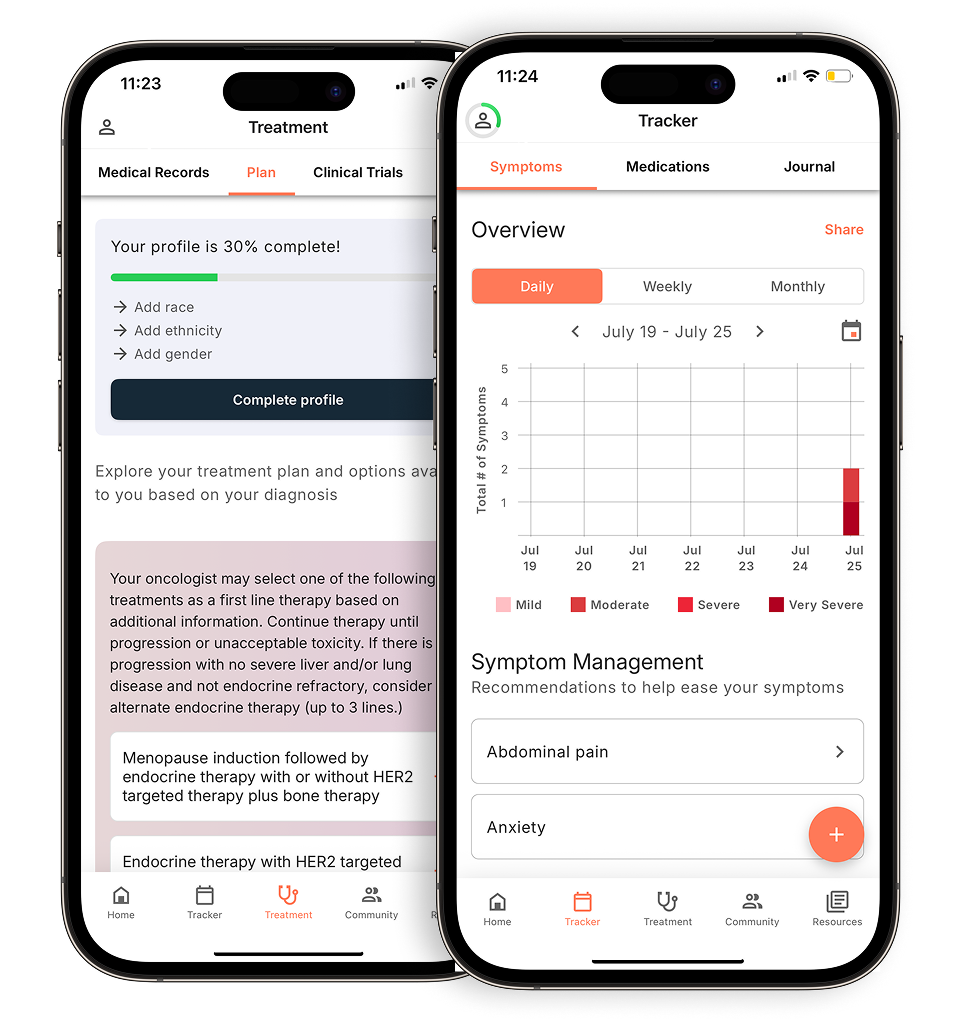
Clinical detection tools. How providers catch recurrence early
Your care team uses a coordinated surveillance toolkit, matching each detection method to the anatomical zone most at risk.
Understanding how that toolkit works starts with recognizing that bladder cancer staging doesn’t stop at diagnosis. Post-cystectomy monitoring continues to apply similar logic. Identifying where disease is most likely to appear and selecting the right tool to look there. For those currently in treatment for muscle invasive bladder cancer, being informed about your treatment options and staying invested in your care can make a difference in your treatment journey.
Imaging standards form the backbone of distant monitoring. CT urography scans the abdomen and pelvis for pelvic soft-tissue recurrence and signs of bladder cancer and upper-tract changes, while chest X-rays screen for pulmonary nodules, one of the more common sites of distant spread.
Laboratory markers add a layer of early warning that imaging can miss. Urine cytology can flag malignant cells at the urethral stump or upper tract before a lesion becomes visible. Blood chemistry, specifically creatinine and liver function panels, signals renal compromise or hepatic involvement that warrants further investigation.
Physical assessment rounds out the toolkit. A focused clinical exam can surface symptomatic changes, new lymphadenopathy, abdominal tenderness, or urethral discharge, that prompt earlier imaging than the scheduled interval would allow. And that responsiveness matters, because the next step is understanding exactly which imaging modalities your care team deploys and why.
Imaging modalities and their specific roles
Each imaging tool your care team uses after radical cystectomy targets a specific recurrence pattern.
Cross-sectional imaging, CT or MRI of the abdomen and pelvis, forms the backbone of post-cystectomy surveillance. These scans detect local pelvic recurrence, lymph node involvement, and upper urinary tract changes that rarely produce obvious bladder cancer signs and symptoms until they’re well advanced.
Chest imaging is a non-negotiable addition. The lungs are among the most common distant metastatic sites, and pulmonary nodules caught early, before they cause symptoms, carry far better treatment options. A chest CT delivers more sensitivity than a standard X-ray for detecting small nodules, which is why many protocols favor it over plain films, particularly in higher-risk patients during the first two years.
Bone scans occupy a more conditional role. They’re not part of routine surveillance for most patients; instead, your care team typically orders them when you report new bone pain or other clinical signs that raise suspicion. That symptom-driven approach keeps unnecessary radiation exposure low while ensuring the scan is available when it genuinely matters.
Beyond imaging, urine- and blood-based tests add another monitoring layer, which the next section covers in detail.
Urine and blood-based monitoring protocols
Beyond imaging, your care team relies on fluid-based tests to monitor for cancer recurrence in areas that scans can’t always reach.
Urine cytology examines cells shed into urine to flag malignant changes, particularly in the upper urinary tract, a site at elevated risk after cystectomy. Urine cytology reliably catches high-grade recurrence but can miss low-grade disease, meaning a normal result doesn’t always mean no recurrence. Metabolic monitoring through kidney function tests like BUN and creatinine is equally critical; urinary diversion alters how the kidneys handle waste, making baseline shifts clinically meaningful. And on the research frontier, liquid biopsies detecting circulating tumor DNA (ctDNA) offer a promising early-warning signal before recurrence becomes visible on imaging, though these remain investigational rather than standard practice.
Knowing what your care team is testing, and why, puts you in a better position to recognize when something feels off between scheduled appointments.
Cancer care guidance for every step of your journey
Get treatment options, clinical trials, and support tailored to your diagnosis--all in one place.
Get started
See treatment options, manage symptoms, and stay informed—all in the app
View treatment options and trials personalized to your diagnosis—plus track progress in real time.
Continue in appNavigating the recurrence window. What patients should watch for
Recognizing the difference between normal post-surgical recovery and genuine red flags is one of the most practical skills you can develop after radical cystectomy.
Distinguishing post-surgical changes from warning signs. Fatigue, digestive changes, and mild discomfort are expected in the weeks following surgery. But certain symptoms of bladder cancer recurrence carry more weight and deserve prompt attention. Unexplained weight loss, a persistent cough that doesn’t resolve, or new localized bone pain, particularly in the spine, hips, or ribs, are systemic signals worth reporting to your care team without delay. These symptoms merit a direct conversation with your care team rather than being monitored quietly at home.
Upper tract and diversion changes. Even after cystectomy, the upper urinary tract remains at risk. Flank pain, especially one-sided, can indicate obstruction or tumor involvement at the ureter or kidney. Blood visible in your urinary diversion, whether that’s a urostomy pouch or neobladder output, is another change your care team needs to know about. It’s easy to dismiss these as diversion-related quirks, but they can reflect something that warrants imaging.
The watchful eye approach. Proactive communication with your oncology team between scheduled appointments matters. Don’t wait for your next scan if something feels off. And it helps to track symptoms over time, when they started, how often they occur, and whether they’re worsening. The patterns you notice between appointments are data your care team can use.
Common patterns and red flags
Recurrence can present as an asymptomatic finding on imaging or as new symptoms that warrant attention.
Asymptomatic recurrence is the ideal scenario, a scan flags something before your body does. Routine imaging catches a significant share of recurrences this way, which is exactly why your care team schedules surveillance even when you feel fine. But not every recurrence announces itself quietly.
Symptomatic recurrence tends to present as new-onset pain, unexplained fatigue, or other changes that feel vague at first. These symptoms can overlap with normal post-surgical recovery, making it easy to wait them out, which is a risk worth avoiding.
Call your provider between scheduled appointments if you notice any of the following:
- Persistent back or flank pain that doesn’t resolve
- Significant, unexplained fatigue lasting more than a week or two
- Swelling in your legs or lower abdomen
- Fever without a clear cause
- Noticeable weight loss you haven’t planned for
Recognizing why recurrence happens, rather than just where, will help you understand the bigger picture. The next section looks at the biological reasons bladder cancer is persistent at a cellular level.
Addressing the ‘why’. Why bladder cancer is dangerous and persistent
Bladder cancer’s tendency to return after cystectomy reflects deep biological features that make the entire urinary tract susceptible from the start.
Field cancerization explains much of this. The same carcinogenic exposures that triggered the original tumor often affect the whole urothelial lining, meaning cells throughout the urinary tract carry pre-malignant changes even when they look normal. Recognizing early signs of bladder cancer in the upper tract after surgery is critical precisely because this field effect doesn’t disappear with the bladder itself.
Biological aggression compounds the risk. High-grade cells can evade local immune defenses and seed distant sites before any imaging detects them. And lymph node involvement shifts the threat from local to systemic.
Trust and reality. Limitations of current surveillance protocols
No surveillance schedule is 100% foolproof in detecting every recurrence after cystectomy.
The detection gap is real. Imaging catches what’s visible at the moment of the scan, not what may be developing between appointments. And urine cytology, while useful, has well-documented sensitivity limits for certain recurrence types, a point the next section addresses in more detail.
Radiation exposure and scanxiety add another layer of complexity. Frequent CT scans reduce the risk of missing a recurrence, but they also accumulate radiation dose over time, and they’re psychologically taxing. That anxiety before each result is a genuine clinical concern, not just an emotional one. Finding the right balance is part of every personalized care plan.
When recurrence is found, surveillance shifts into a different mode entirely. The focus moves from monitoring to active treatment of bladder cancer, whether that’s systemic therapy, immunotherapy, or another intervention guided by your care team. That transition can feel abrupt, which is why knowing the plan in advance matters.
Guidelines exist for a reason, but they’re a framework, not a fixed prescription. Your age, kidney function, and overall health can all shape how that framework gets applied, and that’s exactly what the next section covers.
When surveillance protocols may change
Standard follow-up after radical cystectomy isn’t static; your care team may adjust the schedule based on your health profile, the tools used, and what those tools can realistically detect.
Comorbidities and age matter more than many patients expect. Older adults or those with renal impairment may not tolerate frequent contrast-enhanced CT scans, prompting modified intervals or alternative imaging. On the other hand, skipping tests entirely raises the risk of delayed detection, so the goal is a realistic balance, not a reduced standard of care.
The “false negative” risk is another honest limitation worth understanding. Your care team may recommend supplementary tests if symptoms persist despite a clear cytology result.
PET/CT is increasingly used when traditional CT proves inconclusive, particularly for detecting distant metastases or characterizing suspicious lymph nodes. It’s not yet a first-line standard, but in specific clinical situations it offers sharper resolution of ambiguous findings. These are exactly the nuanced decisions that prompt many patients to have deeper questions about what recurrence really means for long-term outcomes, which the next section addresses directly.
Key takeaways: the bottom line on surveillance
Many bladder cancer recurrences appear within the early period after cystectomy, which is why your care team may recommend closer monitoring during the first two years.
The surveillance window right after surgery isn’t optional. Your care team will schedule imaging, blood work, and physical exams at carefully timed intervals precisely because this is when recurrence risk peaks. Skipping or delaying those appointments narrows the window for intervention.
Effective post-cystectomy monitoring covers more ground than the pelvis alone. Because recurrent disease can appear in distant organs, including the lungs and liver, a comprehensive safety net relies on:
- Local pelvic assessment to catch soft-tissue recurrence near the surgical site
- Chest and abdominal imaging to identify distant metastases early
- Blood panels and kidney function tests to track systemic health and diversion function
- Physical exams to surface symptoms that imaging may not immediately capture
And early detection matters in a very concrete way. The sooner recurrence is identified, the broader the range of treatment options available, including systemic therapies and advanced options.
Disclaimer: The information provided in this article is for informational purposes only and is not intended to be a substitute for professional medical advice, diagnosis, or treatment. Outcomes4Me is not acting as your caregiver, and any suggestions or guidance offered should not replace the advice of your healthcare provider or qualified medical professional. Always seek the guidance of your physician or other qualified health provider with any questions you may have regarding a medical condition.
Personalized support for real care decisions
Understand your diagnosis, explore clinical trials, and track symptoms--all in one place.
Get started
Compare treatments, prepare for appointments, and track side effects—all in the app
Built for your diagnosis, Outcomes4Me gives you the tools to make confident, informed decisions—right when you need them.
Continue in app