
You wait weeks for an appointment, and then it’s over in just a few minutes. It’s so easy to walk out of the doctor’s office and realize you forgot to ask your most important question or downplayed a symptom you’ve been worried about. A good health app can completely change this dynamic, turning your phone into the ultimate preparation tool. It helps you arrive organized, with a clear record of your experiences and a list of questions ready to go. This guide explores how the right tools can make your doctor’s visits more productive, helping you find the best app for breast cancer symptom tracking so you can have clearer, more confident conversations about your care.
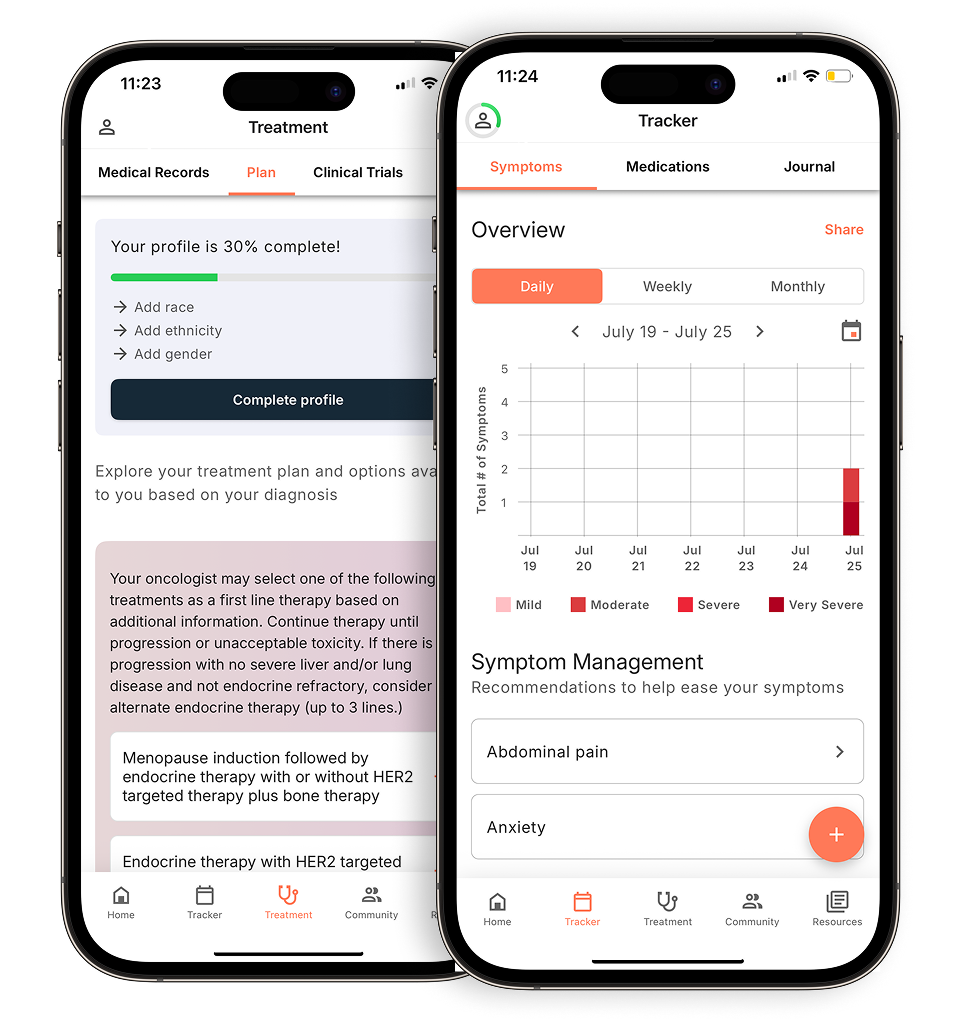
View your personalized treatment plan in the Outcomes4Me app
Use your diagnosis to unlock personalized NCCN Guidelines®-aligned recommendations.
Key Takeaways
- Take an active role in your healthcare: Use an app to log symptoms, list questions, and keep your medical info in one place. This helps you walk into appointments prepared and ready to have productive conversations with your doctor.
- Prioritize apps with evidence-based information: Look for tools developed with healthcare experts or based on established clinical standards, like the NCCN Guidelines®. This ensures the information you receive is accurate and helps you make well-informed decisions with your care team.
- Choose a tool that fits your needs and protects your privacy: Identify your main goal—like symptom tracking or self-exam reminders—and pick an app that specializes in it. Always review the privacy policy to understand how your personal health data is handled.
What Makes a Great Breast Cancer App?
With so many health apps available, it can be tough to figure out which ones are genuinely helpful. A great breast cancer app does more than just store information; it becomes a reliable partner in your health journey. The best apps help you stay organized, provide trustworthy information, and make it easier to communicate with your care team. They should simplify your life, not add another complicated task to your to-do list. Look for tools designed with patients in mind, focusing on clear, actionable features that give you a greater sense of control over your health management.
Easily Log Symptoms and Track Patterns
When you’re managing your health, keeping a detailed record of your symptoms, side effects, and overall well-being is incredibly valuable. A great app allows you to easily log these details day by day. Instead of trying to remember how you felt weeks ago during a doctor’s appointment, you can pull up a clear record. This helps you and your doctor identify patterns, see how treatments are affecting you, and make more informed decisions about your care plan. The goal is to find an app that makes this process simple, so you can stay organized without feeling overwhelmed.
Get Reminders for Medications and Treatments
Managing medications, treatments, and appointments can feel like a full-time job. A quality breast cancer app can take some of that mental load off your shoulders. Look for features that allow you to set reminders for when to take your medicine and when you’re running low on a prescription. These tools can also help you keep track of upcoming doctor’s visits and treatments. By automating these reminders, the app helps ensure you stay on track with your care plan, freeing up your mental energy for other things. It’s a simple feature that can make a huge difference in your daily routine.
Access Trustworthy, Evidence-Based Information
In a world of endless information, finding accurate and reliable medical guidance is essential. The best health apps are built on a foundation of evidence-based information, often developed with input from healthcare experts and professional organizations. A study on cancer management apps found that many were of low quality, so it’s important to choose one that provides information you can trust. An app that offers medically vetted resources empowers you to learn about your diagnosis and treatment options, helping you have more informed conversations with your doctor and feel more confident in your decisions.
Share Your Health Data with Your Doctor
The information you track in an app is most powerful when it’s shared with your healthcare team. A great app makes it easy to export or present your data—like symptom logs, medication schedules, or notes from self-exams—during your appointments. This gives your doctor a clearer, more complete picture of your health between visits. When you can show them exactly what you’ve been experiencing, it leads to more productive conversations and a more personalized care plan. This feature turns your personal tracking into a collaborative tool for you and your doctor.
Find an App That’s Simple and Secure
An app can have all the best features, but if it’s difficult to use, you probably won’t stick with it. Look for a clean, intuitive design that makes sense to you. Beyond usability, security is critical. You’re trusting an app with your most sensitive health information, so it needs to have a strong privacy policy. Some apps, like the Know Your Lemons app, are designed to not collect any personal health data at all. Always check an app’s privacy and data security policies before you start using it to ensure your information is protected.
Our Top App Recommendations for Breast Cancer Support
With so many apps out there, finding the right ones can feel overwhelming. We’ve done the research for you and gathered a list of our favorite, most reliable apps designed to support you through every step. Each one serves a unique purpose, from tracking symptoms to understanding your treatment options. These tools can help you feel more organized, informed, and in control of your health journey.
Outcomes4Me: For Personalized, Guideline-Based Treatment Info
Outcomes4Me is built to give you clear, personalized treatment information that’s tailored to your specific diagnosis. It’s the only app that directly integrates with the NCCN Clinical Practice Guidelines in Oncology (NCCN Guidelines®), turning complex medical standards into easy-to-understand guidance. This helps you have more informed conversations with your care team about treatment options, clinical trials, and genetic testing. In a digital world where many cancer management apps are low quality, having a tool that provides evidence-based information is essential for making confident decisions about your health.
Know Your Lemons: For Self-Exam Education
The Know Your Lemons app is all about empowering you with knowledge for early detection. It uses simple, visual, and friendly guides to teach you how to perform a breast self-exam and what signs to look for. Instead of relying on confusing medical jargon, the app makes learning about breast health approachable and memorable. By turning a potentially intimidating task into a simple routine, this breast cancer self-exam app helps you build confidence in understanding your own body and recognizing any changes as soon as they appear.
Cancer.Net Mobile: For Managing Symptoms
Managing the physical side of breast cancer treatment is a huge part of the journey, and Cancer.Net Mobile is an excellent tool for just that. Backed by the American Society of Clinical Oncology (ASCO), this app lets you log and track your symptoms, medications, and side effects. You can note the time, severity, and what helps relieve them. This creates a detailed record you can share with your doctor, leading to more productive conversations about managing your well-being. It’s a practical way to monitor your health and get trustworthy information to communicate your needs clearly.
Breast Advocate®: For Surgery and Reconstruction Guidance
If you’re facing decisions about breast cancer surgery or reconstruction, Breast Advocate® is a must-have resource. This free app was created by a team of plastic surgeons, breast surgeons, and patient advocates to provide unbiased, reliable information. It gives you personalized guidance based on your diagnosis and preferences. It helps you understand all your options, from lumpectomy to different types of mastectomy and reconstruction, so you can feel prepared and confident when discussing your surgical plan with your doctors. It’s one of the top breast cancer apps for support specifically for this critical part of treatment.
Dr. K’s Breast Checker: For Monthly Self-Exam Reminders
One of the simplest but most effective habits for breast health is the monthly self-exam, and Dr. K’s Breast Checker is designed to help you stay consistent. This straightforward app sends you a reminder each month and provides a simple guide on how to perform an exam. It also gives you a place to privately document any changes or concerns you notice over time. By taking the guesswork out of remembering, it helps you build a proactive routine. This tool empowers you to stay on top of your health and feel more in control, making it easier to spot potential issues early.
How an App Can Improve Your Doctor’s Visits
Walking into a doctor’s appointment can feel overwhelming. You have a limited amount of time to cover a lot of ground, and it’s easy to forget a question or downplay a symptom in the moment. This is where a good app can become an invaluable partner in your healthcare. It acts as your digital notebook, personal health librarian, and organizational assistant, all in one place. By helping you prepare for your visits, an app ensures that the time you have with your doctor is as productive and focused as possible. It transforms your appointments from a quick check-in to a collaborative strategy session about your health. Instead of leaving and wishing you’d remembered to ask about a new side effect or a treatment option you read about, you can walk in with a clear agenda. This level of preparation puts you in a better position to make confident decisions about your care, turning what can be a stressful experience into an empowering one. You become a more active participant in your own health journey, equipped with the data and questions needed to have a meaningful dialogue with your care team.
Document Your Symptoms for Clearer Conversations
It’s one thing to tell your doctor you’ve been feeling “off,” and another to show them a detailed log of your symptoms. Tracking your side effects, pain levels, and energy fluctuations gives your care team concrete data to work with. Instead of relying on memory, you can pinpoint exactly when a new symptom started or if a side effect is getting worse. Some of the best cancer management apps are designed to help you track these details, offering strategies to manage side effects along the way. This clear, documented history allows for more specific conversations and helps your doctor tailor your treatment plan more effectively.
Arrive at Appointments Prepared and Organized
Feeling flustered at an appointment is common, but being prepared can make a world of difference. An app helps you consolidate all your important information—your list of medications, questions for your doctor, and your symptom log—in one accessible spot. You won’t have to shuffle through papers or try to recall details under pressure. As experts note, apps can help you stay organized, remember important tasks like self-exams and taking medicine, and get reliable information. Arriving with your thoughts and data organized allows you to lead the conversation and ensure all your concerns are addressed, making every minute with your doctor count.
Learn About Clinical Trials and Genetic Testing
Your treatment plan is personal, and it’s important to know all the options available to you. Some apps, like Outcomes4Me, go beyond symptom tracking to provide you with personalized information based on your specific diagnosis. This can include details about relevant clinical trials or potential genetic testing options you may qualify for. Having this information at your fingertips empowers you to ask your oncologist about cutting-edge treatments or tests that might be right for you. It opens up a dialogue about possibilities you might not have known to ask about, ensuring you are exploring every avenue for your care.
Better Understand Your Treatment and Screening Plans
Medical plans can be complex, filled with terminology and timelines that are hard to keep straight. An app can act as a translator and a guide, breaking down your treatment and screening schedules into manageable information. For example, the Know Your Lemons app is designed to help you create a personal screening plan based on your individual risk factors. By clarifying the “why” behind each recommendation, these tools help you understand the purpose of every test and treatment. This deeper understanding builds confidence and helps you feel more connected to and in control of your healthcare plan.
Make Informed Decisions with Your Health Data
Ultimately, the goal is to be an active participant in your healthcare journey. When you combine detailed symptom logs, a clear understanding of your treatment plan, and knowledge of all your options, you can have much richer conversations with your doctor. An app helps you bring all of this to the table. It allows you to ground your discussions in your own health data and educated questions. This transforms the doctor-patient relationship into a true partnership, where you work together to make informed decisions that align with your goals and well-being.
The Everyday Benefits of Using a Symptom Tracking App
Living with a breast cancer diagnosis involves managing a lot of new information, from treatment schedules to unfamiliar symptoms. It’s completely normal to feel overwhelmed. A symptom tracking app can be a powerful ally in your daily life, acting as a digital command center for your health. Think of it as a dedicated space to organize the chaos, helping you transform scattered notes and worries into clear, actionable data.
Using an app consistently does more than just create a log; it helps you see the bigger picture. You can start to notice patterns in how you’re feeling, understand your body’s responses to treatment, and feel more prepared for conversations with your care team. This simple act of tracking can bring a sense of order and predictability to your routine. It’s about taking a proactive role in your care, which can be incredibly grounding and empowering when so much feels out of your hands. By centralizing your health information, you reduce the mental load of trying to remember every detail, freeing up your energy to focus on what matters most: your well-being.
Feel Less Anxious with Clear Self-Exam Guides
The advice to “feel for a lump” can feel vague and stressful, leaving you to wonder if you’re even doing it right. Many apps help reduce this anxiety by offering clear, step-by-step instructions for self-exams. Some, like the Know Your Lemons app, even include audio guides that walk you through each motion, explaining exactly what to look and feel for. This structured approach demystifies the process, turning a source of worry into a manageable and productive part of your health routine. When you have a clear guide, you can feel more confident that you’re checking thoroughly and correctly.
Gain Confidence in Recognizing Changes
The more familiar you are with your body, the more confident you’ll be in noticing when something changes. Guided self-exams help you learn your personal landscape, so a new or different feeling is easier to identify. This isn’t just about peace of mind; it can be life-saving. Many people have shared stories of how using an app helped them find a lump that led to an early diagnosis. By building a consistent practice, you develop a deeper body awareness that empowers you to spot potential issues sooner and advocate for yourself with more certainty.
Keep Your Medical Info Organized in One Place
Appointments, medication schedules, symptom notes, questions for your doctor—the amount of information you have to manage can feel like a full-time job. A good health app acts as a single, organized hub for all of it. You can log your medications, set reminders so you never miss a dose, track your symptoms as they occur, and jot down questions the moment they pop into your head. Having everything in one place means you’re not scrambling for a stray sticky note before your next appointment. This level of organization simplifies your daily life and reduces a significant source of stress.
Feel More in Control of Your Health Journey
When your medical information is organized and easily accessible, you naturally feel more in control. A cancer diagnosis can make you feel like you’re a passenger, but tracking your health puts you back in the driver’s seat. It allows you to become an active, engaged member of your own care team. This sense of agency is incredibly important for your mental and emotional well-being. Instead of feeling like your treatment is something that’s just happening to you, you can see the role you play in managing your health every single day.
Empower Yourself with Reliable Medical Knowledge
The right app can also be a source of trustworthy, evidence-based information. When you’re facing a health challenge, knowledge is power. Apps developed by professional health organizations or in partnership with medical experts can help you understand your diagnosis, learn about treatment options, and make more informed decisions. Having access to reliable medical information helps you formulate better questions for your doctor and feel more confident in the choices you make about your care. This empowerment is key to navigating your health journey with clarity and strength.
What to Keep in Mind When Choosing an App
With so many apps available, it can be tough to know which one is right for you. A great app can be a powerful ally in your health journey, but it’s important to choose wisely. Keeping a few key things in mind will help you find a tool that’s trustworthy, secure, and genuinely helpful for managing your health.
Not All Medical Information Is Created Equal
Unfortunately, many apps designed to help with cancer management are not very effective. Research has shown that apps developed with input from healthcare experts or professional health organizations tend to have much more reliable information. Before you download, look for signs that the app is evidence-based. Check the “About Us” section to see if doctors, oncologists, or reputable institutions were involved in its creation. An app that provides personalized guidance based on established clinical guidelines, like the NCCN Guidelines®, is a strong indicator that you’re getting trustworthy information to support your care.
Always Check the Privacy and Data Security Policy
Your health information is incredibly personal, so it’s vital to know how an app will handle it. Before entering any data, take a moment to find and read the app’s privacy policy. Some apps, like Know Your Lemons, are designed to keep all your information stored locally on your phone, meaning the company never collects it. Others may store data on their servers. Make sure you understand what information is being collected, how it’s being used, and what security measures are in place to protect it. A transparent privacy policy is a sign of a trustworthy app.
Remember, an App Is a Tool, Not a Doctor
An app can be an amazing tool for tracking symptoms, reminding you to do self-exams, and organizing your medical information, but it can’t replace the expertise of your healthcare team. While a breast self-exam is a great way to become familiar with your body, an app can’t diagnose a problem. Think of it as your personal health assistant—it helps you gather information and stay on top of your routine, but any concerns or changes you notice should always be discussed with your doctor. They are your ultimate source for diagnosis, treatment, and medical advice.
Understand an App’s Primary Purpose and Its Limits
Different apps are built for different things. Some are fantastic for providing educational content, while others are designed specifically for logging symptoms or reminding you to take medication. It’s helpful to know that while information is useful, it might not be enough to help you form new habits. Before you commit to an app, identify your main goal. Are you looking for a simple self-exam reminder? Or do you need a comprehensive tool to manage treatment side effects? Choosing an app that specializes in what you need most will be far more effective than a general app that tries to do everything.
See if it Connects with Your Current Healthcare Tools
The most helpful apps make it easy to share your health data with the people who matter most—your care team. Look for features that allow you to export your symptom log, medication schedule, or other tracked information. Being able to bring a clear, organized summary of your health to your next appointment can make your conversations with your doctor much more productive. Some apps can help you stay organized and informed by keeping all your information in one place, turning your phone into a powerful tool for managing your care and making informed decisions with your oncologist.
Related Articles
- Best Breast Cancer Guidance (Awareness & Mobile App) | Outcomes4Me
- Is This App for Breast Cancer Patients Only? | Outcomes4Me Community
- Breast Cancer Must Haves: Best Care Products For Patients
- Best List Of Breast Cancer Books (For Patients & Survivors) | Outcomes4me
- Best Breast Cancer Podcasts For Patients & Survivors
View your personalized treatment plan in the Outcomes4Me app
Use your diagnosis to unlock personalized NCCN Guidelines®-aligned recommendations.
Frequently Asked Questions
With so many apps available, do I need more than one? Not necessarily, but it can be helpful to think of apps as a personalized toolkit. One app might be fantastic for logging your daily symptoms, while another is designed specifically to give you unbiased information about surgical options. Instead of searching for one perfect app that does everything, focus on your biggest needs right now. You might start with one to help you stay organized and add another later if you need support in a different area.
How can an app actually make a difference in my conversations with my doctor? An app helps you turn vague feelings into concrete data. Instead of trying to remember how you felt three weeks ago, you can show your doctor a clear log of your symptoms, their severity, and any patterns you’ve noticed. This allows you to have a more specific and productive conversation, moving from “I’ve been feeling tired” to “I’ve felt fatigued every afternoon for the past 12 days.” This level of detail gives your care team a much clearer picture of your experience between visits.
I’m worried about my privacy. How can I be sure my health data is safe? This is a valid and important concern. The best way to protect yourself is to read an app’s privacy policy before you start using it. Look for clear language about what data is collected and how it is stored and protected. Some apps are designed to store all your information locally on your phone, meaning the company never sees it. A trustworthy app will always be transparent about its security practices.
What’s the single most important thing to look for when choosing an app? The most critical factor is the source of the information. A great app should be built on a foundation of reliable, evidence-based medical guidance. Before downloading, check to see if the app was developed with input from oncologists, medical experts, or reputable health organizations. An app that provides information you can trust is an invaluable tool for making confident and informed decisions about your care.
Can an app replace a self-exam taught by a nurse or doctor? Think of an app as a supportive guide, not a replacement for your medical team. It can be an excellent tool for reminding you when to do an exam and walking you through the steps so you feel more confident. However, it can’t diagnose a problem or offer medical advice. Always discuss any changes or concerns you find with your doctor, as they are your ultimate resource for your health.