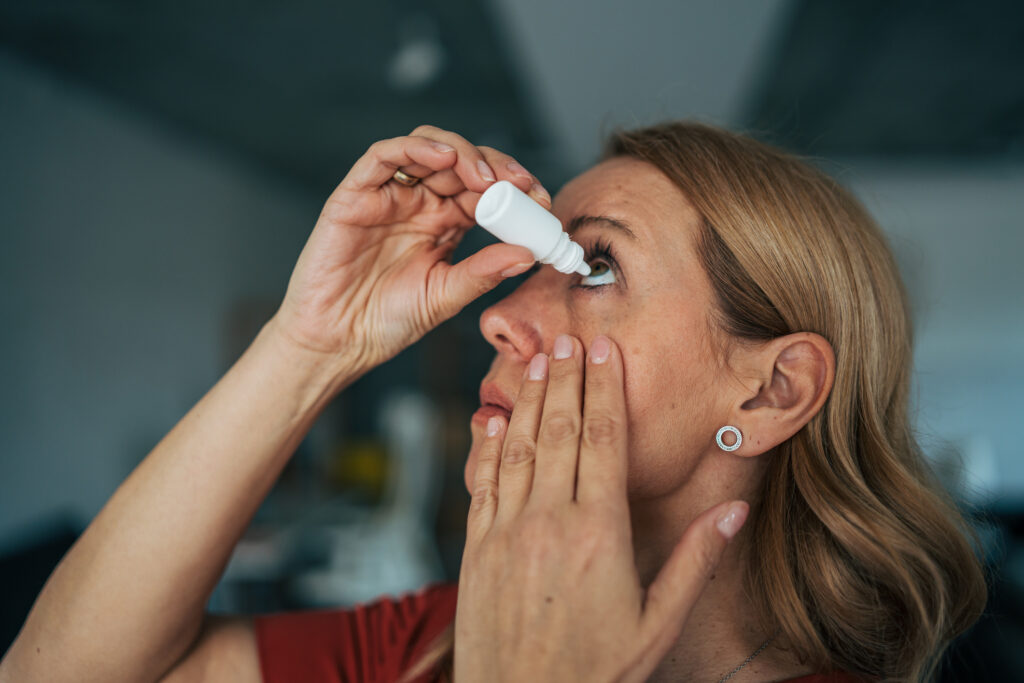
For people living with platinum-resistant ovarian cancer, treatment options have expanded in recent years with the approval of mirvetuximab soravtansine (Elahere®), a targeted therapy designed for tumors that express high levels of folate receptor alpha (FRα). While the drug has shown encouraging effectiveness, many patients have questions about its side effects—particularly its effects on the eyes.
New research presented at the 2026 ASCO Annual Meeting offers reassuring news. A large analysis combining data from clinical trials and real-world studies found that although eye-related side effects are common with mirvetuximab soravtansine, they’re usually mild and manageable, and serious complications are rare.
Why eye side effects have been a concern
Mirvetuximab soravtansine belongs to a type of treatment called an antibody-drug conjugate (ADC). It works by delivering cancer-fighting medication directly to ovarian cancer cells that express folate receptor alpha.
One of the known side effects of this treatment is ocular toxicity, which refers to changes affecting the eyes or vision. Patients may experience symptoms such as:
Evidence-based guidance powered by NCCN Guidelines®
Personalized treatment plans shaped by the latest oncology standards—tailored to your diagnosis.
Get started
View your personalized treatment plan in the Outcomes4Me app
Use your diagnosis to unlock personalized NCCN Guidelines®-aligned recommendations.
Continue in app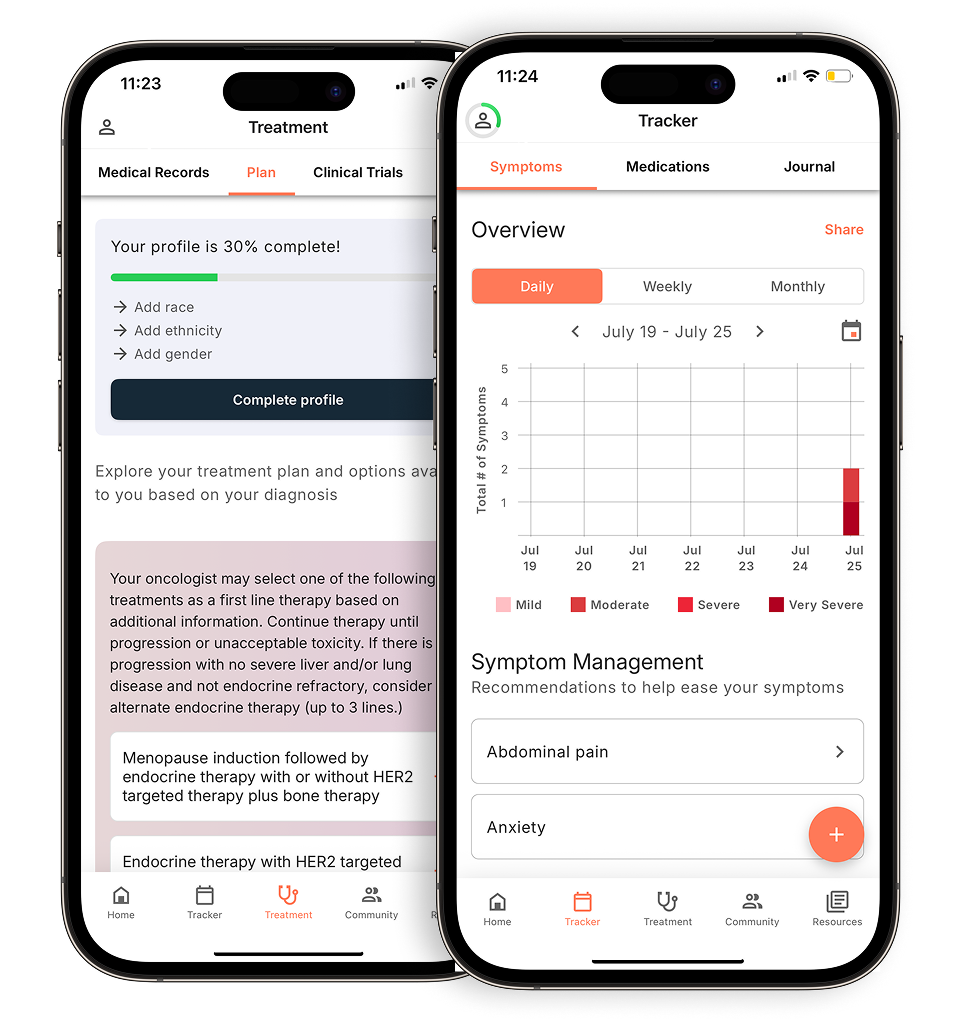
- Blurred vision
- Dry eyes
- Sensitivity to light
- Eye discomfort
- Changes in vision
Because these side effects have been reported across multiple studies, researchers wanted to better understand how often they occur and how serious they tend to be.
What did the study find?
Researchers reviewed data from 14 studies involving approximately 750 who received mirvetuximab soravtansine.
The analysis found that:
- About 56% of patients experienced some type of eye-related side effect.
- Most eye side effects were mild or moderate.
- Serious eye-related side effects occurred in only about 1.4% of patients.
- Nearly one-third of patients required a dose reduction because of eye symptoms.
- Fewer than 10% of patients stopped treatment because of eye-related side effects in clinical trials.
Importantly, while eye symptoms were relatively common, they were usually manageable and rarely severe enough to require patients to permanently stop treatment.
Real-world experience looks even more encouraging
Clinical trials don’t always reflect what happens in everyday medical practice, so researchers also evaluated data from real-world studies involving 289 patients.
Treatment discontinuation due to eye-related side effects occurred in less than 1% of patients in these real-world studies.
This suggests that as physicians gain more experience with mirvetuximab soravtansine and follow established monitoring guidelines, many eye-related side effects can be successfully managed without interrupting treatment.
Serious non-eye side effects were rare
The researchers also examined several potentially serious non-ocular side effects.
They found that severe cases of:
- Pneumonitis (inflammation of the lungs)
- Thrombocytopenia (low platelet counts)
Both were uncommon, occurring in approximately 1% to 1.5% of patients.
These findings add to the growing body of evidence that mirvetuximab soravtansine has a generally manageable safety profile when patients are carefully monitored.
Why these findings matter
When considering a new cancer treatment, many patients weigh the potential benefits against possible side effects. This analysis provides reassurance that while eye-related symptoms are a known side effect of mirvetuximab soravtansine, they are usually not severe and can often be managed through proactive care.
For patients with FRα-positive platinum-resistant ovarian cancer, these findings support what many clinicians have observed in practice: mirvetuximab soravtansine can be an effective treatment option with side effects that are generally manageable when identified early.
The importance of eye monitoring
If you are receiving mirvetuximab soravtansine, your care team will likely recommend regular eye examinations and preventive eye care measures throughout treatment.
Patients should report any new symptoms promptly. Early detection allows doctors to adjust treatment if needed and help prevent symptoms from becoming more severe.
The bottom line
This large analysis confirms that eye-related side effects remain the most common safety concern associated with mirvetuximab soravtansine, but the vast majority are mild and manageable. Serious eye complications and severe non-eye side effects were rare, and real-world data showed that very few patients needed to stop treatment because of these issues.
For patients with FRα-positive platinum-resistant ovarian cancer, these findings provide additional confidence that mirvetuximab soravtansine can often be continued safely with appropriate monitoring and supportive care.
Looking for more information? Access trusted educational resources designed to help you navigate ovarian cancer treatment.
Personalized support for real care decisions
Understand your diagnosis, explore clinical trials, and track symptoms--all in one place.
Get started
Compare treatments, prepare for appointments, and track side effects—all in the app
Built for your diagnosis, Outcomes4Me gives you the tools to make confident, informed decisions—right when you need them.
Continue in app