
New five-year data from the phase III CheckMate 274 trial is giving patients and doctors more confidence in using nivolumab (Opdivo) after surgery for high-risk muscle-invasive urothelial carcinoma, the most common type of bladder cancer. Researchers found that patients who received nivolumab after surgery stayed cancer-free significantly longer than those who didn’t receive the treatment.
For patients facing uncertainty after bladder cancer surgery, these findings are meaningful because they suggest immunotherapy may help reduce the risk of the cancer returning even years later.
What is adjuvant nivolumab?
Adjuvant therapy is treatment given after surgery to lower the risk that cancer comes back. In bladder cancer, surgery such as a cystectomy (removal of the bladder) or nephroureterectomy (removal of the kidney and ureter) can remove visible disease, but microscopic cancer cells may still remain in the body.
Nivolumab is an immunotherapy drug known as a checkpoint inhibitor. It works by helping the immune system recognize and attack cancer cells.
The CheckMate 274 trial studied whether giving nivolumab for up to one year after surgery could help patients with high-risk muscle-invasive urothelial carcinoma remain cancer-free longer than patients who received a placebo.
What did the study find?
The study followed 709 patients for approximately five years after treatment.
Researchers found that patients who received nivolumab had nearly double the median disease-free survival (DFS) compared with placebo:
Evidence-based guidance powered by NCCN Guidelines®
Personalized treatment plans shaped by the latest oncology standards—tailored to your diagnosis.
Get started
View your personalized treatment plan in the Outcomes4Me app
Use your diagnosis to unlock personalized NCCN Guidelines®-aligned recommendations.
Continue in app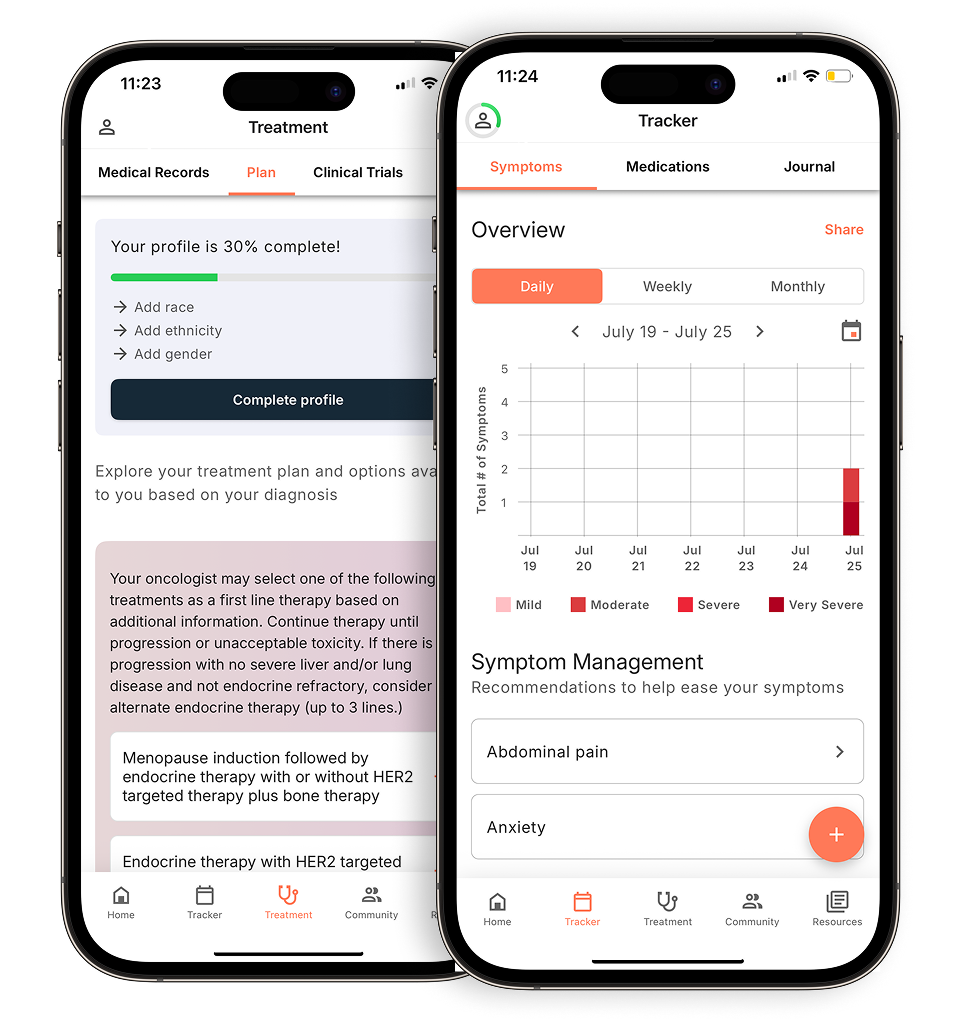
- 21.9 months with nivolumab
- 11.0 months with placebo
Disease-free survival refers to how long patients remain alive without signs that the cancer has returned. Importantly, the benefit of nivolumab appeared durable over time. At five years:
- 36.4% of patients treated with nivolumab were still alive and disease-free
- 30.9% of patients who received a placebo remained disease-free
While that difference may appear modest at first glance, bladder cancer recurrence risk is often highest within the first few years after surgery. Long-term separation between the groups suggests nivolumab may help control microscopic disease for some patients well beyond the active treatment period.
Researchers also observed a trend toward improved overall survival, although the study was not yet considered definitive for that endpoint.
Why PD-L1 status matters
The benefit of nivolumab was especially strong in patients whose tumors expressed PD-L1 at levels of at least 1%.
Among these patients:
- Median DFS was 55.5 months with nivolumab
- Median DFS was 8.4 months with placebo
At five years, nearly half of patients with PD-L1-positive tumors who received nivolumab remained disease-free.
PD-L1 is a protein that can help tumors hide from the immune system. Testing tumors for PD-L1 may help doctors better understand which patients are more likely to benefit from immunotherapy, although nivolumab can still be considered regardless of PD-L1 status.
What is ctDNA and why are researchers excited about it?
One important part of this research involved circulating tumor DNA (ctDNA).
ctDNA refers to tiny fragments of tumor DNA that can sometimes be detected in the bloodstream after surgery. Detectable ctDNA may indicate that microscopic cancer cells are still present in the body, even if scans appear clear.
Patients with detectable ctDNA after surgery had a much higher risk of recurrence overall. However, this group also appeared to benefit substantially from nivolumab.
Among patients with detectable ctDNA:
- Median DFS was 7.4 months with nivolumab
- Median DFS was 2.8 months with placebo
Researchers also saw improvements in distant metastasis-free survival and disease-specific survival in ctDNA-positive patients who received nivolumab.
Why these findings are meaningful for patients
This study matters for several reasons:
It strengthens a newer standard of care
Adjuvant nivolumab has already become part of standard treatment for many patients with high-risk muscle-invasive bladder cancer. These longer-term results reinforce that the benefit is not short-lived.
For patients deciding whether additional treatment after surgery is worth it, five-year data provides more reassurance that immunotherapy may meaningfully delay or reduce recurrence risk.
It highlights the growing role of personalized cancer care
The ctDNA findings suggest blood-based testing may eventually help doctors better tailor treatment decisions after surgery.
In the future, ctDNA testing could potentially help identify:
- Which patients are at the highest risk for recurrence
- Who may benefit most from immunotherapy
- Who may safely avoid additional treatment
Researchers caution that more studies are still needed before ctDNA fully guides treatment decisions in routine care, but many experts believe it represents an important next step in bladder cancer management.
Are there side effects?
The most common side effects reported with nivolumab included:
- Fatigue
- Itching (pruritus)
- Diarrhea
No new safety concerns emerged during the longer follow-up period.
Because nivolumab activates the immune system, it can also occasionally cause immune-related side effects affecting organs such as the lungs, liver, thyroid, skin, or intestines. Patients should report new or worsening symptoms to their care team promptly.
Questions you may want to ask your care team
If you or a loved one has high-risk muscle-invasive bladder cancer after surgery, it may help to ask:
- Am I a candidate for adjuvant immunotherapy?
- Should my tumor be tested for PD-L1?
- Is ctDNA testing available or appropriate for me?
- What are the potential benefits and risks of nivolumab in my situation?
- How might newer treatments affect my options now or in the future?
While questions remain about how best to sequence newer therapies and use ctDNA testing in routine care, many experts view these results as another major step forward in improving outcomes for bladder cancer patients.
Outcomes4Me is here to help you better understand your diagnosis and treatment options. You deserve clear, trustworthy information at every step.
Personalized support for real care decisions
Understand your diagnosis, explore clinical trials, and track symptoms--all in one place.
Get started
Compare treatments, prepare for appointments, and track side effects—all in the app
Built for your diagnosis, Outcomes4Me gives you the tools to make confident, informed decisions—right when you need them.
Continue in app