
Colorectal cancer treatment is changing faster than at any point in the past two decades, and your biomarker status is at the center of that change. For years, chemotherapy was the default. A broad-spectrum approach that targets all fast-growing cells, healthy or not. Immunotherapy works differently. Immunotherapy trains your own immune system to identify and attack the tumor directly, sparing surrounding tissue and, for the right patients, delivering results that chemotherapy simply can’t match.
The immunotherapy for colorectal cancer latest research tells a clear story. This treatment is now a first-line option for patients with MSI-H metastatic colorectal cancer, according to NCCN Guidelines®, a shift that would have seemed unlikely just a few years ago. With emerging combination strategies showing activity across broader patient groups, the pace of progress isn’t slowing down.
Acting early is now standard care for advanced colorectal cancer. Patients and their care teams should begin with knowing exactly which biological subtype of the disease they’re dealing with. That distinction, between tumor types that respond to immunotherapy and those that don’t, begins with a single critical test. Understanding what that test measures, and why it matters so much, is where we need to start.
Understanding the ‘great divide’: MSI-H vs. MSS status
Your biomarker status creates a fundamental divide in MSI-H vs. MSS colorectal cancer treatment, and knowing which side you’re on shapes nearly every decision your care team will make.
MSI-H (Microsatellite Instability-High) tumors are “hot” tumors. They carry a high number of genetic mutations, making them highly visible to your immune system. Because immune cells can recognize and attack these tumors more readily, immunotherapy has proven remarkably effective for this group. Checkpoint inhibitors such as pembrolizumab have shown strong results in MSI-H patients, helping slow cancer progression in ways that weren’t possible just a decade ago.
MSS (Microsatellite Stable) tumors have fewer mutations and show signs of intratumoral immune suppression, which can limit the body’s ability to mount an effective immune response against the cancer, making standard immunotherapy far less effective. Only about 3% of patients with metastatic colorectal cancer have MSI-H disease, meaning the majority of colorectal cancer patients have a different biomarker status that may require alternative treatment approaches. Researchers are actively exploring combination strategies to “heat up” these cold tumors, but proven options remain limited today.
Evidence-based guidance powered by NCCN Guidelines®
Personalized treatment plans shaped by the latest oncology standards—tailored to your diagnosis.
Get started
View your personalized treatment plan in the Outcomes4Me app
Use your diagnosis to unlock personalized NCCN Guidelines®-aligned recommendations.
Continue in app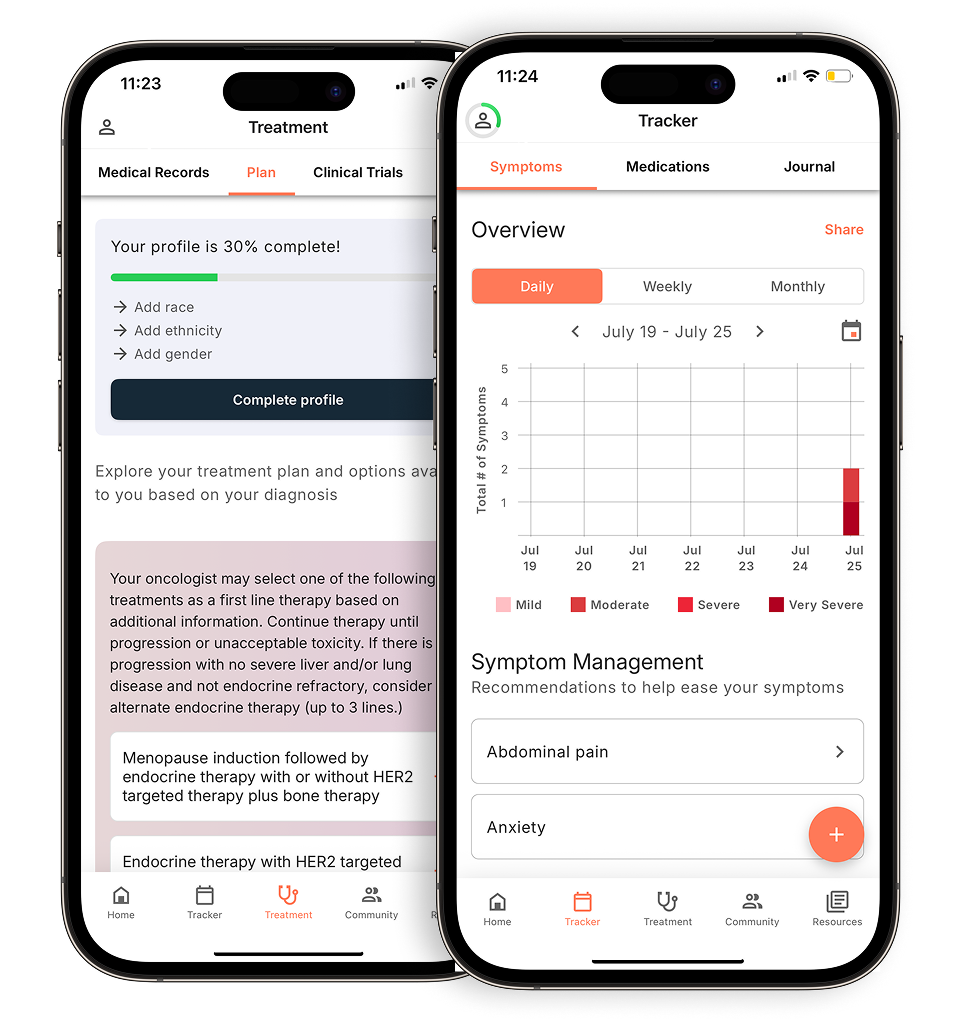
This is exactly why getting tested matters from the start. Asking your care team for an MSI/dMMR biomarker test at diagnosis is foundational to a truly personalized care plan. As researchers work to close the gap for MSS patients, the picture is beginning to shift in promising ways.
Early-stage immunotherapy is changing how we treat earlier disease
Some early-stage studies are exploring immunotherapy before surgery in patients with MSI-H colorectal cancer, with researchers looking at whether this approach may improve treatment outcomes. Your care team can discuss whether this strategy might be appropriate for your individual situation.
This approach offers real benefits. If a tumor responds strongly to immunotherapy before surgery, it may shrink substantially or disappear entirely. For some patients, that could mean avoiding or reducing the extent of surgery needed, which can help preserve normal bowel function and quality of life. This represents a meaningful shift in how care teams approach Stage 2 and Stage 3 colorectal cancer.
For early-stage patients, the strategy of delivering systemic treatment before any surgery, called total neoadjuvant therapy, is now an active focus across colorectal cancer clinical trials for immunotherapy. Rather than operating first and treating later, care teams are increasingly asking whether immunotherapy up front can shrink or eliminate the tumor entirely, turning surgery into an option rather than a certainty.
And for MSS patients who don’t respond to current immunotherapy, that question is precisely what the next wave of research is racing to answer.
Turning ‘cold’ tumors ‘hot’ for MSS patients
Making MSS tumors respond to immunotherapy is widely considered the holy grail of colorectal cancer research, and for good reason. The vast majority of colorectal cancer patients fall into the MSS category, which means the breakthroughs generating headlines have largely passed them by. Research is actively working to change this picture through combination strategies.
The core challenge is the tumor microenvironment. MSS tumors show signs of immune suppression that limit the body’s ability to recognize and attack them. Combination therapies aim to overcome this immunosuppressive microenvironment by using multiple mechanisms at once. Rather than a single drug trying to unlock one door, these approaches hit several barriers simultaneously.
One of the most closely watched combinations is Botensilimab paired with Balstilimab. Early data has shown measurable activity in MSS tumors, a result that would have seemed unlikely just a few years ago. Researchers have reported that this dual-checkpoint approach produced responses in patients who had previously exhausted standard options.
Cancer care guidance for every step of your journey
Get treatment options, clinical trials, and support tailored to your diagnosis--all in one place.
Get started
See treatment options, manage symptoms, and stay informed—all in the app
View treatment options and trials personalized to your diagnosis—plus track progress in real time.
Continue in appTargeted therapies combined with immunotherapy are another avenue gaining traction. Targeted therapies that work against blood vessels, when combined with checkpoint inhibitors, have shown improved outcomes in advanced colorectal cancer compared to immunotherapy alone. The idea is that cutting off a tumor’s vascular supply also reduces its ability to stay “cold.” Emerging findings suggest this combination can prime previously unresponsive tumors for immune attack. These drug-based strategies, however, are just one frontier, and the next wave of innovation reaches even further into personalized medicine.
Beyond drugs: mRNA vaccines and TIL therapy
The next wave of colorectal cancer treatment is moving well beyond checkpoint inhibitors for colon cancer and into territory that would have seemed like science fiction just a decade ago. Two emerging approaches, personalized mRNA vaccines and tumor-infiltrating lymphocyte (TIL) therapy, teach your immune system to recognize your tumor’s unique fingerprint.
Personalized mRNA vaccines work by reading a patient’s specific tumor mutations after surgery and building a custom immunotherapy blueprint from that genetic data. Rather than a broad-spectrum drug, the vaccine is engineered to alert your immune cells to the exact proteins, called neoantigens, that mark your cancer cells as foreign. The goal is to prevent recurrence by training the body to destroy any remaining cells before they can regrow. Early-phase trials are underway, and while results are preliminary, the precision of this approach represents a meaningful shift in how oncologists think about post-surgical care.
TIL therapy takes a different but equally compelling route. Scientists extract immune cells that have already infiltrated a patient’s tumor, cells that know the cancer, then grow billions of copies in a lab and re-infuse them back into the patient. Research found that combining TILs with pembrolizumab produced a 24% reduction in tumor size in some GI cancer studies, a result that’s generating real momentum.
For now, both approaches are largely accessible through clinical trials rather than standard care. That’s not a limitation so much as a reality of how cutting-edge medicine moves from lab to clinic. Understanding exactly where you stand today, starting with your biomarker status, is the clearest first step toward accessing these advances.
What you need to know today
Your biomarker status determines which personalized care options are available to you.
The science is moving fast, but the starting line is always the same. You need to know your MSI/MSS and dMMR/pMMR status before any conversation about immunotherapy can meaningfully begin. Without that result, neither you nor your care team can map the right path forward. If you haven’t been tested, ask for it at your next appointment, it’s that foundational.
For MSI-H patients, immunotherapy is now often recommended as a preferred first-line treatment over conventional chemotherapy, reflecting a broad consensus across leading cancer centers that checkpoint inhibitors deliver stronger, more durable responses for this group. Research is also moving immunotherapy to earlier stages, Stage 2 and Stage 3, rather than reserving it only for Stage 4 disease.
For MSS patients, immunotherapy is not yet effective as a standalone approach, but combination strategies and cold-to-hot tumor reprogramming trials are actively changing that picture. As covered in the sections above, the pipeline is genuinely promising. Your path likely runs through a clinical trial, and that means access to tomorrow’s medicine today. Combination immunotherapy strategies are showing real activity even in this historically resistant population.
Clinical trials are care. They’re no longer a last resort reserved for when everything else has failed. For many patients, particularly those with MSS tumors, enrolling in a trial may represent the most forward-looking option on the table right now.
The next step is knowing how to act on all of this, which means organizing your records, understanding your biomarkers, and walking into your next oncology appointment with the right questions ready.
Quick reference: key takeaways
- Know your biomarker status first. MSI/MSS and dMMR/pMMR testing determines whether immunotherapy is even an option.
- MSI-H patients have a clear path. Immunotherapy is now frequently the preferred first-line choice, with evidence supporting its use in earlier-stage disease.
- MSS doesn’t mean no options. Combination trials and tumor-reprogramming strategies represent a real and growing avenue for patients in this group.
- Clinical trials are a legitimate treatment strategy. Participating in a trial is how MSS patients in particular can access cutting-edge immunotherapy approaches before they reach standard care.
How to navigate your treatment path with confidence
Start by keeping all your genetic and clinical records in one accessible place. Your MSI, MMR, and KRAS test results, pathology reports, and treatment history should be organized so you can share them quickly when seeking a second opinion or enrolling in a clinical trial. Fragmented records slow decisions, and in colorectal cancer immunotherapy, timing matters.
At your next appointment, come prepared with targeted questions. Ask your care team whether your tumor has been tested for all relevant biomarkers, including HER2 amplification and POLE mutations beyond standard MSI/MMR panels. Ask which emerging combination strategies might apply to your profile, and whether any active clinical trials match your status. These conversations shape your decisions.
Personalized support for real care decisions
Understand your diagnosis, explore clinical trials, and track symptoms--all in one place.
Get started
Compare treatments, prepare for appointments, and track side effects—all in the app
Built for your diagnosis, Outcomes4Me gives you the tools to make confident, informed decisions—right when you need them.
Continue in app