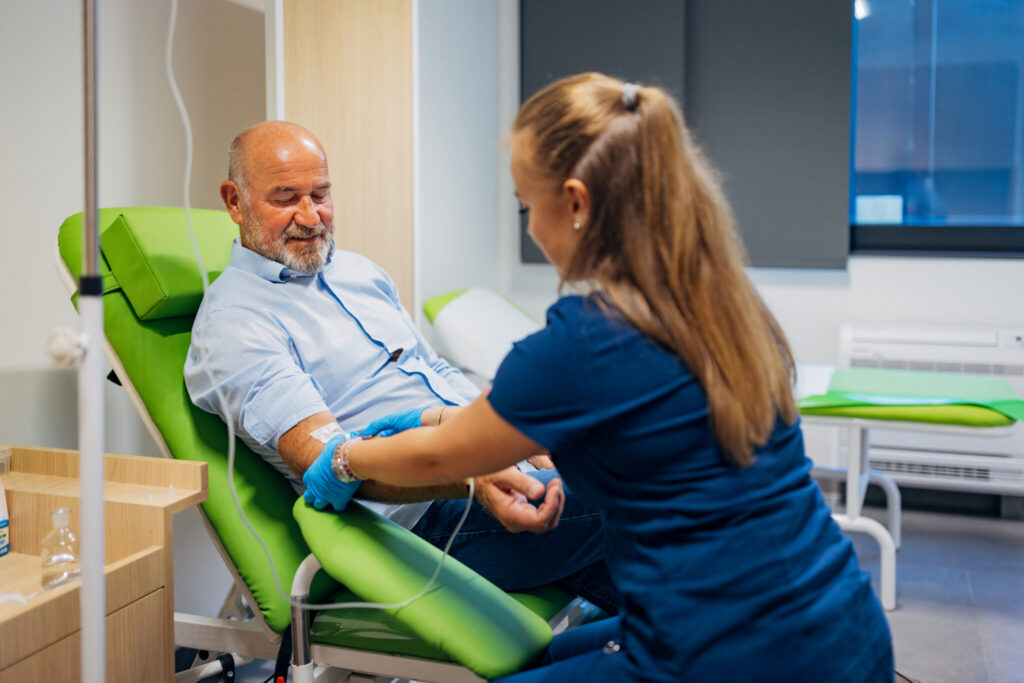
Proactive monitoring for endometrial cancer recurrence symptoms is essential, and it is one of the most important things you can do after treatment ends.
Here’s why that vigilance matters. Endometrial cancer can sometimes return after your initial treatment is completed, which is why monitoring for recurrence is an important part of your care after hysterectomy. Endometrial cancer can sometimes spread to other parts of the body before or during surgery. Your care team can discuss the specific characteristics of your cancer and what monitoring approach may be right for you. This is a reason to stay informed and engaged with your care team.
Timing is also critical. Most endometrial cancer recurrences are detected within the first 2 to 3 years after initial treatment. That window defines when monitoring is most intensive and when you’re most likely to catch any changes early, when treatment options are typically broader and outcomes more favorable.
The mindset shift worth making is from passive waiting to proactive monitoring. You’re actively partnering with your care team to catch any signals early.
Local recurrence. Why vaginal bleeding still matters
Recognizing the signs of cancer returning after hysterectomy starts with understanding where recurrence is most likely to occur, and the vaginal cuff is often considered an important area to monitor for local endometrial cancer recurrence, and your care team may pay particular attention to it during follow-up visits.
The vaginal cuff is the sutured tissue at the top of the vaginal canal created during a hysterectomy. Vaginal bleeding or unusual discharge after hysterectomy is the most important red flag. It should never be dismissed as normal.
Even a small amount of spotting warrants a prompt call to your care team. Vaginal bleeding or discharge is the most common symptom associated with local recurrence in post-hysterectomy patients. Because many people assume bleeding “can’t happen” without a uterus, this symptom is sometimes delayed in being reported, which can cost critical time.
Pelvic pressure or abdominal discomfort may be a sign of endometrial cancer recurrence and should be reported to your physician, especially during routine follow-up pelvic examinations. On the other hand, some patients notice changes that seem unrelated at first: urinary urgency, difficulty emptying the bladder, or new-onset constipation can occur when a recurrent tumor begins pressing against the bladder or bowel.
Evidence-based guidance powered by NCCN Guidelines®
Personalized treatment plans shaped by the latest oncology standards—tailored to your diagnosis.
Get started
View your personalized treatment plan in the Outcomes4Me app
Use your diagnosis to unlock personalized NCCN Guidelines®-aligned recommendations.
Continue in app
As you work through the symptom picture locally, it’s also worth knowing that recurrence doesn’t always stay confined to one area. The lymph nodes in the pelvis and surrounding regions can tell an important part of the story too.
Regional signs. Identifying lymph node involvement
Lymph node changes are among the most overlooked, and most informative, signals of endometrial cancer recurrence after hysterectomy. Endometrial cancer can recur in the pelvic and para-aortic lymph nodes, and these are common sites where recurrence is monitored after initial treatment. These nodes act as filters along the lymphatic system, and when cancerous cells take hold there, the body often sends physical signals that are easy to dismiss as unrelated discomfort.
Unexplained leg swelling is a regional warning sign. Lymphedema, swelling in one or both legs, often develops when cancerous cells block lymph nodes in the pelvis, disrupting normal fluid drainage. It typically appears as puffiness around the ankle or calf that doesn’t resolve with rest or elevation. You might also notice that one leg feels noticeably heavier than the other, almost like a persistent fatigue in the limb itself.
That sensation of “heaviness” in the legs deserves particular attention. While it’s tempting to attribute it to inactivity or post-surgical recovery, persistent heaviness, especially when accompanied by tightness or visible swelling, warrants a conversation with your gynecologic oncologist. Don’t wait for it to worsen before raising it at your next visit.
Beyond swelling, it’s worth checking the groin area periodically for hard, fixed lumps. During monitoring for endometrial cancer recurrence, physicians examine patients for enlarged lymph nodes, particularly in the groin area. These are different from the kind of general soreness that follows surgery. And while vaginal bleeding after hysterectomy for cancer typically signals local recurrence at the vaginal cuff, as covered in the previous section, lymph node involvement tends to present without bleeding at all, which is precisely why these subtler regional signs can go unnoticed for longer.
As endometrial cancer recurrence patterns extend further from the pelvis, the symptoms shift accordingly, and that’s where distant spread becomes the next critical area to understand.
Cancer care guidance for every step of your journey
Get treatment options, clinical trials, and support tailored to your diagnosis--all in one place.
Get started
See treatment options, manage symptoms, and stay informed—all in the app
View treatment options and trials personalized to your diagnosis—plus track progress in real time.
Continue in appDistant recurrence. When cancer travels beyond the pelvis
Uterine cancer recurrence doesn’t always stay close to its origin, and recognizing symptoms in distant organs can be just as critical as monitoring pelvic changes.
When endometrial cancer spreads beyond the pelvis, it often reaches the lymph nodes, liver, and lungs, though bone metastases can also occur. These distant sites produce symptoms that can easily be mistaken for unrelated conditions, which is exactly why knowing what to watch for matters.
Lungs: A persistent cough or unexplained shortness of breath that doesn’t resolve with standard care is worth flagging to your care team. It’s easy to dismiss, but when it lingers without a clear cause, it deserves investigation.
Liver: Yellowing of the skin or eyes (jaundice) paired with pain or discomfort in the upper right abdomen may warrant discussion with your care team, as these symptoms can sometimes be associated with liver involvement. It’s important to report any new or unusual symptoms to your doctor.
Bone: Bone pain that worsens at night or during rest may be a symptom of bone metastasis in cancer recurrence, though this is not specific to endometrial cancer.
Beyond organ-specific signs, systemic red flags like unintentional weight loss and profound, unexplained fatigue are worth taking seriously. These aren’t just side effects of stress or aging, they can reflect the body’s response to widespread disease activity.
The challenge is that these symptoms are not exclusive to cancer recurrence. But paired with your history, they warrant a conversation with your care team rather than a wait-and-see approach. Tracking exactly when symptoms appear, how often, and how they change over time turns vague discomfort into actionable clinical data, which is precisely where the next piece of this picture comes in.
The role of personalized data in detecting relapse
Tracking your health proactively is one of the most powerful things you can do when monitoring for signs that uterine cancer can come back after hysterectomy, particularly within the first two to three years post-surgery. What separates patients who catch recurrence early from those who don’t is often how consistently and precisely they document what their body is telling them.
Digital symptom logging beats relying on memory, especially during high-stakes oncology visits. Appointments are short. Stress is high. Details fade. A timestamped digital log of symptoms, when they started, how they’ve changed, what makes them better or worse, gives your care team a clearer picture than an in-the-moment recap ever could. Some patients and care teams find that keeping track of symptoms using a checklist may help organize information to discuss at appointments, though you should ask your doctor whether this approach would be useful for your situation.
Pulling all of this together, your symptoms, your records, your options, is what positions you to act rather than react when something changes.
Summary: what you need to know
Knowing which symptoms to watch for, and when to act, can make a meaningful difference in how uterine cancer recurrence is caught and managed.
The first two to three years after a hysterectomy are the highest-risk window, and staying alert during this period is one of the most proactive steps you can take. Here’s what the evidence points to:
- Vaginal bleeding is the most important local symptom to report to your care team without delay. Any bleeding after a hysterectomy is abnormal and warrants immediate follow-up.
- Leg swelling and groin lumps can signal regional lymph node involvement and shouldn’t be dismissed as minor discomforts.
- Unexplained weight loss, bone pain, or persistent fatigue may indicate that cancer has spread to distant sites, making prompt evaluation critical.
- “Reporting symptoms to your doctor right away is important, because most endometrial cancer recurrences are found because of symptoms rather than routine screening tests.” Catching recurrence sooner expands treatment options and access to clinical trials.
As covered earlier in this article, proactive data tracking supports your care team in spotting patterns that routine appointments alone might miss. Recurrence risk is closely tied to grade and stage, meaning your personalized care plan should reflect your specific profile, not a broad standard.
While a recurrence is undeniably one of the hardest challenges to face, modern medicine offers paths forward for endometrial cancer recurrence, including targeted therapies and immunotherapy. Hope is grounded in real, evolving science. You don’t have to navigate any of it alone.
Personalized support for real care decisions
Understand your diagnosis, explore clinical trials, and track symptoms--all in one place.
Get started
Compare treatments, prepare for appointments, and track side effects—all in the app
Built for your diagnosis, Outcomes4Me gives you the tools to make confident, informed decisions—right when you need them.
Continue in app