
Understanding the framework of endometrial cancer surveillance
A hysterectomy is a surgical procedure in which the uterus is removed, but vigilance remains crucial. Recurrent endometrial cancer refers to the return of cancer cells after a period when no disease could be detected. Your care team can discuss what recurrence means in your specific situation and how it may be monitored. Microscopic cells can survive surgery, travel through lymphatic channels, or seed tissue near the surgical site. Although the uterus is removed during hysterectomy, endometrial cancer may recur in other parts of the body.
Recurrence may be described as local, meaning near the original site, or distant, meaning in other parts of the body. Your care team can explain how these categories apply to your situation. If endometrial cancer recurs locally after hysterectomy, it may develop at the vaginal vault or elsewhere in the pelvis. Distant recurrence may involve the lungs, liver, abdomen, or lymph nodes. Because blood tests are not routinely used to detect early recurrence on their own, symptom reporting remains a meaningful tool you have. This is the core of a surveillance framework.
Primary symptoms. When to call your care team immediately
Vaginal bleeding or discharge. After a hysterectomy, menstrual bleeding typically stops because the uterus, where menstrual tissue forms, has been removed. Any new spotting, pink or brown discharge, or bleeding after intercourse after hysterectomy may warrant attention, and it’s worth discussing with your care team to determine if it needs evaluation. A same-week call is appropriate rather than a wait-and-see approach.
Persistent pelvic or abdominal pain. Pain that doesn’t respond to over-the-counter measures, wakes you at night, or steadily intensifies over days is different from occasional twinges. Note whether it’s localized or diffuse.
Changes in bladder or bowel habits. New constipation, a sense of incomplete emptying, urinary frequency, or difficulty starting a stream may sometimes be associated with a mass pressing on adjacent structures. If you experience these symptoms, discuss them with your care team to determine the cause. Changes in bladder or bowel habits may be worth discussing with your care team after hysterectomy, as they could potentially warrant evaluation for recurrence.
Evidence-based guidance powered by NCCN Guidelines®
Personalized treatment plans shaped by the latest oncology standards—tailored to your diagnosis.
Get started
View your personalized treatment plan in the Outcomes4Me app
Use your diagnosis to unlock personalized NCCN Guidelines®-aligned recommendations.
Continue in app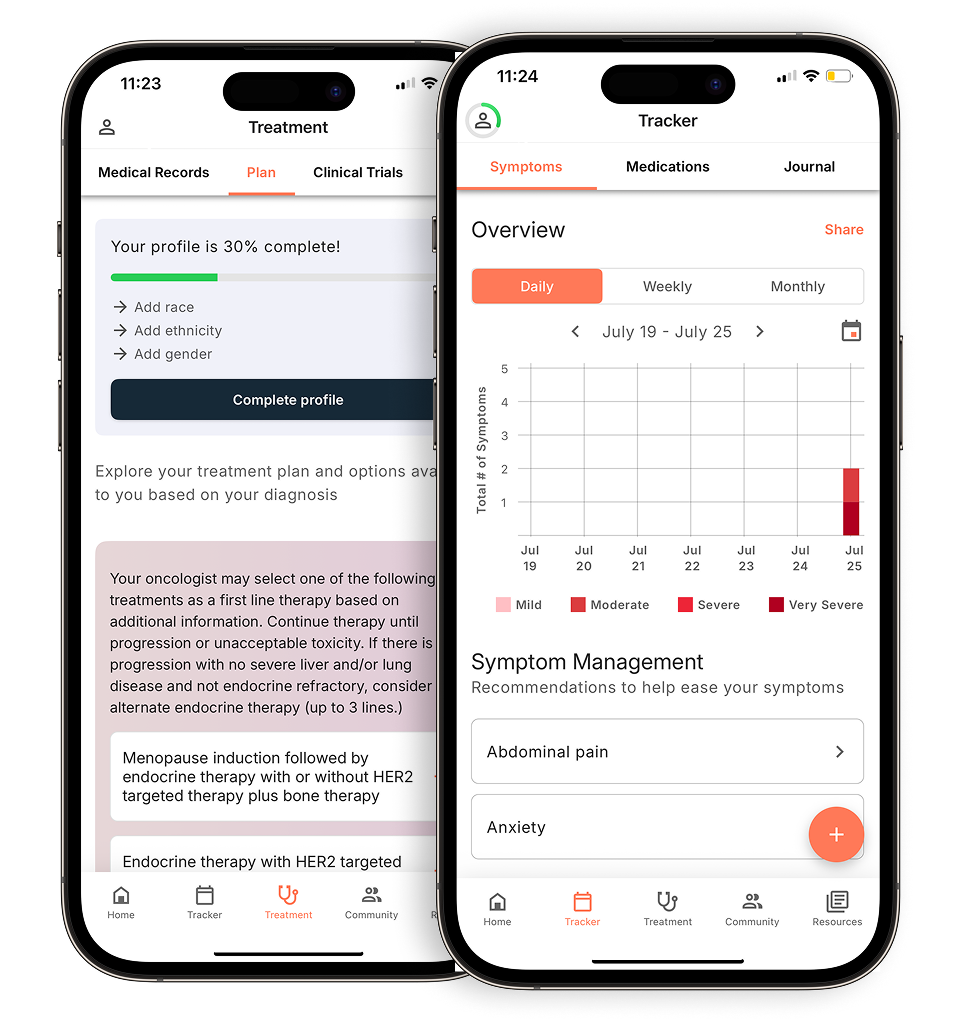
Secondary and systemic signs of recurrence
Unexplained weight loss and reduced appetite. Unintended weight loss or feeling full quickly after eating small amounts may sometimes occur with certain illnesses. If you notice these changes, it’s worth mentioning to your care team.
Chronic fatigue. Post-surgical tiredness improves week over week. Some patients report that cancer-related exhaustion feels different from typical tiredness and may not improve with rest. If you notice a new level of fatigue that makes previously manageable tasks feel difficult, it’s worth reporting to your care team.
Respiratory symptoms. Endometrial cancer recurrence can spread to distant sites, and the lungs may be among the areas your care team monitors for potential recurrence. A dry cough that lingers, new shortness of breath climbing stairs, or chest discomfort deserves evaluation even if you feel otherwise well, particularly if you have no history of asthma or reflux.
Recurrence patterns by the numbers: Risks and timelines
The risk of recurrence isn’t evenly distributed over time. Many recurrences occur within the first few years after treatment, which is why close monitoring during this period may be especially important to discuss with your care team. If you reach the far end of that window without evidence of disease, your statistical position improves considerably.
It’s important to remain alert to potential warning signs even as time passes after treatment. Continue reporting new, persistent symptoms regardless of how much time has passed. Cancer survivors may benefit from ongoing support and awareness throughout the year rather than during limited awareness periods.
Stage and grade at initial diagnosis shape the probability. The stage of your cancer at diagnosis, such as whether it was confined to the uterus or had spread to lymph nodes or beyond the pelvis, may influence your individual risk of recurrence. Your care team can help explain what this means for your specific situation. Prognosis after recurrence depends heavily on timing and location. Isolated, locally recurrent disease may be more amenable to treatment approaches aimed at cure when detected early.
Risk stratification. Who faces the highest probability of return?
Advanced initial stage. Stage 3 and 4 disease means cancer had already moved beyond the uterus, which may increase the risk that some cancer cells were not removed during surgery. These patients generally warrant closer intervals and a lower threshold for imaging.
Cancer care guidance for every step of your journey
Get treatment options, clinical trials, and support tailored to your diagnosis--all in one place.
Get started
See treatment options, manage symptoms, and stay informed—all in the app
View treatment options and trials personalized to your diagnosis—plus track progress in real time.
Continue in appHigh-grade histology. Serous and clear cell carcinomas may behave differently than low-grade endometrioid tumors and may have different patterns of recurrence, including at distant sites. Your care team can discuss how your specific tumor type may affect your follow-up plan.
Treatment history. Prior pelvic radiation may limit options for re-irradiating the same area, which your care team will take into account when planning treatment. Previous chemotherapy influences which agents remain available. Your care team factors both into how closely they watch and what they’d offer if disease returns.
The symptom checklist. A practical guide for monthly self-monitoring
Structured awareness can be beneficial. Once a month, run a deliberate check. Any bleeding or discharge, pelvic or back pain, bowel or bladder changes, appetite or weight shifts, cough or breathlessness, unusual swelling in the legs or abdomen. Five minutes of intentional review replaces hours of scattered worry.
Apply a two-week rule. Any new symptom that persists beyond 14 days gets reported, even if it seems minor. Transient aches resolve; recurrence signals generally don’t.
Keep a symptom journal with dates, severity, and what makes the symptom better or worse. Patterns documented over weeks give your care team far more to work with than a recalled impression at an appointment.
Red flags that justify an urgent call rather than waiting for a scheduled visit: any vaginal bleeding, severe or escalating pain, and new shortness of breath.
Managing a potential recurrence warning sign
Make contact. When you reach the oncology triage nurse, lead with specifics. What the symptom is, the date it started, how often it occurs, and whether it’s worsening. Mention your original stage, grade, and treatments.
Expect a diagnostic sequence. Your doctor may perform a pelvic and vaginal vault examination as part of evaluating possible recurrence. Depending on findings, blood work such as CA-125 testing may help your care team monitor for potential recurrence, followed by CT or PET imaging to look for disease in the pelvis, abdomen, or chest.
Understand the role of biopsy. Imaging can suggest recurrence, but tissue confirmation before starting new treatment for recurrence is often recommended. A biopsy can provide tissue for molecular testing, which may help your care team identify whether targeted therapy or immunotherapy could be options for you.
When symptoms mimic other post-surgical issues
Pelvic floor dysfunction. Pelvic floor dysfunction pain may shift with position or worsen with prolonged standing. Some patients find that physical therapy approaches focused on the pelvic floor may offer relief, though results vary. Ask your care team whether this might be helpful for your situation. Some patients report that pain from internal growth may feel constant and not improve with changes in position, though pain patterns can vary.
Gastrointestinal changes. Some patients experience intermittent cramping and bloating after surgery, which may be related to scar tissue formation and often improves over time. If you have persistent symptoms, discuss them with your care team to determine the cause. Progressive constipation with vomiting, distension, or inability to pass gas may suggest bowel obstruction. If you experience these symptoms together, contact your care team promptly.
Recurrent urinary tract infections. Infections happen after pelvic surgery, but repeated UTIs, particularly those that are culture-negative or include blood in the urine, warrant discussion with your care team rather than routine treatment alone. Request a comprehensive evaluation instead of another empirical antibiotic course.
Key takeaways: What you need to know
- Any vaginal bleeding after a hysterectomy, along with persistent pelvic or back pain, is a high-yield signal for catching recurrence early, and it’s worth reporting rather than monitoring privately.
- Risk is concentrated in the early post-treatment years, but late returns are possible, so awareness is lifelong.
- A structured monthly checklist and symptom journal help you separate ordinary changes from clinical warning signs.
- Reporting symptoms as soon as they appear may help your care team consider a wider range of treatment options, which could include localized radiation, surgery, systemic therapy, and targeted or immunotherapy approaches for endometrial cancer recurrence.
Disclaimer: The information provided in this article is for informational purposes only and is not intended to be a substitute for professional medical advice, diagnosis, or treatment. Outcomes4Me is not acting as your caregiver, and any suggestions or guidance offered should not replace the advice of your healthcare provider or qualified medical professional. Always seek the guidance of your physician or other qualified health provider with any questions you may have regarding a medical condition.
Personalized support for real care decisions
Understand your diagnosis, explore clinical trials, and track symptoms--all in one place.
Get started
Compare treatments, prepare for appointments, and track side effects—all in the app
Built for your diagnosis, Outcomes4Me gives you the tools to make confident, informed decisions—right when you need them.
Continue in app