
How doctors monitor for recurrence
After initial treatment for uterine (endometrial) cancer, patients typically enter a period called “surveillance,” where the care team monitors for signs that the cancer may return.
Dr. Fuh explains that follow-up care often includes in-person visits every three months at first, along with physical exams. “We do monitor every 3 months in terms of an in-person visit,” she says.
Many patients wonder when imaging tests like CT scans or MRIs are needed during surveillance. Dr. Fuh emphasizes that there is no one-size-fits-all schedule. “A lot of it depends on where was it before, what the molecular subtypes are that might make this feel more aggressive or not,” she shares.
Evidence-based guidance powered by NCCN Guidelines®
Personalized treatment plans shaped by the latest oncology standards—tailored to your diagnosis.
Get started
View your personalized treatment plan in the Outcomes4Me app
Use your diagnosis to unlock personalized NCCN Guidelines®-aligned recommendations.
Continue in app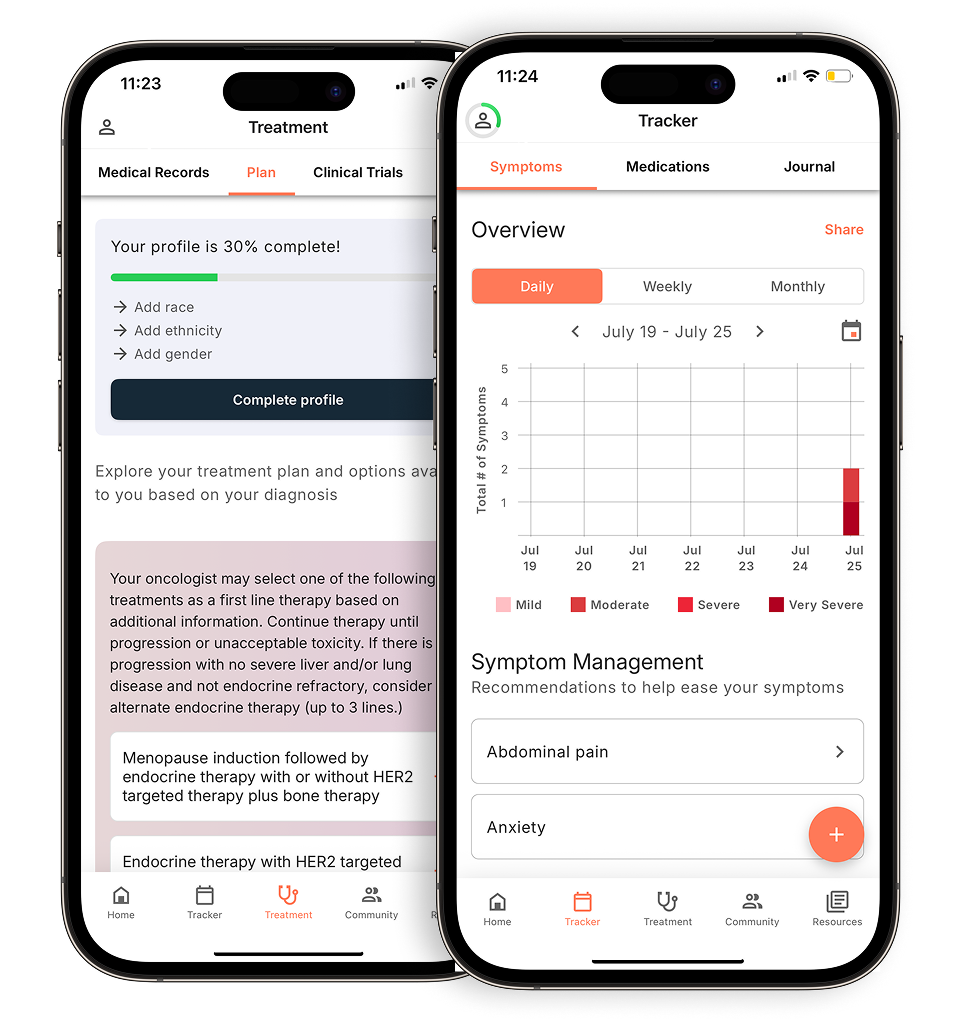
For some patients, blood-based biomarkers may also help guide monitoring. For example, patients with uterine serous carcinoma may have a tumor marker called CA-125 checked if it was elevated before treatment. If the marker begins rising, it may prompt doctors to order imaging sooner.
Dr. Fuh also mentions that circulating tumor DNA (ctDNA), a newer blood test sometimes called a “liquid biopsy,” is being studied as another possible surveillance tool. Researchers are still learning how best to use it in uterine (endometrial) cancer care.
Recurrence care is becoming more personalized
One encouraging development is how personalized uterine (endometrial) cancer care is becoming.
In the past, treatment plans were often based mostly on cancer stage and grade. Today, doctors also look closely at biomarkers, tumor genetics, histology, prior treatments, and how long the cancer stayed away before returning.
This personalized approach can help doctors choose therapies that are more likely to work for each individual patient.
What happens if uterine (endometrial) cancer recurs?
If the cancer returns, doctors will evaluate several factors before deciding on the next treatment plan, including:
- Where the cancer came back
- How long it has been since initial treatment
- Whether prior treatments worked well
- Biomarker and molecular testing results
- Overall health and treatment goals
“There are different approaches to kind of think about and even sequence,” Dr. Fuh says, referring to how treatments may be used one after another over time.
Biomarker testing can help guide treatment
One of the biggest advances in recurrent uterine (endometrial) cancer treatment is the growing use of biomarker-driven therapies.
Dr. Fuh notes that doctors may test tumors for HER2 expression, a biomarker that can help identify patients who may benefit from targeted therapies.
She points to research showing that some patients with recurrent endometrial cancer and high HER2 expression may respond to trastuzumab deruxtecan, an antibody-drug conjugate (ADC). ADCs are a newer type of treatment designed to deliver chemotherapy directly to cancer cells while limiting damage to healthy cells.
“That’s a whole new field of therapies right now,” Dr. Fuh states.
Researchers are also studying additional ADCs and targeted therapies in clinical trials, including treatments that may not rely on a specific biomarker.
What treatments may be used after recurrence?
Treatment options for recurrent uterine (endometrial) cancer continue to expand. Depending on the situation, patients may receive:
- Immunotherapy
- Chemotherapy
- Targeted therapy
- Combination treatments
- Clinical trial therapies
For some patients, doctors may consider using chemotherapy and immunotherapy again, especially if the cancer has stayed away for a long period after initial treatment.
Dr. Fuh shares that patients who didn’t receive immunotherapy earlier in treatment may be candidates for combinations such as lenvatinib plus pembrolizumab, which has become an important option for advanced or recurrent disease.
Chemotherapy drugs like paclitaxel may also still play an important role, particularly for patients who have already received immunotherapy in the past.
Will another biopsy be needed?
Doctors may discuss repeating a biopsy if the cancer comes back. According to Dr. Fuh, whether another biopsy is recommended depends on several factors, including where the recurrence occurs and whether the procedure can be done safely.
“If it’s in a tricky location where a biopsy might not be safe to do, then we tend not to,” she explains.
In some situations, doctors may want another tumor sample to see whether the cancer’s molecular profile has changed over time. However, Dr. Fuh notes that repeat biopsies are not yet considered standard for every patient with recurrence.
“We definitely think about it and talk about it in terms of whether or not it makes sense,” she says.
The bottom line
Today’s treatment landscape offers more options than ever before for recurrence. Biomarker testing, targeted therapies, immunotherapy, and clinical trials are helping doctors tailor care to each patient’s cancer.
Decisions about recurrence treatment are increasingly personalized, giving patients and their care teams more tools to make informed choices and create a plan that fits their individual situation.
You can view the full webinar discussion with Dr. Fuh to learn more about uterine (endometrial) cancer here.
Personalized support for real care decisions
Understand your diagnosis, explore clinical trials, and track symptoms--all in one place.
Get started
Compare treatments, prepare for appointments, and track side effects—all in the app
Built for your diagnosis, Outcomes4Me gives you the tools to make confident, informed decisions—right when you need them.
Continue in app