
Not all uterine (endometrial) cancer recurrences behave the same way and that difference can shape everything about your treatment path. The concept of recurrence tempo describes the time elapsed between completing primary treatment and the moment relapse appears. It’s more than a timeline detail. It’s a biological signal.
Approximately 60% of uterine (endometrial) cancer recurrences are symptomatic, meaning patients notice something that prompts evaluation. The remaining 40%, however, are asymptomatic, detected only through routine surveillance, with no warning signs at all. That distinction matters enormously for endometrial cancer recurrence prognosis, because indolent, low-volume disease caught early is often more localized and, critically, more treatable.
Low-volume recurrence, a small nodule at the vaginal vault, for example, typically behaves very differently than widespread distant metastasis. The slower the tempo, the more likely the disease reflects less aggressive tumor biology. Understanding how tumor type influences tumor behavior can provide useful context here.
The stakes of surveillance, then, go beyond routine follow-up. For patients with indolent disease, a scheduled appointment could be the difference between a localized, manageable recurrence and a missed window for effective treatment. How much your initial diagnosis affects that risk is where we’ll turn next.
Recurrence risk and rates: does your initial stage matter?
Where you start on the FIGO staging scale has a real bearing on your recurrence risk but it doesn’t tell the whole story. Even patients initially diagnosed at Stage I face a meaningful chance of relapse, which is why ongoing surveillance remains important regardless of how early your cancer was caught.
Here’s a general breakdown of recurrence likelihood by stage:
- Stage I: Approximately 10–15% recurrence risk, most often localized to the vaginal vault
- Stage II: Risk rises to roughly 20–30%, with potential spread to pelvic structures
- Stage III: Recurrence affects an estimated 40–60% of patients, frequently involving regional lymph nodes
- Stage IV: Risk exceeds 70%, with distant metastases common at relapse
Understanding how cancer type factors in can also influence where and how a recurrence tends to appear.
Where recurrence shows up matters just as much as the fact that it occurs. The vaginal vault is the most common isolated recurrence site, particularly in early-stage disease, while distant metastases (in the lungs, liver, or bone) are more typical of higher-stage or aggressive histologies.
Evidence-based guidance powered by NCCN Guidelines®
Personalized treatment plans shaped by the latest oncology standards—tailored to your diagnosis.
Get started
View your personalized treatment plan in the Outcomes4Me app
Use your diagnosis to unlock personalized NCCN Guidelines®-aligned recommendations.
Continue in app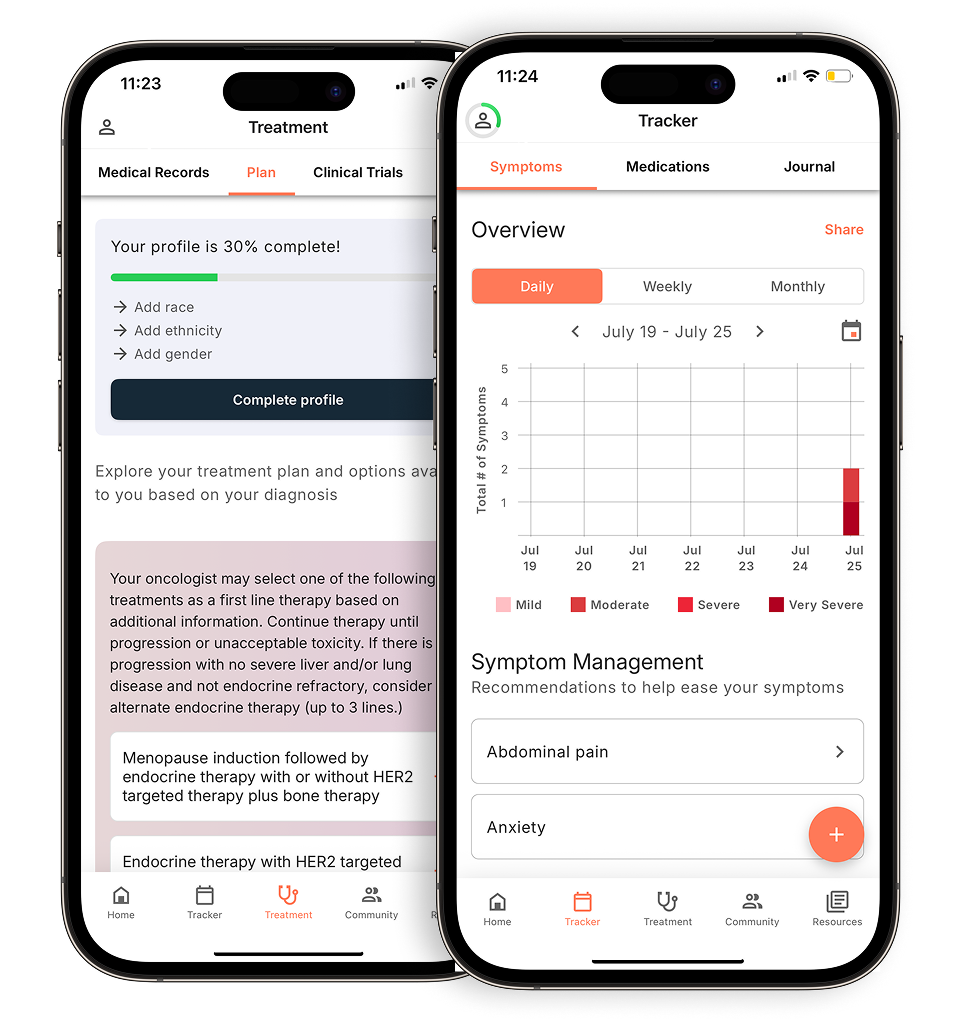
A critical distinction worth flagging: an indolent low-volume recurrence isolated to sentinel lymph nodes is a very different clinical situation from bulky, multi-site nodal disease. According to Gynecologic Oncology (Elsevier), low-volume, indolent recurrences are frequently localized to the vaginal vault or pelvic lymph nodes, making them candidates for targeted local therapies rather than aggressive systemic treatment.
That distinction between limited, slow-moving disease and high-volume spread shapes your options considerably, which is exactly what we’ll explore next.
Indolent low-volume recurrence: a case for targeted intervention
The distinction between low-volume and bulky progression uterine (endometrial) cancer carries consequences for survival. According to the American Journal of Obstetrics & Gynecology, patients with asymptomatic, low-volume recurrence have an approximate 5-year survival rate of 73%, compared to just 33% for those with symptomatic bulky progression uterine (endometrial) cancer. That gap underscores why catching recurrence early and treating it matters so much.
Treatment options for low-volume disease
When recurrence is localized and low-volume, the treatment approach can be far more targeted. Depending on the site and extent of disease, options may include:
- Salvage radiation therapy which is particularly effective for isolated vaginal cuff recurrences
- Localized surgery which is resection of a single site when the disease is anatomically accessible
- Hormonal therapy reliance on progestins or aromatase inhibitors for low-grade, hormone receptor-positive recurrences
Patients with isolated pelvic recurrence who haven’t previously received radiation are often strong candidates for salvage radiotherapy with curative intent.
Why timing matters
Low-volume recurrence responds better to localized intervention, which preserves more treatment options down the road. In practice, patients who receive definitive local therapy for confined recurrence often maintain a longer period of disease control before systemic therapy becomes necessary.
Clinical trial eligibility and molecular subtypes
Patients with indolent recurrence also have a wider window for clinical trial enrollment — their overall performance status tends to be higher, and they’re more likely to meet eligibility criteria before disease burden narrows their options.
Molecular subtype plays a meaningful role here, too. POLE-mutated tumors, for instance, are associated with high tumor mutational burden and favorable outcomes even at recurrence. Understanding your tumor’s molecular profile can directly shape which targeted therapies or trials you’re eligible for.
Cancer care guidance for every step of your journey
Get treatment options, clinical trials, and support tailored to your diagnosis--all in one place.
Get started
See treatment options, manage symptoms, and stay informed—all in the app
View treatment options and trials personalized to your diagnosis—plus track progress in real time.
Continue in appAs the picture shifts from contained, indolent disease to something more aggressive and widespread, the treatment calculus changes significantly.
Symptomatic bulky progression: navigating aggressive relapse
Unlike the localized, slow-moving relapses discussed in the previous section, bulky progression uterine (endometrial) cancer represents a different clinical reality, one that often demands immediate, systemic intervention rather than targeted local therapy. When recurrence presents with widespread disease, symptoms rarely wait. Pain, pelvic pressure, bowel or urinary obstruction, and significant bleeding can escalate quickly, making the urgency of treatment a central concern.
Bulky recurrence also tends to behave differently at the molecular level. In contrast to low-volume relapse, bulky disease frequently lacks the favorable tumor characteristics, such as microsatellite instability, that make localized disease more responsive to targeted approaches. This distinction matters because it shapes the treatment decision from day one. According to research on systemic treatment options, bulky progression uterine (endometrial) cancer often requires systemic chemotherapy, whereas indolent low-volume disease may be managed with salvage radiation or localized surgery.
When symptoms are present and disease burden is high, the standard approach shifts toward combination regimens, typically platinum-based chemotherapy paired with immunotherapy, to address disease that’s spread beyond the reach of any single local modality.
Understanding the recurrence likelihood by stage helps contextualize why bulky progression endometrial cancer carries such a different prognosis, higher-stage cancers recur more often and more aggressively. As treatment protocols continue to evolve, particularly with the rise of immunotherapy combinations, managing progression after these newer regimens introduces its own set of challenges.
Managing progression after immunotherapy
Immunotherapy, particularly checkpoint inhibitors like pembrolizumab, has become a standard component of first-line treatment for advanced and recurrent uterine (endometrial) cancer. For many patients, it delivers meaningful responses. But what happens when the disease progresses despite it?
Managing progression after immunotherapy is one of the most critical gaps in current care, and it’s a challenge that looks very different depending on whether you’re dealing with indolent low-volume disease or bulky, aggressive relapse.
Step 1: Re-biopsy. When disease progresses after immunotherapy, the biology of that recurrence may have shifted. Tumors can develop acquired resistance, essentially evolving to evade the immune response that once controlled them. A biopsy of the new or growing lesion isn’t just useful; it’s often essential.
Step 2: Genetic re-profiling. Fresh molecular testing on recurrent tissue can reveal new actionable targets that weren’t present or weren’t prioritized at initial diagnosis. According to NCI guidelines, tumor molecular profiling directly informs treatment selection at recurrence, making re-testing a non-negotiable step in this setting.
Step 3: Trial matching. This is where the landscape is evolving rapidly. Antibody-drug conjugates (ADCs) represent one of the most promising emerging classes, precision-engineered to deliver targeted therapy directly to tumor cells.
When standard paths close, the right data opens new ones — and the next section shows you how to find them.
Empowerment through data: how to navigate your recurrence
Slow, localized recurrence opens the door to targeted approaches. Bulky, aggressive progression demands faster, more systemic action. Knowing which category you’re in shapes everything from the therapies your team considers to the clinical trials you may be eligible for right now.
That’s why integrating your complete picture matters so much. Your diagnostic test results including MMR/MSI status, HER2 expression, and any molecular profiling, provide the context that transforms a general treatment recommendation into a personalized one. When that information is organized and accessible, it becomes a powerful tool for matching you to options your oncologist may not have surfaced, including trials actively enrolling patients with your specific biomarker profile.
Evidence-based. Oncologist-approved. That’s the standard your decisions deserve and it’s exactly what Outcomes4Me is built around. Personalized platforms can cross-reference your profile against real-world treatment outcomes and current trial databases simultaneously, closing the gap between what exists and what you’re actually offered.
Before your next oncology appointment, come prepared with these three questions:
✅ “Based on my recurrence pattern (localized or bulky progression endometrial cancer), what category does my oncologist consider this, and why does it matter for my options?”
✅ “Have my molecular markers been reviewed against current trials, not just standard regimens?”
✅ “Is this plan specific to my recurrence, or is it the standard path for my stage?”
Don’t follow a default path when a more specific one may exist for you. Download the Outcomes4Me app to bring your records together, understand your treatment options, and step into every appointment with clarity and confidence.
Personalized support for real care decisions
Understand your diagnosis, explore clinical trials, and track symptoms--all in one place.
Get started
Compare treatments, prepare for appointments, and track side effects—all in the app
Built for your diagnosis, Outcomes4Me gives you the tools to make confident, informed decisions—right when you need them.
Continue in app