
The evolution of HER2+ brain metastasis treatment
HER2+ breast cancer has one of the highest rates of central nervous system spread among all breast cancer subtypes, and for decades, that reality carried a grim prognosis.
Approximately 30–50% of patients with metastatic HER2+ breast cancer develop brain metastases over the course of their condition. The brain was long considered a sanctuary site, a place where systemic therapies simply couldn’t reach because of the blood-brain barrier, leaving cancer cells free to grow unchecked while treatments circulating in the bloodstream fell short.
That framing shaped everything. For years, the standard response leaned heavily on local treatments like whole-brain radiation, and early agents such as lapatinib for brain metastases offered only modest, short-lived responses. Median survival after a brain metastasis diagnosis was measured in months, not years. Goals of care centered on symptom management rather than durable control.
But recent clinical data tells a different story. Newer HER2-targeted therapies, particularly antibody-drug conjugates and small-molecule tyrosine kinase inhibitors with improved CNS penetration, are shifting treatment intent toward systemic, durable control. The goal is keeping the disease in check across the entire body, brain included. Understanding why that shift is happening starts with the biology standing in the way, and the barrier your care team has been working to overcome.
Understanding the blood-brain barrier challenge
The blood-brain barrier is the core reason HER2 brain metastases have historically been so difficult to treat, and why drug design had to evolve.
The BBB is a tightly regulated layer of endothelial cells lining the brain’s blood vessels. It blocks most large molecules, including first-generation trastuzumab, from crossing into brain tissue. That selectivity is protective under normal circumstances, but it became a serious therapeutic obstacle.
However, the picture gets more nuanced with larger tumors. Larger metastases can disrupt the BBB, making it “leaky” enough for some drug penetration. Microscopic metastases may face challenges in reaching the brain, since some cells could be protected by the blood-brain barrier. This is one reason why treatment at earlier stages of spread is an area of active research and discussion among care teams. That gap shaped the limitations of older therapies, which the next section examines in depth.
Why older treatments fell short
Older local therapies like surgery and whole-brain radiation could shrink HER2+ brain metastases, but they couldn’t stop them from coming back, and they came with a serious cost.
Whole-brain radiation therapy can cause long-term side effects including memory problems and confusion, with delayed effects potentially starting months or even years after treatment. Surgery offered localized control, but neither approach addressed the underlying systemic disease driving new lesions.
Earlier HER2-targeted drugs had limitations in treating brain metastases, and researchers recognized the need for more effective treatment options for these patients. Tucatinib appears to cross into the brain more effectively than some existing HER2-targeted drugs. That gap set the stage for a fundamental rethinking of how drugs needed to be designed, not just to target HER2, but to reach it inside the brain.
The mechanism of action: how newer drugs cross the border
Unlike the large monoclonal antibodies that dominated earlier HER2+ treatment, TKIs are small enough to diffuse passively across the barrier’s tightly packed cells. Once inside, they work intracellularly, binding directly to the HER2 kinase domain to block the signaling cascade that drives tumor growth.
Cerebrospinal fluid (CSF) drug concentration matters enormously. A drug that reaches adequate levels in the CSF is working where the metastases live. Older, non-selective inhibitors produced off-target effects that often limited the doses needed to reach therapeutic CNS levels. Tucatinib is designed to selectively target HER2, and its structure may allow it to reach the brain more effectively than some earlier drugs. This approach raised questions about whether it could offer a new option for patients with HER2+ brain metastases, though your care team can discuss what the evidence shows for your specific situation.
Evidence-based guidance powered by NCCN Guidelines®
Personalized treatment plans shaped by the latest oncology standards—tailored to your diagnosis.
Get started
View your personalized treatment plan in the Outcomes4Me app
Use your diagnosis to unlock personalized NCCN Guidelines®-aligned recommendations.
Continue in app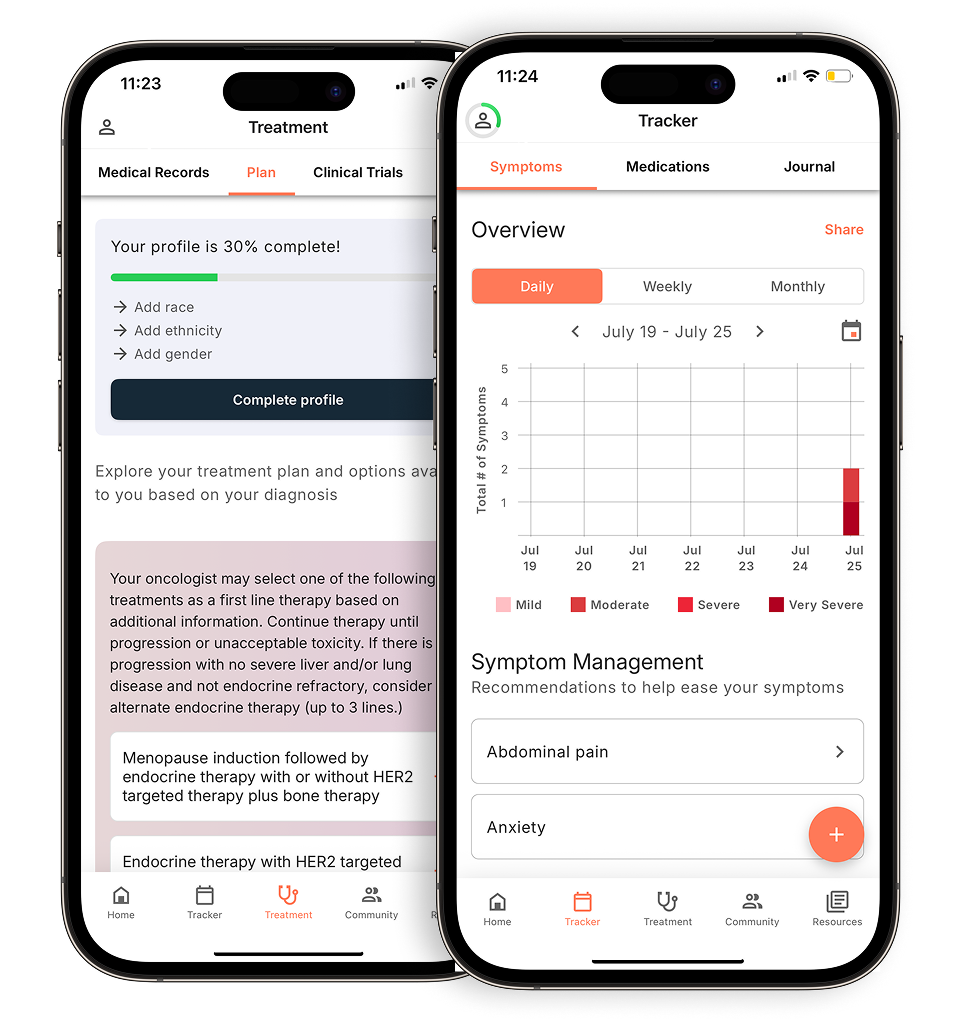
Small molecule inhibitors: the HER2CLIMB breakthrough
Tucatinib is designed to selectively block the HER2 protein while having less effect on EGFR than some earlier drugs in its class. Some patients and clinicians have observed that this selectivity may be associated with a different side effect profile, though individual experiences vary.
The HER2CLIMB trial was a turning point. Crucially, it enrolled patients with active, untreated brain metastases, a population previously excluded from most studies. Adding tucatinib to trastuzumab and capecitabine cut the risk of disease progression or death in the HER2CLIMB trial group by nearly half.
This combination illustrates the core synergy at work. Small-molecule TKIs penetrate the blood-brain barrier, trastuzumab neutralizes HER2 in the systemic circulation, and capecitabine adds cytotoxic pressure. Together, they attack the tumor from multiple angles simultaneously. And because each agent targets a different vulnerability, resistance is harder to develop than it would be against any single drug alone.
Not every patient responds the same way, of course, but this regimen gave clinicians their first genuinely active tool against brain metastases rather than a holding pattern. That shift in standard of care set the stage for an entirely different class of agents to push intracranial response rates even further.
Antibody-drug conjugates (ADCs) in the CNS
Trastuzumab deruxtecan (T-DXd) functions like a Trojan horse, delivering a potent chemotherapy payload directly inside HER2-expressing tumor cells, including those that have spread to the brain.
The structure is precise. An anti-HER2 antibody binds the target and carries multiple chemotherapy molecules, with a higher drug-to-antibody ratio compared to some earlier ADCs, then releases them after internalization. That ratio matters. It overwhelms the efflux pumps and resistance pathways that typically neutralize conventional agents, as outlined in research on HER2-positive resistance mechanisms. DESTINY-Breast03 confirmed that intracranial response rates with T-DXd reached approximately 44% in patients with active brain metastases. That outcome would have been difficult to imagine a decade ago and is reshaping how clinicians think about sequencing systemic therapy.
Clinical outcomes: changing the natural history of the disease
Before newer treatments, patients with HER2-positive breast cancer that had spread to the brain typically saw their disease progress within six to 12 months of standard localized therapies like surgery or radiation. Today, agents like tucatinib and trastuzumab deruxtecan (T-DXd) have pushed intracranial PFS into territory with some trial data showing meaningful responses even in patients with active, untreated lesions.
Systemic control reduces the need for repeated radiation therapy. Newer drugs like trastuzumab deruxtecan can achieve durable disease control in the brain, which may reduce the need for repeated radiation therapy that was previously required when disease progressed.
Researchers are studying brain MRI screening as one approach to detecting brain metastases in breast cancer patients, with clinical trials underway to evaluate how screening may inform treatment decisions. Catching smaller, asymptomatic lesions earlier creates more treatment flexibility and may allow systemic therapy to take the lead before local interventions become necessary. How long that stability holds, and what signals suggest it’s time to reassess, is exactly where the next piece of this picture comes in.
Addressing recurrence and long-term stability
HER2+ brain metastases typically progress within six to 12 months after initial treatment with localized therapies such as surgery, radiosurgery, or radiation therapy. This makes that window the most critical period for monitoring and regimen review.
Stable disease (no growth on imaging) and complete response (no detectable lesions) are distinct milestones. Stable disease is a meaningful win, not a consolation prize. But if new lesions appear or existing ones grow, that’s a clear signal your care team needs to reassess the current treatment regimen, and potentially shift toward a more CNS-penetrant option. What comes next is a closer look at how systemic and local approaches actually compare on outcomes.
Comparative efficacy: systemic vs. local-only approaches
Systemic therapies have fundamentally shifted how clinicians weigh local versus whole-body treatment for HER2+ brain metastases, with modern trial participants outliving historical cohorts by years, not months.
Historically, brain metastases in HER2-positive breast cancer typically progressed within six to 12 months after standard treatment, representing a particularly poor prognosis. Today, data from the HER2CLIMB trial show that patients receiving tucatinib-based regimens experienced significant improvements in tumor control and overall survival, with 72 percent of patients in the tucatinib group alive at one year compared to 41 percent in the control group.
Cancer care guidance for every step of your journey
Get treatment options, clinical trials, and support tailored to your diagnosis--all in one place.
Get started
See treatment options, manage symptoms, and stay informed—all in the app
View treatment options and trials personalized to your diagnosis—plus track progress in real time.
Continue in appFor some asymptomatic metastases, doctors may consider starting with systemic treatment first rather than immediate brain radiation. Ask your care team whether this approach might be an option in your situation.
Surgery still holds its ground in specific situations. It remains the gold standard when:
- Lesions are large and symptomatic, causing significant edema or mass effect
- There’s diagnostic uncertainty and tissue confirmation is needed
- A solitary, surgically accessible lesion allows complete resection with low functional risk
The decision is rarely straightforward, though. How these criteria map onto real patients, and how multidisciplinary teams translate evidence into individual treatment pathways, is where the nuance lives. The next section walks through practical scenarios that bring those choices to life.
Hypothetical scenarios. Treatment pathways in practice
How a care team approaches HER2+ brain metastases depends heavily on lesion burden, symptom profile, and prior therapy, and no two cases unfold the same way.
These example scenarios illustrate how current evidence translates into real treatment decisions.
Scenario A: Single asymptomatic lesion. A patient presents with one small, incidental brain lesion found on routine surveillance imaging. She’s neurologically stable and hasn’t yet received T-DXd. In practice, her care team may defer radiation and initiate T-DXd monotherapy. T-DXd has demonstrated intracranial activity in patients with HER2+ breast cancer and brain metastases, with response rates around 45% and meaningful clinical benefit. This represents a chemo-sparing approach that preserves quality of life.
Scenario B: Progressive CNS disease. A patient with multiple progressive brain metastases after prior trastuzumab-based therapy is a candidate for the tucatinib–trastuzumab–capecitabine triplet. The tucatinib–trastuzumab–capecitabine triplet showed significant benefits in treating patients with HER2-positive breast cancer and progressive brain metastases after prior trastuzumab-based therapy, more than doubling the chance of tumor shrinkage in the brain and improving overall survival.
Scenario C: Localized control with SRS. When a patient has one to three discrete lesions and a good performance status, stereotactic radiosurgery can deliver targeted radiation while continuing systemic therapy, combining local precision with whole-body disease control.
Across all three scenarios, a multidisciplinary tumor board is essential. Neuro-oncologists, radiation oncologists, and medical oncologists each bring a lens that shapes the final personalized care plan. These decisions are rarely straightforward, which is why emerging patterns in CNS management, covered next, matter so much.
Common patterns in successful CNS management
Successful CNS management today prioritizes sparing patients from unnecessary toxicity while staying ahead of evolving disease through smarter monitoring tools.
The shift toward chemo-sparing regimens reflects a broader priority. Preserving quality of life without sacrificing disease control. Care teams increasingly lean on BBB-penetrating HER2-directed therapies and watch closely for ADC-specific side effects like interstitial lung disease (ILD). Liquid biopsies are gaining traction as a way to track HER2 mutations over time, flagging resistance earlier than imaging alone can.
These patterns don’t play out identically for every patient, though, and the next section addresses why.
Limitations and treatment considerations
Newer BBB-penetrating drugs have changed the outlook for HER2+ brain metastases, but they don’t eliminate every barrier patients face.
Some patients with HER2+ metastatic breast cancer may experience disease progression despite treatment, and outcomes can vary among individuals. Beyond biology, newer ADCs may involve practical considerations worth discussing with your care team, such as insurance coverage and whether they are available at your treatment center. And aggressive systemic therapy involves real trade-offs. Cognitive fatigue is a genuine consideration your care team must weigh against disease control. These limitations point toward why the field keeps evolving, and why what’s coming next matters.
Future directions and newest treatments
The newest frontier in HER2+ brain metastases involves a wave of converging technologies that could redefine what’s possible inside the brain.
Trastuzumab deruxtecan (T-DXd) has already shifted expectations, but researchers aren’t stopping there. Bispecific antibodies are being studied as a potential approach to help engage the immune system against HER2+ brain metastases. Researchers are exploring whether this strategy may offer benefit for some patients.
These aren’t distant hypotheticals; researchers are exploring bispecific antibodies and CAR-T cell therapy as potential treatment options for brain metastases, with early-phase trials currently in progress. Ask your care team whether any of these approaches might be relevant to your situation.
BBB-disruption is another focus area gaining momentum. Researchers are exploring whether focused ultrasound and other physical techniques might help open the blood-brain barrier temporarily, potentially allowing some standard agents to reach brain tumors more effectively. This approach is still being studied, and your care team can discuss whether it might be relevant to your situation.
Combining approaches is also on the horizon. “Combining blood-brain barrier-disrupting agents like paxalisib with next-generation HER2-targeted drugs such as trastuzumab is being studied as a potential treatment approach for patients with HER2-positive breast cancer brain metastases.”
What ties all of this together is clinical trial access. For patients with HER2+ brain metastases, a clinical trial may be worth discussing with your care team as one option alongside standard treatments, since newer approaches in this area are still evolving. Talking with your care team about trial eligibility is one of the most proactive steps you can take. The next section points to exactly where you can find the most current data to inform those conversations.
Where to look next for clinical data
Staying current on HER2+ brain metastases means knowing exactly where to look, because this field moves fast.
Start with peer-reviewed oncology journals for the latest Phase 3 trial results. From there, review National Comprehensive Cancer Network (NCCN) guidelines for updated staging protocols. And don’t stop at published data, discuss your options directly with a neuro-oncologist specialized in HER2+ disease, since personalized care plan decisions rarely reduce to what’s on paper alone. Questions about symptoms, recurrence risk, and daily side effects? Those are worth exploring next.
Frequently Asked Questions About HER2+ CNS disease
HER2+ brain cancer carries a real risk of CNS recurrence, with disease typically progressing in the brain and spinal cord within six to 12 months after localized treatment such as surgery or radiation therapy.
Does HER2+ always come back? The risk is elevated, particularly in this critical window. Your care team will typically recommend regular imaging and monitoring even after treatment for HER2+ brain metastases, because early detection of CNS involvement directly shapes treatment options.
What symptoms should you watch for? Headaches that worsen in the morning, vision changes, balance problems, or new cognitive shifts are signals of possible CNS involvement in HER2+ disease. Flag these to your care team immediately.
How do newer drugs affect daily life? Fatigue can occur with targeted agents like trastuzumab deruxtecan used to treat HER2+ brain metastases. Talk with your care team about what’s realistic for your specific regimen.
Key Takeaways
The treatment landscape for HER2+ brain metastases has shifted fundamentally. The brain is no longer a sanctuary site beyond the reach of systemic therapy.
Newer antibody-drug conjugates and tyrosine kinase inhibitors now cross the blood-brain barrier with enough potency to produce intracranial response rates that rival local radiation in select patients. That’s a meaningful change from where things stood even a decade ago.
Here’s a summary of what this article covered:
- ADCs and TKIs have converted the brain from an untreatable refuge into a site where durable responses are increasingly possible
- Systemic therapy now plays a central role alongside, and sometimes instead of, local radiation in HER2+ brain metastases treatment
- Survival outcomes for HER2+ brain metastases continue to improve as better blood-brain barrier penetration translates into real clinical benefit
- Personalized care plans remain essential, because balancing tumor control with long-term cognitive health demands individualized decision-making, not a standardized protocol
Your care team can help you navigate these decisions and find an approach that fits your life.
Disclaimer: The information provided in this article is for informational purposes only and is not intended to be a substitute for professional medical advice, diagnosis, or treatment. Outcomes4Me is not acting as your caregiver, and any suggestions or guidance offered should not replace the advice of your healthcare provider or qualified medical professional. Always seek the guidance of your physician or other qualified health provider with any questions you may have regarding a medical condition.
Personalized support for real care decisions
Understand your diagnosis, explore clinical trials, and track symptoms--all in one place.
Get started
Compare treatments, prepare for appointments, and track side effects—all in the app
Built for your diagnosis, Outcomes4Me gives you the tools to make confident, informed decisions—right when you need them.
Continue in app