
Understanding post-hysterectomy radiation. The next step in your care
After a hysterectomy for endometrial cancer, radiation is a targeted, evidence-based strategy to reduce the risk of cancer coming back.
This approach is called adjuvant therapy, meaning treatment that follows surgery to eliminate any microscopic cancer cells that imaging can’t detect. For many patients, the most vulnerable site is the vaginal cuff, the sutured tissue at the top of the vaginal canal where the uterus was removed. The vaginal cuff is where endometrial cancer most commonly returns after surgery, making it the primary focus of post-operative radiation planning.
When your care team considers endometrial cancer radiation after hysterectomy, two distinct approaches come into play. Vaginal brachytherapy delivers radiation from inside the body, directly to the vaginal cuff. Pelvic radiation, by contrast, uses external beams to treat a broader region that includes surrounding lymph nodes. The right choice depends on your specific cancer stage, tumor grade, and how deeply the cancer invaded the uterine wall. Both approaches aim to maximize your chances of long-term survival while protecting your quality of life.
Vaginal brachytherapy. Targeted internal radiation for low-to-intermediate risk
Vaginal brachytherapy is the preferred post-surgical radiation option for patients whose endometrial cancer was confined to the uterus or showed only minimal deep invasion, and it works very differently from external radiation.
Rather than directing beams from outside the body, a radiation oncologist places a small applicator cylinder directly inside the vagina. This delivers a precise, high dose of radiation to the vaginal cuff, the tissue most at risk for recurrence, while largely sparing surrounding structures like the bladder and bowel.
The treatment schedule is mostly manageable. Most patients complete three to five short sessions of vaginal brachytherapy over roughly two weeks, with each visit lasting only minutes in the treatment room itself. Pelvic radiation requires a weeks-long commitment, and brachytherapy’s shorter timeline is one reason quality of life scores tend to remain higher with this approach.
Evidence-based guidance powered by NCCN Guidelines®
Personalized treatment plans shaped by the latest oncology standards—tailored to your diagnosis.
Get started
View your personalized treatment plan in the Outcomes4Me app
Use your diagnosis to unlock personalized NCCN Guidelines®-aligned recommendations.
Continue in app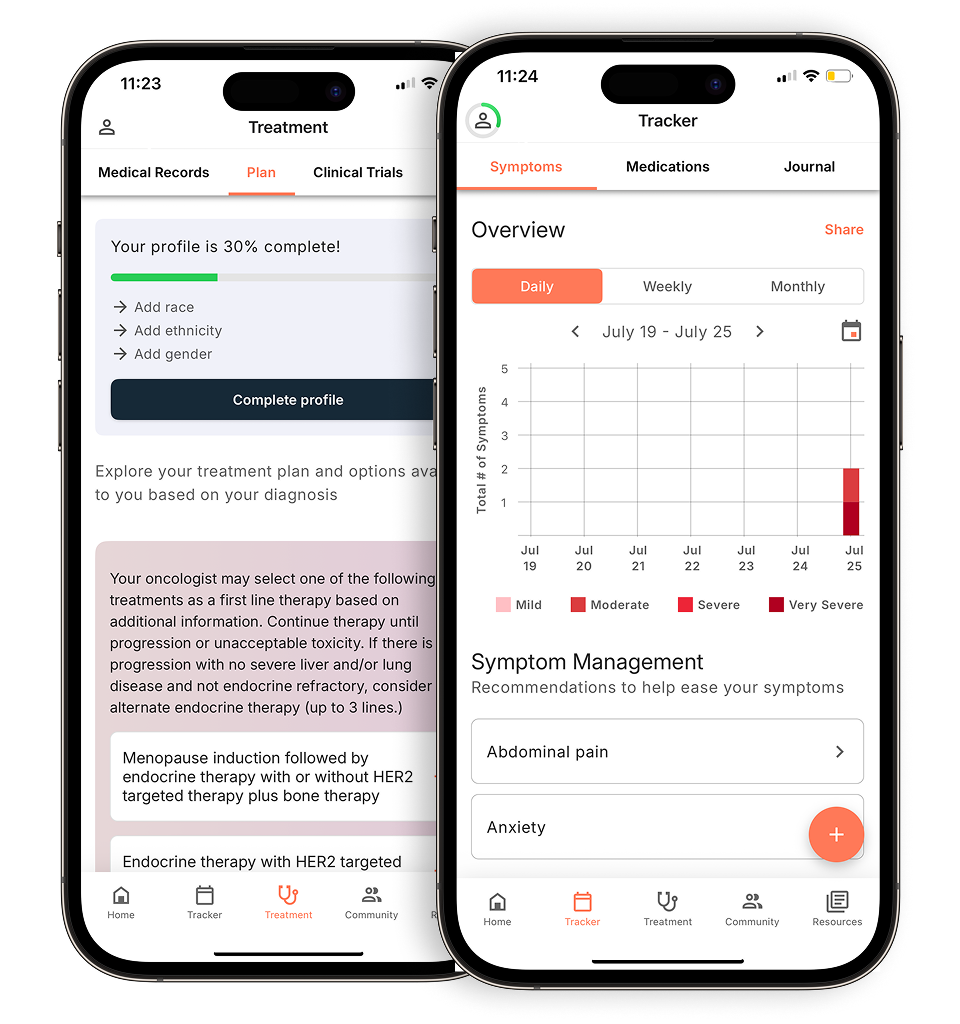
One concern that comes up often, especially among patients already managing endometrial cancer symptoms like fatigue and pelvic discomfort, is whether radiation will cause hair loss. Vaginal brachytherapy targets radiation to a small area inside the vaginal canal, which may reduce the risk of hair loss compared to external beam radiation that covers a larger treatment area. Talk with your care team about what side effects to expect with your specific treatment plan. The next section covers external beam radiation, where the treatment field and the side effect profile is considerably broader.
External beam radiation therapy (EBRT): comprehensive pelvic protection
When adjuvant radiation after hysterectomy needs to reach beyond the vaginal cuff, external beam radiation therapy delivers high-energy beams from a machine into the entire pelvic region, targeting lymph nodes and surrounding tissue that internal approaches cannot reach.
Endometrial cancer pelvic EBRT is typically recommended when pathology reveals higher-grade tumors, Stage 2 involvement, or lymphovascular invasion. In these cases, the risk of microscopic cancer cells spreading through the lymphatic system is significant enough that vaginal cuff radiation alone wouldn’t offer adequate protection. Your care team will weigh this decision against your specific tumor characteristics before recommending a course of treatment.
EBRT generally runs five days a week for four to six weeks, with each session lasting only minutes but adding up to a substantial cumulative dose. Modern techniques have improved precision. Intensity-Modulated Radiation Therapy (IMRT) shapes the radiation dose around critical structures like the bladder and rectum, reducing unnecessary exposure to healthy tissue. A broader treatment field carries a broader side effect profile.
Comparing outcomes, efficacy, and side effects
For early-stage endometrial cancer, vaginal cuff brachytherapy as a boost after external beam radiation may help reduce the risk of vaginal recurrence, particularly in patients with higher-risk features such as cervical stromal involvement.
Cancer care guidance for every step of your journey
Get treatment options, clinical trials, and support tailored to your diagnosis--all in one place.
Get started
See treatment options, manage symptoms, and stay informed—all in the app
View treatment options and trials personalized to your diagnosis—plus track progress in real time.
Continue in appBrachytherapy side effects in endometrial cancer tend to be more localized. Vaginal stenosis and dryness are the most commonly reported long-term concerns, and while they’re manageable with dilators and moisturizers, they do require attention. External beam radiation exposes a larger pelvic field and carries a higher likelihood of bowel and bladder complications over time, including urgency, cramping, and chronic pelvic discomfort.
When lymph node involvement is suspected or confirmed, targeting only the vaginal cuff is insufficient. The wider treatment field becomes clinically necessary. That distinction drives much of the tumor board decision-making your care team works through. The next section puts these differences side by side so you can see them clearly at a glance.
Comparison table: brachytherapy vs. pelvic radiation
When patients ask what endometrial cancer treatment after surgery involves, this side-by-side breakdown cuts through the complexity, as vaginal brachytherapy and pelvic radiation differ on nearly every clinical dimension.
| Factor | Vaginal Brachytherapy | Pelvic Radiation (EBRT) |
|---|---|---|
| Target area | Vaginal cuff only | Full pelvic lymph node network |
| Treatment duration | 3–5 outpatient sessions | 5 days a week, 4–6 weeks |
| Side effect profile | Localized vaginal dryness or mild discomfort | Bowel urgency, bladder irritation, cumulative fatigue |
| Patient suitability | Low-to-intermediate risk cases with disease confined to the uterus | Confirmed or suspected lymph node involvement |
Some patients don’t need radiation after uterine cancer surgery, and understanding when your care team might recommend surveillance alone is just as important as knowing your treatment options.
Low-risk profiles do exist. For Stage 1A Grade 1 endometrial cancer, surgery alone is sometimes the only treatment needed, with close follow-up to watch for cancer recurrence.
Overtreatment carries real consequences. Adding external beam radiation to endometrial cancer patients who don’t need it introduces bowel, bladder, and pelvic floor complications without meaningfully improving survival odds. More treatment isn’t always better, particularly for early-stage recovery where quality of life matters enormously.
Tumor boards work through your specific pathology report, including margin status, grade, depth of myometrial invasion, and lymph node findings, to map the right path. That decision directly shapes how long after hysterectomy brachytherapy or any radiation after uterine cancer surgery should begin. In practice, the four-to-six week post-operative window is considered optimal, long enough for surgical healing and early enough for the treatment field to be most effective.
Key takeaways for your care plan
Endometrial cancer adjuvant treatment guidelines consistently point to one principle. The right radiation approach is determined entirely by your individual risk profile.
For intermediate-risk patients, vaginal brachytherapy alone remains a viable treatment option for endometrial cancer, delivering precise, localized radiation to the vaginal cuff with a significantly narrower side effect burden than whole-pelvic treatment. Based on individual clinical-pathologic risk factors such as lymph node involvement or high-grade histology, your radiation oncology team may recommend external beam radiation therapy (EBRT) rather than vaginal brachytherapy to help reduce the risk of cancer recurrence in the vagina or pelvis. Neither approach is interchangeable; they address fundamentally different risk distributions.
Timing matters too. Treatment typically begins within four to six weeks post-hysterectomy, enough time for surgical healing and early enough for treatment to be most effective.
Here’s what to bring to your next appointment:
- Your full pathology report, including grade, stage, and lymphovascular space invasion status
- Questions about sequencing, particularly whether chemotherapy will be combined with radiation
- Your quality-of-life priorities, since long-term pelvic function is a legitimate clinical variable
- Any symptoms that concern you, especially those that could indicate early changes your care team needs to track
Disclaimer: The information provided in this article is for informational purposes only and is not intended to be a substitute for professional medical advice, diagnosis, or treatment. Outcomes4Me is not acting as your caregiver, and any suggestions or guidance offered should not replace the advice of your healthcare provider or qualified medical professional. Always seek the guidance of your physician or other qualified health provider with any questions you may have regarding a medical condition.
Personalized support for real care decisions
Understand your diagnosis, explore clinical trials, and track symptoms--all in one place.
Get started
Compare treatments, prepare for appointments, and track side effects—all in the app
Built for your diagnosis, Outcomes4Me gives you the tools to make confident, informed decisions—right when you need them.
Continue in app