If you’re wondering what to expect with BCG treatment for bladder cancer, the first thing to understand is that this therapy works nothing like standard chemotherapy. BCG, or Bacillus Calmette-Guérin, is an intravesical therapy, meaning , the doctor puts a liquid drug right into your bladder rather than giving it by mouth or putting it into your blood. The drug is given through a tube (urinary catheter) that’s been put into your bladder through your urethra..
BCG treatment contains live bacteria, the bacteria irritates the cells in your bladder and your immune system thinks you have an infection your immune system then attacks the cancer cells in your bladder. That distinction matters. For non-muscle-invasive bladder cancer (NMIBC), medication can be placed directly into the bladder to destroy cancer cells and reduce the chance of recurrence, allowing treatment to be focused where the cancer lives on the bladder’s surface. Delivering it this way concentrates its effect on the bladder lining while limiting systemic exposure to the rest of your body.
Key distinction: BCG works by priming your immune system to recognize and attack cancer cells, which is fundamentally different from chemotherapy.
That priming process is why BCG is the most effective intravesical therapy currently available for non-muscle invasive bladder cancer and is considered standard treatment for appropriate candidates. For intermediate- and high-risk cases, BCG remains the standard of care precisely because it addresses the immune system’s role in preventing recurrence. Understanding this mechanism is the foundation for everything that follows, including what actually happens during each appointment.
What happens during intravesical delivery
The catheterization step is typically straightforward but can feel uncomfortable. A healthcare provider will insert a thin, sterile catheter through your urethra and into your bladder. Once the catheter is correctly positioned, any residual urine is drained before the BCG solution is slowly instilled. The whole insertion process usually takes just a few minutes.
Then comes “the hold” – the phase that determines whether the treatment does its job. You must retain the BCG liquid in your bladder for 1.5 to 2 hours to ensure effectiveness. The 90-to-120-minute retention period is critical because shortening it reduces the therapy’s ability to stimulate your immune response along the bladder lining. To help the solution coat every surface of the bladder wall, your collaborative care team will typically ask you to reposition, shifting from your back to each side and onto your stomach at intervals.
Evidence-based guidance powered by NCCN Guidelines®
Personalized treatment plans shaped by the latest oncology standards—tailored to your diagnosis.
Get started
View your personalized treatment plan in the Outcomes4Me app
Use your diagnosis to unlock personalized NCCN Guidelines®-aligned recommendations.
Continue in app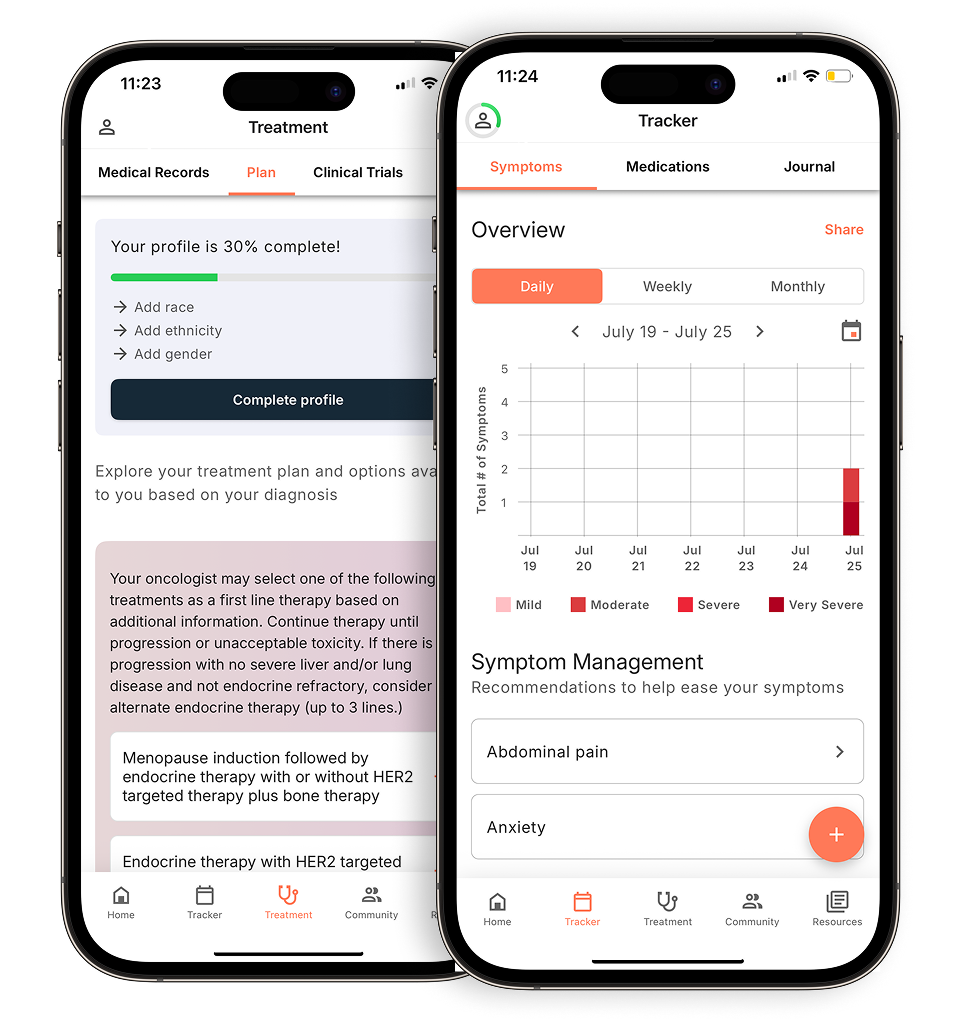
The discharge process itself is quick. Once the hold period ends, you’ll urinate in the clinic or return home to do so.
Essential post-treatment safety and hygiene
Because intravesical therapy introduces live BCG bacteria directly into the bladder, the hours immediately after your appointment require specific safety steps, for your protection and everyone around you.
When you urinate after holding the solution, the excreted fluid still contains active bacteria. That’s why your collaborative care team will walk you through a hygiene protocol before you leave the clinic. Following it consistently across every treatment cycle is essential to the treatment’s success.
Hygiene protocol. The first 6 hours after BCG
- Bleach the toilet after each urination. Pour 2 cups of household bleach into the toilet, let it sit for 15–20 minutes, then flush with the lid down to prevent aerosolization.
- Hydrate to flush your bladder naturally. Drink plenty of water in the hours that follow. Increasing fluid intake helps dilute and clear any remaining bacteria through normal urination.
- Wash the genital area thoroughly after each bathroom visit using soap and water to reduce the risk of bacterial irritation to surrounding skin.
Beyond the bathroom, laundry and close-contact precautions apply for the full six-hour window. Any clothing or linens that come into contact with urine should be washed separately. Avoid sexual contact during this period, as BCG bacteria can be transmitted to a partner through bodily fluids.
Managing side effects. Why the second dose feels different than the first
Side effects from BCG therapy build over time. Understanding that pattern helps you stay on track with treatment and manage your care effectively.
Urinary symptoms are the most immediate response most patients notice. Burning during urination, a strong sense of urgency, and minor traces of blood (hematuria) typically begin 2–4 hours after the BCG procedure and resolve within 24–48 hours. These reactions are localized. Your bladder is responding directly to the live BCG bacteria introduced during the instillation.
Flu-like symptoms – low-grade fever, fatigue, and general achiness – are also common, and they’re actually a meaningful signal. These systemic responses indicate that your immune system is activating, which is precisely the mechanism BCG relies on to fight cancer cells. In practice, mild fever and tiredness after a treatment session show that the therapy is working.
Cancer care guidance for every step of your journey
Get treatment options, clinical trials, and support tailored to your diagnosis--all in one place.
Get started
See treatment options, manage symptoms, and stay informed—all in the app
View treatment options and trials personalized to your diagnosis—plus track progress in real time.
Continue in appThe cumulative effect is where many patients are caught off guard. What felt manageable during week one can feel noticeably more intense by weeks four, five, or six. That’s because repeated BCG exposures continue to prime the immune response, and the body’s reaction compounds with each successive instillation. Talk to your collaborative care team if symptoms feel unmanageable, as adjustments are possible.
Some symptoms warrant urgent attention. Contact your collaborative care team immediately if you experience any of the following:
- High fever above 101.3°F
- Large blood clots in your urine
- Confusion or disorientation
- Symptoms that don’t resolve within 48 hours
These red flags can signal a systemic BCG infection, a rare but serious complication that requires prompt evaluation. Knowing when to call versus when to wait is a critical part of navigating this therapy and sets the stage for understanding the longer treatment arc ahead.
Induction, maintenance, and success rates
BCG therapy isn’t a quick fix. Understanding the full treatment timeline helps you stay prepared and engaged throughout your care.
The induction phase is where treatment begins: six weekly instillations delivered directly to the bladder over six consecutive weeks. This initial block is designed to expose your immune system to the BCG bacteria repeatedly, building a sustained local immune response. Think of it as the foundation. Each session adds to the cumulative effect, which is why completing the full course matters so much.
The maintenance phase is where the real work happens. After induction, most collaborative care teams recommend ongoing periodic treatment cycles often continuing for one to three years, to prevent recurrence. BCG maintenance therapy is typically given once a week for three weeks at the three-, six-, and 12-month marks after induction treatment, and for some people may be continued for up to three years. It’s a significant commitment, but the data supports it: BCG has shown success in reducing the risk of bladder cancer recurrence, with outcomes improving when treatment is combined with maintenance therapy.
Regular cystoscopies run alongside this entire timeline. Your collaborative care team will schedule periodic scope examinations to monitor the bladder lining for any signs of recurrence or progression. These aren’t optional check-ins, they’re a core part of your personalized care plan and the clearest window into how well treatment is working.
And that full picture – what BCG achieves, what it demands, and how every phase connects – is worth stepping back to see as a whole.
The bottom line. What you need to know
BCG therapy remains the gold-standard immunotherapy for non-muscle-invasive bladder cancer, and knowing how it works makes you a far more prepared patient.
Here’s a quick recap of what the previous sections have covered:
- BCG is a live bacterial immunotherapy instilled directly into the bladder to trigger a localized immune response against cancer cells.
- The “hold” time matters. Retaining the solution for up to two hours maximizes contact between BCG and the bladder lining and is one of the most controllable factors in your treatment.
- Hygiene protocols are non-negotiable. Because BCG contains live bacteria, bleaching the toilet after each void for six hours post-treatment protects both you and your household.
- Side effects intensify over time. Urgency, frequency, and fatigue are common, and as earlier sections explained, they typically peak mid-cycle rather than after the first instillation.
- Long-term maintenance is where outcomes are made. BCG maintenance therapy can help reduce the risk of bladder cancer recurrence, with over half of patients who respond appropriately remaining tumor-free for an extended period when they receive both induction and maintenance treatment.
Preparation is part of the treatment itself. The patients who do best are those who understand each phase, communicate openly with their collaborative care team, and track what’s happening between appointments.
Taking control. Personalizing your bladder cancer experience
Preparation is your most powerful tool, and it starts with knowing your own body. Tracking how you feel after each BCG instillation helps you and your collaborative care team distinguish between expected side effects, like temporary urinary discomfort, and warning signs that warrant a call to your provider. Keep a simple daily log of symptoms, their severity, and how long they last. That data isn’t just reassuring, it’s clinically useful.
And if BCG therapy doesn’t deliver the response you need, that’s not the end of the road. Genetic data and clinical trial matching can open doors to alternative treatment paths tailored specifically to you. Rather than waiting to see what your provider suggests next, you can walk into that appointment already informed about your options.
Engaging actively with your collaborative care team transforms your experience into an informed one. Ask questions. Share your symptom log. Push for clarity on your cystoscopy results and what they mean for your next step. Your providers want a collaborative relationship, and your engagement makes that possible.
You don’t have to navigate any of this alone. Download the Outcomes4Me app for personalized support.
Personalized support for real care decisions
Understand your diagnosis, explore clinical trials, and track symptoms--all in one place.
Get started
Compare treatments, prepare for appointments, and track side effects—all in the app
Built for your diagnosis, Outcomes4Me gives you the tools to make confident, informed decisions—right when you need them.
Continue in app