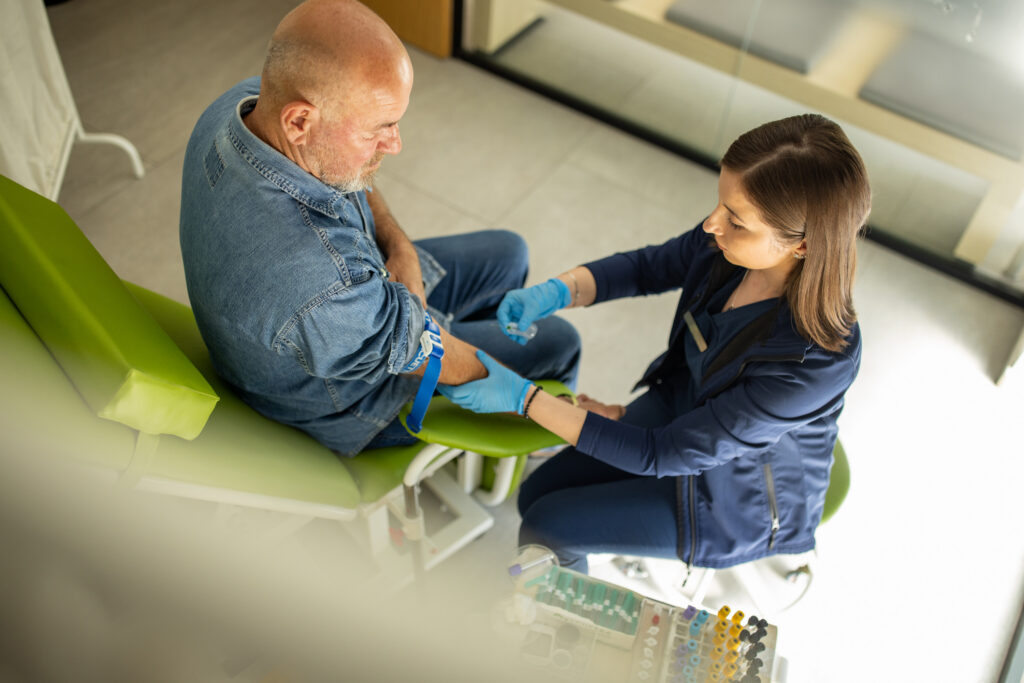
The immediate post-operative window. The first 48 hours
Recovery begins the moment you leave the operating room, and understanding what’s happening inside your body during those first 48 hours helps you move from uncertainty to confidence.
Transurethral Resection of Bladder Tumor (TURBT) is a minimally invasive procedure in which a surgeon removes abnormal growths from the bladder wall using a scope passed through the urethra. There are no incisions. But your bladder has still experienced real trauma, and the first two days after surgery set the foundation for everything that follows.
A urinary catheter is placed during this window for two critical reasons. It prevents blood clots from accumulating inside the bladder, and it allows the bladder to rest while the resection site begins closing. Many patients worry that the catheter itself slows healing or extends TURBT recovery time. The catheter is a protective tool that supports healing.
You’ll likely notice some unsettling but normal symptoms. A persistent urge to urinate, mild burning, and urine that looks pink or lightly blood-tinged. These are expected responses to surgical trauma. Your care team will monitor these closely before discharge.
Managing the catheter, hydration, and early urinary changes will be your active role in recovery.
Managing the catheter and early urinary changes
Understanding catheter management is one of the most practical steps you can take to reduce anxiety and support a smoother TURBT recovery time.
Most catheters are removed within one to three days after surgery. Once it’s out, you may notice:
- Urgency or frequency when urinating
- Mild burning that fades over several days
- Light pink-tinged urine, still normal at this stage
Bladder spasms are common and feel like sudden, sharp cramping in the lower abdomen. Your care team can prescribe medication to manage them effectively.
Hydration matters enormously during bladder tumor surgery recovery time. Aim for consistent fluid intake to flush the bladder and lower infection risk. As your catheter days wind down, the real test of home recovery begins.
The first week. Transitioning to home recovery
Following your TURBT post op instructions carefully during the first week protects your bladder and helps you avoid complications that extend TURBT healing time.
Activity restrictions matter more than most patients expect. Heavy lifting raises abdominal pressure and can reopen the resection site, triggering secondary bleeding. Rest is protective.
Watch your diet, too. Constipation forces straining, which puts direct pressure on the bladder wall. Prioritize fiber-rich foods and steady hydration to keep bowel movements regular and strain-free.
Fatigue can come back from days five through seven as your body redirects resources toward internal repair.
Bladder healing timeline. Weeks 2 through 6
Following TURBT catheter removal, your bladder begins a healing process that may involve clot formation at the resection site, followed by gradual tissue repair. Your care team can explain what to expect during your individual recovery.
Around days 10 to 14, the internal scab may begin to shed naturally, and some patients experience a brief increase in bleeding during this time as a result. This is a predictable part of healing, not a sign something has gone wrong.
While your bladder works through these biological stages, a parallel process is unfolding in the lab. Pathology results from tissue removed during surgery can vary in turnaround time, with some routine results ready in a day or two, while others may take longer depending on the complexity of the specimen and any special testing needed. Feeling better doesn’t mean results are in, and waiting on pathology is its own emotional challenge that your care team can help you navigate.
The full picture, especially what that days-10-to-14 bleeding spike actually looks like and how to tell normal from concerning, deserves a closer look.
Understanding the 10-to-14-day bleeding spike
Around days 10 to 14 of TURBT recovery at home, many patients see a sudden return of pink or red-tinged urine, and it’s one of the most misunderstood moments in bladder healing.
Evidence-based guidance powered by NCCN Guidelines®
Personalized treatment plans shaped by the latest oncology standards—tailored to your diagnosis.
Get started
View your personalized treatment plan in the Outcomes4Me app
Use your diagnosis to unlock personalized NCCN Guidelines®-aligned recommendations.
Continue in app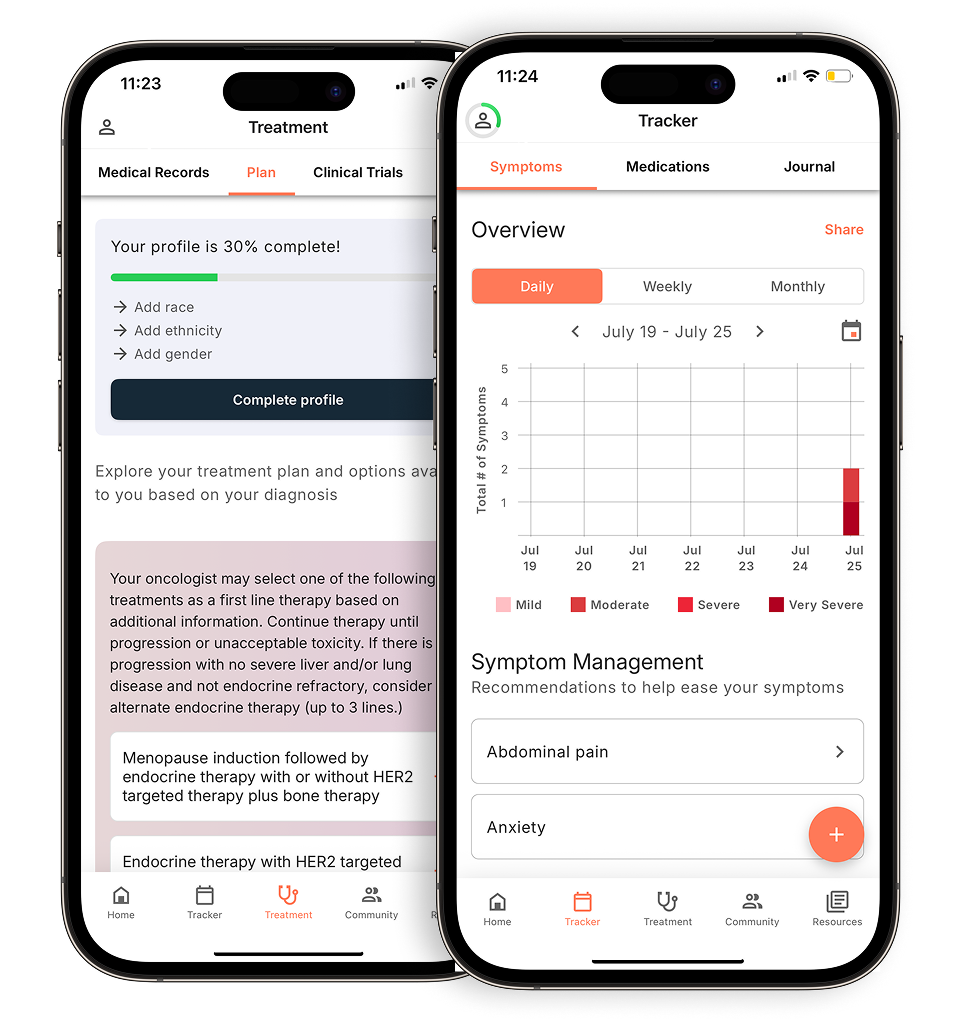
This happens because the internal scab at the resection site begins to shed as fresh tissue forms underneath, a process called sloughing. Dark red flakes or clots in urine at this stage are a predictable part of that process, not a signal that something has gone wrong.
Many patients find that normal sloughing improves with steady hydration and rest, though the timeline can vary. Ask your care team what to expect during your individual recovery. Heavy bleeding that soaks through or produces large clots, persists beyond two days, or comes with fever warrants an immediate call to your care team. TURBT lifting restrictions remain especially critical during this window. Any strain can disrupt fragile new tissue right as it’s forming.
Once the spike passes, your body shifts into steadier repair. That progress sets the stage for a bigger question most patients are already asking. When can you actually return to driving, work, and normal life?
Resuming normal activities and work
Many patients find they are able to return to sedentary office work within one to two weeks of TURBT, though your individual recovery timeline may depend on factors like whether hematuria has resolved and your comfort level. Ask your care team what activity schedule makes sense for your situation.
Driving is limited in the first few weeks after TURBT, and you can resume driving as usual once you’ve completed your initial recovery period. Let hematuria guide your activity escalation. Pink urine means pause. Clear urine signals you can cautiously do more. Pelvic floor rest during the first month is critical. Straining, heavy loads, and high-impact movement all pressure healing tissue before it’s ready.
Resuming a fuller lifestyle, including intimacy and structured exercise, raises its own set of questions worth addressing directly.
Safety and lifestyle. When to resume intimacy and exercise
Returning to intimacy and exercise after TURBT requires reading your TURBT recovery symptoms carefully. Rushing either one is the most common way patients undo weeks of careful healing.
Your provider will let you know when you can return to your normal level of activity, which typically involves waiting at least two weeks before gradually getting back to your typical activities. But most patients feel fully healed from a TURBT within six weeks, though recovery times vary for each person. The reason is straightforward. High-impact activity raises intra-abdominal pressure, stressing the resection site before new epithelial tissue has anchored fully. A common failure pattern is resuming vigorous exercise as soon as discomfort fades, only to trigger a recurrence of gross hematuria days later.
Before returning to any structured fitness routine, confirm all three criteria with your care team. Urine is consistently clear, pelvic discomfort is absent, and your surgeon has cleared you at a follow-up visit.
Bladder capacity and function may be temporarily affected after TURBT, with most patients experiencing frequent urination that resolves within six weeks of the procedure. Urgency and reduced holding capacity are common short-term changes after TURBT. Persistent symptoms beyond that window deserve a conversation with your care team. Don’t wait them out alone.
Intimacy raises a closely related but distinct set of considerations, including timing, surgical location, and what symptoms signal you should wait longer.
Guidelines for sexual activity post-surgery
Many care teams recommend waiting two to three weeks before resuming sexual activity to allow the bladder neck and urethra time to heal. Ask your doctor what timeline makes sense for your individual recovery.
But that timeline assumes a smooth recovery. Persistent pain or any active bleeding are clear signals to wait longer. Surgical location may affect your recovery experience. Your care team can discuss whether the specific location of your resection might influence your healing timeline or any precautions you need to take. Bring those specifics to your care team before resuming intimacy. As with walking after surgery, gradual progression guided by your actual symptoms, not a calendar, is always the safest approach.
Exercise progression and pelvic health
Many patients find that walking is a gentle activity to start with during the first two weeks, while other activities may need to wait until your care team clears you to resume them.
Cancer care guidance for every step of your journey
Get treatment options, clinical trials, and support tailored to your diagnosis--all in one place.
Get started
See treatment options, manage symptoms, and stay informed—all in the app
View treatment options and trials personalized to your diagnosis—plus track progress in real time.
Continue in appAfter TURBT, the timing for returning to physical activity depends on the extent of the procedure. Your surgeon can advise you on when it’s safe to resume exercise based on whether you had a small tumor removal or a more extensive resection. A gradual gym return means starting with light resistance and short duration, never pushing through discomfort, and treating any symptom flare as a signal to scale back immediately.
Knowing which activities are safe is only part of the picture. Recognizing warning signs that something’s wrong matters just as much.
Monitoring for complications. Red flags and infections
Knowing the difference between expected TURBT bladder pain recovery and a developing infection is one of the most important skills you can build in the weeks after surgery.
Normal post-surgical discomfort includes mild burning with urination, light pink-tinged urine, and occasional urgency, all of which gradually ease as your bladder heals. A urinary tract infection looks different. Watch for cloudy urine with a foul odor, pain that escalates rather than fades, and systemic symptoms like fever or chills. Those are signals to contact your care team the same day.
Certain symptoms demand immediate action, regardless of where you are in your timeline:
- Fever above 101°F may warrant contacting your care team, as it can be a sign that needs medical attention.
- If you’re unable to urinate after TURBT, contact your healthcare provider right away, as this may indicate urinary retention.
- Heavy bleeding with clots that block urine flow
- Contact your provider right away if you experience unexpected or severe pain. This may require immediate attention.
Urinary retention deserves particular attention. Blood clots after TURBT can potentially block urine flow, which is why your surgeon may place a catheter to help drain your bladder and prevent this complication. This risk is separate from questions like how long after TURBT can I work. It’s an acute issue that requires same-day evaluation regardless of your recovery stage.
Catching these signs early prevents complications from escalating into kidney involvement, and that distinction is exactly where the next section goes deeper.
Identifying a post-operative urinary tract infection
A UTI after TURBT may have different signs than routine post-surgical discomfort, such as cloudy urine with a foul odor, increasing pain, or chills. Contact your care team if you notice these symptoms, as they may indicate an infection. Left untreated, these infections can migrate up the urinary tract and involve the kidneys, turning a manageable complication into a serious one. That’s why tracking your TURBT recovery week by week matters. Patterns you’d otherwise miss become obvious when you’re paying close attention. Your care team will often prescribe prophylactic antibiotics immediately after surgery to reduce this risk, and completing that full course is non-negotiable. And if you’re wondering when can I drive after TURBT, active signs of infection are another reason to hold off. Your body needs to stabilize before you take the wheel. Certain escalating symptoms warrant immediate contact with your care team, which the next section addresses directly.
When to call your care team immediately
Certain symptoms after TURBT demand a same-day call, not a wait-and-see approach. Bright red urine that resembles tomato soup, or urine that contains large, obstructive clots, signals bleeding beyond the expected range. If you’re managing TURBT recovery without catheter support and suddenly can’t pass urine at all, that’s acute urinary retention. Treat it as urgent. Fever above 101°F (38.3°C), or persistent nausea and vomiting, may warrant a call to your care team to discuss whether these symptoms need assessment. And if you’ve been wondering when can I exercise after TURBT, active symptoms like these signal you to pause everything and call first.
Limitations and considerations for recovery success
Recovery time after TURBT varies from person to person, and most patients feel fully healed within six weeks of the procedure.
Recovery isn’t uniform. A single, small, superficial tumor resection heals faster than a case involving multiple tumors across different bladder wall sites. When a TURBT involves multiple tumor sites, your surgeon may need to remove tissue from several areas of the bladder, which could potentially affect how your bladder heals compared to a single-site procedure.
Intravesical therapies complicate the picture further. Your care team may administer chemotherapy directly into your bladder after surgery to reduce the risk of cancer spreading. In the first one to two weeks after TURBT, you might experience pain or burning when you urinate, along with some blood in your urine.
And it’s worth being clear. TURBT is often the starting point of a longer treatment roadmap, not the finish line. Pathology results from the resected tissue guide what comes next, whether that’s surveillance, additional intravesical therapy, or something more intensive. That context matters for how you pace your recovery emotionally and physically.
The catheter deserves an honest acknowledgment too. It’s uncomfortable, and it limits mobility, but it protects healing tissue by keeping the bladder decompressed during the most vulnerable window. The temporary trade-off is worth it. How quickly that picture changes often depends on factors unique to your resection, including tumor depth and location, which the next section addresses directly.
Variations in tumor size and location
TURBT recovery generally takes up to six weeks, and you may have pain or discomfort, especially while peeing, for one to two weeks after the procedure. Some patients report that tumors located near the bladder neck may be associated with pronounced urgency during recovery, even after symptoms improve in other areas. Your care team can help you understand what to expect based on your tumor’s location. How a single chemotherapy dose given right after surgery interacts with these variables is worth understanding next.
Impact of immediate intravesical chemotherapy
Chemical cystitis symptoms may be most intense during the first few days after TURBT. Talk with your care team about what to expect during your recovery. Staying well hydrated flushes the bladder lining and usually brings relief. If burning intensifies beyond that window rather than fading, let your care team know. It’s a distinction worth flagging before moving into the recovery milestones ahead.
Key takeaways: your recovery at a glance
Most patients feel fully healed within six weeks after TURBT, though recovery times vary from person to person. A few key milestones along the way are worth keeping front of mind.
The 10-to-14-day bleeding spike is your body shedding the internal scab that formed over the resection site. It’s a normal part of healing that catches many patients off guard. Knowing it’s coming transforms alarm into reassurance.
A few clear guidelines tie everything together:
- Many patients are advised to avoid heavy lifting and strenuous activity for several weeks after TURBT. Ask your care team how long to restrict these activities based on your individual recovery.
- Watch for red flags: fever, inability to urinate, or bright red bleeding that doesn’t ease. Contact your care team the same day.
- Your pathology results will help your doctor decide what additional treatment you might need. Ask your healthcare team when you can expect to receive your pathology report and how they will share those results with you.
Recovery moves forward one day at a time. You won’t always feel progress, but the structure is there. Lean on your care team, trust the process, and use every available resource to stay informed and in control.
Disclaimer: The information provided in this article is for informational purposes only and is not intended to be a substitute for professional medical advice, diagnosis, or treatment. Outcomes4Me is not acting as your caregiver, and any suggestions or guidance offered should not replace the advice of your healthcare provider or qualified medical professional. Always seek the guidance of your physician or other qualified health provider with any questions you may have regarding a medical condition.
Personalized support for real care decisions
Understand your diagnosis, explore clinical trials, and track symptoms--all in one place.
Get started
Compare treatments, prepare for appointments, and track side effects—all in the app
Built for your diagnosis, Outcomes4Me gives you the tools to make confident, informed decisions—right when you need them.
Continue in app