
When it comes to partial vs. radical nephrectomy kidney function outcomes, the surgical approach your care team recommends can shape your health for decades.
For years, radical nephrectomy, complete removal of the affected kidney, was the default treatment for renal cell (kidney) cancer. Today, the picture looks different. For localized tumors, partial nephrectomy has become the preferred approach at leading cancer centers, because preserving healthy kidney tissue matters far beyond the operating room. Understanding the surgical options available is a critical first step in navigating a renal cell carcinoma treatment plan.
The shift happened as evidence mounted linking total kidney removal to a significantly higher risk of chronic kidney disease (CKD). When one kidney is removed entirely, the remaining kidney compensates, but that added workload can accelerate long-term functional decline. Partial nephrectomy, by contrast, removes only the tumor while protecting as much healthy tissue as possible, keeping your overall kidney function more intact.
How partial nephrectomy protects long-term kidney health
Preserving healthy nephrons during surgery is one of the most direct ways to maintain strong renal function after surgery, and that benefit compounds over time.
Nephrons and eGFR. Every nephron your care team spares during a partial removal contributes to a higher estimated Glomerular Filtration Rate (eGFR). Research suggests that patients who undergo nephron-sparing surgery may be more likely to retain better kidney function compared to those who have the entire kidney removed, though individual outcomes vary and your care team can discuss what this may mean for you. A higher eGFR signals that your body is filtering waste efficiently, which protects nearly every organ system downstream.
Cardiovascular connection. There is a well-established link between preserved kidney mass and reduced cardiovascular risk. When kidney function declines, blood pressure tends to rise and fluid balance becomes harder to regulate, both drivers of heart disease. Real-world survival data show that partial nephrectomy patients experience lower rates of non-cancer mortality, largely because their cardiovascular health is better protected over the long term.
Life expectancy after partial nephrectomy. This is one of the most common questions patients bring to their care team, and the answer is encouraging. Beyond cancer control, the procedure’s ability to limit partial nephrectomy side effects, such as chronic kidney disease and related complications, means patients often maintain a quality of life and life expectancy closer to the general population.
The impact of radical nephrectomy on the remaining kidney
After a radical nephrectomy, the single remaining kidney undergoes a significant shift. Compensatory hypertrophy is the term for what happens next. The remaining kidney enlarges and ramps up its filtration capacity to compensate for the loss. In practice, after a radical nephrectomy, the remaining kidney may recover some of its function over time, though the degree of recovery varies among patients. Your care team can discuss what kidney function levels to expect based on your individual situation. That gap has real consequences. Research indicates that partial nephrectomy is associated with lower rates of chronic kidney disease stage progression following radical removal.
eGFR after nephrectomy, estimated glomerular filtration rate, becomes the key metric your care team will track going forward. This number reflects how efficiently your remaining kidney filters waste, and it often drops into a range that qualifies as stage 3 CKD, even in otherwise healthy patients. That new baseline isn’t necessarily an emergency, but it does mean future health screenings need to account for the reduced reserve, including monitoring for elevated blood pressure and cardiovascular risk.
And that is precisely why the surgical decision matters beyond the operating room, a point that becomes even clearer when you understand the clinical criteria that sometimes make radical surgery the necessary choice.
When radical nephrectomy is necessary
Not every renal cell carcinoma case is a candidate for kidney-sparing surgery. Tumor size, stage, and location can make radical nephrectomy the safer oncologic choice.
Evidence-based guidance powered by NCCN Guidelines®
Personalized treatment plans shaped by the latest oncology standards—tailored to your diagnosis.
Get started
View your personalized treatment plan in the Outcomes4Me app
Use your diagnosis to unlock personalized NCCN Guidelines®-aligned recommendations.
Continue in app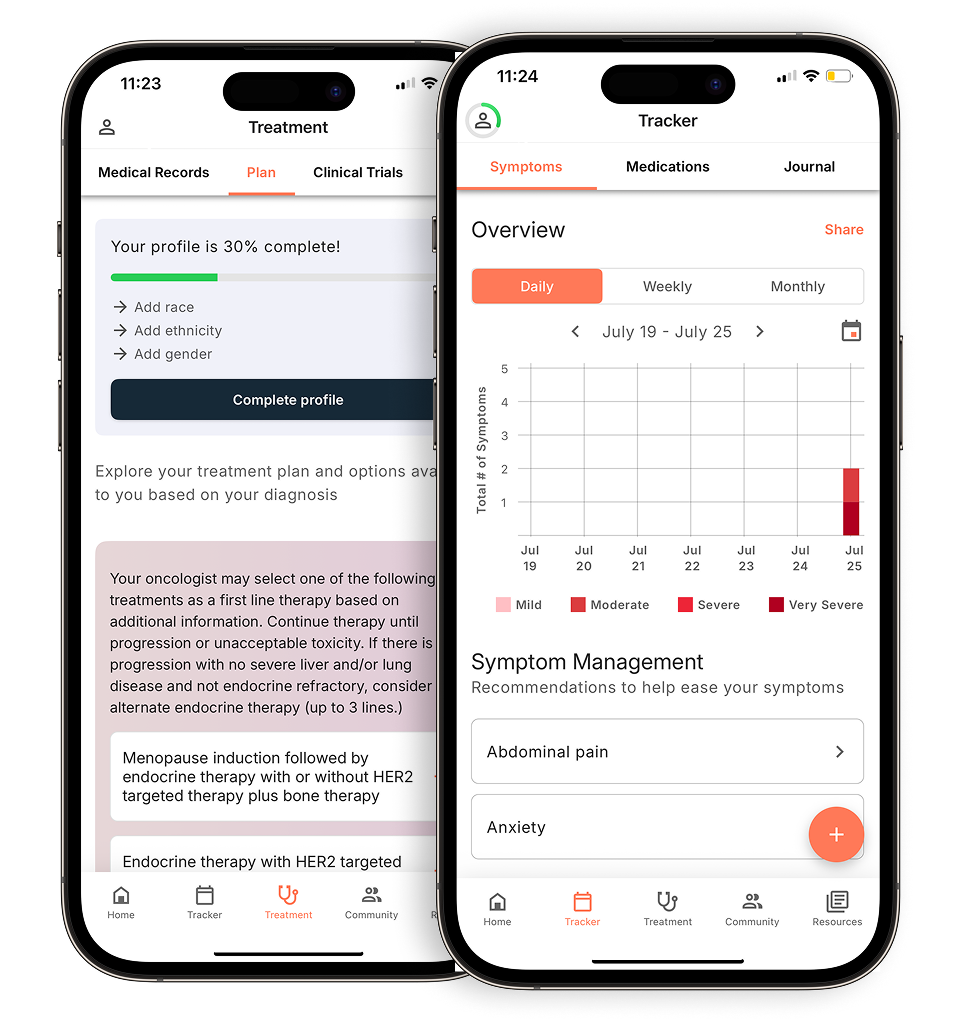
Tumor stage plays a central role. T1 tumors (under 7 cm) are typically strong candidates for partial nephrectomy. Larger tumors, generally those exceeding 7 cm, may not be suitable candidates for partial nephrectomy, and radical nephrectomy may be recommended instead to ensure complete tumor removal.
Hilar involvement is another deciding factor. When a tumor sits close to the renal pelvis or major blood vessels, surgeons face a narrower margin for error. In those cases, attempting a partial resection raises the risk of incomplete removal or serious intraoperative bleeding, which can shift the calculus firmly toward radical surgery.
Prioritizing cancer clearance sometimes means accepting a higher chronic kidney disease risk post-surgery. The choice between partial and radical nephrectomy depends on surgeon assessment of patient and tumor characteristics, with surgeons tending to recommend radical nephrectomy for older or frailer patients who may not tolerate the more complex partial procedure.
Your care team’s recommendation will reflect these variables together. And understanding how they measure that complexity, including standardized scoring tools, leads naturally into what surgeons look at when evaluating the full anatomical picture.
Tumor complexity and the RENAL nephrometry score
The RENAL nephrometry score gives your care team a standardized way to measure tumor complexity before committing to a surgical approach.
The RENAL nephrometry score is used to classify tumor complexity based on five anatomical features: tumor radius, exophytic or endophytic position, nearness to the collecting system, anterior or posterior location, and location relative to the polar lines. Each feature is assigned a numeric value, and the total score helps providers determine whether kidney-sparing surgery is technically feasible, or whether the anatomy makes radical nephrectomy the safer path.
Tumor depth is one of the most consequential factors in that calculation. Tumors that sit deep within the kidney or press close to the renal pelvis carry a higher risk of bleeding and urine leakage during a partial resection. In those cases, the surgical margin required to remove the tumor safely may leave too little functional tissue behind, tipping the decision toward complete removal and directly influencing life expectancy after kidney removal by reducing long-term kidney reserve.
Surgical technique also shifts depending on complexity. Robotic-assisted surgery may offer surgeons enhanced visualization and instrument precision during partial nephrectomy. Some surgeons use this technology to help manage cases with challenging anatomy that might otherwise require open surgery. But high RENAL scores may still favor an open approach, where tactile feedback and wider access help manage unexpected bleeding or intricate dissection. Your care team will weigh the score alongside your overall health to reach the right call. And that calculus becomes even more critical when patient-specific risk factors, like pre-existing conditions, are already in play.
Patient-specific risk factors
Your underlying health profile, not just tumor size, often determines whether nephron preservation is the right call for your renal cell (kidney) cancer treatment.
Pre-existing conditions like diabetes, hypertension, or chronic kidney disease already compromise your remaining kidney function before surgery begins. For these patients, losing an entire kidney to radical nephrectomy accelerates the progression to chronic kidney disease in ways that directly affect long-term survival. Nephron preservation becomes less of a preference and more of a clinical priority.
The second opinion rule matters here more than almost anywhere else in oncology. Surgical habits vary widely between centers, and some facilities default to radical approaches even when partial surgery is technically feasible. Seeking input from a high-volume kidney cancer center before committing to radical surgery gives you a clearer picture of what options are genuinely on the table for your specific anatomy and health history.
Cancer care guidance for every step of your journey
Get treatment options, clinical trials, and support tailored to your diagnosis--all in one place.
Get started
See treatment options, manage symptoms, and stay informed—all in the app
View treatment options and trials personalized to your diagnosis—plus track progress in real time.
Continue in appSolitary kidney and bilateral tumor cases represent the highest-stakes scenarios. When a person has only one functioning kidney or tumors in both kidneys, a radical nephrectomy may significantly compromise kidney function, which is why doctors may recommend partial nephrectomy in these situations to preserve as much kidney tissue as possible. The outcomes for this group underscore why your full medical history, not just imaging, must guide every surgical decision. The next section puts these trade-offs into sharper focus with a direct comparison of functional and clinical outcomes across both procedures.
What to expect after surgery
Recovery timelines differ meaningfully between partial nephrectomy and radical nephrectomy, and knowing what to monitor in the weeks after surgery can help you stay ahead of complications.
For most patients, a partial nephrectomy carries a hospital stay of two to three days, with a full return to normal activity typically taking three to four weeks. Radical nephrectomy often involves a similar or slightly longer inpatient stay, but because the entire kidney is removed, the remaining kidney faces a heavier compensatory burden from day one. Your care team will set realistic expectations based on your baseline health profile before you are discharged.
Postoperative kidney function monitoring centers on two markers. Serum creatinine and eGFR. Both are measured at regular intervals, often within 24 to 48 hours after surgery and again at follow-up appointments. After partial nephrectomy, many patients experience recovery in kidney function (eGFR) over time, with improvement often continuing beyond the first year.
After partial nephrectomy, kidney function typically shows a transient reduction in the early postoperative period, followed by gradual improvement that plateaus around one month after surgery, though it may not return to preoperative levels. Some patients experience temporary decreases in kidney function after surgery that may improve over weeks to months, though the timing and degree of recovery can vary. This pattern underscores why close monitoring matters. Persistent creatinine elevation or a continued eGFR decline can signal that the remaining nephrons are under stress and may need intervention.
How you manage the days immediately after surgery plays a direct role in how smoothly that function recovers, which is where specific restrictions around activity, diet, and medication come in.
Immediate post-op restrictions
Whether you have had a partial or radical nephrectomy, the first six weeks after surgery set the foundation for how well your remaining kidney tissue adapts and stabilizes.
Physical activity tops the list of immediate concerns. Lifting anything heavier than 10 pounds, strenuous exercise, and prolonged walking should be avoided for at least four to six weeks. Your care team will outline a gradual return-to-activity plan based on your specific procedure and recovery markers.
Hydration and diet play an equally critical role. Staying well hydrated after surgery may support kidney function. Your care team can advise you on appropriate fluid intake for your individual situation. A low-sodium diet reduces the pressure placed on kidney function during healing.
Medication management is where many patients are caught off guard. NSAIDs like ibuprofen and naproxen may affect kidney function and blood flow, so many doctors recommend discussing pain management options with your care team before and after surgery rather than using them without guidance. These early restrictions are not permanent, but honoring them closely shapes what your long-term monitoring will reveal, which is exactly where your focus should shift next.
Long-term monitoring and surveillance
Completing partial nephrectomy recovery is only the beginning. What happens over the next 5 to 10 years depends heavily on how consistently you and your care team track both recurrence and kidney function.
Imaging schedule. Your care team will typically order CT or MRI scans at regular intervals, often at six months, then annually for several years, to watch for local recurrence or new tumor growth. The exact schedule depends on the original tumor stage and which procedure you had.
Lab work. Bloodwork to measure GFR (glomerular filtration rate) and creatinine levels runs alongside imaging. For patients who had a radical nephrectomy, these numbers tell a clear story about how the remaining kidney is compensating over time. Making long-term lifestyle changes after nephrectomy, such as managing your blood pressure, avoiding contact sports that could injure your remaining kidney, and having regular check-ups with your care team, can help protect your kidney health.
Psychological weight. Living with one kidney, or a partially resected one, carries an emotional dimension that lab values do not capture. Uncertainty around scan results and long-term function can affect daily life in real ways. Connecting with your care team about emotional challenges after surgery can help you manage your recovery. You can also write down your questions or concerns to bring to appointments, which can help you stay organized and communicate more effectively.
And while surveillance is a well-defined process, it is worth knowing that not every aspect of treatment choice is as clear-cut as the follow-up schedule suggests, which is where common misconceptions about both procedures deserve a closer look.
Limitations, trade-offs, and common misconceptions
When comparing partial vs. radical nephrectomy, a few persistent myths can cloud an otherwise straightforward conversation between you and your care team.
“Do kidneys grow back?” No, removed kidney tissue does not regenerate. What improves over time is the function of remaining tissue as it adapts, not the physical regrowth of what was resected.
Surgical risk is another honest trade-off to acknowledge. Partial nephrectomy carries a higher short-term complication rate than radical nephrectomy, particularly bleeding and urine leak, because the procedure requires precise reconstruction of a still-functioning organ. That elevated technical complexity is a real consideration, not a reason to avoid the surgery, but something your care team will weigh against the long-term kidney function benefits.
“Radical must mean better cancer control” is perhaps the most stubborn misconception. For small, localized renal cell (kidney) cancer, particularly T1 tumors, evidence consistently shows that partial nephrectomy delivers equivalent oncological outcomes to radical nephrectomy. “Radical” describes surgical extent, not superiority.
But there are cases where the radical approach genuinely is the safer oncological choice. Large tumors, central masses near major vessels, or involvement of surrounding structures can make complete kidney removal the only responsible path. These are not failures of nephron-sparing intent, they are situations where preserving the kidney would compromise cancer control. Knowing when each approach is right is exactly the kind of nuanced decision this article’s final takeaways are designed to help you navigate.
Choosing the right path for your kidneys
When it comes to partial vs. radical nephrectomy, the right choice depends on tumor characteristics, your overall health history, and how much kidney function you can afford to lose long-term.
The evidence is consistent: nephron sparing surgery is the preferred standard for T1 tumors, precisely because preserving functional kidney tissue protects eGFR over the years ahead. But radical nephrectomy remains the right call for large, invasive, or centrally located tumors where partial removal is not safe or oncologically sound. Neither approach is inherently superior, context is everything.
Your health history matters just as much as tumor stage. If you are managing diabetes or high blood pressure, your care team will weigh the functional stakes of losing kidney mass even more carefully, since reduced renal reserve compounds those existing risks over time.
Disclaimer: The information provided in this article is for informational purposes only and is not intended to be a substitute for professional medical advice, diagnosis, or treatment. Outcomes4Me is not acting as your caregiver, and any suggestions or guidance offered should not replace the advice of your healthcare provider or qualified medical professional. Always seek the guidance of your physician or other qualified health provider with any questions you may have regarding a medical condition.
Personalized support for real care decisions
Understand your diagnosis, explore clinical trials, and track symptoms--all in one place.
Get started
Compare treatments, prepare for appointments, and track side effects—all in the app
Built for your diagnosis, Outcomes4Me gives you the tools to make confident, informed decisions—right when you need them.
Continue in app