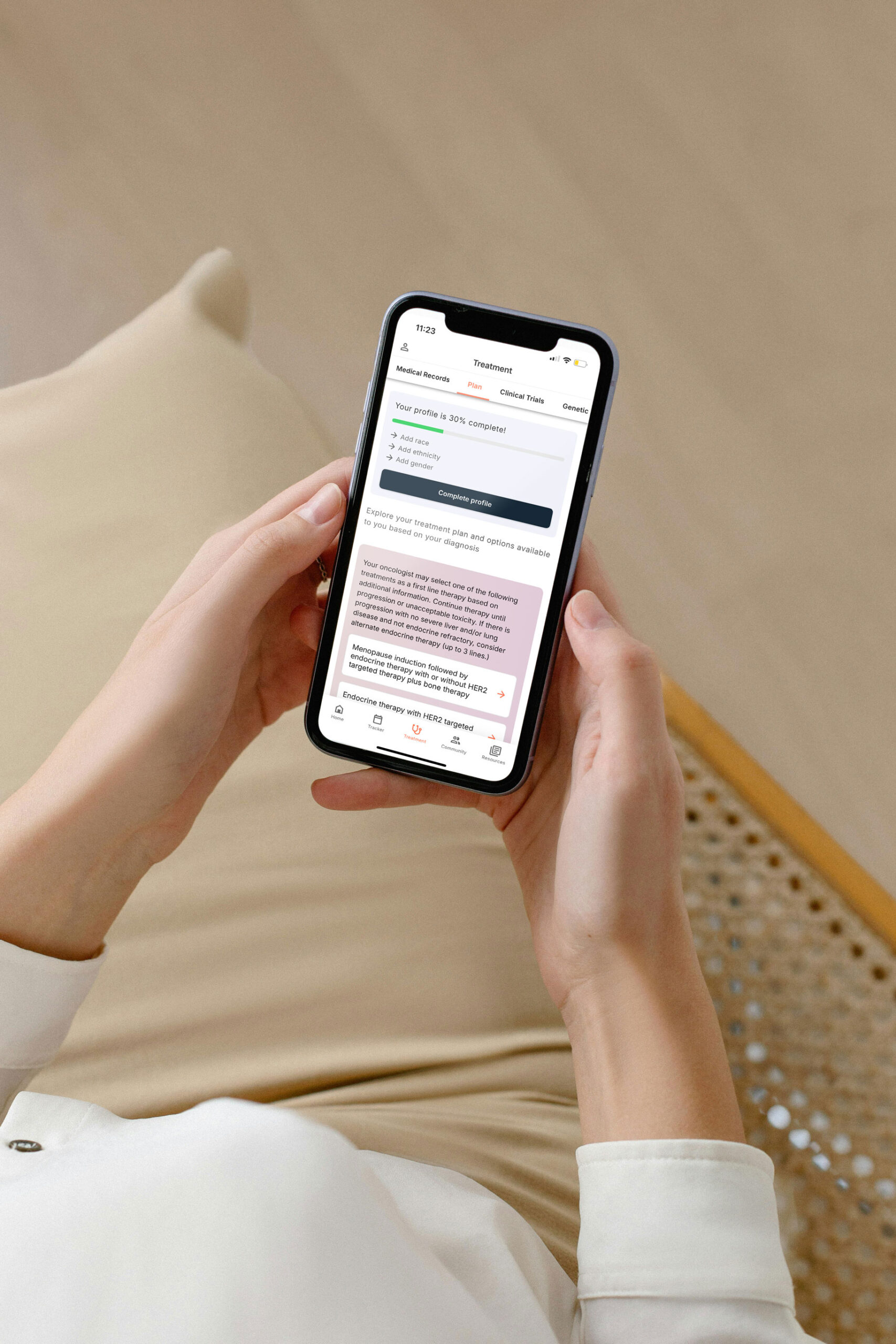
A Stage 4 breast cancer diagnosis carries enormous weight — but the story of what comes next is changing in ways that genuinely matter. Living with metastatic breast cancer today increasingly means living with it, not just facing it. More women are managing this disease for years, even decades, with a quality of life that would have seemed out of reach just a generation ago.
The shift in how oncologists think about metastatic breast cancer (MBC) reflects this reality. Rather than measuring success solely by remission, the goal is often long-term stability — controlling the disease, preserving function, and extending life while maintaining as much normalcy as possible. That’s the chronic disease model, and it’s reframing what’s possible.
The numbers are beginning to reflect this change. Research shows that median overall survival for metastatic breast cancer patients has improved significantly over the past 27 years, with survival increasing from approximately 32 months in the mid-1990s to 48 months in recent years — a shift driven by advances in targeted therapies, hormone treatments, and anti-HER2 drugs. Meanwhile, data from Breastcancer.org confirms that more women are living with MBC in the U.S. than at any previous point in history — and living longer after diagnosis.
What’s driving this progress isn’t a single breakthrough. It’s the convergence of smarter treatments, better diagnostic tools, and — critically — the ability to match the right therapy to each patient’s unique tumor biology. Personalized data is the engine powering this shift. Understanding the molecular profile of a patient’s cancer has become as important as the diagnosis itself, and that’s something we’ll explore in the next section on how precision medicine is reshaping treatment for people with MBC.
Precision medicine: the end of one-size-fits-all treatment
Precision medicine matches metastatic breast cancer symptoms and treatment decisions to the specific biology of a patient’s tumor — making therapy more targeted and, crucially, more effective. Rather than applying a standard protocol to everyone, oncologists now use detailed molecular data to select drugs that attack the exact mutations driving a patient’s cancer. As novel approaches and targeted therapies demonstrate, this shift is helping patients live longer and better.
Genomic tumor testing is essential — it’s the foundation of modern MBC care. When a tumor is biopsied, testing can reveal which receptors it expresses, which genes are mutated, and which pathways it relies on to grow. That information directly determines which treatments are likely to work. Without it, providers are essentially guessing.
One of the most significant recent advances is the identification of HER2-low status — a classification that didn’t meaningfully exist in treatment planning until recently. Tumors previously labeled HER2-negative are now being re-evaluated on a more precise scale. Many patients who were told they didn’t qualify for HER2-targeted therapy actually do qualify based on HER2-low status, opening the door to a new class of drugs that would otherwise have been off the table.
Evidence-based guidance powered by NCCN Guidelines®
Personalized treatment plans shaped by the latest oncology standards—tailored to your diagnosis.
Get started
View your personalized treatment plan in the Outcomes4Me app
Use your diagnosis to unlock personalized NCCN Guidelines®-aligned recommendations.
Continue in app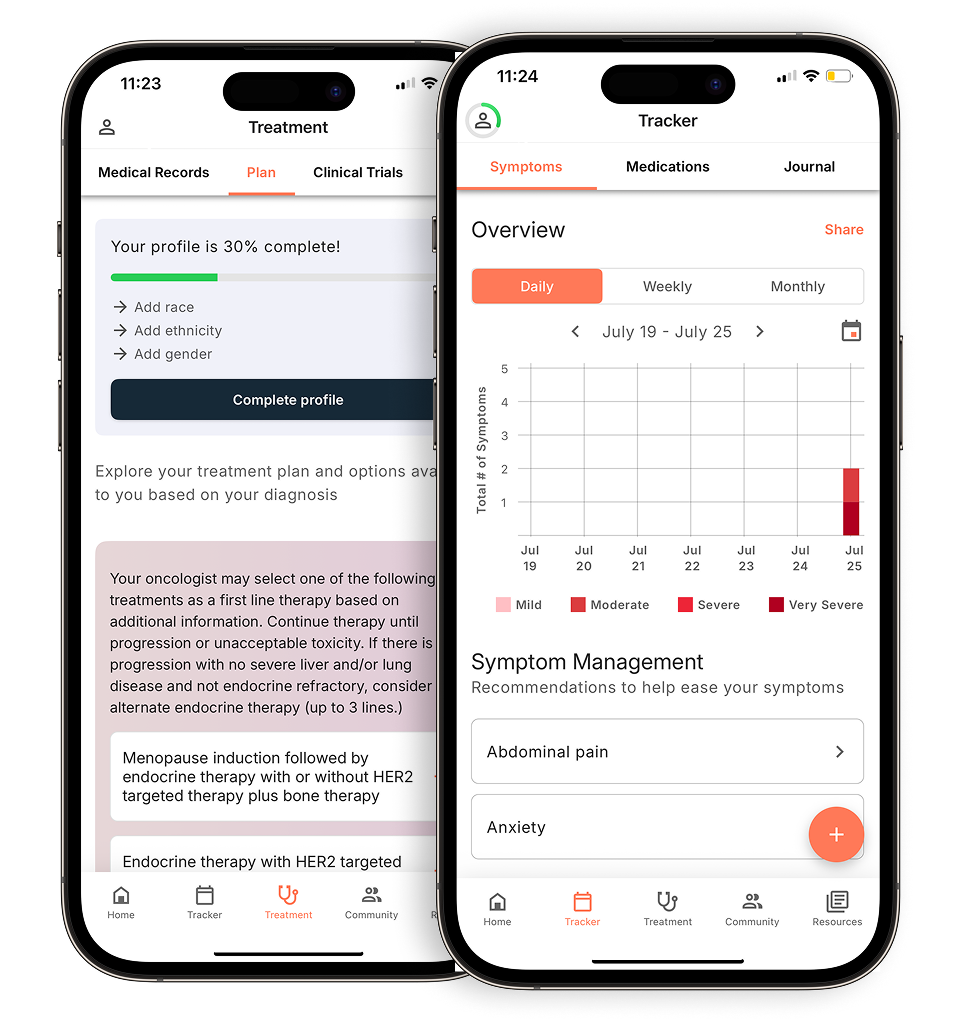
Key biomarkers to know: HR+ (hormone receptor-positive) — responds to hormone-blocking therapy | HER2-positive/HER2-low — eligible for HER2-targeted drugs | BRCA1/2 mutation — may benefit from PARP inhibitors | PIK3CA mutation — targetable in HR+ disease | PD-L1 expression — relevant for immunotherapy eligibility
Understanding how precision oncology works in practice helps patients ask the right questions at diagnosis and at each line of treatment. That’s where Outcomes4Me comes in — translating complex biomarker results into language that makes sense, so patients can have more informed conversations with their care team. The next step is understanding the specific drugs these biomarkers unlock — and that’s where the science becomes particularly promising.
The breakthroughs: antibody-drug conjugates (ADCs) and targeted inhibitors
Two drug classes are doing more than any others to shift MBC survival rates in 2024 — and understanding how they work helps explain why oncologists are increasingly talking about years of controlled disease rather than months.
Antibody-drug conjugates (ADCs) act like smart bombs, delivering chemotherapy directly to cancer cells while leaving healthy tissue largely intact. Antibody-drug conjugates like trastuzumab deruxtecan (Enhertu) and sacituzumab govitecan (Trodelvy) attach to proteins on the surface of tumor cells, release their toxic payload precisely where it’s needed, and sidestep much of the collateral damage that makes traditional chemotherapy so difficult to tolerate.
CDK4/6 inhibitors — including palbociclib, ribociclib, and abemaciclib — have become a cornerstone of treatment for hormone receptor-positive (HR+) MBC. By blocking proteins that drive tumor cell division, these drugs have become an important treatment option for eligible patients with metastatic breast cancer, helping many women live longer while managing the disease as a chronic illness. Crucially, their side effect profile tends to be more manageable than traditional chemotherapy, which supports a better quality of life over extended treatment periods.
What ties all of this together is treatment sequencing — the strategic ordering of therapies to preserve options and maximize their effectiveness over time. The goal isn’t just one good response; it’s a series of them. That’s why the newest ADCs and targeted agents coming through clinical trials are so important to understand early — which is exactly what the next section covers.
Clinical trials: your proactive treatment tier
Clinical trials aren’t a last resort — they’re one of the most proactive steps you can take when exploring new treatments for stage 4 breast cancer. Yet the “guinea pig” stigma persists, stopping many patients from asking about them until every other option has been exhausted. That framing deserves a direct challenge.
Participating in a clinical trial isn’t giving up on proven care — it’s gaining early access to tomorrow’s standard of care. As the National Comprehensive Cancer Network (NCCN) puts it, “Clinical trials are a way to access the most advanced care available today.” Trials are where the newest antibody-drug conjugates (ADCs) and next-generation immunotherapies are tested — often years before they reach standard approval. Waiting until the final line of treatment means potentially missing that window.
A few common myths, set straight:
Cancer care guidance for every step of your journey
Get treatment options, clinical trials, and support tailored to your diagnosis--all in one place.
Get started
See treatment options, manage symptoms, and stay informed—all in the app
View treatment options and trials personalized to your diagnosis—plus track progress in real time.
Continue in app- Myth: You might get a placebo. Reality: In most oncology trials, all participants receive active treatment; placebos are only used when a standard-of-care option is still given alongside the experimental drug.
- Myth: Trials are only for the sickest patients. Reality: Many trials actively recruit patients at earlier lines of therapy, where the data — and the benefit — may be strongest.
- Myth: Finding a trial is a full-time job. Reality: Platforms like Outcomes4Me automate the matching process, cross-referencing your tumor profile, prior treatments, and location to surface trials you actually qualify for.
The practical barrier isn’t eligibility — it’s awareness. Asking your provider about open trials at every treatment decision, not just at progression, keeps more doors open. And if you’re already navigating life with metastatic breast cancer, staying informed about your treatment options and taking an active role in your care can help you feel more supported and empowered.
Of course, finding the right trial is only part of the equation. Staying on any treatment — whether standard or investigational — depends heavily on how well you’re supported day to day. That’s where integrated care comes in.
Integrated care: managing quality of life to extend life
Staying on a life-saving treatment is just as important as finding the right one — and that’s exactly what integrated care protects. Palliative care isn’t about end-of-life planning; it’s supportive care that begins at diagnosis and runs parallel to your active treatment. Think pain management, nausea control, sleep support, and mental health resources — all working together to keep you functional and on track.
Structured monitoring and management of treatment-related factors such as tracking side effects and medication adherence may help patients continue on their therapies. When fatigue, neuropathy, or nausea go unmanaged, treatment interruptions follow. Those interruptions can undermine even the most well-designed precision medicine for MBC plan. Research cited by ASCO confirms that patients who receive early palliative care alongside standard treatment often achieve better clinical outcomes and longer survival — a finding that reframes supportive care as a clinical strategy, not an afterthought.
Two often-overlooked factors also shape long-term outcomes: financial toxicity and emotional well-being. The cost of MBC treatment — copays, transportation, lost income — creates real stress that can cause patients to delay or skip doses. Similarly, untreated anxiety and depression erode the motivation to stay engaged with care. Addressing both is a legitimate part of optimizing your treatment approach, not a luxury.
Real-time symptom tracking between appointments is where this all connects. When you can message your provider about a new symptom the day it appears — rather than waiting weeks for a scheduled visit — your team can intervene faster, adjust dosing, and prevent small issues from escalating into treatment-derailing crises. Building that communication loop is one of the most practical steps you can take to support your own longevity. The next section pulls these threads together into a clear framework for navigating what comes next.
The bottom line: how to navigate your longevity
MBC survival is rising — and the patients who live longest tend to be the most informed and most proactive members of their own care teams.
Knowing your biomarkers is the single most important step you can take right now. Whether it’s HER2 status, PIK3CA mutations, hormone receptor expression, or HER2-low breakthroughs that have opened targeted therapy to a whole new patient population, your molecular profile is the map that guides every treatment decision. Without it, you’re navigating without direction.
From there, the strategy builds in layers. Precision medicine matches your biology to the right therapy. Smart drug sequencing preserves your options over time. Clinical trials give you access to treatments that haven’t yet reached standard care — and as we’ve covered, they’re a proactive move, not a backup plan. Recent medical advances in treatment are helping people live longer with metastatic breast cancer, while integrated supportive measures including physical care, emotional support, and healthy lifestyle choices can help improve quality of life and sense of well-being. Long-term survivors of 15–20+ years are becoming more common in the MBC community — not because of luck, but because of this kind of layered, evidence-based approach.
Tools like Outcomes4Me bring all of this together in one place — helping you organize your clinical data, track your biomarkers, and surface personalized treatment options your care team can act on. The science is complex, but the goal is simple: more time, lived well. The next section shows you how to take that first step.
Taking control of your MBC journey
The science behind metastatic breast cancer is complex — but your goal is straightforward: more time, and more quality time. Every treatment advance, every guideline update, every clinical trial exists in service of that single objective. And at the center of all of it is you.
You are the most important member of your care team. Providers bring clinical expertise; you bring the knowledge of your own body, your values, and what matters most to your life. That combination — when it works well — is what drives the best outcomes. The patients who tend to fare best aren’t passive recipients of care. They ask questions, track their symptoms, understand their options, and stay engaged between appointments.
This is precisely where Outcomes4Me can help. As the only direct-to-patient platform that integrates with National Comprehensive Cancer Network® (NCCN®) treatment guidelines, Outcomes4Me translates the latest oncology evidence into personalized, accessible information built around your specific diagnosis. You don’t have to decode clinical research on your own or wonder whether you’re missing a better option — the platform does that work alongside you. Personalized medicine is reshaping how doctors make treatment decisions in cancer care through better risk stratification and tailored approaches — an evolution that may help improve treatment outcomes for patients across different cancer types.
Disclaimer: The information provided in this article is for informational purposes only and is not intended to be a substitute for professional medical advice, diagnosis, or treatment. Outcomes4Me is not acting as your caregiver, and any suggestions or guidance offered should not replace the advice of your healthcare provider or qualified medical professional. Always seek the guidance of your physician or other qualified health provider with any questions you may have regarding a medical condition.
Personalized support for real care decisions
Understand your diagnosis, explore clinical trials, and track symptoms--all in one place.
Get started
Compare treatments, prepare for appointments, and track side effects—all in the app
Built for your diagnosis, Outcomes4Me gives you the tools to make confident, informed decisions—right when you need them.
Continue in app