
Hearing the words “you have colorectal cancer” changes everything in an instant. Alongside the medical decisions ahead, many patients face a wave of fear, sadness, anger, or numbness that can feel just as overwhelming as the diagnosis itself. These reactions are common, understandable, and also manageable with the right support.
Emotional distress is a normal, common response
According to the National Cancer Institute (NCI), people respond to a cancer diagnosis in a wide range of ways, and distress levels can vary considerably from one person to the next. Research on colorectal cancer specifically shows that psychological distress is often reported: studies estimate that clinically significant anxiety and depressive symptoms affect a substantial share of colorectal cancer patients, with one review noting that these symptoms are, on average, notably more common in colorectal cancer patients than in the general population. Distress tends to peak around diagnosis, though it can resurface at any point during treatment, at follow-up scans, or well into survivorship.
Evidence-based guidance powered by NCCN Guidelines®
Personalized treatment plans shaped by the latest oncology standards—tailored to your diagnosis.
Get started
View your personalized treatment plan in the Outcomes4Me app
Use your diagnosis to unlock personalized NCCN Guidelines®-aligned recommendations.
Continue in app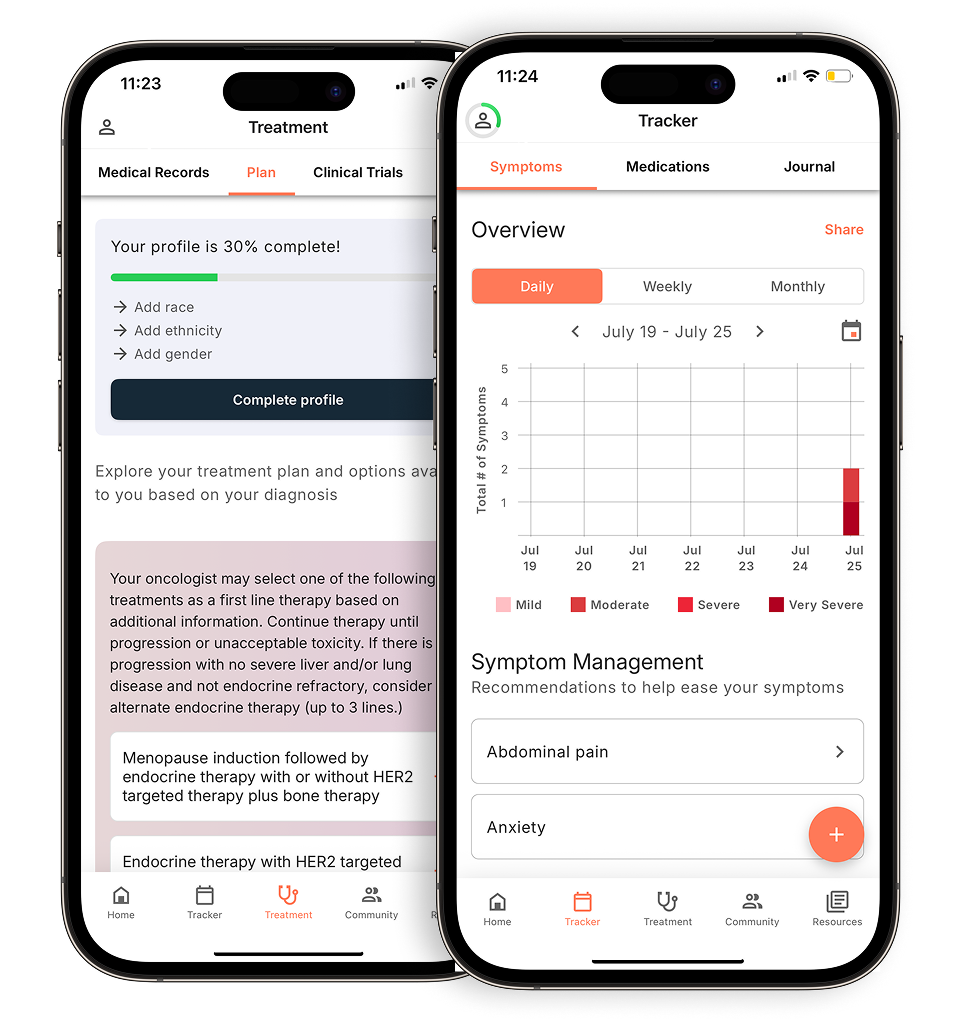
Physical symptoms unique to colorectal cancer can add another layer of difficulty. Pain, fatigue, changes in bowel function, and the use of medical devices such as ostomies often intensify emotional strain, and can also make depression and anxiety harder to recognize because their symptoms (e.g. poor sleep, appetite changes, low energy) can overlap with cancer or treatment side effects themselves.
Why addressing emotional health matters
Research summarized in a 2025 study on psychological distress in colon cancer patients found that anxiety and depression were associated with lower quality of life throughout treatment, with the connection growing stronger in later treatment stages. Other research ties elevated anxiety and depressive symptoms to greater pain, fatigue, and inflammation in colorectal cancer patients. Managing emotional health, in other words, is a legitimate part of managing the disease.
Practical ways to cope
Name what you’re feeling, without judgment. Fear, grief, guilt, and anger are all common. Suppressing these emotions tends to prolong distress, while acknowledging them to yourself, a loved one, or a professional is often the first step toward managing them.
Ask your care team about a distress screening. Many cancer centers routinely screen patients for anxiety and depression using simple questionnaires about mood, energy, and daily functioning. If your center hasn’t offered one, ask for it directly; a positive screen typically leads to a referral to a social worker, psychologist, psychiatrist, or chaplain.
Use professional counseling designed for cancer patients. Centers such as Memorial Sloan Kettering Cancer Center offer psychiatrists, psychologists, and social workers specifically trained to help patients and families cope with the emotional weight of a cancer diagnosis, through both individual and group sessions. Mass General, for example, has a psychiatric oncology (or psycho-oncology) center.
Join a support group. Talking with others who understand the experience firsthand can reduce feelings of isolation. Groups run through academic cancer centers or organizations such as the Colorectal Cancer Alliance connect patients with others navigating the same diagnosis. You can also join online peer communities, such as those available on the Outcomes4Me platform.
Lean on patient advocacy resources. Organizations like Fight Colorectal Cancer provide peer support programs, educational materials, and navigators who understand the disease-specific emotional challenges of colorectal cancer, including younger-onset diagnoses.
Involve your caregivers, but protect your own space too. Family and friends can be a major source of strength, but it’s also OK to set boundaries around how much you discuss your diagnosis on any given day.
Consider mind-body approaches alongside, not instead of, professional care. Gentle movement, breathing exercises, mindfulness practices, and acupuncture can complement clinical treatment for significant anxiety or depression.
When to seek immediate help
If feelings of hopelessness, persistent low mood, or loss of interest in daily life last more than two weeks, or if you’re having thoughts of self-harm, tell your care team right away. Oncology teams expect these conversations and can connect you quickly with mental health support.
The bottom line
Emotional overwhelm after a colorectal cancer diagnosis is a well-documented, common response with real physical and clinical stakes. Screening, professional counseling, peer support, and honest conversations with your care team are all evidence-based ways to manage it. You don’t have to carry this alone, and asking for support is itself a form of taking care of your health.
This article is for informational purposes and is not a substitute for personalized medical or mental health advice. If you’re struggling, talk to your oncology team or a mental health professional.
Personalized support for real care decisions
Understand your diagnosis, explore clinical trials, and track symptoms--all in one place.
Get started
Compare treatments, prepare for appointments, and track side effects—all in the app
Built for your diagnosis, Outcomes4Me gives you the tools to make confident, informed decisions—right when you need them.
Continue in app