
Every year, the American Society of Clinical Oncology (ASCO) Annual Meeting brings together cancer researchers, oncologists, and advocates to discuss the latest advances in cancer care. Some studies presented at ASCO may eventually change how lung cancer is treated. Others help answer important questions that patients and families are already asking in the clinic every day.
This year, several lung cancer studies are drawing significant attention because they focus on issues patients care deeply about, including whether targeted therapies should move earlier in treatment, how resistance to treatment may be overcome, whether antibody-drug conjugates can improve outcomes, and whether progress is finally being made in small cell lung cancer, a disease that has historically had fewer treatment advances.
Here are four lung cancer studies patients and advocates should be paying attention to at ASCO 2026.
HARMONi: A new first-line option for EGFR-mutated metastatic NSCLC?
Patients with EGFR-mutated non-small cell lung cancer (NSCLC) have seen major treatment advances over the past decade, especially with targeted therapies like osimertinib. But even with these treatments, most cancers eventually develop resistance.
The Phase III HARMONi-6 trial studied ivonescimab combined with chemotherapy compared with chemotherapy alone in patients with previously untreated advanced squamous NSCLC.
Evidence-based guidance powered by NCCN Guidelines®
Personalized treatment plans shaped by the latest oncology standards—tailored to your diagnosis.
Get started
View your personalized treatment plan in the Outcomes4Me app
Use your diagnosis to unlock personalized NCCN Guidelines®-aligned recommendations.
Continue in app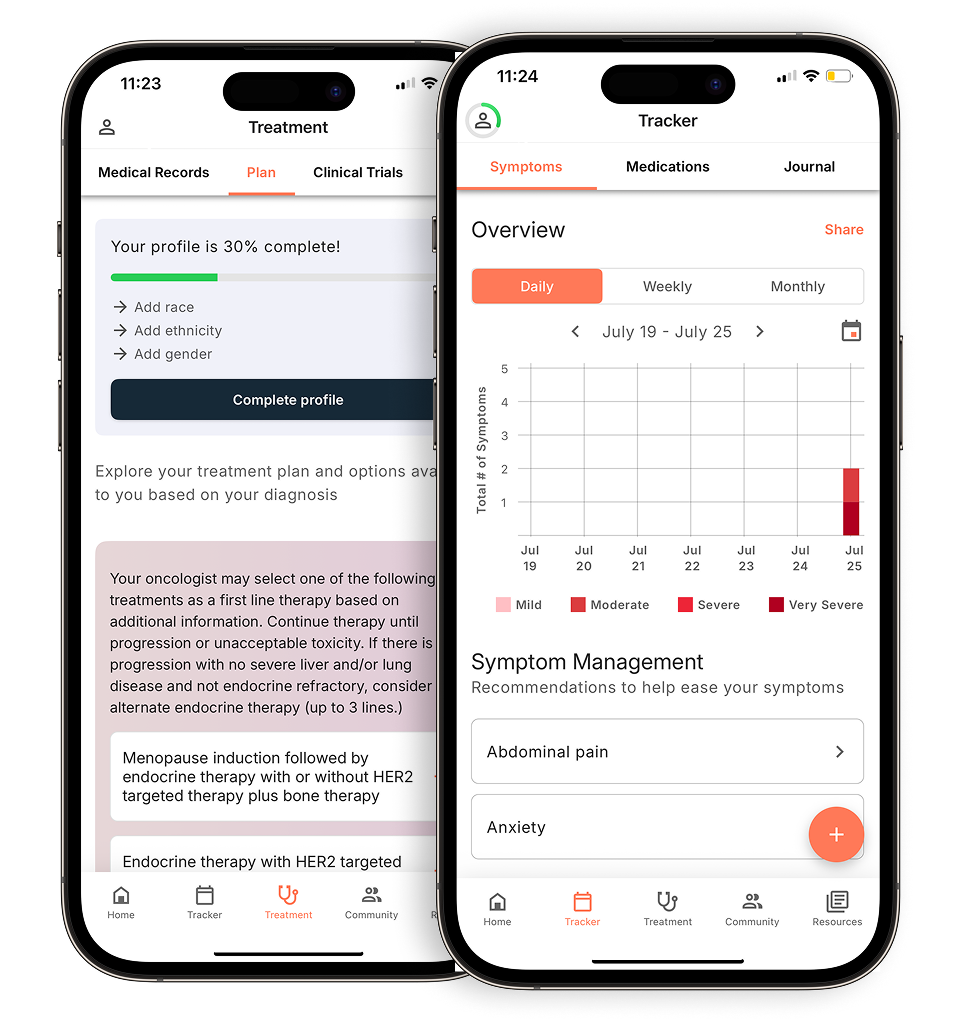
This study is drawing major attention because ivonescimab is a novel PD-1/VEGF bispecific antibody, meaning it targets both immune checkpoint signaling and tumor blood vessel growth simultaneously. At ASCO 2026, the study authors reported that ivonescimab plus chemotherapy showed a statistically significant 34% improvement on overall survival.
The results of the HARMONi-6 trial represent the possibility of a new first-line treatment option for patients with previously untreated EGFR-mutated advanced squamous NSCLC.
OptiTROP-Lung05: Can ADCs improve first-line treatment for PD-L1-positive NSCLC?
One of the most talked-about lung cancer studies at ASCO 2026 evaluated sacituzumab tirumotecan, an antibody-drug conjugate (ADC), combined with pembrolizumab as a first treatment for patients with PD-L1-positive advanced NSCLC.
OptiTROP-Lung05 showed that patients receiving the combination lived longer without their cancer growing compared with those receiving pembrolizumab alone. Researchers also reported encouraging early overall survival results. This is the first Phase III study to demonstrate a significant benefit from combining an ADC with immunotherapy in the first-line treatment setting for advanced NSCLC. These findings could help shape future treatment options for some patients with PD-L1-positive lung cancer.
LIBRETTO-432: Moving targeted therapy earlier in RET-positive lung cancer
One of the major themes at ASCO 2026 is the continued movement of targeted therapies into earlier-stage lung cancer, where treatment is still being given with the goal of cure.
The Phase III LIBRETTO-432 trial evaluated selpercatinib (Retevmo) as adjuvant treatment for patients with stage IB-IIIA RET fusion-positive non-small cell lung cancer (NSCLC) after surgery. RET fusions are uncommon but important genetic alterations that can help guide treatment decisions in some patients with lung cancer.
At ASCO 2026, researchers presented the primary results of the trial, including event-free survival data. The study found that selpercatinib reduced the risk of disease recurrence or death by 83% versus a placebo. For patients with a RET fusion, who face a high risk of recurrence, selpercatinib offers the option for a post-surgery therapy that can significantly reduce that risk.
This study matters because it reflects a major shift happening across lung cancer treatment: using precision medicine earlier, before cancer returns, rather than waiting until metastatic disease develops. For patients, it also reinforces why comprehensive biomarker testing at diagnosis is becoming increasingly important, even in earlier-stage disease.
Phase 1/1b CHRYSALIS-2: A new option for atypical EGFR-mutated NSCLC?
Atypical EGFR mutations exist outside of the classical exon 19 deletions and exon 21 L858R substitutions, and account for up to 30% of EGFR mutations. In this category of EGFR-mutated lung cancer, first-line treatment options have remained limited.
The Phase 1/1b CHRYSALIS-2 study evaluated intravenous amivantamab-vmjw in combination with lazertinib in patients with advanced NSCLC with atypical EGFR mutations. As reported at ASCO 2026, the study found that amivantamab-vmjw in combination with lazertinib led to a durable overall survival benefit of 41 months (3.5 years) among this patient population.
These findings represent an exciting, new, first-line option for patients with a NSCLC subtype that typically leads to poorer outcomes compared to outcomes for patients with common EGFR mutations.
Why this matters for patients
Large cancer meetings like ASCO can feel overwhelming, especially when headlines begin circulating before patients fully understand what the research may mean for them personally. Not every study will immediately change treatment, and early excitement does not always translate into long-term benefit.
But these meetings provide an important glimpse into where lung cancer care is heading.
This year’s lung cancer research reflects several major themes shaping the future of treatment:
- More personalized biomarker-driven therapy
- Earlier use of targeted treatments
- New approaches to overcoming treatment resistance
For patients, staying informed can help support more meaningful conversations with your healthcare team and a better understanding of how treatment options continue to evolve.
Personalized support for real care decisions
Understand your diagnosis, explore clinical trials, and track symptoms--all in one place.
Get started
Compare treatments, prepare for appointments, and track side effects—all in the app
Built for your diagnosis, Outcomes4Me gives you the tools to make confident, informed decisions—right when you need them.
Continue in app