Scanxiety is the wave of dread, hypervigilance, and emotional challenges that builds before, during, and after a cancer scan, and it’s one of the most universal experiences in cancer treatment. Scanxiety, anxiety while waiting for test results, is very common among people with cancer, affecting more than 70% of this population according to clinical experts.
What you’re feeling is biology, not weakness or overreaction. The sights, sounds, and even the smell of an imaging center can trigger your nervous system’s fight-or-flight response, releasing cortisol and adrenaline in the same way a physical threat would. Your body doesn’t distinguish between a real danger and an anticipated one.
It doesn’t stop once you’re in remission. Even patients with no evidence of disease (NED), frequently report intense anxiety ahead of follow-up scans. Coping with cancer stress and depression is a legitimate clinical concern that your care team takes seriously.
Information is one of the most powerful tools for reclaiming a sense of control. Understanding what to expect from your scan, your timeline, and your options can help quiet the nervous system’s alarm signals.
Managing the 72-hour result gap
The days between a scan and its results are often the hardest part, but a few deliberate choices made before you leave the imaging center can meaningfully reduce that distress.
The single most effective move is scheduling strategically. Following what many patients informally call the “Monday Morning Rule,” booking scans early in the week prevents results from falling into a weekend communication gap, when offices are closed, phones go unanswered, and anxiety fills the silence. Setting early expectations with your care team about when and how results will be delivered can significantly lower distress. Before you leave the imaging center, ask directly: “When should I expect to hear back, and from whom?” That one question anchors the uncertainty to a specific timeframe rather than an open-ended wait.
Beyond scheduling, structure the waiting period itself with intention. A practical protocol that works for many patients includes:
Evidence-based guidance powered by NCCN Guidelines®
Personalized treatment plans shaped by the latest oncology standards—tailored to your diagnosis.
Get started
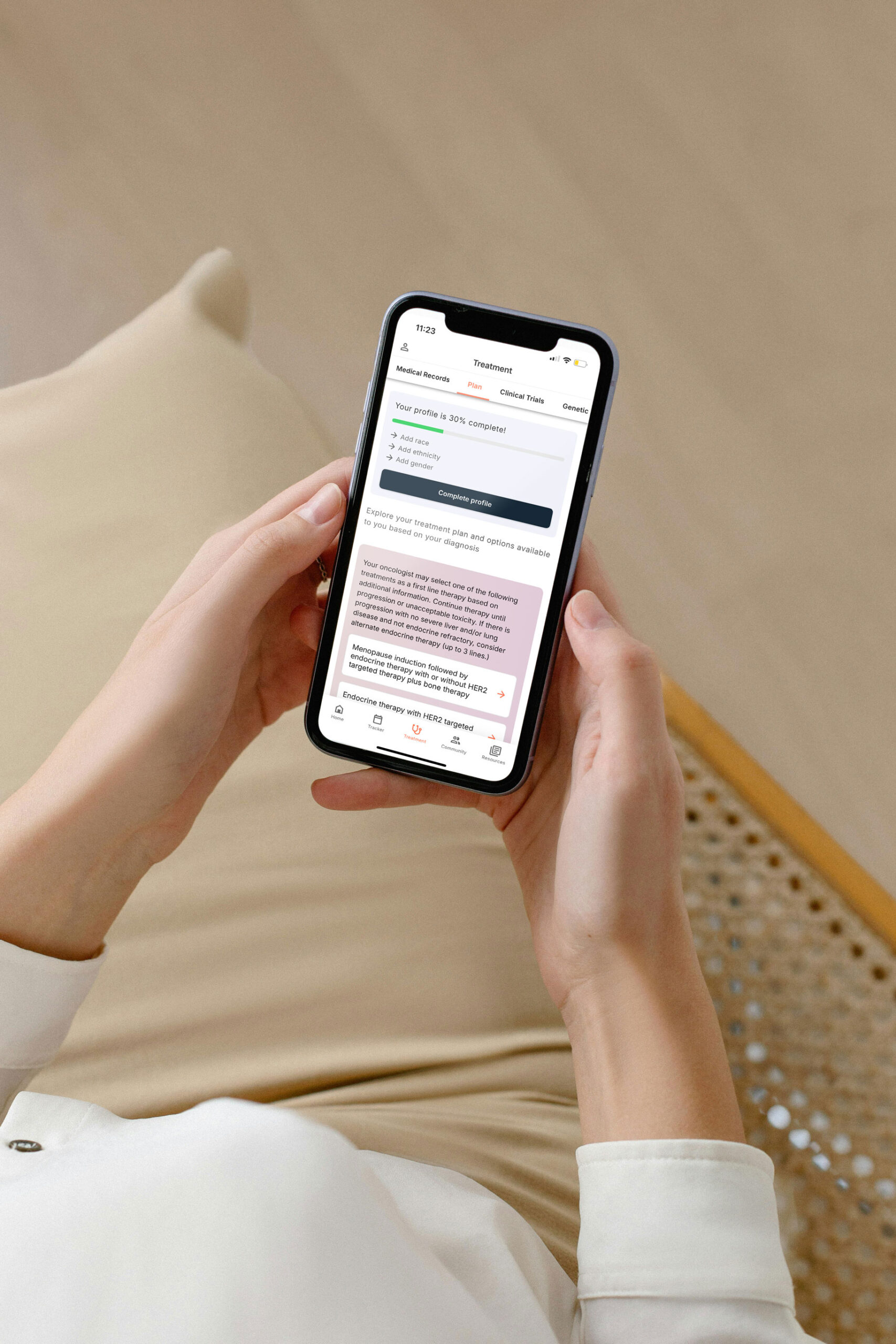
View your personalized treatment plan in the Outcomes4Me app
Use your diagnosis to unlock personalized NCCN Guidelines®-aligned recommendations.
Continue in app
- Build a distraction kit. Load a playlist of audiobooks, download a puzzle app, or start a jigsaw, high-focus activities that occupy the mind without demanding emotional bandwidth.
- Plan a post-scan treat. A favorite meal, a walk somewhere you love, or a low-key outing creates a positive anchor for the day of the scan itself, shifting the emotional association away from dread.
- Keep managing anxiety during clinical trials and routine follow-ups the same way. Consistency across scan types reduces the cognitive load of deciding how to cope each time.
- Avoid checking the patient portal: Results from tests and scans may appear in your patient portal before your doctor reviews them with you. Constantly refreshing your portal for results can cause more anxiety and results can be hard to interpret.
These strategies don’t eliminate uncertainty, but they replace reactive suffering with proactive structure. And if the fear of what results might mean feels bigger than a distraction kit can handle, particularly the weight of biomarker or genetic testing results, that’s worth exploring more deeply.
Grounding techniques for the MRI and CT suite
The moments inside a scanner can feel overwhelmingly long. Memorial Sloan Kettering Cancer Center recommends relaxation exercises, such as deep breathing, stretching, and meditation, to help manage scanxiety before, during, and after medical imaging scans. Having two or three techniques ready before you slide into the machine puts you in control.
Box breathing is the simplest place to start. Inhale for four counts, hold for four, exhale for four, hold again for four. Repeat. Box Breathing is a simple technique that some people find helps them feel calmer during stressful moments. You might try it in the waiting room to see if it helps you manage anxiety. It requires nothing except your breath, which means it works even when you can’t move inside an MRI machine.
Cancer care guidance for every step of your journey
Get treatment options, clinical trials, and support tailored to your diagnosis--all in one place.
Get started
See treatment options, manage symptoms, and stay informed—all in the app
View treatment options and trials personalized to your diagnosis—plus track progress in real time.
Continue in app- Box breathing: Inhale (4 counts) → Hold (4 counts) → Exhale (4 counts) → Hold (4 counts). Repeat four to six cycles.
- 5-4-3-2-1 grounding: Name five things you can see, four you can feel, three you can hear, two you can smell, one you can taste. This sense-by-sense scan interrupts a building panic response by redirecting attention outward.
- Memory palace exercises offer a longer distraction for extended MRI sessions. Choose a familiar route, your childhood home or a favorite walk, and mentally move through it room by room, filling in as much detail as possible. It’s an absorbing cognitive task that passes time without requiring you to open your eyes or move.
Communicating with the technician before the scan begins is equally important. Ask about available music, and request a check-in at a specific interval, say every five minutes, so you have a predictable anchor point. Most technicians welcome this kind of direction.
Navigating the psychological impact of genetic testing results
Genetic results carry a different kind of emotional charge than routine scans, because they feel less like a snapshot and more like an identifier of who you are.
While learning how to deal with scanxiety before imaging and during follow-ups is a skill many patients develop over time, the anxiety tied to genetic and biomarker data is unique. A scan result reflects what’s happening in your body at that moment. A genetic result can feel like a verdict about your biology that won’t change, and that permanence can feel heavier. Processing complex risk data requires patients to hold uncertainty and specificity at the same time, which is an unusually demanding cognitive task.
A genetic result with more data expands your options. A common pattern is for patients to receive biomarker results and immediately spiral into worst-case thinking, especially when a report flags mutations they don’t recognize. Biomarker testing may help your care team identify whether you could be eligible for targeted therapies, immunotherapy protocols, and clinical trials. Ask your doctor how biomarker results might apply to your specific situation.
Understanding complex genetic reports and connecting findings directly to relevant clinical trials and treatment options helps you walk into your next care team conversation informed rather than overwhelmed.
When anxiety becomes clinical. Knowing when to seek help
Scanxiety exists on a spectrum. Feeling nervous before an MRI is normal, but when anxiety starts disrupting daily life, it’s a signal worth taking seriously. According to the National Cancer Institute, red flags include persistent insomnia, an inability to perform routine tasks, and panic attacks severe enough to prevent you from attending scans altogether.
Psycho-oncology is the clinical specialty built for exactly this. These are mental health professionals trained specifically in the emotional challenges of cancer care, and they’re increasingly embedded within oncology centers. If you’re experiencing clinical-level distress, ask your care team for a referral.
Your care team can also discuss anti-anxiety medication for scan days specifically. Short-acting options are commonly prescribed for procedural anxiety; a direct, factual conversation before your next scheduled scan is all it takes to explore whether that’s right for your care.
Don’t underestimate peer support. MD Anderson recommends staying connected with others through support groups and social contact as one of several strategies to help manage scanxiety and treatment-related stress.
Key takeaways
Scanxiety is a physical response to uncertainty, and the most effective antidote is proactive planning that replaces passive waiting with purposeful action. Coping with cancer stress and depression means building a structure that keeps fear from running the show.
The strategies covered throughout this article distill into four concrete habits:
- Schedule strategically. Book scans for early in the week, ideally Mondays, and ask your care team upfront for a clear results timeline. Reducing “limbo” time is one of the highest-leverage moves you can make.
- Prepare your body and mind. Box Breathing and other grounding techniques give you a reliable tool when anxiety peaks inside the scanner itself. Practice before your appointment so the technique feels automatic when you need it most.
- Know your threshold. As earlier sections outlined, there’s a meaningful difference between expected distress and clinical anxiety. Recognizing that line and crossing it into professional support when needed is a sign of self-awareness, not weakness.
- Organize your data. Fear often grows in the gaps between what you know and what you don’t. Having your genetic and clinical information in one place helps you walk into conversations with your care team better informed.
Personalized support for real care decisions
Understand your diagnosis, explore clinical trials, and track symptoms--all in one place.
Get started
Compare treatments, prepare for appointments, and track side effects—all in the app
Built for your diagnosis, Outcomes4Me gives you the tools to make confident, informed decisions—right when you need them.
Continue in app