
A cancer diagnosis reshapes how you think, sleep, and move through every ordinary moment of your day. Psychological distress in cancer is a significant concern and recognizing it as such is the first step toward addressing it effectively.
Scanxiety, the acute anxiety that builds in the days or weeks before a scan, and the dread of what results might reveal is one of the most widely reported experiences among cancer patients. Paired with the persistent fear of recurrence, it can create a cycle of hypervigilance that doesn’t ease even when scans come back clear. These aren’t overreactions. They’re predictable, physiological stress responses to a fundamentally threatening situation.
This is the domain of psychosocial oncology: the field that addresses emotional, psychological, and social distress alongside physical cancer care. International panels now recommend mindfulness-based interventions to address depression and anxiety in adults with cancer, a recognition that mental health support belongs inside oncology, not alongside it.
That’s where mindfulness for cancer anxiety enters as a clinically meaningful tool. In an oncology context, mindfulness means intentionally directing attention to the present moment without judgment to interrupt the rumination loops that feed fear. You can’t always control your diagnosis, but you can find ways to quiet the noise and reclaim your sense of self within it. The clinical evidence behind this practice is what makes it worth understanding in depth.
Clinical validation: why experts recommend mindfulness-based interventions
Mindfulness-based interventions have moved well beyond wellness trends and are now among the most rigorously studied behavioral tools in oncology care. As the previous section explored, a diagnosis triggers real psychological disruption. What the clinical evidence confirms is that structured mindfulness programs help manage that disruption at a measurable, biological level. Meta-analyses published in the Journal of Psychosomatic Research show significant reductions in cortisol levels and improved sleep quality in cancer patients who practice mindfulness consistently, outcomes that matter as much as any symptom management protocol.
Three clinical frameworks have the strongest evidence base in oncology:
Evidence-based guidance powered by NCCN Guidelines®
Personalized treatment plans shaped by the latest oncology standards—tailored to your diagnosis.
Get started
View your personalized treatment plan in the Outcomes4Me app
Use your diagnosis to unlock personalized NCCN Guidelines®-aligned recommendations.
Continue in app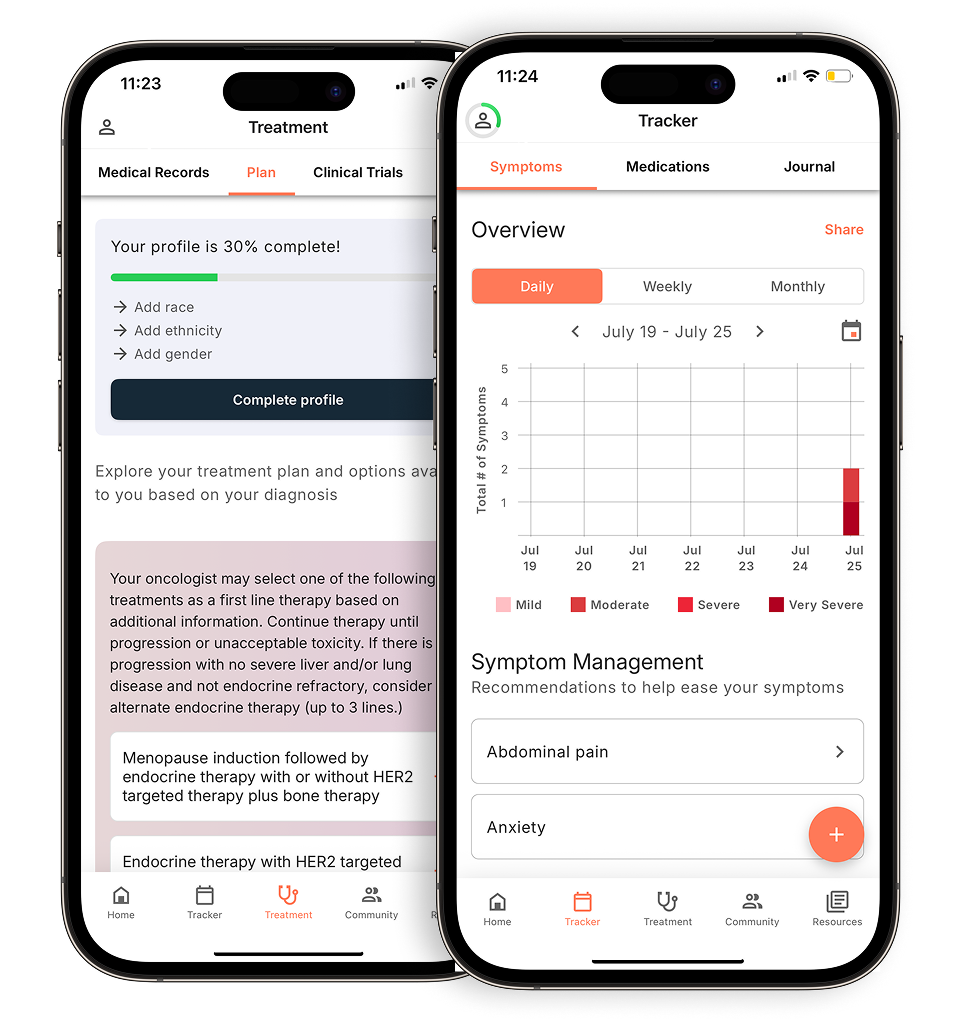
- Mindfulness-based stress reduction (MBSR): The eight-week gold standard, MBSR for cancer patients combines body awareness, breathing techniques, and gentle movement to reduce anxiety and treatment-related fatigue. Research supports its role in improving sleep and recovery during and after active treatment.
- Mindfulness-based cognitive therapy (MBCT): Adapted from MBSR, MBCT specifically targets the cycle of negative rumination, which is the “what if” thinking that can spiral after a diagnosis. It trains patients to observe thoughts without being consumed by them.
- Acceptance and commitment therapy (ACT): Rather than reducing distressing thoughts, ACT helps patients clarify what matters most to them and take value-driven action despite uncertainty. It’s particularly useful when prognosis feels ambiguous.
Across all three approaches, systematic reviews of mindfulness-based interventions in cancer survivors provide evidence for improvements in mood disturbance, anxiety, depression, and stress, though adherence to the daily home practice typically assigned in these programs remains suboptimal at approximately 60% of prescribed amounts. Understanding why these programs work physiologically sets the foundation for the practical techniques covered next.
Managing the ‘fight or flight’ response during active treatment
Coping with cancer anxiety is hardest in the moments you can least escape, such as during a scan, when you’re in the infusion chair or waiting room to see your doctor. These are the settings where the body’s stress response fires hardest, and where practical, evidence-based techniques matter most. As the Mayo Clinic notes, mindfulness helps patients stay focused in the present moment, reducing the impact of intense emotions. The good news: you don’t need a quiet room or a meditation cushion to use these tools.
Three techniques worth knowing and when to use them:
- The 5-4-3-2-1 grounding technique works by pulling your attention through each of your five senses in sequence: five things you can see, four you can touch, three you can hear, two you can smell, one you can taste. It’s especially useful during invasive scans, when the enclosed space and mechanical noise can trigger panic. Starting the sequence before you enter the scanner gives your nervous system something concrete to hold onto.
- Mindful breathing for anxiety is straightforward but genuinely effective. Before a chemotherapy infusion, try a slow inhale for four counts, a brief hold, then a six-count exhale. The extended exhale activates the parasympathetic nervous system. Many people with cancer have found that breath-focused relaxation techniques help them lower stress and cope with anxiety.
- Body scan meditation is particularly valuable when treatment leaves you feeling disconnected from your own body. Moving your attention slowly from your feet upward helps rebuild a sense of familiarity and safety with a body that can feel unpredictable. Mind-body practices like meditation are part of integrative oncology and may help reduce stress, anxiety, and depression in cancer patients receiving treatment.
In the waiting room, any of these techniques can be done silently, eyes open or closed, without drawing attention. Even two to three minutes of focused breathing before your name is called can meaningfully lower baseline anxiety. Understanding how these practices work physiologically sets the stage for a larger question: how do they interact with the increasingly personalized nature of cancer care itself?
Cancer care guidance for every step of your journey
Get treatment options, clinical trials, and support tailored to your diagnosis--all in one place.
Get started
See treatment options, manage symptoms, and stay informed—all in the app
View treatment options and trials personalized to your diagnosis—plus track progress in real time.
Continue in appThe intersection of personalized medicine and mental resilience
A calm, focused mind directly shapes how well patients can engage with the most complex decisions of their lives. When anxiety is running high, it becomes genuinely harder to process dense genetic reports, weigh clinical trial eligibility criteria, or ask the right questions of your care team. Chronic stress narrows cognitive bandwidth, making it harder to absorb, retain, and act on critical medical information.
This is where mindfulness-based stress reduction oncology programs reveal a function that goes beyond emotional support. By helping patients regulate their stress response, these practices create the mental space needed to evaluate options clearly. A patient who can approach a conversation about biomarker testing or a phase 2 trial with a grounded, present-state mindset is far better positioned to participate meaningfully in shared decision-making than one operating in a state of sustained fight-or-flight.
Personalized medicine with its genomic data, companion diagnostics, and expanding trial landscapes demands cognitive engagement, which anxiety actively undermines. Mindfulness-based interventions have been shown to reduce pain severity, anxiety, depression, and distress in cancer patients, contributing to improved quality of life. Tools designed to reduce information overload still require a regulated nervous system to be truly useful. Mindfulness-based interventions show broad potential in improving cancer patients’ psychological health, physical symptoms, and quality of life, and this potential is enhanced when patients are able to engage actively with the intervention.
Beyond the patient: mindfulness for caregivers and survivors
Caregivers carry a psychological burden that often goes unaddressed. The emotional weight of supporting a loved one through diagnosis, infusions, and recovery can produce what clinicians describe as secondary traumatic stress, a response that mirrors many symptoms of the patient’s own distress. Many people with cancer and their caregivers have found that mindfulness and relaxation techniques help lower stress and anxiety. Practices like body scans, breath awareness, and even brief meditation during chemotherapy appointments can interrupt the cycle of anxious anticipation that builds over weeks of treatment. When caregivers regulate their own nervous systems, they’re better positioned to offer calm, consistent support.
Survivors face a different but equally real challenge: the “what now?” phase. When active treatment ends and the care team steps back, many people experience a disorienting loss of structure. The appointments, the protocols, the clear sense of purpose that came with fighting the disease: all of it suddenly recedes. Fear of recurrence fills the gap. Research on mindfulness-based interventions in cancer survivors shows evidence that these practices can help improve anxiety and other measures of psychological distress, though more research is needed to fully understand the relationship between home practice adherence and clinical outcomes. Building a long-term resilience practice, even just 10 minutes of daily breath-focused meditation, gives survivors a concrete, repeatable tool for managing uncertainty. Addressing fatigue that lingers after treatment is often part of this same recovery picture, and mindfulness supports both the physical and emotional dimensions of healing.
The bottom line: what you need to know about mindfulness in oncology
Expert guidelines now formally include mindfulness-based interventions for managing cancer-related distress, reflecting a significant shift in how oncology teams approach the whole-patient experience. This isn’t a soft endorsement. Mind-body interventions including mindfulness, progressive muscle relaxation, and deep breathing are evidence-based tools recommended by oncology nursing guidance for managing anxiety, depression, and treatment-related stress in cancer patients.
Here’s what the evidence tells us:
- Mindfulness-based stress reduction (MBSR) measurably lowers cortisol, the body’s primary stress hormone, and improves sleep quality, both of which have downstream effects on immune function and treatment tolerance.
- Real-time techniques — breath focus, body scans, and guided imagery can be used during scans, blood draws, and infusions to interrupt the anxiety response in the moment.
- Mental health support, including mindfulness practices, plays a significant role in cancer patients’ recovery and quality of life, and can help patients engage more effectively with their personalized care plan.
On the other hand, mindfulness isn’t a cure, and it works best when it’s integrated intentionally with provider support and consistent practice. The good news is that access is expanding, with digital and app-based mindfulness programs showing meaningful improvements in quality of life, anxiety, depression, and sleep for cancer patients.
Pairing mental resilience tools with reliable clinical information creates a genuinely powerful combination — and that’s exactly where the right platform can make a real difference.
Taking control of your cancer care with Outcomes4Me
The research is clear that managing anxiety requires both psychological and informational support. Practicing mindfulness alongside somatic approaches can further support your body and mind through treatment. Combining these practices with a platform built around your specific diagnosis creates a genuinely whole-person approach to care.
You don’t have to navigate this alone or uninformed. Download the Outcomes4Me app today to access personalized treatment matching, clinical trial options, and evidence-based resources built around your unique situation.
Personalized support for real care decisions
Understand your diagnosis, explore clinical trials, and track symptoms--all in one place.
Get started
Compare treatments, prepare for appointments, and track side effects—all in the app
Built for your diagnosis, Outcomes4Me gives you the tools to make confident, informed decisions—right when you need them.
Continue in app