
The biomarker revolution: why MSI-H is a game changer
A single lab result can change everything about your colorectal cancer treatment plan — and MSI-H status is one of the most significant results you can receive.
MSI-H, or microsatellite instability-high, is a genetic signature that makes colorectal cancer cells unusually visible to your immune system. According to MD Anderson Cancer Center, MSI-H tumors accumulate a high number of genetic mutations because the cell’s DNA mismatch repair system has broken down — essentially, the machinery that proofreads your DNA stops working. The result is a tumor littered with errors, and that “messiness” is precisely what flags it for immune attack.
That distinction matters enormously when it comes to treatment. MSI-H colorectal cancer immunotherapy is effective because these mutation-dense tumors are recognized and targeted far more effectively than genetically stable ones. Specifically, MSI-H status is the key that unlocks access to checkpoint inhibitors for colon cancer. As research has demonstrated, checkpoint inhibitors have shown promising results in patients with advanced or metastatic colorectal cancer that have MSI or mismatch repair deficiency, representing an important immunotherapy option for this selective patient population. You can also explore how checkpoint inhibitors like pembrolizumab and dostarlimab work by blocking PD-1 checkpoint proteins to help your immune system fight cancer, which will help you better understand these therapies.
Understanding your MSI status isn’t just a clinical detail — it’s a decision-making tool. Outcomes4Me is built on the belief that you deserve clear, evidence-based information so you can advocate for yourself and engage meaningfully with your care team. Knowing whether your tumor is MSI-H or not directly shapes which therapies are available to you. The next section breaks down exactly what those two categories — MSI-H and MSS — mean in practice, and why oncologists describe them as “hot” and “cold” tumors.
MSI-H vs. MSS: understanding your ‘hot’ or ‘cold’ tumor
Not all colorectal cancer tumors behave the same way — and the difference between MSI-H and MSS can determine whether immunotherapy is even an option for you.
MSI-H tumors are “immunologically hot,” meaning they’re already generating a strong immune response. According to Fight Colorectal Cancer, approximately 15% of colorectal cancers fall into this category. Because these tumors carry an unusually high number of genetic mutations, the immune system recognizes them more readily — making microsatellite instability high colon cancer treatment with immunotherapy agents like pembrolizumab for MSI-H colorectal cancer both logical and clinically validated.
The remaining 85% are MSS (Microsatellite Stable) — “cold” tumors with fewer mutations and minimal immune activity. For MSS patients, checkpoint inhibitors have shown limited anti-tumor activity in the majority of cases, whereas they have demonstrated remarkable clinical benefit in MSI-H colorectal cancers.
Evidence-based guidance powered by NCCN Guidelines®
Personalized treatment plans shaped by the latest oncology standards—tailored to your diagnosis.
Get started
View your personalized treatment plan in the Outcomes4Me app
Use your diagnosis to unlock personalized NCCN Guidelines®-aligned recommendations.
Continue in app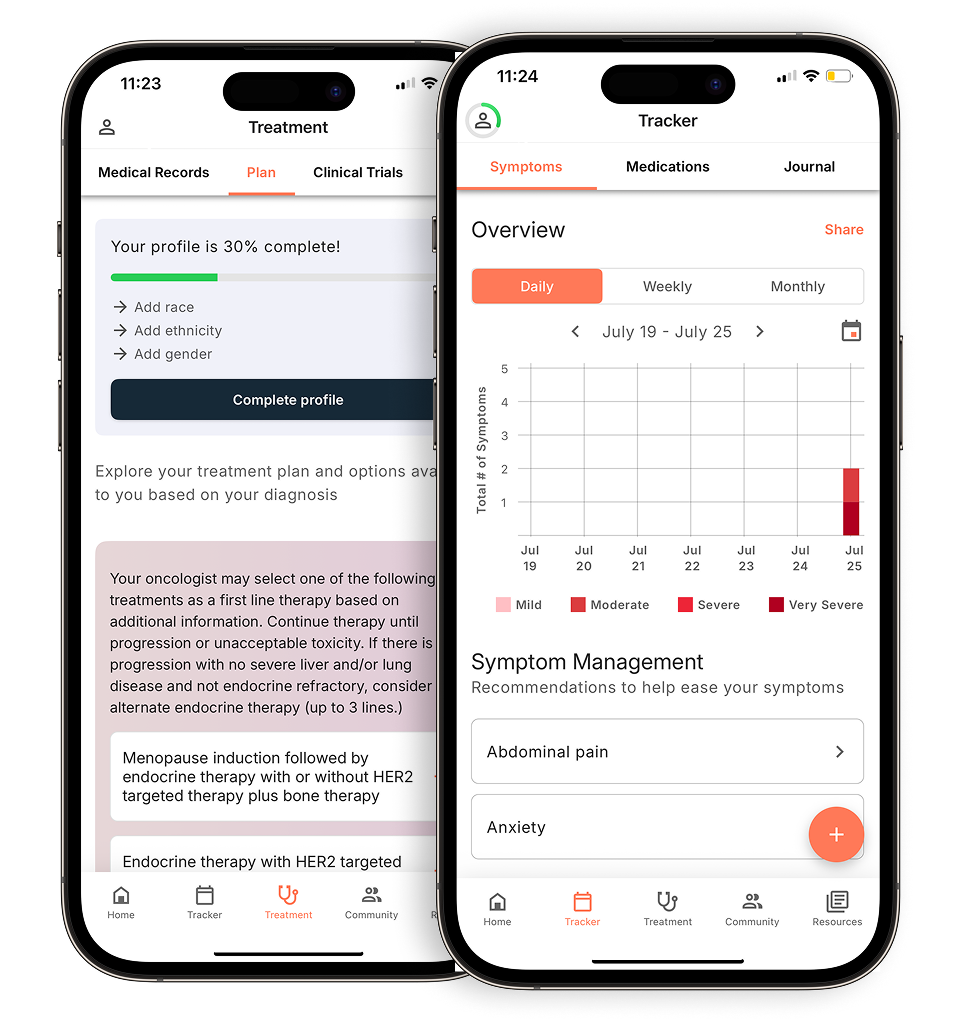
One more term worth knowing: dMMR (deficient Mismatch Repair). In clinical practice, dMMR and MSI-H are essentially two ways of describing the same underlying problem — a breakdown in the DNA repair system that allows errors to accumulate. As Memorial Sloan Kettering explains, both labels point to the same treatment implications. Both dMMR and MSI-H status are now routinely evaluated as part of colorectal cancer workup, and patients with either finding may be candidates for immunotherapy such as pembrolizumab.
- MSI-H / dMMR — Immune response: High (“hot”) — Primary treatment: Immunotherapy (e.g., checkpoint inhibitors)
- MSS — Immune response: Low (“cold”) — Primary treatment: Chemotherapy / surgery
- Unknown — Immune response: Requires testing — Primary treatment: Biomarker testing recommended
Understanding where your tumor falls on this spectrum is the first step — but it’s equally important to understand how immunotherapy actually works against MSI-H tumors, which is where checkpoint inhibitors come in.
How checkpoint inhibitors drop the cancer’s ‘shield’
Cancer cells are remarkably clever at hiding — but checkpoint inhibitors are designed to expose them. Here’s an analogy that makes the mechanism easy to explain to anyone: imagine your immune system’s T-cells are security guards patrolling for threats. Cancer cells display a protein called PD-L1 on their surface — think of it as a fake ID badge that says “I’m normal, don’t attack me.” The T-cells see the badge and stand down. Checkpoint inhibitors like pembrolizumab (Keytruda) and nivolumab (Opdivo) work by blocking that fake badge, so your immune system finally recognizes the cancer cell as the threat it actually is and moves in.
This is where the distinction between MSI-H vs. MSS colorectal cancer becomes especially important. MSI-H tumors accumulate numerous genetic mutations, including widespread hypermethylation and mismatch repair gene alterations, which produce abnormal proteins that the immune system can recognize and target. MSI-H tumors are far more likely to trigger a strong immune response once that PD-L1 shield is removed. MSS tumors, by contrast, present far fewer abnormal proteins, which makes them much harder for the immune system to identify and target — even after checkpoint inhibition.
Currently, the FDA has approved several checkpoint inhibitors for MSI-H metastatic colorectal cancer, including:
- Pembrolizumab (Keytruda) — a PD-1 inhibitor
- Nivolumab (Opdivo) — a PD-1 inhibitor
- The combination of nivolumab and ipilimumab for colon cancer — pairing a PD-1 inhibitor with a CTLA-4 inhibitor to attack the cancer’s defenses on two fronts simultaneously
Checkpoint inhibitors work by releasing the brakes on your immune system, enabling it to recognize and attack cancer cells more effectively — an approach being studied across multiple cancer types including colorectal cancer. The real question for colorectal cancer patients is whether these drugs should be used earlier in treatment — and that’s exactly what landmark clinical evidence has started to answer.
Immunotherapy as first-line treatment: moving beyond chemo
For MSI-H colorectal cancer patients, immunotherapy has shifted from a backup plan to the frontline standard of care. The landmark KEYNOTE-177 trial, published in the New England Journal of Medicine, confirmed this shift: pembrolizumab — a checkpoint inhibitor — doubled progression-free survival compared to standard chemotherapy in patients with MSI-H metastatic colorectal cancer (mCRC). That’s not a marginal improvement — it’s a fundamental rethinking of how treatment begins.
Cancer care guidance for every step of your journey
Get treatment options, clinical trials, and support tailored to your diagnosis--all in one place.
Get started
See treatment options, manage symptoms, and stay informed—all in the app
View treatment options and trials personalized to your diagnosis—plus track progress in real time.
Continue in appBeyond survival data, patients on checkpoint inhibitors often experience a different side effect profile compared to traditional chemotherapy. Chemo is known for fatigue, nausea, hair loss, and immune suppression. Immunotherapy carries its own risks — including immune-related inflammation — but for many patients, day-to-day tolerability is significantly better. That quality-of-life difference matters, especially for Stage IV patients managing a long-term treatment plan.
For certain cases, oncologists may recommend a combination approach. Immune checkpoint inhibitors have shown efficacy in MSI-H mCRC, with combination approaches demonstrating improved progression-free survival compared to single-agent therapy or chemotherapy. It’s a more aggressive strategy that your care team will weigh against your individual health profile.
If you’re newly diagnosed with MSI-H colorectal cancer, it’s worth asking your provider about both approved therapies and emerging options. Knowing how to find clinical trials for MSI-H colorectal cancer can open doors to combination regimens and next-generation immunotherapies not yet widely available. That conversation with your care team — and a potential genetic counselor — may matter more than you realize.
The Lynch Syndrome connection: a family health alert
An MSI-H result doesn’t just open the door to immunotherapy as first-line treatment for MSI-H colon cancer — it can also be a critical signal about your family’s health. Lynch Syndrome is associated with MSI-H/dMMR status, which makes immunotherapy drugs like dostarlimab and pembrolizumab potential treatment options for colorectal cancer.
An MSI-H finding is, in many cases, a genetic alert that extends to your entire family. Lynch Syndrome is an inherited condition that significantly raises the risk of several cancers — not just colorectal, but also endometrial, ovarian, and others. When family members carry the same gene variant, catching these cancers early through regular screening can be life-changing. If you’ve been living with Lynch Syndrome and want to understand what managing that ongoing screening looks like, others have shared their experiences in ways that might resonate.
If your MSI-H status is confirmed, here’s a practical three-step action plan:
- Ask your oncologist for a referral to a certified genetic counselor — this should be a standard next step after a positive MSI-H result.
- Share your results with immediate family members so they can consider genetic testing for Lynch Syndrome themselves.
- Discuss a cancer screening schedule with your provider that accounts for the full range of Lynch-associated cancers, not just colorectal.
Understanding the hereditary dimension of your diagnosis is one piece of a larger picture — and the next section brings it all together.
Summary: what you need to know about MSI-H
MSI-H/dMMR status is the single most important biomarker in colorectal cancer care today — and understanding it can fundamentally change your treatment path. As the Outcomes4Me Editorial Board puts it: “Knowing your MSI status is not optional; it is a fundamental part of modern colorectal cancer care.”
Here’s what the research covered in this article makes clear:
- MSI-H/dMMR is the key to immunotherapy eligibility. It’s the biomarker oncologists look for first when deciding whether checkpoint inhibitors are an option.
- First-line immunotherapy may mean skipping chemo entirely. Patients with MSI-H tumors can potentially receive pembrolizumab or nivolumab plus ipilimumab as their very first treatment, based on evidence from landmark clinical trials.
- The biology matters. Immunotherapy works by lifting the “invisibility cloak” that MSI-H cancer cells use to hide from your immune system — once unmasked, your body can do much of the work.
- An MSI-H result is a family signal. It should always prompt a conversation with your care team about Lynch syndrome and genetic counseling for relatives. Living with that reality is something many patients navigate every day.
- Your results need to stay accessible. Tracking your genetic data in a platform like Outcomes4Me keeps you eligible for emerging dMMR colorectal cancer clinical trials as the research landscape evolves.
Knowing your MSI-H status isn’t just useful — it’s actionable. The next step is understanding exactly how to put that information to work for you.
Taking Control: How to use your MSI-H status today
Understanding what MSI-H means for colon cancer prognosis is the first step — acting on that knowledge is crucial for improving outcomes. Your MSI-H or dMMR status is a clinical asset, and you have every right to use it.
Start with your pathology report. Look for the terms “MSI-H,” “MSI-High,” or “dMMR.” If neither appears, ask your care team directly to order biomarker testing — it’s a standard of care recommendation, and you shouldn’t have to wait. Resources like Fight Colorectal Cancer’s biomarker checklist can help you frame that conversation with confidence.
Once you have your results, the Outcomes4Me app gives you a place to store them and put them to work. As the only direct-to-patient platform that integrates with NCCN® treatment guidelines, Outcomes4Me translates your genetic results into personalized treatment recommendations grounded in evidence — not guesswork.
You are not alone in navigating this. We’re here to help you take what your pathology report says and turn it into informed, confident next steps — because your status isn’t just data. It’s direction.
Disclaimer: The information provided in this article is for informational purposes only and is not intended to be a substitute for professional medical advice, diagnosis, or treatment. Outcomes4Me is not acting as your caregiver, and any suggestions or guidance offered should not replace the advice of your healthcare provider or qualified medical professional. Always seek the guidance of your physician or other qualified health provider with any questions you may have regarding a medical condition.
Personalized support for real care decisions
Understand your diagnosis, explore clinical trials, and track symptoms--all in one place.
Get started
Compare treatments, prepare for appointments, and track side effects—all in the app
Built for your diagnosis, Outcomes4Me gives you the tools to make confident, informed decisions—right when you need them.
Continue in app