
Many symptoms of lung cancer can occur at any stage of the disease, not just when it has metastasized (spread). Being aware of these signs can help prompt earlier evaluation and care.
Persistent cough
A persistent cough is often one of the most common signs of lung cancer. If you find yourself coughing for several weeks, especially if it worsens or is accompanied by blood-tinged sputum,it’s important to consult with your healthcare provider. While many respiratory conditions can cause coughing, a prolonged or unusual cough should not be ignored.
Unexplained weight loss
Losing weight without changes in diet or exercise may be a symptom of lung cancer or another underlying condition. If you notice significant, unintentional weight loss, bring it to the attention of your healthcare professional.
Shortness of breath
Lung cancer can impact how well your lungs function. If you experience breathlessness during routine activities or notice changes in your breathing, it’s important to seek medical advice.
Evidence-based guidance powered by NCCN Guidelines®
Personalized treatment plans shaped by the latest oncology standards—tailored to your diagnosis.
Get started
View your personalized treatment plan in the Outcomes4Me app
Use your diagnosis to unlock personalized NCCN Guidelines®-aligned recommendations.
Continue in app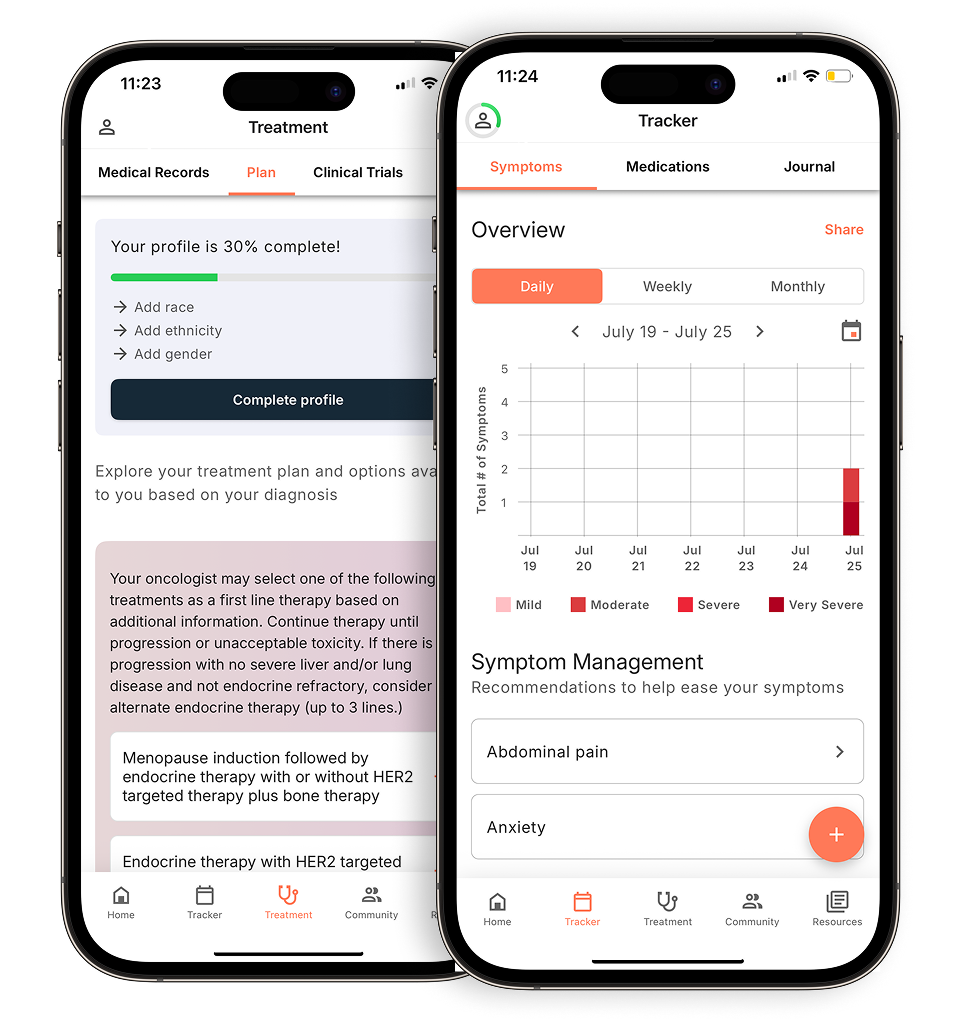
Chest pain
Persistent chest pain—especially pain that worsens with deep breathing, coughing, or laughing—can be a symptom of lung cancer. Any ongoing or unexplained chest discomfort should be evaluated by a healthcare provider.
Fatigue
Ongoing fatigue that doesn’t improve with rest may be linked to a variety of health conditions, including lung cancer. If fatigue feels excessive or unusual, it’s worth discussing with your care team.
Changes in voice
Hoarseness or other voice changes can occur if lung cancer affects the nerves controlling the vocal cords. Persistent or unexplained changes in your voice should be checked by a healthcare professional.
Symptoms if lung cancer spreads to other parts of the body
When lung cancer becomes metastatic, meaning it has spread beyond the lungs, additional symptoms may develop depending on where the cancer has spread.
These may include:
- Bone pain (often in the back, hips, ribs, or legs)
- Arm or leg weakness or numbness
- Headache, dizziness, or seizures
- Balance problems or difficulty walking
- Jaundice (yellowing of the skin and eyes)
- Swollen lymph nodes in the neck or shoulder
Frequently asked questions
What are early warning signs of metastatic lung cancer?
Possible signs of metastatic lung cancer often include new or worsening symptoms, such as increasing shortness of breath, persistent cough, chest pain, unexplained weight loss, fatigue, coughing up blood, or new pain (especially in the back or bones). Neurologic symptoms like headaches or dizziness may also occur. Because these symptoms can have many causes, medical evaluation is important.
Can metastatic lung cancer symptoms come and go?
Yes. Some symptoms may develop gradually or come and go. Even if a symptom improves temporarily, it’s important to tell your care team if it is new, persistent, or worsening.
What symptoms can suggest lung cancer has spread to the brain?
Symptoms of brain metastases may include persistent headaches, nausea or vomiting, weakness or numbness (often on one side of the body), vision changes, difficulty speaking, balance problems, or seizures. Sudden neurologic symptoms require urgent medical care.
What symptoms can suggest lung cancer has spread to the bones?
Bone metastases may cause persistent or worsening bone pain, especially at night, or fractures after minor injury. Any new or unexplained bone pain should be reported to your doctor.
When should I seek urgent medical care?
Seek urgent care if you experience trouble breathing, chest pain, coughing up a large amount of blood, sudden weakness or numbness, confusion, severe headache, seizures, or loss of bladder or bowel control.
Key takeaways
Recognizing the signs and symptoms of lung cancer—at any stage—is an important step toward timely diagnosis and care. While many early symptoms are not specific to metastatic disease, changes in symptoms or the development of new symptoms may indicate progression and should be evaluated.
If you notice any concerning or persistent symptoms, don’t hesitate to contact your healthcare provider. Regular check-ups, awareness of your body, and open communication with your care team all play a key role in monitoring your lung health.
Not all symptoms mean cancer, but addressing concerns early can make a meaningful difference in outcomes and treatment options.
Personalized support for real care decisions
Understand your diagnosis, explore clinical trials, and track symptoms--all in one place.
Get started
Compare treatments, prepare for appointments, and track side effects—all in the app
Built for your diagnosis, Outcomes4Me gives you the tools to make confident, informed decisions—right when you need them.
Continue in app